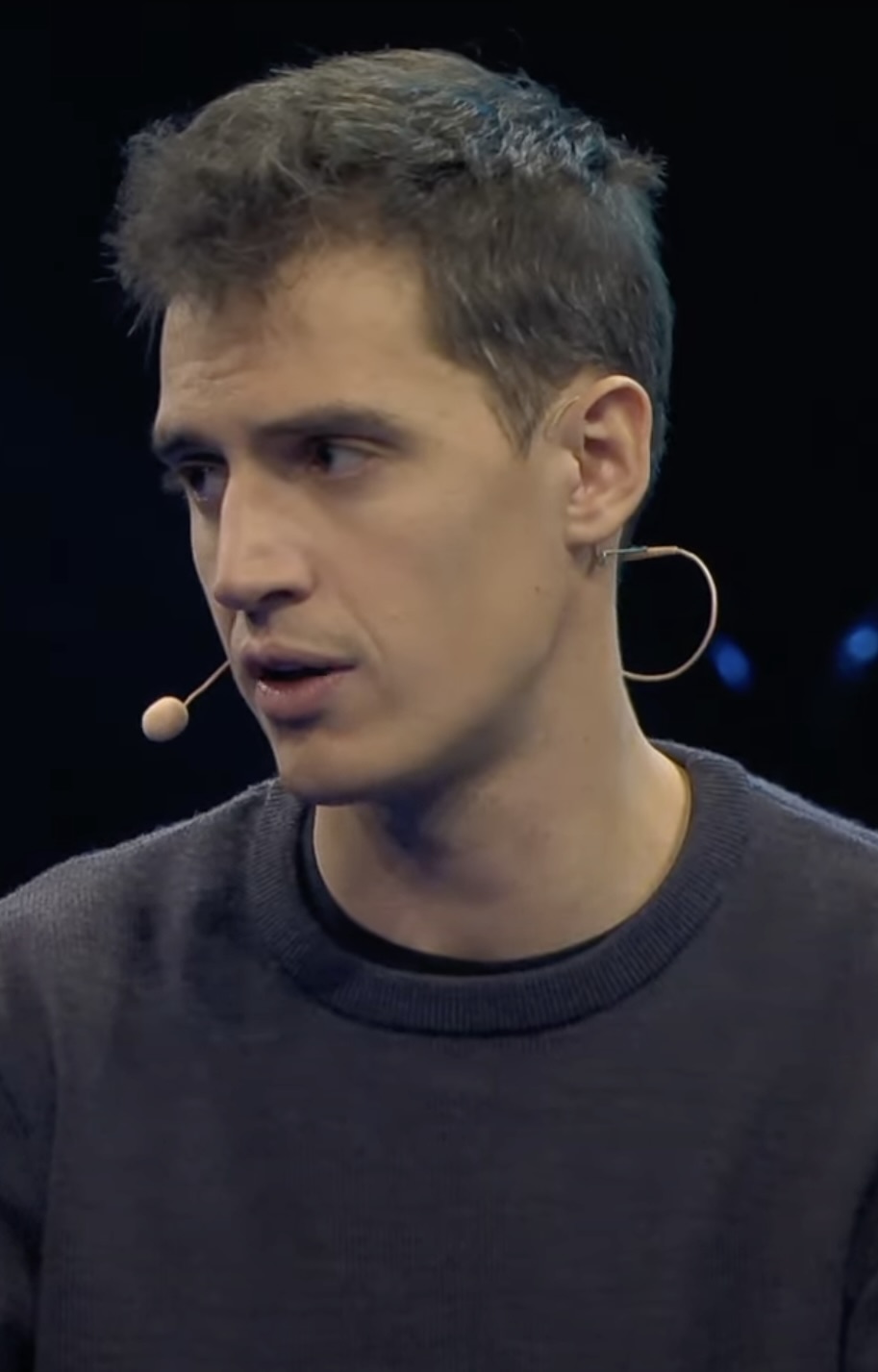
Mistral AI, the Paris-based model developer founded in 2023, has raised €3 billion in a Series D round at a post-money valuation of more than €21 billion, the company confirmed on 8 September 2026. The round was led by Samsung Electronics, with the EQT-managed Scaleup Europe Fund and existing investor PSG Equity as co-leads, and new money from Advent, funds managed by BlackRock, and the Grand Duchy of Luxembourg. Mistral and its backers describe it as the largest equity funding round ever completed by a European technology company.
 Mistral AI
The headline number is easy to report and easy to misread. A €21 billion valuation makes Mistral the most valuable AI company in Europe by a wide margin, and it is still a fraction of what the largest United States labs command. The more useful question is what the money is being raised to build, and why so much of it is now flowing to a category that did not have a name two years ago: sovereign AI.
What "sovereign AI" actually means
Sovereign AI is the idea that a country or region should be able to run advanced AI on infrastructure it controls, using models it can inspect, hosted under its own legal jurisdiction, without a hard dependency on a foreign provider that could change terms, prices, or access. It is less a technical specification than a procurement preference, and it has moved from rhetoric to budget line in the space of about eighteen months.
Sovereign AI is less a technical specification than a procurement preference, and it has moved from rhetoric to budget line.
On why the category exists
The demand is real and it is specific. European governments, defense ministries, banks, and industrial firms increasingly want AI systems whose weights, data flows, and compute sit inside the bloc. Mistral has positioned itself squarely at that demand: it ships open-weight models that a customer can host itself, and it has built out a full-stack platform spanning model development, infrastructure, and enterprise applications. The company says it now serves more than 125 enterprises, including Airbus, ASML, and HSBC, and operates across roughly 20 countries.
The valuation ramp, in context
Mistral's private valuation has roughly doubled at each of its last two rounds. A €600 million Series B in mid-2024 valued it near €5.8 billion. A 2025 Series C led by the Dutch chip-equipment maker ASML set the figure at €11.7 billion. The Series D nearly doubles that again to more than €21 billion in about a year.
A valuation that has doubled each round
Mistral's reported post-money valuation across its last three funding rounds, in billions of euros. The Series D was led by Samsung; the Series C was led by ASML.
A doubling each round prices expectations about future demand for sovereign AI, not current revenue.
A doubling every round is a signal about expectations, not about current revenue. Investors are pricing a bet that European and allied demand for domestically controlled AI will grow faster than the cost of serving it, and that Mistral will be the default supplier of that demand. The step-ups are steep enough that they only make sense if the sovereign-AI thesis holds at scale. If enterprises and governments treat "runs in Europe" as a genuine buying criterion rather than a nice-to-have, the numbers are defensible. If sovereignty turns out to be a preference customers abandon the moment a cheaper or more capable American model appears, the same numbers look stretched. Both readings are live.
Why Samsung leading the round matters
The lead investor is the tell. Samsung is not a financial fund looking for a markup; it is one of the world's largest makers of memory chips and a strategic player in the hardware that AI training and inference run on. A hardware giant anchoring a model developer's round points at the same logic showing up across the industry: the companies that make compute want durable, well-capitalized customers for it, and the companies that make models want a reliable supply of compute. The two ends of the stack are financing each other.
That arrangement carries a quieter tension for a company selling sovereignty. The most advanced AI accelerators are still overwhelmingly designed by a single United States firm and manufactured in Taiwan. A European champion can control its models, its data centers, and its jurisdiction, and still depend on chips it does not make. Sovereign at the model layer does not automatically mean sovereign at the silicon layer, and Samsung's involvement is a reminder that the compute question sits upstream of the model question.
The open-weight paradox
There is a second tension worth naming plainly, because it is central to how Mistral is valued. Much of Mistral's brand rests on open-weight models that anyone can download and run. Openness is what makes the sovereignty pitch credible: a customer can host the model itself and audit it. But open weights are hard to monetize directly, because the artifact that creates the value can be copied at zero marginal cost. A €21 billion valuation therefore has to be justified by the surrounding business, the enterprise platform, the support, the deployment services, the frontier models kept closed, rather than by the open models alone.
What a sovereign AI stack tries to control
Mistral positions itself across the layers a sovereignty-minded buyer wants to keep inside its own jurisdiction. The lowest layer, the silicon, is the one it does not control.
Sovereign at the model layer does not automatically mean sovereign at the chip layer.
This is not a contradiction so much as a strategy under pressure. Mistral is trying to hold two positions at once: open enough to be trusted by sovereignty-minded buyers, and closed enough at the edges to capture the revenue that a valuation like this requires. Whether those two can be sustained together is one of the genuinely open questions the round does not answer.
The competitive frame
For all the "largest European round ever" framing, the scale gap with the United States remains large. The leading American labs have raised at valuations several times higher, backed by hyperscaler balance sheets that dwarf anything available in Europe. Mistral's advantage is not raw capital; it is positioning. It is the credible non-American, non-Chinese option at the frontier, and for a meaningful set of European and allied customers that positioning is the product. The risk is that positioning is a narrower moat than capability. If the performance gap to the best closed models widens faster than the sovereignty preference deepens, the champion status protects less than it appears to.
The portability lesson underneath
Strip away the geopolitics and the round is an argument about dependence. The reason governments and enterprises are paying a premium for sovereign options is that they have learned what it costs to be locked into a single provider they cannot influence: pricing they do not control, terms that can change, access that can be revoked. Sovereignty at the national level is the same instinct that portability serves at the software level. A team that keeps its AI workloads able to move across models and providers, rather than welded to one stack, holds the same leverage a sovereign buyer is paying billions to secure. Platforms like Metir that stay deliberately model-agnostic are one expression of that principle for individual organizations, and Mistral's round is the same argument playing out at the scale of a continent.
The honest read on the raise is that it funds a real and growing category on terms that assume the category keeps growing. The demand for AI that runs under one's own control is not manufactured; governments and regulated industries are asking for it. What the €3 billion cannot settle is whether sovereignty is a durable buying criterion or a temporary one, whether open weights and a €21 billion valuation can coexist for long, and whether a model champion can stay sovereign while the silicon beneath it is not. The capital is a high-conviction bet that the answer to all three is yes.
Sources:
- Mistral raises €3B as sovereign AI becomes big business | TechCrunch
- Mistral bags €3B to build Europe's sovereign AI champion | The Register
- Mistral secures €3B at €21B valuation in record European tech round | Vestbee
- Mistral AI raises €3 billion in Samsung-led Series D round | Yahoo Finance
- Mistral Raises €3 Billion at a €21 Billion Valuation After Strategic Pivot to Neocloud | Trending Topics
Image credits
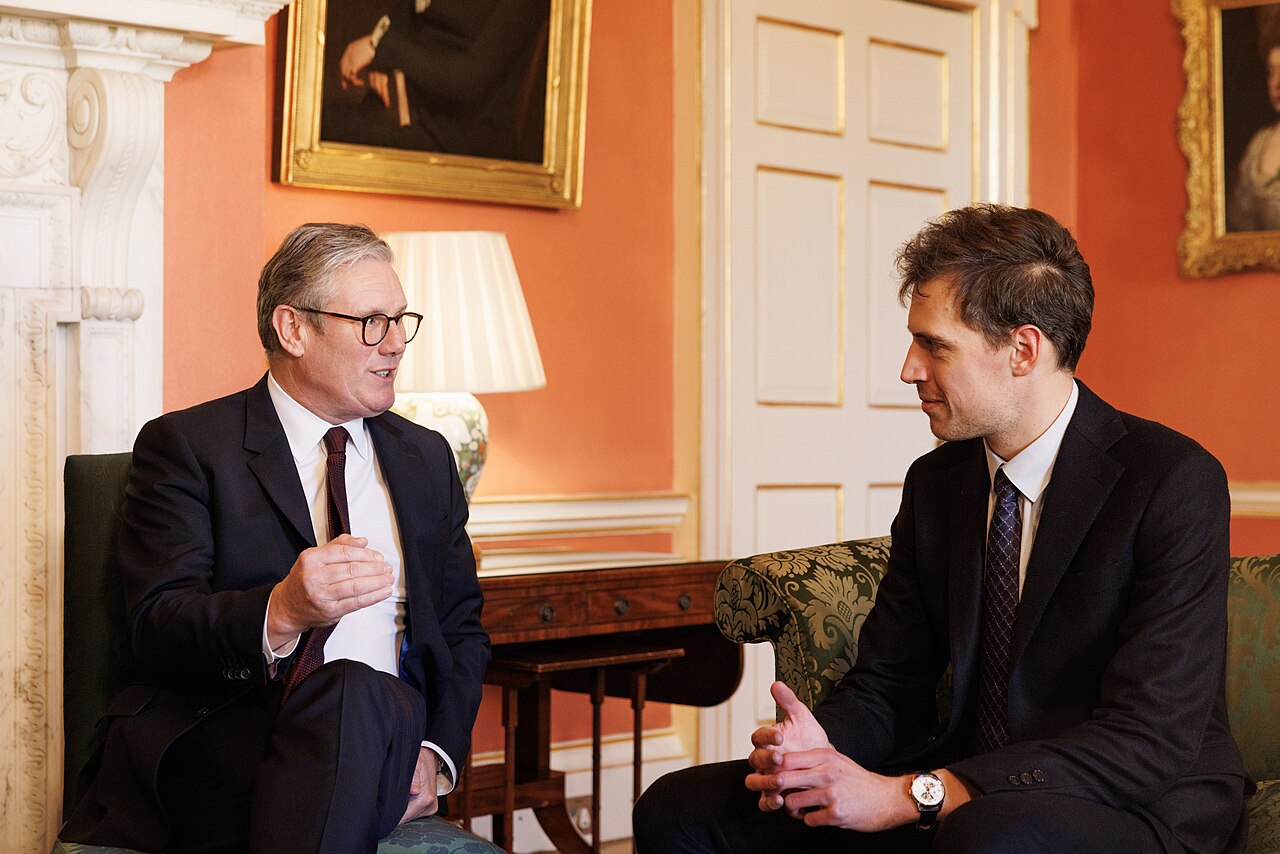
Hero image: Arthur Mensch, co-founder and chief executive of Mistral AI, via Wikimedia Commons, licensed under CC BY 4.0. In-body photograph: Arthur Mensch meeting the UK Prime Minister, by Simon Dawson / No 10 Downing Street, via Wikimedia Commons, licensed under the Open Government Licence v3.0.