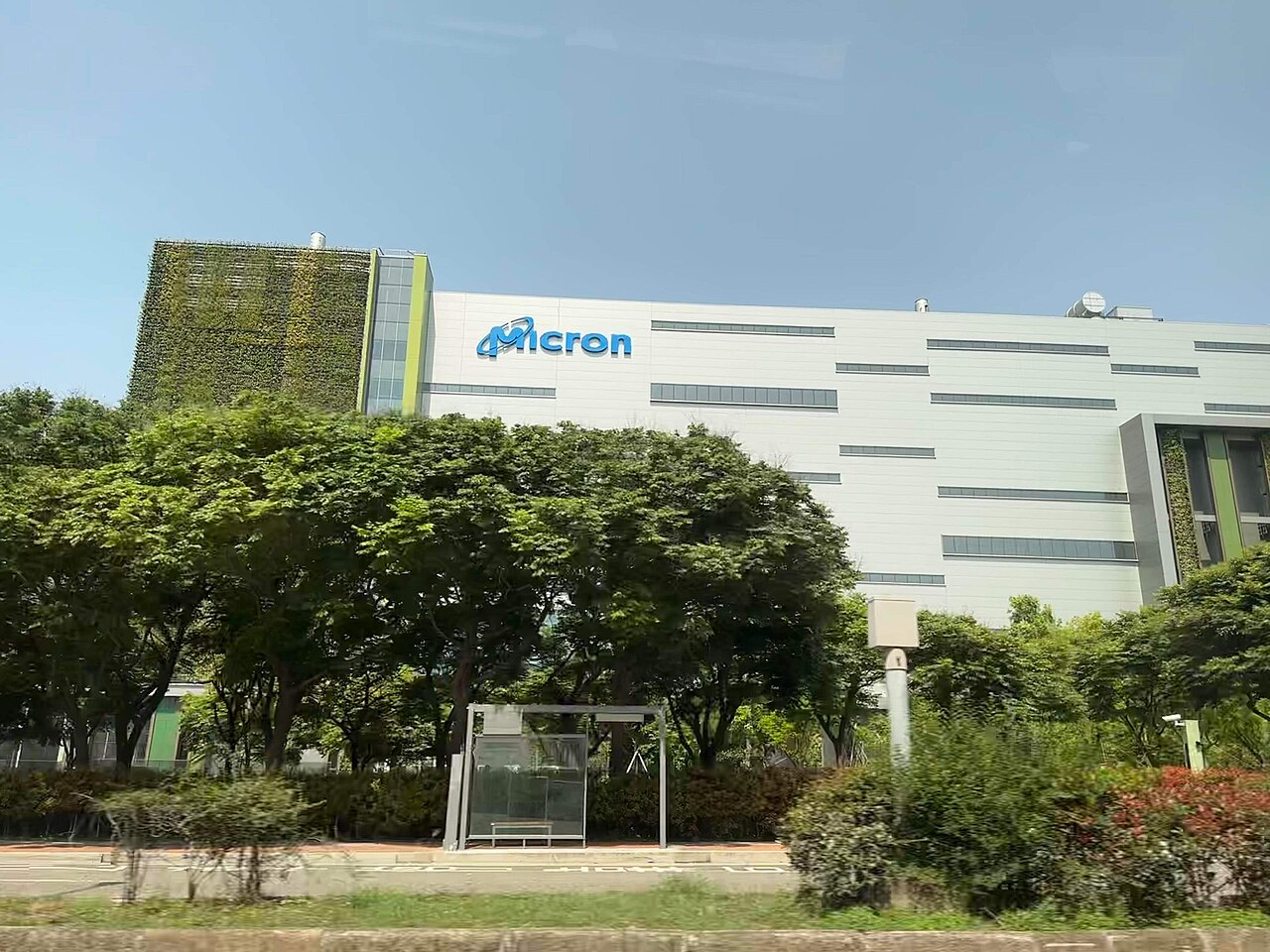
The Micron Taiwan union strike vote, announced on October 7, 2026, turned a months-long pay dispute into a possible disruption at a company that sits near the center of the AI memory supply chain. According to Focus Taiwan, the Taoyuan union at Micron secured authorization to strike, with 1,994 of 2,012 ballots in favor. The union is asking for a permanent profit-sharing system worth 15% of operating profit, not the one-off bonuses the company has offered. No strike date has been set. This article lays out what was voted, how Taiwanese law treats a strike, how the demand compares with Korean rivals, and what it could mean for high-bandwidth memory (HBM) supply.
What the Micron Taiwan union strike vote actually decided
Per Focus Taiwan, the Taoyuan union has 2,258 eligible members. Of 2,012 who voted, 1,994 supported a strike, 14 opposed and 4 ballots were invalid. That is 99% of votes cast and 88.3% of all eligible members. Union chairman Jerry Lin said no schedule has been decided and that members would be notified by text message, and the union has kept a "surprise strike" open so the company cannot prepare.
Taoyuan strike authorization vote, step by step
Number of union members at each stage of the vote announced October 7, 2026.
Source: Focus Taiwan (October 7, 2026). Hover a bar for details.
The vote is an authorization, not a walkout. Several dates are already on the calendar according to Focus Taiwan: a Micron board meeting on October 8 to 9 (U.S. time), a rally on Ketagalan Boulevard in Taipei on October 19, and a mediation session with the separate Taichung union on October 22. Reuters reports the rally is described as a non-strike action, and that Micron shares fell more than 2% in U.S. premarket trading on the news.
Scale matters here. Reuters reports that the Taoyuan and Taichung unions together represent over 80% of Micron's roughly 15,000 Taiwan employees. Focus Taiwan puts Taichung at about 12,300 employees (about 11,000 union members) and Taoyuan at about 3,000 (about 2,400 members). One analyst write-up, by Hundred East, gives smaller Taoyuan headcounts, so we use the Focus Taiwan figures.
The dispute: bonuses versus a formula
Micron announced fiscal 2026 rewards for more than 60,000 employees worldwide, and Taiwan staff who joined before August 29, 2025 were offered NT$1 million cash, per Reuters. Focus Taiwan describes Micron's offer slightly differently, as at least NT$1.7 million in cash compensation for fiscal 2026. The reports do not say whether the two numbers measure the same thing, so we cite both rather than reconcile them.
The union rejects the framing. TrendForce reports the union's argument that the package equals about 4.4% of Micron's operating profit, and that Micron's GAAP net income rose from $778 million in fiscal 2024 to $8.54 billion in fiscal 2025 while rank-and-file Taiwan staff received roughly 2.37 months of bonus. The union also cited 2022 to 2023 layoffs and suspended bonuses as lingering grievances.
Micron's public position, as reported by Reuters, is that it takes employees' concerns seriously and remains committed to engaging with its unions in good faith. It has not published a profit-sharing formula.
If there is no concrete proposal on September 18 and 21 and employees feel the company is simply dragging out the process, we will declare the negotiations have broken down and move towards a strike vote.
Jerry Lin, Taoyuan union chairman, via Reuters (Sep 15, 2026)
How much is 15% of operating profit
The scale is large because the profit is. Micron's record quarter is covered in our look at its Q4 FY2026 results. Hundred East, citing GAAP operating income of $43.75 billion for the quarter ended September 3, 2026, calculates that 15% would be about $6.6 billion for that quarter alone. That is a third-party estimate, not a figure from the union or Micron, and the union's ask is a recurring share rather than a single payment. Reuters reports the demand is framed against global operating profit, which is why the debate is as much about corporate policy as Taiwan pay.
Employee profit-share pools in memory: the formulas on the table
Share of operating profit allocated to employees. The grey bar is the Micron union demand; green bars are reported arrangements.
Sources: Focus Taiwan and Reuters (union demand), TrendForce (4.4% figure, a union calculation), Korea JoongAng Daily (SK hynix), Korea Herald (Samsung). Formulas differ in thresholds, payment form and scope, so the bars are not like-for-like.
How Korean memory makers handle profit sharing
The union points to Samsung and SK hynix, and the comparison is useful but not like-for-like.
- SK hynix. Korea JoongAng Daily reports that in September 2025 labor and management removed a 1,000%-of-salary cap on the profit-sharing bonus and tied it to 10% of operating profit, with both sides committing to keep the structure for a decade. In July 2026 management proposed paying part in stock, and both unions initially rejected it. The dispute shows that even a formal formula can be reopened on how the payout is made.
- Samsung. Korea Herald reports a May 27, 2026 agreement approved by 73.7% of 62,616 voting union members (95.5% turnout), allocating 10.5% of semiconductor operating profit as a stock special bonus. It narrowly averted a planned strike.
Two lessons follow. First, a fixed percentage of operating profit is an established template in Korean memory, and 15% would sit above both. Second, the details beyond the headline percentage, such as payment in stock or cash, caps, thresholds and duration, decide the real cost to the company. That is why the Taiwan union's call for a "transparent" system, not only a higher number, is notable.
Why Taiwan matters to Micron and to HBM
According to Focus Taiwan, Taichung is Micron's largest manufacturing base in Taiwan, and a second advanced packaging facility there is scheduled to begin HBM production in mid-October 2026. Micron has invested more than NT$1.6 trillion (about US$50 billion) in Taiwan, roughly half of it in the past four years, and the same report, covering an October 1 media gathering, says memory supply is expected to tighten in 2027 to 2028, with most HBM output already contracted.
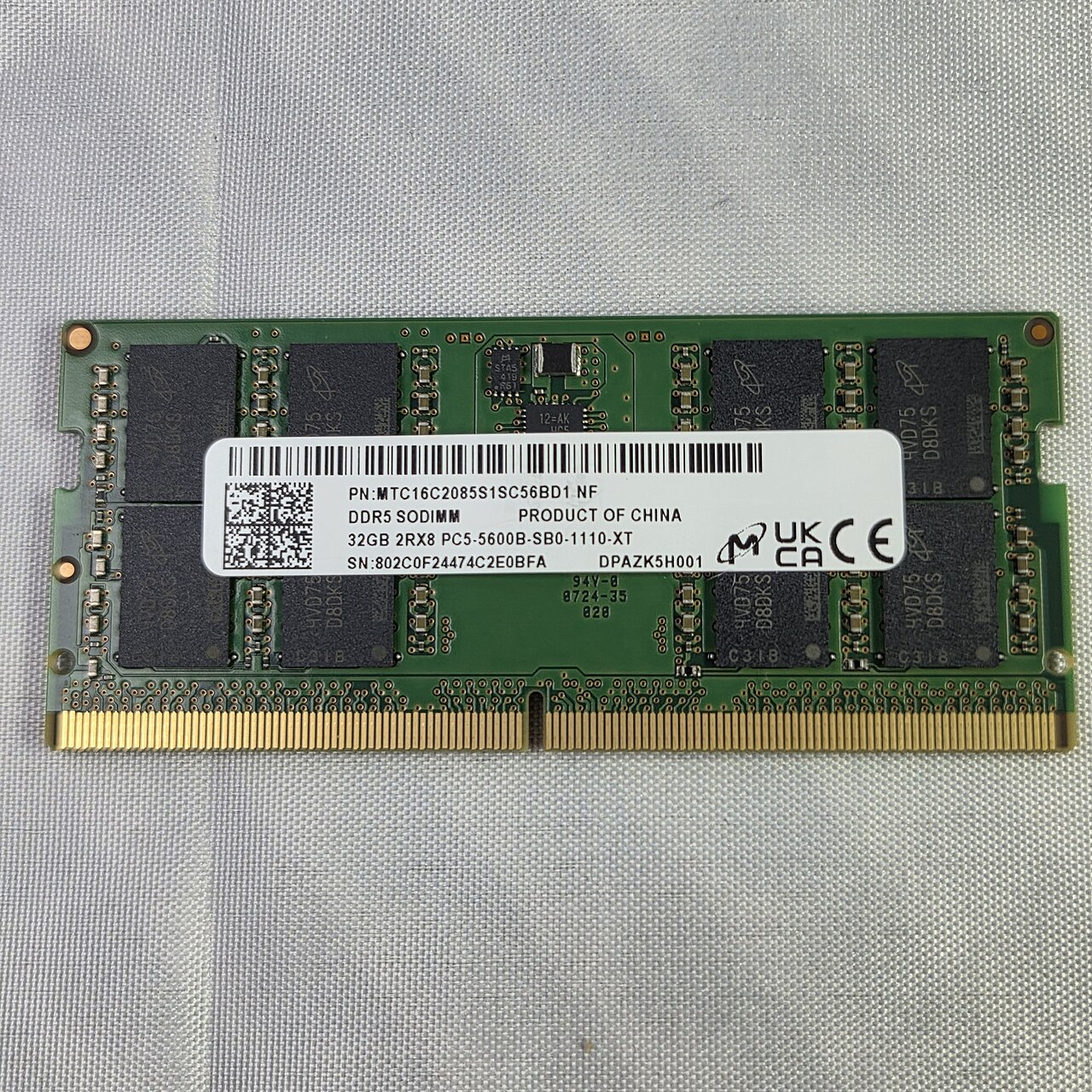
We could not verify what share of Micron's HBM output comes from Taiwan, and none of the Reuters or Focus Taiwan reports we read states it. Hundred East says most of Micron's DRAM output in fiscal 2025 came from Taiwan plants, but that is one source, and we treat it as indicative only. Context on why HBM is scarce is in our explainer on the AI memory supercycle: HBM stacks consume more wafer capacity per bit than ordinary DRAM, so a stoppage at an HBM line would be felt across NVIDIA-class accelerator supply.
 NVIDIA
How a strike would work under Taiwan labor law
Under Taiwan's Act for Settlement of Labor-Management Disputes, as summarized by Taiwan News in coverage of the EVA Air pilots case, industrial action cannot be taken until mediation has failed, and strikes are not allowed over "rights disputes". Article 54 of the same Act adds that a union may not strike unless the strike is approved by no less than one half of its total members via direct and secret balloting. On the reported figures, 88.3% of eligible Taoyuan members voted yes, which would exceed that bar, though we have not seen a legal opinion applying it to this case.
The harder question is classification. A dispute over wages and bonus design is an interest dispute about working conditions, which can lead to a lawful strike. In the EVA Air case, the company argued that a demand beyond negotiable working conditions was a non-strikable matter. Whether a request for a fixed share of operating profit counts as a condition of work or an intrusion on corporate decisions is the kind of argument either side could make. Hundred East notes that Article 235-1 of Taiwan's Company Act already requires firms to set a fixed amount or ratio for employee compensation in their articles, a point the union could cite.
What to watch
- The October 8 to 9 board meeting and the October 22 Taichung mediation. These are the next concrete decision points.
- A formula, not a figure. Settlement could take the form of a percentage with thresholds or a stock component, as in Korea.
- Scope of any action. A partial or short stoppage differs sharply from an extended one, and Micron's HBM contracts are already largely committed.
- Precedent. Two Korean formulas already exist, so how Micron answers will show whether the Korean template travels to Taiwan.
Sources:
- Focus Taiwan: Micron Taoyuan union secures strike authorization
- Focus Taiwan: Micron Taichung and HBM expansion
- Reuters via Investing.com: Union secures authorisation to strike
- Reuters via Investing.com: Union presses profit-sharing demand
- TrendForce: Micron Taiwan union seeks 15% profit share
- Hundred East: Micron's $6.6 billion question
- Korea JoongAng Daily: SK hynix bonus overhaul
- Korea Herald: Samsung wage pact
- Taiwan News: strike requirements in the EVA Air case
- Act for Settlement of Labor-Management Disputes (Laws and Regulations Database of the Republic of China)
Image credits
- Hero: Micron building with signage in Taichung, Taiwan ("Micron Fab in Taichung, Taiwan"), by Thingreenline4546, CC BY-SA 4.0, via Wikimedia Commons.
- Micron 32 GB DDR5-5600 SO-DIMM, by ITEagle Europe - Sebastiaan Broekhoven, CC BY-SA 4.0, via Wikimedia Commons.