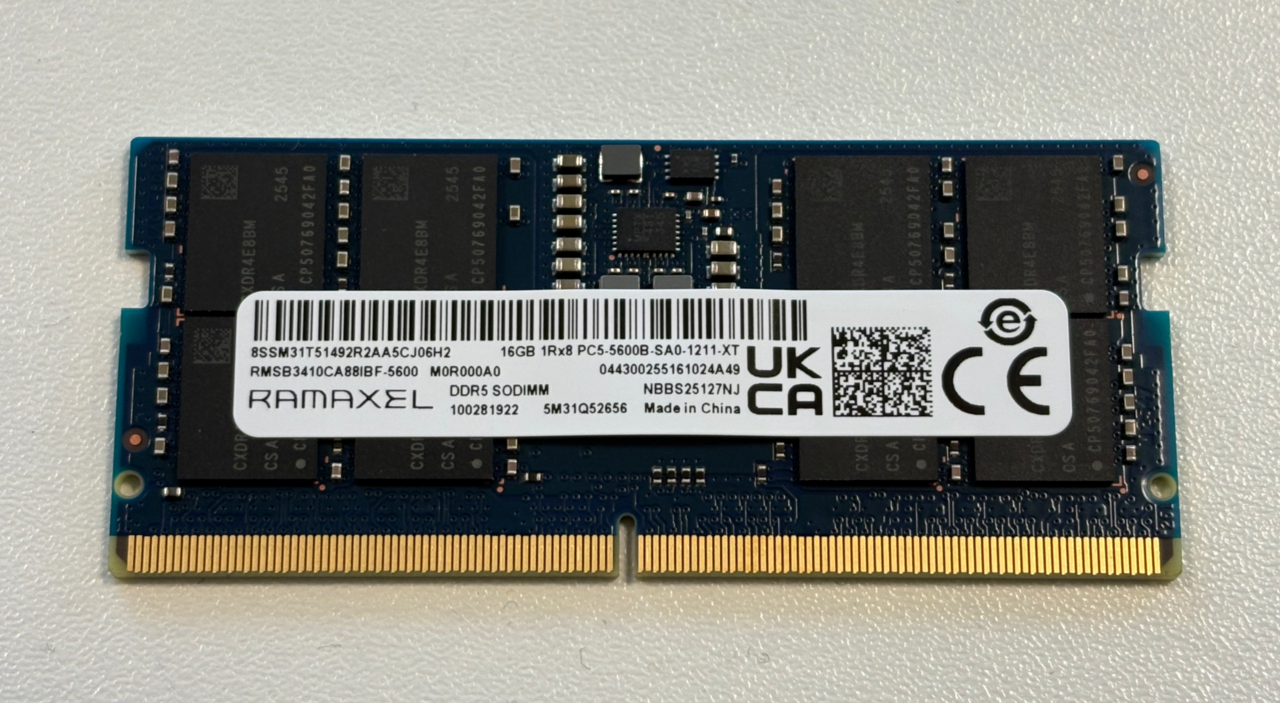
If you tried to buy a stick of RAM in 2026, you likely noticed something strange: a commodity part that has gotten cheaper almost every year for three decades suddenly got dramatically more expensive. Contract prices for DRAM, the memory chips inside every PC, phone, server, and now every AI accelerator, rose by as much as 80 to 90 percent quarter over quarter heading into 2026, with some trackers putting the second-quarter jump as high as 89 percent. This is the AI memory supercycle: a deliberate, industry-wide reallocation of scarce chip-making capacity away from ordinary RAM and toward the specialized high-bandwidth memory that AI accelerators need, and it is now the clearest example yet of the AI buildout's costs spilling over into products that have nothing to do with AI.
The surge, in numbers
The scale of this move is easiest to see at the retail level, where it is unambiguous. A 32GB DDR5 desktop kit that cost roughly $80 to $100 in September 2025 was selling for $375 to over $500 by mid-2026, a roughly fourfold increase, according to Tom's Hardware's ongoing RAM price tracking and TechRadar's coverage of the run-up. DDR4, an older standard with less overlap with AI-grade memory, moved less violently but still substantially: a 32GB DDR4 kit that cost $60 to $90 in October 2025 was listed around $150 to $200 by early 2026, roughly a doubling, per Wccftech's reporting on the shortage.
Consumer RAM kit prices, before and after the reallocation
Approximate street price for a 32GB kit, in US dollars. DDR5 roughly quadrupled; DDR4, an older and less HBM-adjacent standard, roughly doubled.
Figures are midpoints of reported industry ranges, not precise averages. Server-grade DDR5 contract prices moved even faster than retail kits.
Server and contract pricing, which is less visible to consumers but drives everything downstream, moved even faster than retail. TrendForce and Counterpoint Research data cited across multiple outlets put quarter-over-quarter DRAM contract price increases at 50 to 90 percent through the first half of 2026, an extraordinary rate of change for a commodity component that historically moves in single digits most quarters.
Why now: the mechanism behind the AI memory supercycle
The direct cause is not a shortage of silicon capacity in the abstract. It is a decision. Samsung, SK Hynix, and Micron, who together control somewhere between 90 and roughly 95 percent of global DRAM output depending on how the market is sliced (Samsung held 38.6 percent of Q1 2026 DRAM revenue, SK Hynix 28.8 percent, and Micron 22.4 percent, according to Counterpoint Research data reported by Tech Times), have been steadily redirecting wafer starts toward high-bandwidth memory, or HBM, the stacked memory that sits directly on AI accelerator packages. HBM is reported to earn memory makers three to five times more revenue per wafer than standard DDR5, which makes the reallocation straightforwardly rational for the companies making it, even as it strips capacity away from everything else.
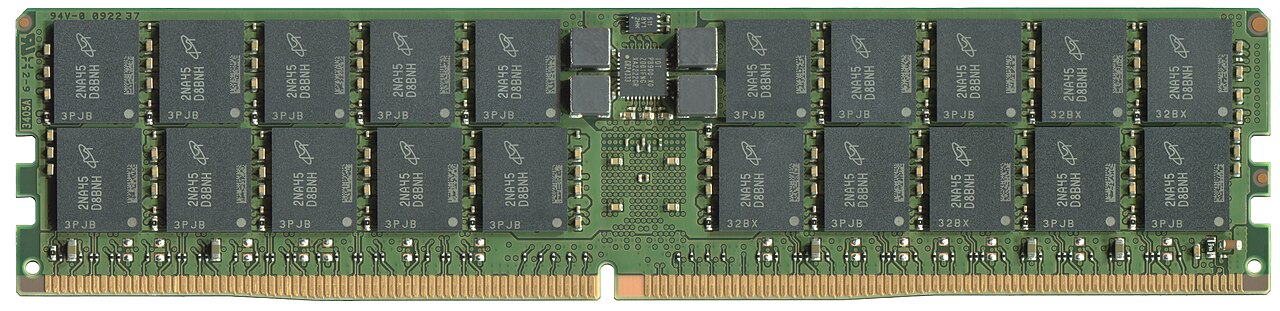
The physical reason this crowds out ordinary RAM is that HBM and commodity DRAM come from the same wafers in the same fabs. A stacked HBM die requires roughly three to four times the wafer area per gigabyte of an equivalent DDR5 die, largely because of yield loss from stacking multiple layers and wiring them together with through-silicon vias, according to TrendForce figures reported by Tom's Hardware. TrendForce has separately estimated that HBM's share of total DRAM wafer output climbed from about 19 percent in 2025 to roughly 23 percent in early 2026. Those look like modest percentage-point moves, but because each HBM gigabyte consumes several times the wafer capacity of a commodity gigabyte, even a small share shift removes a disproportionate amount of capacity from the DDR5 and DDR4 pool.
Why one gigabyte of HBM costs the fab more than one gigabyte of DDR5
Wafer area consumed per gigabyte of output, DDR5 versus HBM, indexed to DDR5 = 1x. Same silicon wafers, same fabs, very different yield.
Reported estimates range from roughly 3x to 4x depending on HBM generation. A fab that shifts a wafer start from DDR5 to HBM produces far fewer usable commodity gigabytes as a result.
A fab that shifts a wafer start from DDR5 to HBM produces far fewer usable commodity gigabytes as a result.
Mechanism described in TrendForce data reported by Tom's Hardware
Who actually bears the cost
The reallocation lands unevenly. Data centers, chasing Nvidia and other accelerators that need HBM, are estimated to consume around 70 percent of all memory chips produced worldwide in 2026, up from roughly 20 to 30 percent as recently as 2022, according to Tom's Hardware and TechRadar coverage of industry tracker data. That is the demand side of the same story the wafer numbers tell on the supply side.
Data centers went from a fraction of memory demand to most of it
Estimated share of worldwide memory chip output consumed by data centers, 2022 versus 2026.
The remaining share is split across PCs, smartphones, gaming consoles, cars, and other consumer and industrial devices, all now competing with AI infrastructure for the same wafers.
This is where the demand-inelasticity dynamic becomes visible. AI labs and cloud providers building accelerator fleets treat memory as a must-have input to a multi-billion-dollar infrastructure bet; a 50 percent jump in HBM contract prices is a rounding error against the value of the compute it enables, so they keep buying. Consumers buying a laptop or a gaming PC have no equivalent willingness to pay, but they are competing for the same finite wafer starts, so retail DRAM and NAND prices get pulled up regardless. IDC and other trackers cited in this reporting have forecast resulting declines in smartphone and PC unit sales as buyers delay upgrades, which is the classic signature of a supply-side price shock reaching a price-sensitive market.
The hyperscaler pass-through
 NVIDIA
 Microsoft
 AWS
AWSThe clearest evidence that this is a real cost, not just a retail headline, comes from the hyperscalers' own numbers. Amazon raised its 2026 capital expenditure guidance to roughly $220 billion, up about $20 billion from its prior guidance, and CEO Andy Jassy specifically attributed the increase to rising memory prices on the company's Q2 2026 earnings call, according to CNBC and Yahoo Finance's coverage of the results. Microsoft disclosed something similar earlier in the year: CFO Amy Hood attributed roughly $25 billion of the company's raised $190 billion fiscal 2026 capex plan to higher memory and component prices rather than net-new capacity, as reported by The Register.
Micron's own results are the mirror image of that spending. The company reported record fiscal Q3 2026 DRAM revenue of $31.3 billion, up sharply year over year, and said its HBM3E and HBM4 output is fully booked through calendar 2027 with demand extending into 2028, according to earnings coverage from Tech Times and Micron's own investor materials. When the same commodity that is squeezing a hyperscaler's budget is simultaneously producing record margins for the company selling it, that is the supercycle working exactly as the memory makers intended, even if it was not designed with consumer RAM buyers in mind.
How long does this last
The honest answer is that nobody agrees, and the range of credible views is wide. On the more optimistic end, Intel and Silicon Motion have both pointed to 2028 as a plausible point for supply and demand to rebalance as new fab capacity comes online, per reporting compiled by Tom's Hardware and industry newsletters. Bank of America, in a memory sector note reported by SemiAnalysis and Futu News, has framed 2026 as a supercycle on the scale of the 1990s boom, forecasting DRAM revenue up roughly 51 percent year over year and NAND up about 45 percent, with average selling prices up 33 percent and 26 percent respectively, a framing that treats the current environment as extraordinary but not necessarily multi-year.
On the more pessimistic end, SK Hynix CEO Kwak Noh-jung told reporters around the company's July 2026 Nasdaq listing that the industry is heading into its worst-ever supply shortage in 2027, and that he expects demand for memory to keep outstripping the industry's ability to produce it well beyond 2030, according to Bloomberg's coverage of his comments. That is a strikingly long horizon from the head of a company that is, in the same breath, raising billions of dollars to expand capacity as fast as it can.
Demand for memory will continue to exceed the company's ability to produce it well into the next decade.
Kwak Noh-jung, SK Hynix CEO, July 2026
Both views can be internally consistent. New wafer capacity takes years to plan, build, and qualify, which supports the 2028-and-later camp. But if AI accelerator demand keeps growing and HBM keeps commanding several times the margin of commodity memory, manufacturers have every incentive to keep prioritizing it, which supports the SK Hynix camp. What would actually break the cycle is either a meaningful cooling in AI capital spending, which nobody currently in this piece's sourcing is predicting, or a wave of new fab capacity large enough to satisfy both HBM and commodity demand at once, which is exactly what the current investment cycle is trying, slowly, to build.
The takeaway
The memory supercycle is a useful case study in how an AI infrastructure boom's costs travel. It starts with an accelerator that needs HBM, moves through a handful of companies that control almost all of the world's DRAM wafer capacity, and ends up on a receipt for a laptop that has no AI chip in it at all. For hyperscalers, the same dynamic shows up as billions of dollars in unplanned capex, which eventually shapes what AI compute and API access cost. For anyone building on top of models rather than underneath them, the practical lesson mirrors the one from the hardware layer generally: input costs that are entirely outside your control are still going to move, and the more freedom you have to route work to whichever model or provider is priced sensibly at any given moment, the less exposed you are to one supplier's capacity decisions. That is the model-agnostic case for a workspace like Metir AI, which lets teams move between leading AI models rather than committing to a single provider's pricing as infrastructure costs like this one ripple through the industry.
Sources:
- Memory Shortages Have Destroyed The Consumer Segment As DRAM Prices Surge By Up To 89% In Q2 2026 | Wccftech
- Memory price surge begins to cool as consumers hit affordability limit, AI demand still keeps DRAM and NAND prices climbing through Q3 2026 | Tom's Hardware
- 32GB of DDR5 now costs $375 minimum, AI shortage continues to squeeze PC building | Tom's Hardware
- 2026 could well be the year of the $500 32GB DDR5 memory module | TechRadar
- Memory Shortages To Last Till At Least Q4 2027, Higher Prices Expected Throughout 2026-2027 | Wccftech
- Samsung Leads DRAM Market Share at 38.6%: SK hynix Trails on Revenue but Tops Profit Margins | Tech Times
- Here's why HBM is coming for your PC's RAM | Tom's Hardware
- AI Reportedly to Consume 20% of Global DRAM Wafer Capacity in 2026, HBM and GDDR7 Lead Demand | TrendForce
- Data centers will consume 70 percent of memory chips made in 2026 | Tom's Hardware
- It really is the craziest time ever: data centers to grab 70 percent of all high-end memory chips in 2026 | TechRadar
- Amazon hikes 2026 capex to $220 billion due to higher memory costs | CNBC
- Memory Prices Add $20 Billion to Amazon Capex, Stock Jumps 12% | Yahoo Finance
- Microsoft lifts 2026 CapEx by $25B to cover price rises | The Register
- Micron Q3 2026 Earnings: $100B in Contracts Signals AI Memory Cycle Break | Tech Times
- SK Hynix CEO Expects Memory Crunch to Last Beyond 2030 | Bloomberg
- SK Hynix CEO Sees Worst-Ever Memory Supply Shortage in 2027, Says Demand to Outstrip Supply Beyond 2030 | US News
- Memory Mania: How a Once-in-Four-Decades Shortage Is Fueling a Memory Boom | SemiAnalysis
- Micron's Earnings Report Offers Insights to Bank of America: The Memory Supercycle Could Extend Through 2027 or Even 2030 | Futu News
- 2026 Market Outlook: SK hynix's HBM to Fuel AI Memory Boom | SK Hynix Newsroom
Image credits
Header image: a DDR5 SODIMM laptop memory module (16GB, PC5-5600B), an example of the ordinary consumer DRAM at the center of this piece, by Padgriffin via Wikimedia Commons, licensed under CC BY 4.0. In-body photograph: a Micron 64GB DDR5 ECC RDIMM server memory module, by PantheraLeo1359531 via Wikimedia Commons, licensed under CC BY 4.0. No photograph exists of a specific 2026 wafer-allocation decision, so both images depict the real memory hardware this piece is about rather than any single event.