
Marlowe, a company founded in May, raised a $277 million seed round at a $1.15 billion valuation to build non-Nvidia AI inference clouds, GeekWire reported. Accel led the latest round, and a smaller initial round led by Eclipse is included in the total. The company designs and operates computing systems for running AI models, not for training them, and says it will start with chips from AMD and Etched rather than Nvidia GPUs.
 AMD
 Nvidia
Who is behind the round
Dan Lewis, a Convoy co-founder and former Microsoft executive in enterprise AI, is CEO. Kutta Srinivasan, previously a Microsoft corporate vice president for AI infrastructure with earlier roles at Valve, Facebook and LinkedIn, is CTO. Eclipse founder Lior Susan is executive chairman. Other investors named by GeekWire include Bessemer, Altimeter, Atreides, Journey and Valor, plus angels such as Box CEO Aaron Levie, former LinkedIn CEO Ryan Roslansky and Uber CEO Dara Khosrowshahi. The company has about 30 employees across Bellevue, Washington and Redwood City, California.
The non-Nvidia inference cloud thesis
Marlowe's pitch is that a new chip cannot simply be plugged in and made to produce tokens. Lewis told GeekWire, "You can't just take a new chip that comes out and plug it in and expect it to produce tokens." Srinivasan described large-company fleets where "a significant portion of our non-Nvidia fleet was either idle or grossly underused." The company's answer is to tune chips, networking, power and software together for each workload.
You can't just take a new chip that comes out and plug it in and expect it to produce tokens.
Dan Lewis, Marlowe CEO, to GeekWire
The first site, built on Etched chips, is scheduled to go live in December 2026. A larger second site using AMD Helios systems is targeted for the second quarter of 2027, and a third is under a letter of intent. Both built sites are under contract, and three customer agreements are signed, though the customers are not named. Sites are planned at tens of megawatts, with financing arranged site by site. For background on the hardware, see our coverage of AMD's Helios racks and of Etched's transformer-only chips.
The compounding arithmetic
Marlowe says gains of 10% to 20% at each layer (chips, networking, power and software) compound to 2 to 3 times more output per watt and per dollar than conventional GPU clouds, measured in tokens. This is the company's claim and has not been independently audited. The arithmetic below only checks how the stated ranges combine, and is not a finding that the claim is wrong.
| Gain per layer | Four layers compounded |
|---|---|
| 10% | 1.10^4 = 1.46x |
| 15% | 1.15^4 = 1.75x |
| 20% | 1.20^4 = 2.07x |
Four layers at 10% to 20% therefore give roughly 1.46x to 2.07x. To reach 2x takes about 19% per layer (the fourth root of 2 is 1.189), and 3x takes about 32% (the fourth root of 3 is 1.316). The 2x end of the claim sits inside the stated range only at its upper edge, and 3x needs gains above it. Plausible explanations include more than four layers, gains larger than 20% at some layers, or a baseline that differs from the one the range implies. GeekWire's report does not specify which. How much each layer contributes is the part to watch once independent measurements exist.
Inference economics versus training
Training is a few large, scheduled jobs that favor the most flexible hardware. Inference is continuous, spread across many requests, and is measured by cost and energy per token, which is why specialized chips and tuned systems can matter there. Marlowe cites a 40% rise in data center construction costs since 2020, which raises the value of output per watt. The risk side is utilization: a site built around a specific chip needs steady demand, and the company has said only that three customer agreements exist.
The cohort and the funding sizes
Marlowe is one of several recent rounds for inference clouds that avoid an Nvidia-only stack. GeekWire cites Gimlet Labs, which raised $300 million at a $3 billion valuation in September (see our Gimlet Labs analysis), and General Compute, which raised a $100 million Series A in October. TechCrunch reported an $800 million post-money valuation for General Compute, though the company did not state one itself.
Three inference-cloud rounds in three months
Round size and reported valuation, in millions of dollars. Rounds differ in stage (seed, Series A, Series B), so the comparison is of scale, not like for like.
General Compute's $800M valuation is TechCrunch's figure; the company did not state one.
The contrast with the incumbent model is capital structure. CoreWeave rents mostly Nvidia compute and carries about $47 billion in debt, per GeekWire; our CoreWeave Q3 analysis covers its financing. Marlowe's equity raise is small by comparison, and its site-by-site financing means debt is likely to follow, as it did for the wider neocloud buildout.
What to watch
- December site launch. Whether the Etched site goes live on schedule and what throughput it reports.
- Customer names. Three signed agreements are a start, but named customers and volumes would show demand.
- Independent measurements. Output per watt and per dollar against a GPU baseline, on a published workload.
- Software portability. As hardware diversifies, tools that stay model-agnostic, as Metir does, matter more than any single chip choice.
Sources:
- Beyond Nvidia: Convoy co-founder and former Microsoft leader raise $277M to rethink AI infrastructure, GeekWire, November 2026
- General Compute raises $100 million Series A, countering the neocloud disaster narrative, TechCrunch, October 27, 2026
Image credits
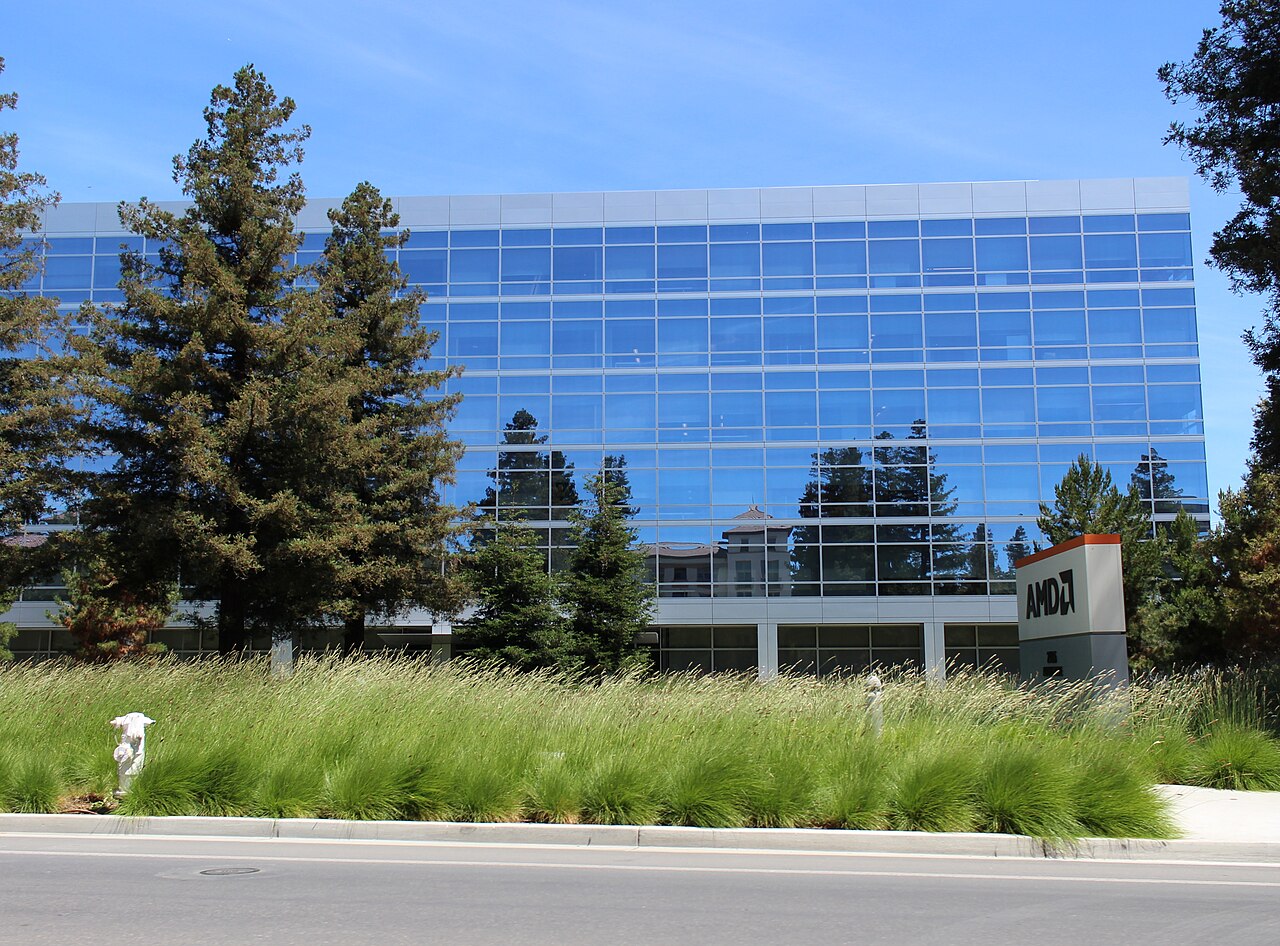
- Hero: "Bellevue, Washington Skyline" by Goldman60, licensed CC BY-SA 3.0, via Wikimedia Commons. Retrieved November 2026 and visually reviewed. It shows downtown Bellevue in 2009 and is city context only, not Marlowe's office.
- In-body: "2485 Augustine Drive headquarters in Santa Clara, California" by Coolcaesar, licensed CC BY-SA 4.0, via Wikimedia Commons. Visually reviewed. It shows a former AMD headquarters building in 2020.