Google made Nano Banana 2.1, its latest image generation and conversational editing model, generally available on October 6, 2026. According to the Gemini API changelog, the model ID is gemini-nano-banana-2.1, and the older gemini-3.1-flash-image model is deprecated and will be shut down on October 29, 2026. Pricing, per Google's pricing page, is roughly half that of the model it replaces. For developers, the change is both an upgrade and a deadline.
 Google
 Gemini
 Google Cloud
What Google released: Nano Banana 2.1 at a glance
The Gemini API changelog describes the release as "the latest high-efficiency image generation and conversational editing model" and an update to Nano Banana 2. Google lists "significant improvements in visual quality, prompt adherence, multi-turn character consistency, text rendering, and wide and panoramic aspect ratio generation."
The Google DeepMind model card says Nano Banana 2.1 is based on Gemini 3.6 Flash, with a knowledge cutoff of March 2026 for most domains. Google's image generation documentation calls it the primary high-efficiency workhorse model for image generation and conversational editing, with reference-image support, Google Search grounding, image search grounding, and controllable thinking levels (minimal, medium and high) to trade quality against latency.
According to press coverage, including The Decoder, the model is rolling out across the Gemini app, Google Search's AI Mode, Google AI Studio, Flow, Stitch and Google Ads, as well as Google's enterprise agent platform. Rollout details vary by surface, so check the product you use.
Nano Banana lineage: how the family got here
The name has stuck to several distinct models, which makes version tracking confusing.
From Nano Banana to Nano Banana 2.1
- Aug 26, 2025Nano BananaImage editing model announced in the Gemini app
- Nov 20, 2025Nano Banana ProGemini 3 Pro Image, 2K and 4K output (as reported)
- Feb 26, 2026Nano Banana 2Gemini 3.1 Flash Image, 512px to 4K
- Oct 6, 2026Nano Banana 2.1gemini-nano-banana-2.1, generally available
- Oct 29, 2026Shutdowngemini-3.1-flash-image stops being served
Sources: Google blog, Gemini API changelog, press reports.
- Nano Banana (August 2025): Google announced the image editing model in the Gemini app on August 26, 2025, emphasizing that people and pets stayed recognizable across edits.
- Nano Banana Pro (November 2025): Reported to be built on Gemini 3 Pro and aimed at higher fidelity, text rendering and 2K and 4K output.
- Nano Banana 2 (February 26, 2026): Google's launch post describes it as Gemini 3.1 Flash Image, combining much of Nano Banana Pro's capability with Flash-class speed, at resolutions from 512px to 4K.
- Nano Banana 2.1 (October 6, 2026): The same Flash-tier idea on a newer base model, Gemini 3.6 Flash.
The pattern is a "Pro" line for maximum fidelity and a "Flash" line for volume. Google's Nano Banana 2 announcement framed the two as complementary, and The Decoder reports Google calls 2.1 the more efficient counterpart to Pro while acknowledging Pro can still produce visibly better images in some cases. The newer release does not remove the Pro option; it changes the cost and quality of the default.
The gemini-3.1-flash-image model is deprecated and will be shut down on October 29, 2026.
Google, Gemini API changelog
Pricing and resolutions: what the numbers show
Google's pricing page lists standard per-image prices of $0.0336 at 1K, $0.0504 at 2K and $0.0756 at 4K for Nano Banana 2.1. Batch prices are half of those: $0.0168, $0.0252 and $0.0378. The 1K figure follows from token pricing: a 1K output image consumes 1,120 tokens, and image output is priced at $30 per million tokens.
The predecessor, gemini-3.1-flash-image, is listed at $0.045 (0.5K), $0.067 (1K), $0.101 (2K) and $0.151 (4K). At each resolution both models share, the new price is about half the old one.
Gemini API price per generated image, by resolution
Standard (non-batch) pricing in US dollars.
Source: Google, Gemini API pricing page, October 2026.
Two details are easy to miss. First, Google's documentation says Nano Banana 2.1 supports 1K, 2K and 4K, but not the 512px tier that Gemini 3.1 Flash Image offered. Teams that used 512px for cheap previews or thumbnails have no direct equivalent in the new model, and the 1K price is the new floor. Second, the page-level prices are for generated output; if your workflow uses many reference images or high thinking levels, input and thinking-token charges also apply (Unite.AI reports $1.50 per million input tokens and $7.50 per million text and thinking output tokens), so measure real cost per finished asset rather than only the headline image price.
Claimed improvements: what is measured and what is not
Google's changelog language (visual quality, prompt adherence, text rendering, character consistency, panoramic ratios) is a set of qualitative claims. Press coverage adds some numbers. The Decoder and Unite.AI report preference scores in which Nano Banana 2.1 with thinking enabled scores 1050 (plus or minus 14) overall. The Decoder compares that to 935 for Nano Banana Pro, while Unite.AI compares it to 990 for Nano Banana 2. Unite.AI also reports infographic design at 1048 versus 961 for the predecessor. We could not confirm the evaluation methodology from Google's pages, so treat these as reported figures from an evaluation Google has not fully documented in the sources we checked.
The model card is also candid about limits: it lists difficulty with small text rendering, imperfect character consistency, occasional spatial confusion and limited 3D reasoning and factuality. "Improved text rendering" therefore means better than the previous model, not solved. Posters, diagrams and UI mockups still deserve human review before publication.
Migration: what developers need to do before October 29
The timeline is short. With general availability on October 6 and shutdown on October 29, developers have 23 days to move. The changelog's guidance amounts to replacing the old model ID with the new one, but a sensible migration involves more than a string swap:
- Find every reference. Search code, configuration, queued jobs and third-party tools for gemini-3.1-flash-image. After October 29, calls to it are expected to fail.
- Check resolution settings. Any request at 512px must move to 1K or higher, which changes cost, file size and sometimes layout.
- Re-test prompts. A newer base model can interpret the same prompt differently. Regression-test the prompts your product depends on, especially text-in-image and character consistency cases.
- Set thinking levels deliberately. The new model exposes minimal, medium and high thinking. Higher levels may improve composition but can add latency and cost.
- Update budgets. If cost per image falls by about half, volume forecasts and per-user limits may need to be revisited.
- Consider batch. Batch pricing at $0.0168 for a 1K image suits non-interactive work like catalog or marketing asset generation.
Third-party summaries disagree on some secondary specifications, such as supported aspect ratios, context window and output token limits, so rely on Google's current model page for those rather than on press recaps.
The competitive picture
The price cut arrives in a crowded image market. OpenAI's ChatGPT image models and open-weight options such as Qwen Image compete on quality, editing and cost, and we have covered recent moves in ChatGPT Images 2.5 and its API models and Qwen Image 2.1. For a broader view, see our best AI image generator comparison. We did not find an independent, like-for-like benchmark of Nano Banana 2.1 against those models in Google's own materials, so direct claims of leadership remain unverified. Provenance is a separate dimension: Google's Nano Banana 2 announcement describes combining SynthID with C2PA Content Credentials, and the 2.1 listings mention content credentials support. For how provenance and misinformation intersect with this model family, see our earlier piece on Google Earth and Nano Banana imagery.
What to watch next
- Whether Google documents the evaluation behind the reported preference scores.
- How the Pro line evolves, and whether a matching update follows.
- Whether competitors respond on price, since halving a per-image rate resets expectations for production image APIs.
- Real-world text rendering results on dense layouts, where the model card still flags weakness.
Teams that use several image models, including through multi-model platforms such as Metir, can compare outputs and costs side by side before settling on a default, which also reduces exposure to a single provider's deprecation schedule.
Sources:
- Gemini API changelog, Google AI for Developers
- Gemini API pricing, Google AI for Developers
- Image generation with Gemini, Google AI for Developers
- Nano Banana 2.1 model card, Google DeepMind
- Nano Banana 2: Google's latest AI image generation model, Google blog
- Nano Banana: image editing in Gemini gets a major upgrade, Google blog
- Google's new image model Nano Banana 2.1 generates better images for less money, The Decoder
- Nano Banana 2.1 Debuts at Half the Image Cost of Its Predecessor, Unite.AI
- Google launches pro version of image generator Nano Banana, Forklog
Image credits
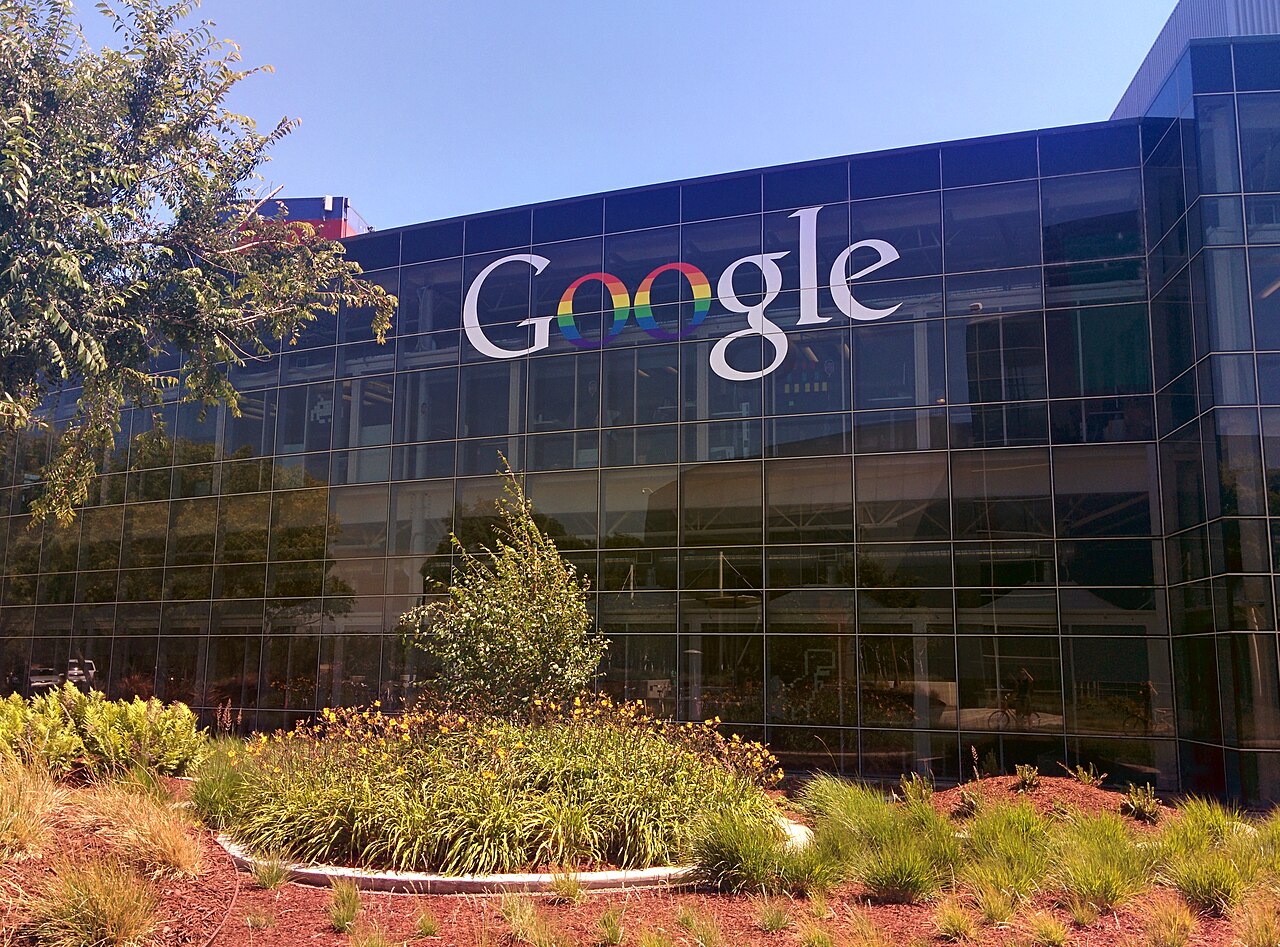
- Header image: Google building with logo at the Googleplex, Mountain View, photographed in 2015 (Pride-colour logo variant). Photo by Grendelkhan, Wikimedia Commons, CC BY-SA 3.0. File photo, not from the model launch.
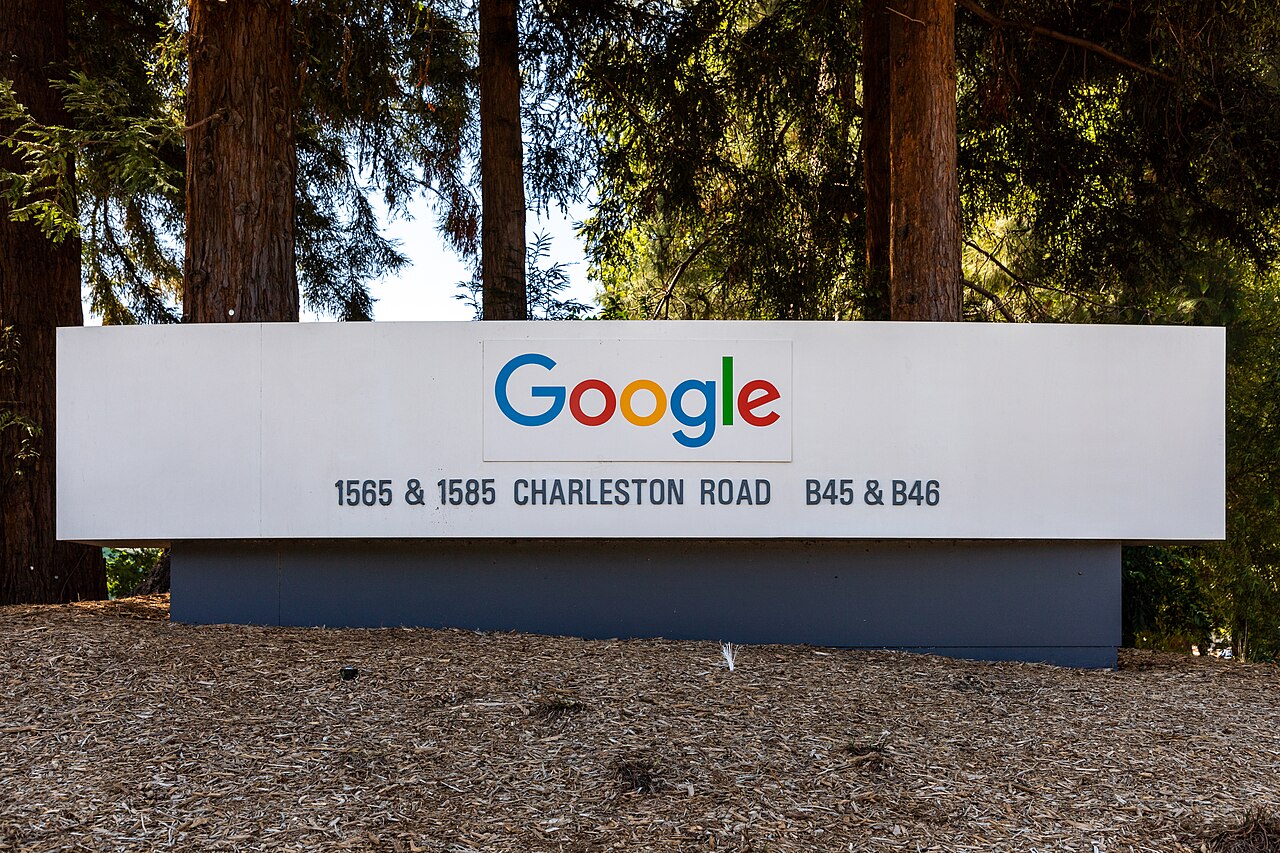
- In-body image: Google campus sign, Charleston Road, Mountain View, 2022. Photo by Dietmar Rabich, Wikimedia Commons, CC BY-SA 4.0.
- Both images were reviewed before use.