The landscape of AI image generation has transformed dramatically in 2026. What started as simple text-to-image experiments has evolved into sophisticated tools that understand context, maintain consistency, and integrate seamlessly into professional workflows. According to a 2024 Gartner report, by 2026, 90% of all digital content will be AI-generated, highlighting the growing impact of these tools on creative industries.
For creators, marketers, designers, and developers, choosing the right AI image generator can mean the difference between mediocre results and stunning visuals that capture your vision perfectly. But with dozens of options available—from proprietary giants like OpenAI's DALL-E and Midjourney to open-weight models like Stable Diffusion and Flux—how do you choose?
This comprehensive guide explores the best AI image generators available in 2026, comparing their strengths, weaknesses, pricing, and ideal use cases. Whether you need photorealistic product renders, artistic illustrations, or precise text rendering in your images, we'll help you find the perfect tool.
The AI Image Generation Revolution: Where We Are in 2026
The AI image generation market has matured significantly. As industry analysts note, "The landscape of AI image generation has transformed dramatically in 2026. What started as simple text-to-image experiments has evolved into sophisticated tools that understand context, maintain consistency, and integrate seamlessly into professional workflows."
The key developments shaping 2026 include:
Photorealism Breakthroughs: By 2026, major breakthroughs in underlying diffusion and transformer models have addressed fundamental technical hurdles. Generative AI has achieved consistency, length, and photorealism suitable for mainstream media, including advertising, big-budget TV shows, and even simple Hollywood scenes.
Text Rendering Mastery: One of the biggest challenges for AI image generators—accurately rendering text within images—has seen dramatic improvements. Although they're getting better, most AI image generators still struggle to generate text correctly—the diffusion process just doesn't lend itself to precisely rendering letters. However, specialized models like Ideogram and newer versions of Midjourney and Recraft have largely solved this problem.
Multimodal Integration: The latest tools — such as Midjourney v7, DALL·E 4, and Google's Gemini Image Suite — now emphasize photorealism, fine-grained control, and cross-modal input, allowing users to blend text, reference photos, and even rough sketches.
Market Growth: Global revenue for generative AI is projected to reach $30–$40 billion in 2026, a substantial increase from an estimated $18–$22 billion in 2025. Approximately 80% of global businesses plan to increase their investment in AI by 2026.
Let's explore the leading platforms transforming creative work in 2026.
Proprietary AI Image Generators: The Commercial Leaders
OpenAI: DALL-E 3 and GPT-4o Image Generation
OpenAI's journey in image generation has evolved significantly. The latest release, DALL-E 3, is currently available as a custom GPT, but is no longer directly integrated into the ChatGPT platform. OpenAI replaced DALL-E with GPT Image 1 (GPT-4o) in March 2025. DALL·E 3 is still available as a GPT for those who prefer it, though it's now considered a legacy model.
Key Strengths:
- Prompt Adherence: GPT-4o is a full multimodal model that was also trained on text, audio, video, and more. It's a much bigger model, so it has a far deeper understanding of the world, making it excel at following complex prompts precisely.
- Conversational Refinement: DALL-E 3, available through ChatGPT Plus and ChatGPT Pro subscriptions, brings AI image generation into conversational workflows. Instead of crafting perfect prompts on the first try, users can describe what they want, get images, and refine through natural dialogue.
- Text Rendering: ChatGPT's image feature follows instructions the best and produces the best text rendering, making it ideal for creating images with readable text, logos, and typography.
Pricing: You can access DALL-E 3 at no cost and generate up to three images daily within the free ChatGPT tier. If you need more outputs, the paid ChatGPT Plus subscription starts at $20 per user, per month.
Best For: Users who need precise prompt adherence, accurate text rendering in images, and prefer a conversational interface for iterative refinement. Ideal for creating marketing materials, social media graphics, and content requiring readable text.
Midjourney: The Artistic Powerhouse
Midjourney has established itself as a leading AI image generator known for producing highly artistic, visually striking images. With the latest Midjourney V7 release, the platform offers sharper realism, better prompt fidelity, and even AI-video capabilities.
Key Strengths:
- Visual Quality: Midjourney produced my favorite results of all of the image generators on this list. Other apps have finally surpassed it in quality, especially when it comes to adhering exactly to your prompts, but Midjourney still produces some of the most visually appealing and interesting results with great textures and colors.
- Artistic Interpretation: Midjourney likes to get creative. It often adds its own artistic spin, even when given a basic prompt. This produces bold, detailed, and often dreamy or cinematic images—perfect when you want something visually stunning or unique.
- Community Learning: Accessible through Discord, it has a community-driven approach where users can see others' generations, learn from prompts, and discover creative techniques.
Pricing: If you miss a free trial window, the Basic Plan starts at $10/month and comes with 3.3 hours of GPU time per month, or around 200 images. Midjourney pricing starts at $10/month for the Basic Plan. You also get the option to buy additional GPU time, and you can use your images commercially.
Best For: Artists, designers, and creatives who prioritize aesthetic quality and artistic interpretation over literal prompt accuracy. Use Midjourney when you want mood and creativity. Ideal for concept art, creative exploration, and projects where visual impact matters more than precise specifications.
Key Comparison: Use Midjourney when you want mood and creativity. Use DALL·E 3 when you want speed and precision.
Google: Imagen 3, Imagen 4, and Gemini Image Generation
Google has made significant strides in image generation with its Imagen and Gemini platforms, offering multiple pathways to create stunning visuals.
Imagen Evolution: Imagen 3 is Google's highest quality text-to-image model, producing brighter, better composed images with more diverse art styles. More recently, Imagen 4 represents a significant leap forward in AI image generation, allowing for more precise visual creations.
Key Strengths:
- Detail and Clarity: The latest Imagen model combines speed with precision to create stunning images. Imagen 4 has remarkable clarity in fine details like intricate fabrics, water droplets, and animal fur, and excels in both photorealistic and abstract styles.
- Speed: Soon Google will be launching a fast variant of Imagen 4 that's up to 10x faster than Imagen 3, enabling rapid iteration.
- Integration: Imagen 4 is available in the Gemini app, Whisk, Vertex AI and across Slides, Vids, Docs and more in Workspace, providing seamless integration into existing Google workflows.
- Multimodal Capabilities: You can prompt either the fast Gemini 3 Flash or the advanced Gemini 3 Pro image models with text, images, or a combination of both, allowing you to create, edit, and iterate on visuals with text-to-image, image-to-image, and multi-image-to-image generation.
Best For: Users embedded in the Google ecosystem who want seamless integration with Workspace tools. Ideal for creating presentation visuals, document illustrations, and collaborative creative projects. The multimodal capabilities make it perfect for iterative design work.
xAI Grok Imagine: The Unrestricted Generator
xAI has updated Grok's capabilities with a new autoregressive image generation model, code-named Aurora, bringing unique capabilities to the market.
Key Strengths:
- Advanced Architecture: Aurora is an autoregressive mixture-of-experts network trained to predict the next token from interleaved text and image data, enabling it to generate high-quality images across several domains where other image generation models often struggle.
- Versatility: Grok can now generate high-quality images across several domains where other image generation models often struggle. It can render precise visual details of real-world entities, text, logos, and can create realistic portraits of humans.
- Video Capabilities: Grok Imagine promises to turn text or image prompts into a 15-second video featuring native audio, with ambient sound effects and background music.
- Fewer Restrictions: The platform has a "spicy mode" that allows more permissive content generation compared to competitors.
Pricing: $16/month for an X Premium+ membership for most access to Grok Imagine.
Best For: Users who need fewer content restrictions and want integrated video generation capabilities. The platform's integration with X (formerly Twitter) makes it convenient for social media creators and those already active on the platform.
Adobe Firefly: The Commercial-Safe Choice
Adobe officially released its latest generation image generation model - Firefly Image 5 on October 29, introducing several groundbreaking features that position it uniquely in the market.
Key Strengths:
- Commercial Safety: Firefly is trained exclusively on Adobe Stock and non-copyright works, meaning outputs can be used in commercial projects with confidence. This makes it the safest choice for businesses concerned about copyright issues.
- High Resolution: Compared to the previous version that only supported 1 million pixel native generation, Firefly Image 5 can directly generate high-quality images up to 4 million pixels (approximately 2240×1792).
- Creative Control: Adobe also released Firefly Image Model 4 & 4 Ultra, described as Adobe's fastest and most controllable image models yet, offering lifelike quality with precision control over structure, style, and camera angles at up to 2K resolution.
- Workflow Integration: Seamless integration with Adobe Creative Cloud applications makes it natural for existing Adobe users.
Pricing: Limited free credits; from $9.99 for Firefly Standard with 2,000 credits/month; Photoshop available from $19.99/month.
Best For: Professional designers, marketers, and businesses requiring commercially safe images with legal peace of mind. For commercial safety, Firefly is the answer. Ideal for corporate content, advertising, and any project where copyright clearance is critical.
Open-Weight Models: Freedom and Customization
Stable Diffusion: The Customizable Foundation
As the flagship 1024×1024 model from Stability AI, Stable Diffusion XL (SDXL) delivers high-resolution versatility for both realistic and stylized creations. Its broad training dataset enables handling diverse prompt styles and subjects smoothly.
Model Evolution:
- SDXL: Stable Diffusion XL launched in July 2023, offering improved resolution and quality
- SD3: Stable Diffusion 3, the latest iteration, was released in February 2024, promising big advancements across the board, especially in typography
- Architecture: SD3 integrates a diffusion transformer backbone and adopts multimodal training, combining both text and image understanding for improved prompt adherence, compositional reasoning, and consistency
Key Strengths:
- Open Source Freedom: Complete control over the model, ability to run locally, and no ongoing subscription costs
- Customization: Can be fine-tuned on specific datasets, making it ideal for specialized use cases
- Community Resources: Massive ecosystem of community-created models, extensions, and tools
- Free Access: You can use Stable Diffusion 3 for free by visiting StableDiffusion3.net, which allows image generation without registration
Pricing: Free to use with your own hardware, or various cloud services offer hosted versions with different pricing models.
Best For: Technical users, developers, and businesses needing complete control and customization. For technical customization, Stable Diffusion is the choice. Ideal for creating custom models for specific industries, products, or artistic styles.
Flux by Black Forest Labs: The New Challenger
On August 1, Black Forest Labs was announced. With a team of 14 members, Black Forest Labs was established by researchers pivotal in developing the technology that powered the original Stable Diffusion models. Their new model, Flux, is making waves in the AI image generation community.
Model Variants: The company has launched the FLUX.1 suite of text-to-image models, which includes:
- FLUX.1 [pro]: A state-of-the-art model for commercial use, only available through API
- FLUX.1 [dev]: An open-weight model for non-commercial applications, distilled from FLUX.1 [pro]
- FLUX.1 [schnell]: A smaller model intended for local development and personal use, available under an Apache 2.0 license
Key Strengths:
- Scale: With a massive parameter count of approximately 12 billion, Flux vastly exceeds the 860 million parameters in SD1.5, 2.5 billion in SDXL, and 8 billion in SD3
- Performance: Black Forest Labs explained that "FLUX.1 [pro] and [dev] outperform popular image generation AI models such as Midjourney v6.0, DALL·E 3 (HD), and SD3-Ultra in visual quality, prompt followability, size/aspect ratio variability, typography, and output diversity"
- Text Rendering: The Flux model is clearly the winner in text rendering
- Hand Generation: Flux generates better hands! — a notorious challenge for AI image generators
Pricing: Pricing depends on the platform, but many offer free credits to try out the Flux models.
Best For: Users wanting cutting-edge quality from an open-weight model, especially those prioritizing text rendering and anatomical accuracy (particularly hands). The various license tiers make it suitable for both personal experimentation and commercial projects.
Ideogram: The Typography Specialist
From its launch, Ideogram AI focused on addressing challenges related to incorporating text into images, creating a competitive advantage by neatly integrating readable text into visually appealing design elements like logos, graphics, animations, and social media posts.
Key Strengths:
- Text Excellence: If your AI image generation project requires accurate text, Ideogram is unmatched. While other tools have improved, Ideogram remains the most consistent performer for typography
- Template Library: One unique feature of Ideogram is its extensive library of templates and pre-configured models, which helps users jumpstart their creative process
- Integration: The platform offers seamless integration with popular design and productivity tools, enhancing workflow efficiency
Pricing: Limited free plan; from $8/month for full-resolution download and 400 monthly priority credits.
Best For: Designers creating logos, social media graphics, marketing materials, and any project requiring perfect text rendering. The template library and affordable pricing make it accessible for small businesses and individual creators.
Leonardo AI: The Creative Ecosystem
Leonardo AI offers a Transparent PNG Generator for creating background-free visual elements, which Ideogram does not provide, along with professional editing tools and expanding capabilities.
Key Strengths:
- Comprehensive Toolset: The platform offers professional editing tools including image-to-image generation, inpainting, and outpainting alongside sophisticated image editing tools. Leonardo AI specializes in producing detailed and high-resolution images
- Video Capabilities: Leonardo AI includes an AI Video Generator that transforms images into animations, a feature not available in Ideogram. Leonardo AI has introduced Motion 2.0 with improved video generation capabilities
- Custom Models: Flux Elements for training custom models allows users to create specialized generators for specific styles or subjects
- Evolving Platform: With 2026 updates on the way, Leonardo AI is transforming from an image generator into a full-scale creative ecosystem. A 2026 update highlight includes integration with Runway ML and Kittl API for seamless video and vector exports
Pricing: Free tier available with usage limits; paid plans offer expanded generation capacity and advanced features.
Best For: Creators who need an all-in-one platform combining image generation, editing, and video animation. Leonardo wins in terms of accuracy, while Ideogram wins in terms of aesthetics. Ideal for content creators producing varied visual content across multiple formats.
Feature-by-Feature Comparison
Image Quality and Photorealism
The quest for photorealism has seen dramatic progress. AI image generators are getting better and better, with photorealism, prompt accuracy and creative control improving all the time. The latest models from Midjourney, OpenAI, and Google have largely achieved photorealism suitable for professional use.
Leaders in Photorealism:
- Midjourney V7: Exceptional for artistic photorealism with cinematic quality
- Imagen 4: Outstanding detail in fine textures like fabrics and fur
- Flux Pro: Strong photorealistic capabilities with accurate anatomy
- Recraft V3: In terms of photorealism and text rendering, this is perhaps one of the best AI image generators in the market
Text Rendering Capabilities
Text rendering has been one of the biggest challenges for AI image generators. However, 2026 has seen breakthrough progress in this area.
Text Rendering Champions:
- Ideogram: Industry-leading text rendering accuracy
- ChatGPT/DALL-E: Excellent text adherence and typography
- Flux: Superior text rendering compared to earlier open models
- Midjourney v6: Features improved text rendering capabilities and heightened realism compared to earlier versions
Speed and Performance
Generation speed varies significantly across platforms and can impact iterative workflows.
Speed Leaders:
- Imagen 4 Fast: Coming soon, promised to be up to 10x faster than Imagen 3
- Flux [schnell]: Optimized for rapid local generation
- DALL-E/GPT-4o: Quick generation with conversational refinement
- Firefly Image 4 & 4 Ultra: Described as Adobe's fastest models yet
Customization and Control
Different tools offer varying levels of control over the generation process.
Customization Champions:
- Stable Diffusion: Maximum control with local deployment and fine-tuning
- Leonardo AI: Extensive editing tools with inpainting and outpainting
- Firefly Image 4 Ultra: Precision control over structure, style, and camera angles
- Flux [dev]: Open-weight flexibility for custom implementations
Ease of Use
User experience varies from simple conversational interfaces to complex parameter-heavy tools.
Most User-Friendly:
- ChatGPT/DALL-E: Conversational interface requiring no technical knowledge
- Gemini: Integrated into familiar Google workspace
- Midjourney Web App: Simplified interface beyond Discord requirement
- Ideogram: Template library for quick starts
More Technical:
- Stable Diffusion: Requires technical setup and parameter understanding
- Flux: Variable depending on chosen platform
- Leonardo AI: Rich feature set with learning curve
Pricing Comparison: Free vs Paid Options
Completely Free Options
Several tools offer generous free tiers:
- DALL-E 3 via Microsoft Copilot: You can use DALL-E 3 without paying by logging into Microsoft Copilot with your Microsoft account
- Meta AI: Totally free to use as of now and can be accessed across popular Meta social media apps
- Stable Diffusion 3: Free by visiting StableDiffusion3.net, allowing image generation without registration
- CreateVision AI: Offers a free tier with no credit card required, allowing users to generate 20 images daily
Budget-Friendly Paid Options ($10/month or less)
- Ideogram: $8/month for full-resolution downloads
- Midjourney Basic: $10/month for ~200 images
- Adobe Firefly Standard: $9.99/month for 2,000 credits
Premium Options ($20/month)
- ChatGPT Plus: $20/month with DALL-E 3 access
- Google AI Pro: $20/month with Nano Banana access
- Nano Banana Pro: Finally cracked the one last issue most image generators had: morphing two images perfectly together
Best Value Analysis
According to pricing analysis, the most cost-effective approach depends on your usage:
- Casual users (1-5 images/day): Free tiers from Microsoft Copilot, Meta AI, or CreateVision AI
- Regular users (10-30 images/day): Ideogram at $8/month or Midjourney Basic at $10/month
- Professional users (100+ images/day): Consider API access or platform-specific professional tiers
Use Case Recommendations: Which Tool for Which Purpose
For Marketing and Social Media
Best Choice: Ideogram or Adobe Firefly
Marketing materials often require text overlays, logos, and brand compliance. Ideogram's text rendering excellence makes it perfect for social media graphics, while Firefly's commercial safety ensures legal peace of mind for corporate content.
Alternative: ChatGPT/DALL-E for rapid iteration with text descriptions
For Artistic and Creative Exploration
Best Choice: Midjourney
For artistic exploration, Midjourney is the way to go. Its artistic interpretation and stunning visual quality make it the top choice for concept art, creative projects, and work prioritizing aesthetic impact over literal accuracy.
Alternative: Stable Diffusion for complete creative control and custom fine-tuning
For Product Visualization and E-commerce
Best Choice: Imagen 4 or Leonardo AI
Product photography requires exceptional detail and photorealism. Imagen 4's remarkable clarity in fine details like fabrics and textures makes it excellent for product visualization, while Leonardo AI's editing capabilities enable precise refinement.
Alternative: Flux Pro for high-quality commercial renders
For Technical Documentation and Diagrams
Best Choice: ChatGPT/DALL-E or Ideogram
Technical documentation often requires diagrams with text labels. ChatGPT's conversational refinement combined with strong text rendering makes it ideal, while Ideogram's typography excellence works well for labeled diagrams and infographics.
For Web Design and UI Mockups
Best Choice: Leonardo AI or Firefly
Web design benefits from transparent backgrounds and precise control. Leonardo AI's Transparent PNG Generator is perfect for creating UI elements, while Firefly's integration with Adobe tools streamlines the design workflow.
For Animation and Video Content
Best Choice: Leonardo AI or Grok Imagine
Leonardo AI's Motion 2.0 offers improved video generation from images, while Grok Imagine can turn prompts into 15-second videos with native audio.
Alternative: Google's Veo 2 or Veo 3 for advanced video generation needs
For Custom Industry Applications
Best Choice: Stable Diffusion or Flux [dev]
Industries with specific visual requirements (medical imaging, architecture, fashion) benefit from fine-tuning capabilities. Both Stable Diffusion and Flux offer the flexibility to train custom models on industry-specific datasets.
Access Multiple Image Generators Through Metir AI
While each AI image generator has unique strengths, managing multiple subscriptions and platforms can be cumbersome and expensive. This is where unified platforms like Metir AI provide compelling value.
Metir AI is designed as a comprehensive multi-model platform, giving users access to leading AI capabilities across text, image, and beyond through a single, unified interface. While our primary focus has been on text-based AI models like Claude, GPT-5.4, Gemini, and Perplexity, we're expanding our image generation capabilities to include access to multiple image generation APIs.
What Metir AI Offers for Image Generation:
- Multi-Model Access: Connect to various image generation APIs through one platform, eliminating the need for multiple subscriptions
- Gemini Integration: Full access to Gemini's advanced image generation capabilities, including the powerful Imagen models
- GPT-5.4 Integration: Access OpenAI's latest multimodal capabilities for image generation
- Unified Interface: Consistent experience across text and image AI, with conversation history and cross-device sync
- Mobile Support: Native iOS and Android apps bring AI image generation to your mobile devices
- Privacy-First: Your creative work and prompts remain secure with our privacy-focused architecture
As AI image generation continues to evolve, having a platform that adapts and adds new capabilities ensures you're always working with the latest and best tools. Learn more at metirai.com.
Future Trends in AI Image Generation
The AI image generation landscape continues to evolve rapidly. Here are the key trends shaping the future:
Semantic Editing and Real-Time Control
As we head into 2026, AI will advance computational photography with real-time "semantic editing" — for example, allowing natural language commands like "make the background more blurry" or "change the subject's shirt to blue." This moves beyond generation to intelligent, context-aware editing.
Integration Beyond Standalone Tools
The trend is towards integration—combining image generation with video creation, animation and full production workflows. Instead of generating isolated images, the next generation of AI image generators will flow from concept to final product, as we're already seeing with Leonardo AI's ecosystem approach.
Multimodal AI Convergence
By 2026, multimodal AI models that seamlessly understand and generate content across text, image, audio, and video will be the norm. This convergence means tools won't just generate images—they'll understand context across all media types.
Specialization Over Generalization
The market is moving toward specialized models optimized for specific use cases rather than one-size-fits-all solutions. We're seeing this with Ideogram's typography focus, Firefly's commercial safety emphasis, and Flux's anatomical accuracy improvements.
Consistency Across Generations
One ongoing challenge being actively addressed is maintaining consistent characters, styles, and elements across multiple generations. Advances in this area will unlock new use cases in storytelling, brand consistency, and serialized content creation.
Conclusion: Choosing Your Perfect AI Image Generator
The AI image generation landscape of 2026 offers unprecedented choice and capability. The key isn't finding the single "best" tool—it's understanding which tool excels at your specific needs:
- For artistic vision and creative exploration: Midjourney remains unmatched
- For precise prompt adherence and text rendering: ChatGPT/DALL-E leads the pack
- For commercial safety and legal peace of mind: Adobe Firefly is essential
- For typography and text-heavy designs: Ideogram dominates
- For technical control and customization: Stable Diffusion and Flux provide maximum flexibility
- For professional detail and ecosystem integration: Imagen 4 and Leonardo AI offer comprehensive solutions
For many users, the optimal approach isn't choosing one tool but having access to multiple options. Platforms like Metir AI that provide unified access to multiple AI models—including image generation capabilities through Gemini and other integrations—offer the flexibility to use the right tool for each specific task without managing multiple subscriptions.
As one industry analysis concluded, "Success in 2026 means matching your tasks to the right models rather than committing to a single platform." The AI image generation revolution isn't about finding one perfect tool—it's about having the right tool for every creative challenge.
Ready to explore AI image generation with access to multiple leading models? Visit Metir AI to experience unified multi-model AI access across text and image generation.
Stay informed about the evolving AI landscape. Follow the Metir AI blog for insights, comparisons, and guides to help you make the most of AI in your creative workflows.
Sources
- The 8 Best AI Image Generators in 2026 | Zapier
- Midjourney vs. DALL-E: Which is Better? | Zapier
- I Tested Midjourney vs. DALL·E | G2 Learn
- SDXL vs Flux1.dev Models Comparison | Stable Diffusion Art
- What is Flux? Understanding Black Forest Labs' New Text-to-Image Model | Shakker AI
- Introducing Veo and Imagen 3 on Vertex AI | Google Cloud Blog
- State-of-the-art Video and Image Generation with Veo 2 and Imagen 3 | Google Blog
- Fuel Your Creativity with New Generative Media Models and Tools | Google Blog
- Grok Image Generation Release | xAI
- Grok Imagine from xAI Offers Video Generation | ETCentric
- Adobe Firefly Image 5 Major Upgrade | AIbase
- Best Stable Diffusion Models for 2026 | Cubix
- Black Forest Labs Image AI Flux | Gigazine
- Ideogram AI vs Leonardo AI 2026 | GroupBuySEOTools
- Leonardo AI Launches New Model | Decrypt
- AI in Photography & Graphics: 2025-2026 Trends | History of Icons
- 10 Best AI Image Generators 2026 Comparison | Felo Search
- The 6 Best AI Image Generators (2026) | LTX Studio
- How Regular People Can Use AI to Generate Images in 2026 | CreateVision AI
Image credits
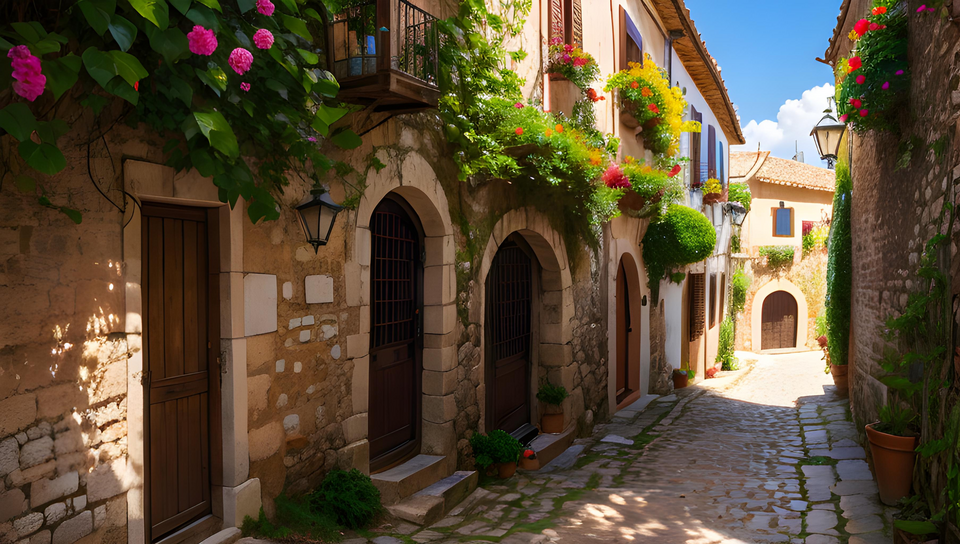
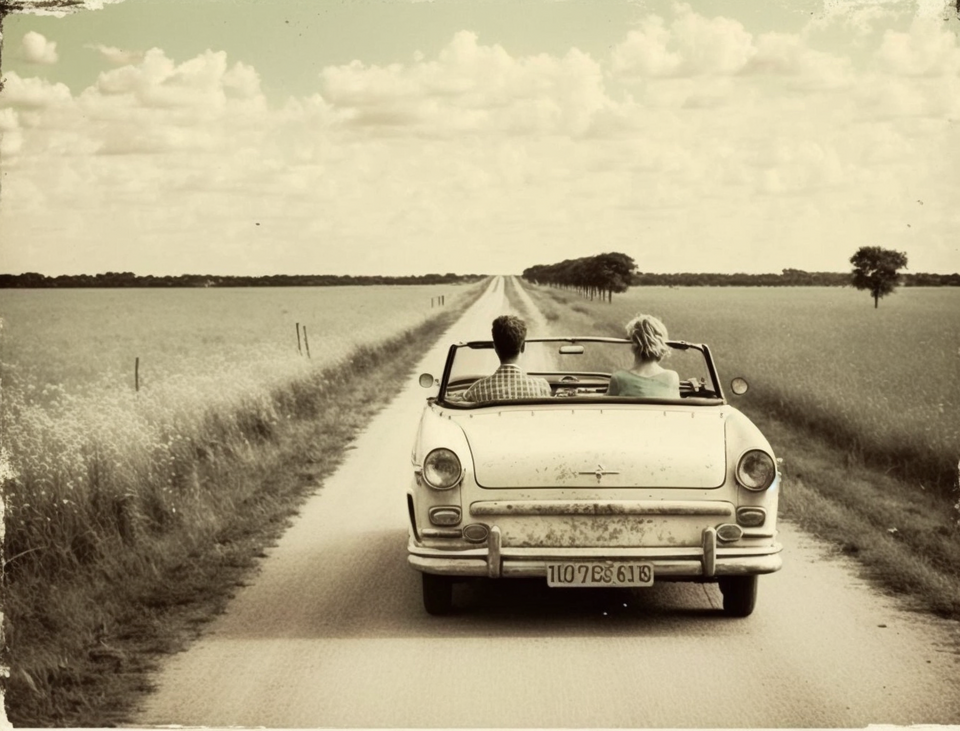
Header image: an image generated with Stable Diffusion by Tullius Detritus via Wikimedia Commons, released into the public domain. In-body image generated with Midjourney by Chikorita via Wikimedia Commons, licensed under CC BY-SA 4.0.