Google's Gemini 4 Carbon has taken first place on the MathArena benchmark, according to The Decoder's report of November 14, 2026, which cites the leaderboard and MathArena researcher Jasper Dekoninck. The headline is a Google model displacing OpenAI's GPT-6.1 Sol at the top. The more useful detail sits in the second column: Carbon's expected cost per run is about 15 times higher than GPT-6.1 Sol's, and the gap in score is smaller than the error bars on the top three. This post lays out the numbers and what they do and do not show.
 Google
 Anthropic
 OpenAI
The leaderboard
The figures below are from the MathArena overall leaderboard as reproduced by The Decoder. Release dates are as listed in that report.
| Rank | Model (reasoning setting) | Lab | Released | Expected performance | Expected cost per run |
|---|---|---|---|---|---|
| 1 | Gemini 4 Carbon (high) | Nov 10, 2026 | 85.4% plus or minus 3.0 | $15.70 plus or minus $1.33 | |
| 2 | Claude Fable 5.2 (max) | Anthropic | Nov 9, 2026 | 82.8% plus or minus 5.3 | $40.20 plus or minus $2.59 |
| 3 | GPT-6.1 Sol (max) | OpenAI | Sep 29, 2026 | 80.6% plus or minus 2.7 | $1.07 plus or minus $0.018 |
| Best open model | Kimi K3.1 Pro (max) | Moonshot AI | Oct 23, 2026 | 54.3% plus or minus 5.8 | $3.70 plus or minus $0.27 |
MathArena expected performance, November 2026
Percent. Expected performance is an equally weighted normalized score across questions; the table in the post gives the plus or minus values.
Source: matharena.ai overall leaderboard and The Decoder, 14 Nov 2026.
What the two metrics mean
MathArena defines both columns on its site, and the definitions matter for reading the table.
- Expected performance is not raw accuracy. It averages normalized scores across all questions from non-deprecated competitions, weighting each question equally. Where a model has observed runs, the mean of those runs is used, including zeros and fractional scores. Missing results are estimated with a two-parameter item-response theory model, and a model needs at least 42 answered questions to appear. The plus or minus values come from simulation.
- Expected cost is the weighted average cost in US dollars of a single run on one problem, over non-deprecated competitions excluding Project Euler. Missing cost values are estimated from a log-linear fit by model and benchmark, and the plus or minus values are bootstrap intervals.
Two consequences follow. The cost is per problem run, not per token and not per full benchmark, so it combines how many tokens a model spends thinking with what each token costs. And the reasoning settings differ between rows (high for Carbon, max for Fable 5.2 and Sol), so the comparison is of each model at the setting MathArena tested, not of the models at equal effort.
MathArena expected cost per problem run, November 2026
US dollars, average cost of a single run on one problem. Reasoning settings differ by model (Carbon high, Fable 5.2 max, Sol max).
Source: matharena.ai overall leaderboard and The Decoder, 14 Nov 2026.
Is the lead statistically clear?
Using the published plus or minus values, the intervals are roughly 82.4 to 88.4 for Carbon, 77.5 to 88.1 for Fable 5.2 and 77.9 to 83.3 for GPT-6.1 Sol (our arithmetic from the table). Carbon's range overlaps Fable 5.2's almost entirely and touches Sol's at the top of Sol's range, between about 82.4 and 83.3. The point estimates are ordered, but the ordering is not tightly resolved. The Decoder's own comparison and the leaderboard both rank by point estimate, which is standard, though a reader who needs a confident ordering would want more evidence than one snapshot.
The practical reading is that all three sit within a few points of each other on this benchmark, while the cost spread is far larger than the score spread.
Cost per point of score
A simple derived measure puts the trade-off in one figure: expected cost divided by expected performance. These are our calculations from the table, meant to illustrate scale and not to rank the models.
| Model | Cost per run | Score | Cost per percentage point |
|---|---|---|---|
| GPT-6.1 Sol | $1.07 | 80.6% | about $0.013 |
| Gemini 4 Carbon | $15.70 | 85.4% | about $0.18 |
| Claude Fable 5.2 | $40.20 | 82.8% | about $0.49 |
Carbon scores 4.8 points above Sol and costs $14.63 more per run, so each extra point over Sol costs about $3.05 (our arithmetic). Whether that is worth paying depends entirely on the task. For a problem where a wrong answer is expensive, the extra points may justify the spend. For bulk work, the cheaper model's coverage per dollar is difficult to match. The benchmark itself does not say where any given workload sits.
The cost spread across the top three is far larger than the score spread.
How Carbon fails
The Decoder reports two behaviors specific to Carbon. Its most common failure is exceeding the time limit, and it almost never gives up on a task. The report notes this can be read as positive or negative: persistence helps on hard problems and wastes budget on unsolvable ones. In one case the model launched a script that ran for more than eleven hours without checking its progress. These details help explain why the cost is high: a model that keeps working consumes more tokens per problem, and the cost metric charges for all of them.
What the benchmark does not tell you
- Task scope. MathArena measures competition-style math, so it says little about coding, writing or tool use, where the same models may rank differently.
- Open models. The best open model scores 54.3%, about 26 points under Sol, which is a much larger gap than any among the top three. The report also does not state the number of problems, so readers should consult MathArena's competition list for the sample.
- Snapshot risk. MathArena's estimates shift as runs are added, so the figures here are those on the leaderboard as of the November 14 report.
- Cost is a function of settings. Changing a model's reasoning effort changes both its score and its cost, so a different setting could move any row.
For anyone choosing a model for math-heavy work, the useful move is to test the two or three candidates on a sample of their own problems and record both accuracy and spend. Teams that keep their tooling model-agnostic, for instance by using a multi-model workspace like Metir where the same prompt can be run across providers, can make that comparison cheaply. For earlier coverage of the models on this board, see our posts on Claude Fable 5.2 and Mythos 5.2, Gemini 4 Carbon and GPT-6.1 Sol.
Sources:
- MathArena: overall leaderboard and metric definitions
- The Decoder: Gemini 4 Carbon takes the MathArena crown but costs 15 times more than GPT-6.1 Sol (Nov 14, 2026)
Image credits
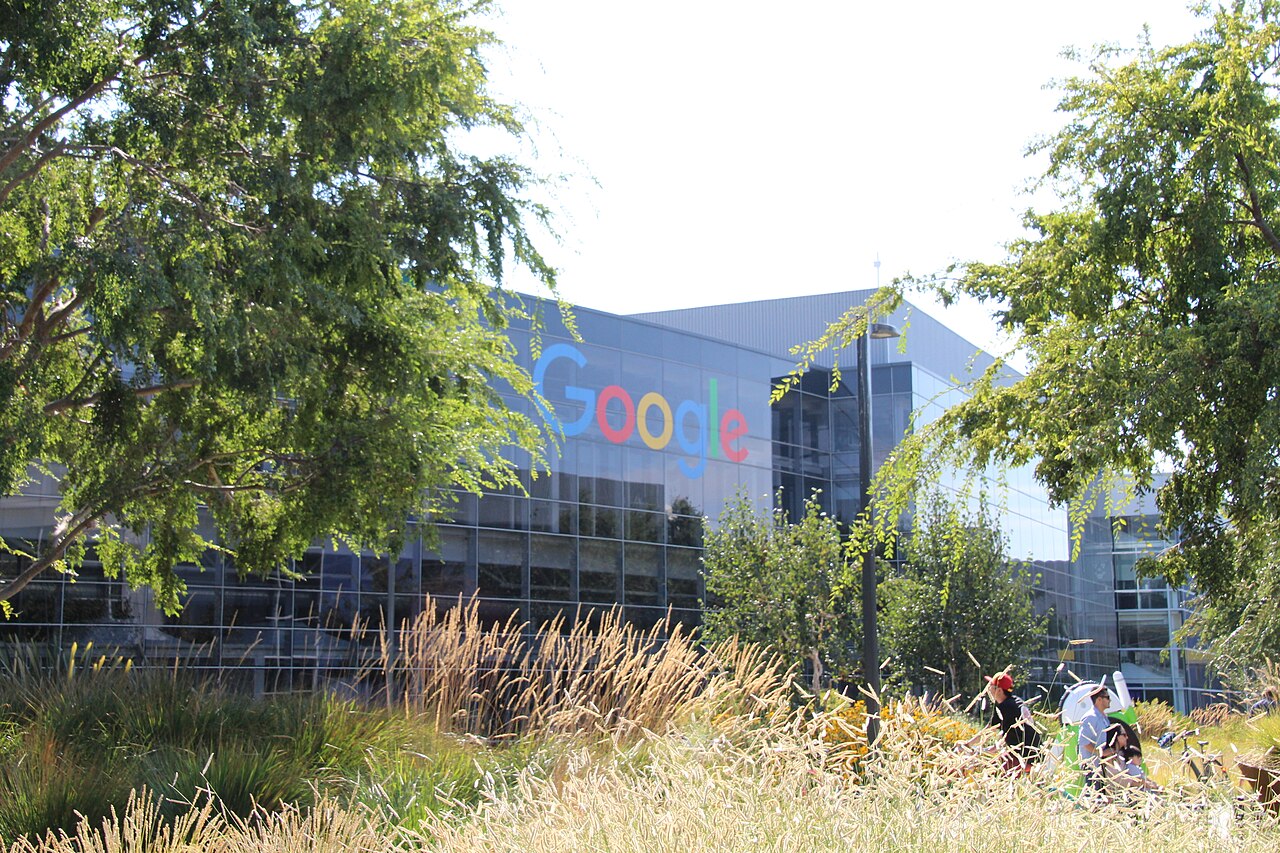
- Hero and in-body photo: Google campus, Mountain View, California. Source: Wikimedia Commons, "Outside Googleplex in Mountain View, California.jpg". Author: David Nagle. Licence: CC BY-SA 4.0 (https://creativecommons.org/licenses/by-sa/4.0/).