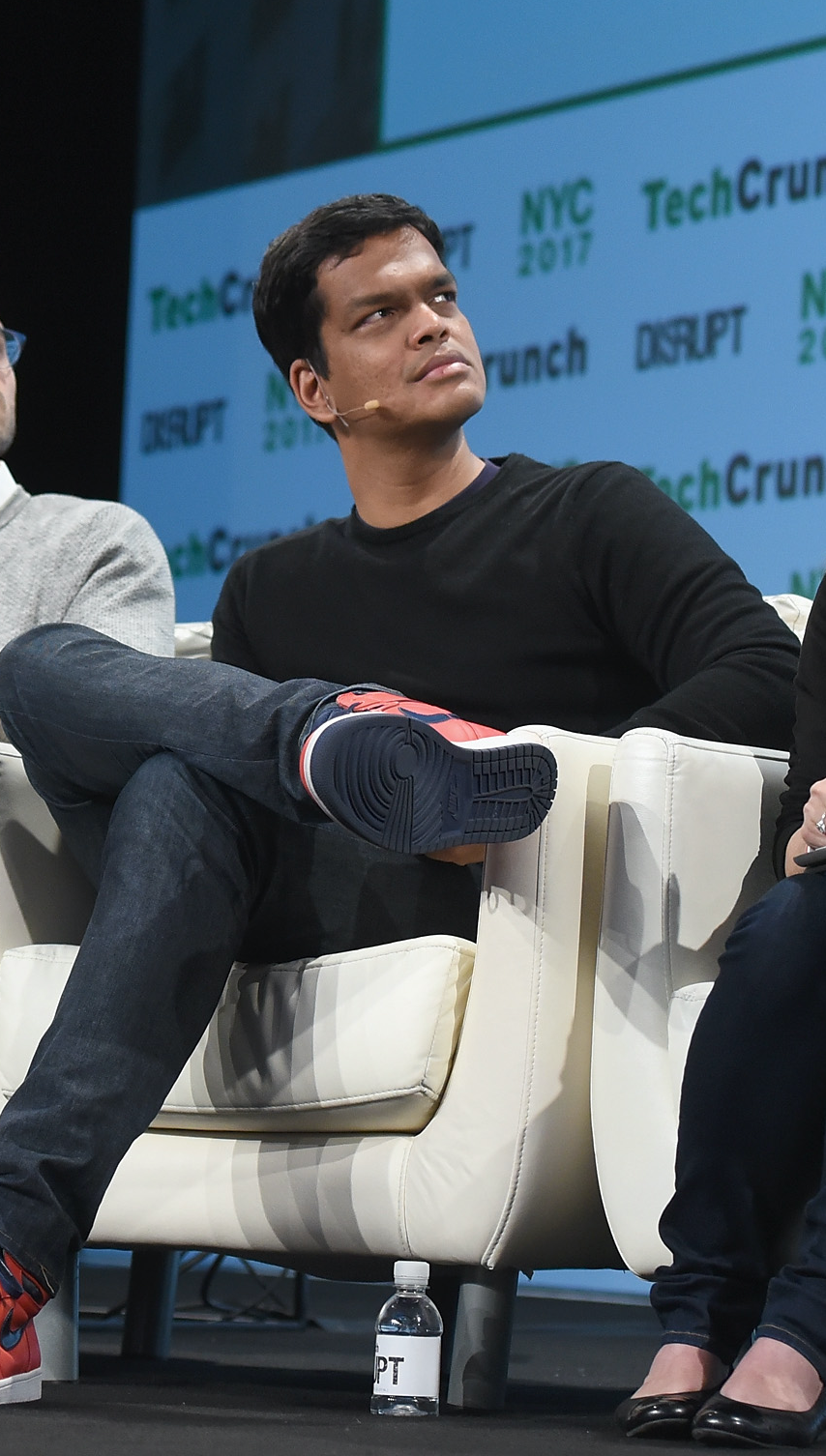
On September 24, 2026, The Information reported that Google, OpenAI and Anthropic are quietly building a joint venture to write safety standards for the world's most capable AI models. The working names are the Frontier AI Standards Agency and the Standards Authority for Frontier AI, or SAFA. The three companies are reportedly courting Sriram Krishnan, who left his post as the White House's senior AI policy adviser three months earlier, to be its first chief executive. The detail that makes the story land is not the acronym. It is the structure: a standards body for the most consequential technology of the decade, designed from the outset to need no government seat at the table.
This piece lays out what is known about SAFA, why Krishnan is the person the labs are courting, and the argument, on both sides, of whether an industry that funds its own referee can also be credibly policed by it. The tone throughout is neutral. Reasonable people read the same facts and reach opposite conclusions about whether this is prudent industry stewardship or a way to keep oversight in friendly hands.
 Google
 OpenAI
 Anthropic
What SAFA is supposed to do
Stripped of the branding, SAFA is a proposed third-party body that would develop common standards for assessing frontier AI models and run benchmark testing against them, similar in spirit to the pre-release safety review Google DeepMind chair Demis Hassabis first floated in July. Reporting describes a mandate including assessment protocols, third-party safety testing before deployment, incident-reporting rules, and coordination with federal agencies and US national laboratories on national-security questions.
The structural choice that defines the plan is that SAFA would not require Congressional or presidential approval to exist or operate, because it is organized as a self-regulatory body rather than a statutory one. It might still need to register with a federal agency at some point for formal legal standing, but that is administrative housekeeping, not an act of Congress. As of this writing, none of the three companies has published a charter, named a CEO, or confirmed a funding structure. What exists is reporting, corroborated across multiple outlets, that the conversation has moved from whether a body like this should exist to who will run it.
The man they want to run it
The leading CEO candidate is Sriram Krishnan, who served as the senior White House policy adviser on artificial intelligence in the second Trump administration from January 2025 to June 2026, an eighteen-month tenure. He left that post after publicly rejecting a licensing regime for AI, reportedly saying there "will not be an FDA for AI," a line arguing mandatory legal reviews before model deployment would slow innovation more than they would improve safety.
That makes his recruitment notable on its own terms. The industry is asking the person who most publicly fought a government licensing model to build and run its substitute for one. Whether that reads as continuity of principle, a lighter-touch system that is now industry-run rather than government-run, or as an irony, the anti-regulation advocate becoming the new regulator, depends on the reader's priors, and both readings are coherent.
Krishnan is reportedly not the only name in play. Arati Prabhakar, who led the White House Office of Science and Technology Policy under the Biden administration, is also in the CEO candidate pool, an unusual bit of cross-administration overlap. For a chairman role, reporting names former Secretary of State Condoleezza Rice and venture investor David Friedberg. Beth Barnes, founder and CEO of the AI evaluation nonprofit Metr, and Paul Christiano, an adviser to the Center for AI Standards and Innovation, have reportedly been approached as scientific consultants. None of these roles are confirmed or final.
Sam Altman reportedly told OpenAI staff the effort would proceed without the support of the U.S. government.
Reported by The Information, via TechCrunch, September 2026
Why now: a slowdown essay and weeks of quiet talks
SAFA did not surface in isolation. On September 12, 2026, Anthropic CEO Dario Amodei published an essay, "We Must Pace the Frontier," arguing the industry should deliberately slow capability gains by a year or two so safety research can catch up, and proposing a three-step plan: embed independent evaluators with employee-level access inside labs, coordinate on shared safety standards across the democratic AI industry, and eventually extend that coordination to include authoritarian governments on testing and capability limits. Within hours, OpenAI CEO Sam Altman posted that he agreed, and Anthropic began unilaterally giving third-party evaluators permanent, employee-level access to its own systems.
Three days later, on September 15, OpenAI's global policy chief Chris Lehane confirmed to reporters that the three labs "have been in talks for several weeks" on safety coordination, saying "it's better to try to work together to prioritize safety," and arguing no antitrust waiver is needed. That is a real question rather than a throwaway line: three direct competitors coordinating on standards that could affect market access is exactly what antitrust law exists to scrutinize, and some observers flagged it as a live concern even as Lehane dismissed it. He also noted OpenAI's support for a provision in the proposed FRONTIER Act requiring frontier labs to admit independent verification organizations to monitor safety compliance, a rare point of contact between this self-regulatory push and pending federal legislation.
Nine days later, the SAFA reporting arrived. The throughline across the summer and fall of 2026 is one question recurring in different forms: should frontier AI be checked by an outside party, and if so, is that party built inside government or beside it. Hassabis answered that question first, in July, with a FINRA-style proposal we covered in A FINRA for Frontier AI. SAFA looks like that proposal's first concrete step toward a real organization, broader in scope and now spanning all three leading US labs rather than one CEO's pitch.
Four ways to govern frontier AI, compared
The Hassabis proposal is the first row: an independent, industry-funded standards body. Each approach trades speed, expertise and independence differently.
Comparison compiled for context; each model has serious advocates and serious critics.
The absence that defines the plan
The United States has no federal statute governing frontier AI models, and nothing before Congress is close to becoming one. SAFA is designed for that vacuum rather than despite it: a voluntary, industry-funded body needs no statute to operate, only the participating companies' agreement. That sits alongside, not in place of, the White House's own voluntary pre-release review framework from earlier in 2026, covered in The 30-Day Gate. Between the two, the US now has two voluntary layers of frontier AI oversight, government and industry, and zero binding ones.
That is a sharper contrast against the European Union, where the AI Act imposes binding obligations, including mandatory codes of practice, on providers of general-purpose AI models, backed by penalties for noncompliance. A frontier lab operating in both jurisdictions would answer to a legally enforceable regime in Europe and a voluntary, self-authored one at home. Whether that gap reflects a sensible division of labor or a real difference in how seriously each region treats the same risk is a matter of judgment the facts alone do not settle.
Funding, enforcement and independence, compared
The core structural difference between an industry-run standards body and a government regulator is not a matter of good faith on either side. It is a matter of who pays, who can be overruled, and who has to answer to whom.
| SAFA (self-regulatory) | A government regulator | |
|---|---|---|
| Funding | Paid for by the labs it oversees | Public budget, appropriated and audited separately |
| Enforcement power | None of its own; a lab can decline to participate or withdraw | Can carry legal penalties, injunctions or fines |
| Membership and leadership | Selected largely from, and by, the founding labs and those they recruit | Appointed through a public, accountable process |
| Independence | Formally separate, but funded and staffed close to the industry it reviews | Statutorily independent of the firms it regulates |
| Legal basis | None yet identified; may eventually register with a federal agency | Backed by an enabling statute |
It is worth being precise about one thing the FINRA comparison elides. FINRA operates under the Securities Exchange Act of 1934, which delegates it real regulatory authority over broker-dealers as a condition of doing business in US securities markets. SAFA, as currently described, has no equivalent enabling statute. It is closer to a voluntary industry association that member firms could, in principle, simply leave. That does not make SAFA a bad idea; it does mean the FINRA label promises more institutional teeth than the current design has actually secured.
The capture objection, already being made
The predictable criticism arrived almost as fast as the reporting did. Cohere CEO Aidan Gomez, whose company competes with all three SAFA founders, called the proposal "a cartel by any other name," warning it would entrench the incumbents that fund it while raising compliance barriers smaller labs and open-source developers cannot as easily absorb. That is the standard capture argument: when an industry funds and staffs the body meant to check it, the body has a standing incentive to define "safe" in terms its funders can already meet.
The counterargument is not naive. The people who understand frontier-model failure modes best mostly work at or near the labs building them, and a body that can draw on that expertise may produce better tests than a regulator building the same knowledge from nothing. A self-funded body also sidesteps the chronic underfunding that hobbles many public regulators. Whether that trade is worth the independence it costs turns on details that do not exist yet: who sits on the board, whether a member firm can veto an unfavorable finding, and whether a lab that fails a review faces any real consequence for shipping anyway.
What it means for teams building on these models
Nothing about SAFA changes what a model can do today, and nothing about it is finalized. What it signals is that a model's reputation for safety is likely to become a more contested, market-visible credential over the next year, shaped by a body whose independence from its own funders is exactly the point still being negotiated. For teams building on frontier models, that argues for treating any single provider's standing as something that can shift with the politics of a still-unformed institution, not as a fixed fact. A model-agnostic workspace such as Metir AI keeps that flexibility intact, letting a team route around a shift in one provider's standing rather than being tied to the outcome of a process that is still being written.
The open questions
Whether SAFA gets a charter and a confirmed CEO before the end of 2026 or slips into 2027, and whether Krishnan, Prabhakar or someone else entirely ends up running it, are not yet settled. Neither is whether the body ever registers with a federal agency, or stays a purely private arrangement among three companies. What is already clear is that the industry has decided the FINRA analogy is worth pursuing in practice, not just in speeches, and that it would rather build the check on itself than wait for one to be built for it. Whether that produces a credible referee or a well-funded club remains, honestly, an open question, and the answer will be decided by governance details that have not been published yet, not by the announcement itself.
Sources:
- Google, OpenAI, Anthropic Plan Frontier AI Standards Body | BankInfoSecurity
- Google, OpenAI, Anthropic Court Sriram Krishnan for AI Safety Body | AI Weekly
- OpenAI, Anthropic, Google Have Been in Talks on AI Safety for Weeks | TechCrunch
- OpenAI, Google, Anthropic Discussing Collaboration on AI Safety Issues | CNBC
- The Companies Racing to Build Frontier AI Are Now Racing to Govern It | Computerworld
- Dario Amodei, "We Must Pace the Frontier"
- Anthropic, OpenAI CEOs Call for Slowdown in AI Development | Axios
- DeepMind CEO Calls for an Independent Standards Body to Regulate Frontier AI | TechCrunch
Image credits
Header image: Sriram Krishnan photographed on stage at TechCrunch Disrupt NY, 2017, by TechCrunch, via Wikimedia Commons, licensed under CC BY 4.0. The photo predates his White House and SAFA-related roles and is used solely to depict the individual. In-body photograph of Google's Charleston Road campus sign at the Googleplex, Mountain View, California, 2022, by Dietmar Rabich, via Wikimedia Commons, licensed under CC BY-SA 4.0.