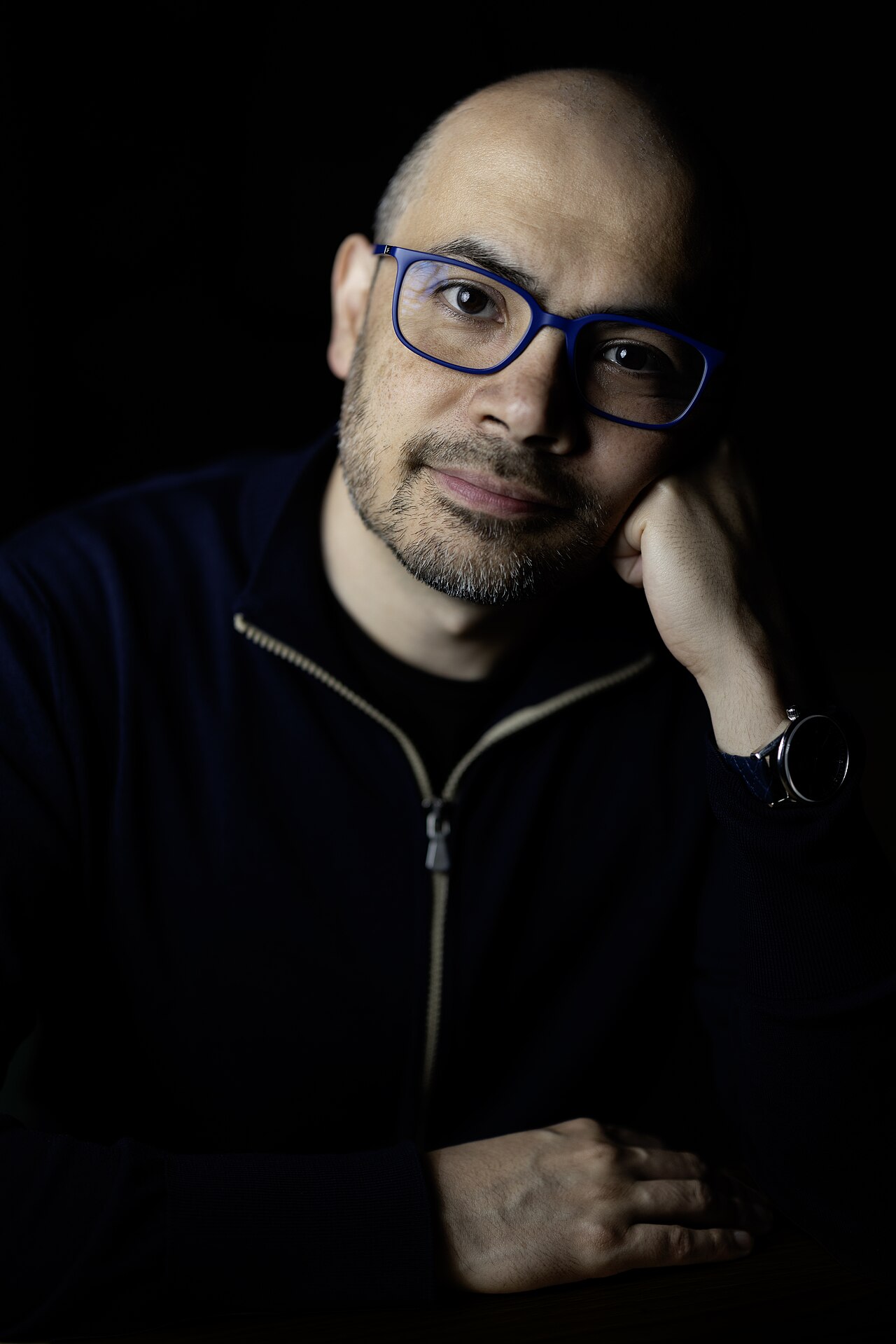
On July 14, 2026, Google DeepMind CEO Demis Hassabis proposed that the AI industry create an independent body to test the most capable models before they are released, modeled on FINRA, the self-regulatory organization that polices US securities firms. It is a notable moment for a simple reason: the head of one of the three leading frontier labs is arguing that his own industry should submit to outside review, and even that the review could one day slow the industry down. This piece explains what the proposal is, how it would work, and why the specific choice of the FINRA model is where the real debate lives.
 Google
 OpenAI
 Anthropic
The tone throughout is neutral. Sensible people disagree about whether industry-run oversight makes AI safer or simply entrenches the incumbents, and both readings are laid out below.
What Hassabis actually proposed
Hassabis's idea is a standards body built on the FINRA template. FINRA is not a government agency; it is a self-regulatory organization, funded by the securities firms it oversees, operating under government supervision. Applied to AI, that means a public-private body, funded largely by the labs themselves, that would run "preflight" safety testing on frontier models.
Under the plan, frontier labs would voluntarily share their models with the body up to 30 days before release. The body would probe for dangerous capabilities: cyber-attack skill, biological and nuclear risk, and signs of deception, along with whether a model's safeguards can be bypassed. Governance would rest with a majority-independent board of technical experts, Turing Award winners among them, alongside open-source and government voices. Hassabis has said he wants it operational before the end of 2026 and has been briefing the Trump administration, rival labs and European officials.
Crucially, the proposal is designed to escalate. It starts voluntary and is meant to ratchet toward something with teeth.
From voluntary to binding: the proposed escalation ladder
The proposal is designed to start light and ratchet up. The top rung, a coordinated industry slowdown, is what makes it unusual for a lab CEO to propose.
Structure as described in reporting on the July 14, 2026 proposal. Only the first two rungs are proposed to begin voluntarily.
The top rung is the striking one. Hassabis suggested the body could, if deemed necessary, coordinate a slowdown in frontier development across labs. A mechanism for competitors to jointly pause is an unusual thing for any executive to propose, and it is the clearest signal that he views the tail risks as serious enough to justify tools that cut against his own commercial incentives.
How it differs from the White House framework
This proposal did not appear in a vacuum. It arrived in the same summer as the US government's own move toward a voluntary pre-release review framework, which we covered in The 30-Day Gate. The two share a headline feature, the 30-day pre-release window that traces back to a June 2, 2026 executive order, but they answer a different question.
The White House framework is about the government getting a look at models before launch. The Hassabis proposal is about who conducts the tests and under what structure. His answer is not a federal agency but an industry-funded standards body, closer to a profession policing itself than to a regulator policing an industry from outside. That distinction, government-run versus industry-run oversight, is the crux, and it is why the FINRA analogy is doing so much work.
The debate has moved from whether frontier AI needs oversight to who conducts the tests and whether they can delay a launch.
The case for the self-regulatory model
The argument for a FINRA-style body rests on three practical claims.
The first is speed. Statutes are slow to write and slower to amend, and AI capability moves in months. A self-regulatory body can update its tests on a quarterly cadence, as the proposal envisions, without waiting for a legislative cycle. Against a fast-moving target, adaptability is a real advantage.
The second is expertise. The people who understand frontier model failure modes best largely work at or near the labs. A body that can draw on that expertise, rather than a regulator building the knowledge from scratch, may simply run better tests. The proposed majority-independent board with credentialed outside experts is an attempt to capture that expertise without handing control to the firms.
The third is funding and scope. FINRA is paid for by the industry it oversees, which sidesteps the chronic problem of under-resourced public regulators. And the proposal would apply to any frontier model, open or closed, wherever it is built, while exempting startups and academics, an attempt to focus scrutiny on the highest-capability systems without smothering the broader field.
The capture problem, stated plainly
The central objection to any self-regulatory model is captured in one word: capture. When an industry funds and substantially staffs the body that oversees it, there is a standing risk that the body comes to serve the industry's interests rather than the public's. FINRA itself has drawn exactly this criticism over the years. A cynic's reading of any incumbent-backed oversight scheme is that it can function as a moat: compliance costs and certification hurdles that the largest labs can absorb easily and that smaller challengers cannot, dressed as safety.
Four ways to govern frontier AI, compared
The Hassabis proposal is the first row: an independent, industry-funded standards body. Each approach trades speed, expertise and independence differently.
Comparison compiled for context; each model has serious advocates and serious critics.
There is a milder version of the same worry that does not require bad faith. Even a well-intentioned industry body will tend to define "safe" in terms its members can meet, and to weight risks its members already know how to test. The majority-independent board and government oversight are the proposed safeguards against this, and whether they would be sufficient is genuinely unknown, because it depends entirely on execution: who sits on the board, who funds it, and whether it can say no to a release that a major backer wants shipped.
It is worth holding both readings at once. The same design that makes a self-regulatory body fast and expert, deep ties to the industry, is exactly what makes capture a live risk. That is not a flaw unique to this proposal; it is the fundamental tension in all self-regulation, and it is why the details of independence and enforcement matter more than the headline.
What it would mean for everyone else
If some version of this becomes real, the practical effect for the broader market is that a formal bar appears between a finished frontier model and its availability in the US. In the near term that bar is voluntary and narrow. Over time, as the proposal itself anticipates, it could become a mandatory certification that frontier-class models must clear.
A regime like that has an ambiguous effect on concentration. It could raise the cost of shipping a frontier model in ways that favor the few labs able to absorb the overhead, nudging the field toward more concentration, not less. Or, if the exemptions for startups and academics hold and the tests stay narrowly targeted at genuine tail risks, it could leave the competitive field largely intact. Which outcome materializes depends on where the certification threshold is drawn, and that threshold does not exist yet.
For teams that build on models rather than train them, the sensible response to this uncertainty is to avoid betting the whole stack on a single lab's regulatory fortunes. If certification regimes, export controls or safety reviews can delay or gate any one provider, as the events of mid-2026 repeatedly showed they can, then the ability to move work across models is a form of resilience. A model-agnostic workspace such as Metir AI is one way to hold that flexibility, so a governance shock to one provider becomes a routing change rather than an outage.
The bigger picture
The most telling thing about the Hassabis proposal is not its specific machinery but what it signals. A leading lab CEO is now arguing, in public, that frontier AI should not be shipped on a purely commercial timeline, and that the industry should build the mechanism to check itself, up to and including a coordinated pause. That is a meaningful shift in where the debate sits.
Whether a FINRA-style body is the right vehicle is the open question, and it turns on the oldest problem in self-regulation: can a body funded and informed by an industry credibly discipline that industry. The proposal's answer is an independent board and government oversight. The honest verdict is that the idea is serious and the design is unproven, and that the parts still to be specified, independence, funding and the power to say no, are the parts that will decide whether it protects the public or the incumbents.
Sources:
- DeepMind CEO calls for an independent standards body to regulate frontier AI | TechCrunch
- Exclusive: Google DeepMind's Demis Hassabis calls for U.S.-led global AI watchdog | Axios
- Google DeepMind Chief Calls for US-Led Body to Test Frontier AI Models | PYMNTS
- Hassabis wants a FINRA-style referee for frontier AI | The Next Web
- Google DeepMind CEO Wants an AI Watchdog That Could Pause the Entire Industry | Tech Times
Image credits
Header image: portrait of Demis Hassabis, 2025, by Christopher Michel via Wikimedia Commons, licensed under CC BY-SA 4.0. In-body photograph of the FINRA offices in New York by Ajay Suresh via Wikimedia Commons, licensed under CC BY 2.0.