The Bank of England's November 2026 Financial Stability Report, published on November 26, describes the financing of artificial intelligence as taking a form that is "increasingly complex, circular and opaque." Secondary coverage of the report also puts the potential AI-related exposure of hyperscalers at just over $4 trillion. This post looks at what that exposure figure measures, what it does not, and how the financing channels the report describes connect to each other. It follows our earlier coverage of the Fed's November 2026 report on data center leverage and the IMF's October 2026 report on circular AI financing.
 Google
 AWS
 Microsoft
 Meta
What the Bank of England said about AI financing
The Financial Policy Committee's summary says AI investment has supported global growth, while the rapid expansion and broadening of its financing is "increasingly complex, circular and opaque." The report adds that "more complex structures and circular financing arrangements can make it more difficult to identify concentrations of risk" and that deepening AI-related interconnections raise the likelihood that multiple risks crystallise at the same time. It also states that "equity valuations remain stretched on some measures, despite recent falls," with AI and technology valuations embedding strong expectations for future earnings.
On volumes, the report says hyperscaler bond issuance is "set to exceed $305 billion in 2026." StockAnalysis adds that this is about 8% of global investment-grade issuance, that debt raised by AI infrastructure firms is almost double its 2025 level, and that the Bank names Alphabet, Amazon, Microsoft, Meta, Oracle and SpaceX as hyperscalers. We could not retrieve the full primary text for the exposure estimate or the company list, so those two points rest on that secondary summary.
Increasingly complex, circular and opaque.
Bank of England Financial Policy Committee, on AI-related financing, November 2026
What "exposure" means here, and what it does not
According to the coverage reviewed, the Bank's figure is "total potential exposure": hyperscaler debt plus off-balance-sheet contractual commitments such as leases, purchase deals, guarantees and backstops. The coverage did not give the split between debt and commitments, the method, or the full list of companies counted.
What the "just over $4 trillion" figure is made of, and where the money flows
The Bank describes total potential exposure as debt plus off-balance-sheet contractual commitments. The split between the two was not given in the coverage reviewed.
Debt
Borrowing already raised, including bonds. Hyperscaler bond issuance is set to exceed $305B in 2026 (report).
Off-balance-sheet commitments
Leases, purchase commitments, guarantees and backstops, as summarised by StockAnalysis. Contractual, not yet drawn debt.
Financing channels the report describes
Public bond markets
Hyperscaler bonds, about 8% of global investment-grade issuance (StockAnalysis).
Equity markets
Valuations embed strong expectations for future AI earnings (report).
Private credit
Morgan Stanley estimate cited: $700B of data centre spending 2026 to 2028.
Sector-to-sector finance
AI companies finance others in arrangements linked to future revenue commitments (report).
A few readings follow from that definition. These are our interpretation, not Bank statements.
- It is a ceiling, not a loss estimate. "Potential" exposure counts obligations that may or may not ever be called on. It does not say how much could be lost.
- It mixes different certainty levels. Issued debt is a fixed claim. A purchase commitment or lease is contractual, but its cost depends on how the buildout unfolds.
- It is not all owed to banks. The report describes financing spanning equity markets and public bond markets, and StockAnalysis cites a Morgan Stanley estimate of $700 billion of private credit for data center spending from 2026 to 2028. The holders of the claims matter more for stability than the headline total.
- It is not a single-entity number. Several large companies with very different balance sheets sit inside one figure.
The circular financing channels
The report notes that some AI-related companies "are also providing finance to others in the sector to support investment," in "arrangements linked to future revenue commitments." In plain terms, a supplier or investor funds a customer, and the customer's spending then supports the funder's revenue. The funding is only as sturdy as the revenue it anticipates.
That structure explains why the Bank stresses opacity. When funding links run between companies and across markets, concentrations of risk are harder to see, which is the report's own point. The report also notes that AI-related equities fell sharply after the US midterm elections and that spreads widened for some lower-quality AI-related borrowers, so the links are already visible in pricing. Whether that amounts to stress is a judgment the report leaves to the reader.
Conflicting issuance figures
The $305 billion figure is the one the report itself states for 2026 hyperscaler bonds. Other outlets cite different issuance totals, which we have not been able to reconcile with the report text, so we use only the report's own figure.
The same-day capital proposal
On the same day, the Bank set out plans to reduce capital requirements for more domestically focused UK lenders, according to Reuters via WTBX. The report's capital summary says the Prudential Regulation Authority will consult on lower minimum requirements tied to domestic lending, with Tier 1 requirements for major UK banks falling by about 50 basis points of risk-weighted assets in normal times. It also says the review is complete, that cutting capital further would risk financial instability, and that the countercyclical buffer stays at 2%. The report does not frame the cut as a response to AI exposure, and we do not draw that link.
What to watch
- Disclosure. Whether the Bank or companies publish the debt versus commitments split behind the $4 trillion figure.
- Who holds the claims. The mix of bond investors, private credit funds and banks.
- Valuations versus earnings. The report ties stability to AI companies delivering expected profits.
- Issuance definitions. Whether future reports use a single definition for AI debt.
For teams that depend on AI services, the practical point is concentration: financing conditions among a few providers can affect pricing and availability over time. Model-agnostic tools such as Metir make it easier to move between providers if those conditions change.
Sources:
- Bank of England: Financial Stability Report, November 2026
- StockAnalysis: Bank of England warns AI financing threatens financial stability, puts hyperscalers' exposure at over $4T
- Reuters via WTBX: Bank of England sees growing financial risks as AI borrowing surges
- Another Coding Blog: Bank of England flags $4 trillion AI exposure
- City AM: Bailey calls for greater AI testing as risks to economy rise
Image credits
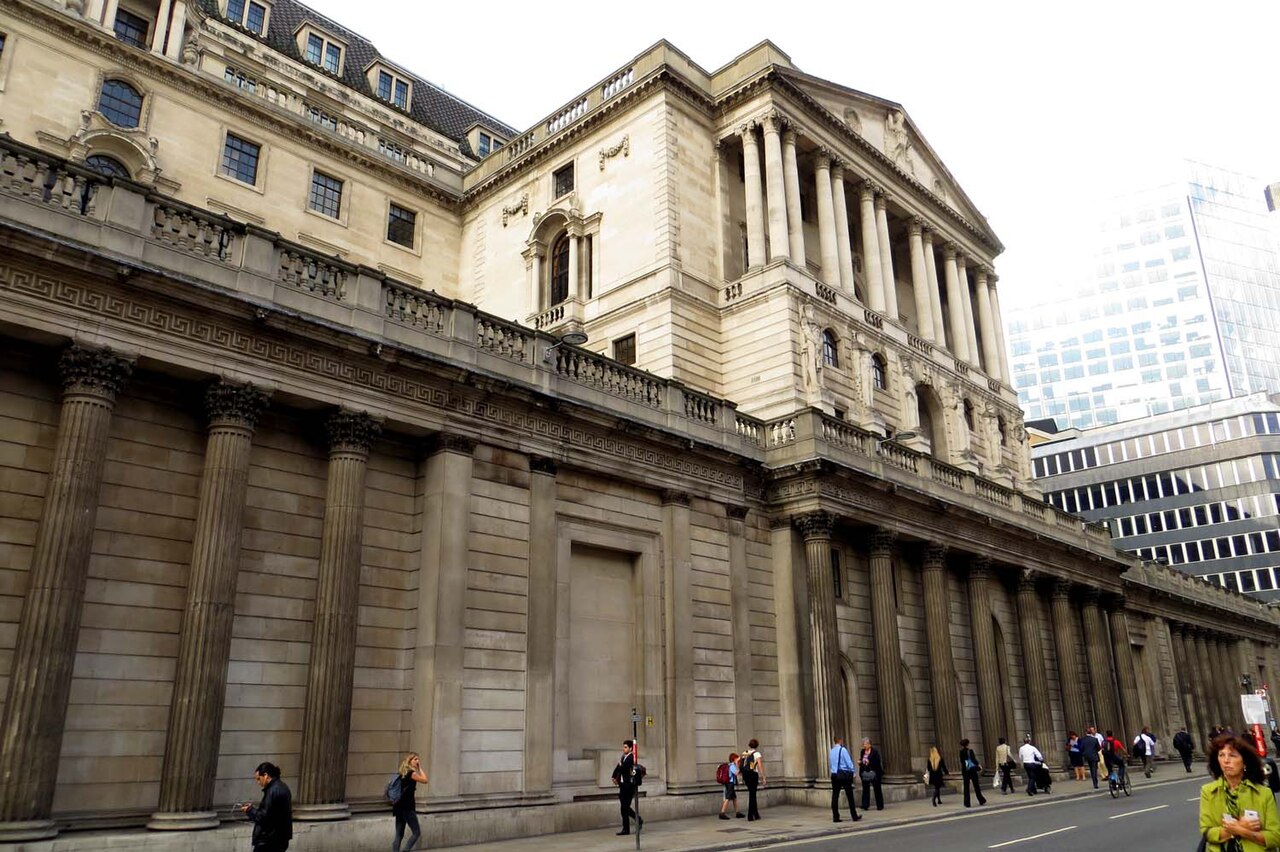
- Hero: The Bank of England on Threadneedle Street. Author: Steve Daniels. Wikimedia Commons. CC BY-SA 2.0.
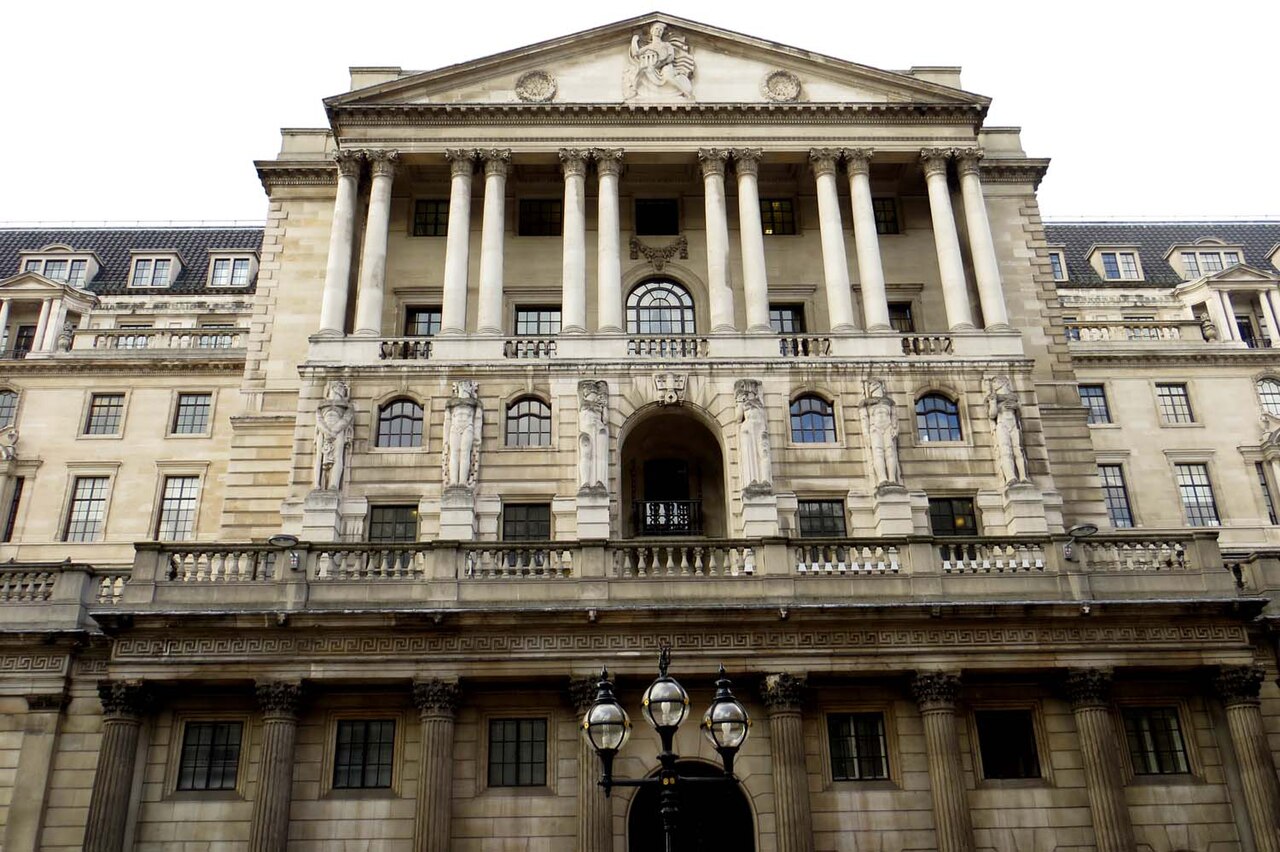
- In-body: The Bank of England on Threadneedle Street. Author: Steve Daniels. Wikimedia Commons. CC BY-SA 2.0.