The Federal Reserve Board published its November 2026 Financial Stability Report on November 13, and artificial intelligence appears in it twice in different roles. In Box 5.1, AI is the risk most frequently cited by the market contacts the Federal Reserve Bank of New York surveyed. In Box 2.2, titled "Leverage in the Data Center Buildout," Fed staff put numbers on how much debt and other commitments the buildout now carries. This post walks through both boxes using the report's own text, and separates what the Fed measured from what it did not claim.
What the survey box says
Box 5.1 summarizes a survey run by staff at the Federal Reserve Bank of New York. During September and October, responses came from 23 contacts, including professionals at broker-dealers, banks, investment funds and advisory firms. The report is explicit that the box "should not be interpreted as representing the views of the Federal Reserve board or the Federal Reserve bank of New York."
The headline finding is that AI was the top-cited risk. The report groups the AI responses into three concerns:
| Concern | How the report describes it |
|---|---|
| Valuations | Elevated equity valuations, and the possibility that lower-than-expected earnings could cause lower valuations and a market correction. |
| Cybersecurity | Either a malicious attack by sophisticated state actors or damage caused by frontier AI models themselves. |
| Financing | Risks associated with complex forms of AI-related financing. |
The same box lists the other leading shocks in order: risk asset correction, higher long-term rates, cyberattacks and fiscal debt sustainability. It adds that cyberattack and fiscal debt risks were viewed as having the most severe potential consequences, and that mentions of AI, higher long-term interest rates and cyberattacks rose the most compared with the spring survey.
The spring comparison matters for interpretation. The spring survey (March to April) drew 20 contacts, and in that edition geopolitical risks and an oil shock led the figure, with AI listed third. The sample sizes are small, and the survey records how often a risk was named, not how likely a respondent thought it was. A risk can be cited often and still be judged unlikely, or cited rarely and judged severe, which is exactly the distinction the report draws between frequency and severity for cyberattacks and fiscal debt.
Box 2.2: how large the leverage is
The second box is where the report is most quantitative. It states that debt issuance to finance advanced computing infrastructure "has grown rapidly over the past year," and that its composition is evolving from mostly corporate bonds to a mix of public and private debt, structured credit and project finance.
Advanced computing debt issuance: all of 2023 versus 2023 to October 2026
Billions of US dollars. The 2026 bar is the Fed's floor (more than 680) through October, not a full year.
Source: Federal Reserve Financial Stability Report, November 2026, Box 2.2 (Bank of America Global Research, Bloomberg).
The figures, as published:
- Advanced computing related debt issuance rose to more than $680 billion by October 2026, about a fivefold increase from $130 billion in all of 2023.
- Investment-grade technology companies issued most of it.
- Advanced computing borrowing as a share of nonfinancial investment-grade corporate debt issuance rose from less than 6 percent in 2023 to about 31 percent in 2026.
- Outstanding public debt related to advanced computing is estimated at more than $1.1 trillion as of October 2026, and the report notes that sizable private credit transactions make the true total harder to measure.
One analytical point on that 31 percent: it is a share of a single market, nonfinancial investment-grade issuance. It says that nearly a third of the new investment-grade corporate debt coming to market in 2026 is tied to computing infrastructure, which makes that market's pricing more sensitive to how the sector is perceived. It does not say a third of all corporate borrowing, and it does not say the borrowers are weak, since the report notes that investment-grade firms issued most of the debt.
The complex interlinkages among firms engaged in the data center buildout, public credit markets, private lenders, and special purpose financing vehicles create vulnerabilities that necessitate close monitoring.
Federal Reserve Financial Stability Report, November 2026
Debt is only part of the commitment
The box then turns to obligations that do not appear as borrowings. Large technology firms, it says, are rapidly increasing future lease commitments, backstop guarantees provided to other firms and other complex and contingent obligations. Figure C covers Alphabet, Amazon, Meta Platforms, Microsoft and Oracle, plus the chip makers Broadcom and Nvidia.
Obligations the Fed counts beyond debt issued
Billions of US dollars, undiscounted. Both bars are floors: the report says each exceeds the figure shown.
Source: Federal Reserve Financial Stability Report, November 2026, Box 2.2 (Alphabet, Amazon, Meta, Microsoft, Oracle, Broadcom, Nvidia).
The report breaks these into two groups, both stated as undiscounted values: not-yet-commenced leases that exceed $1 trillion, and other obligations such as take-or-pay contracts and residual value guarantees that exceed $2 trillion. Taken together, the report's own thresholds imply more than $3 trillion of non-debt obligations for those seven companies (our arithmetic, a floor rather than an estimate). That sits next to outstanding public debt of more than $1.1 trillion, which is why the box says that while debt balances have grown, "other obligations have grown even more rapidly."
Undiscounted values are an upper-bound style measure: they add up contractual payments without adjusting for timing, and many of these contracts are conditional. Take-or-pay contracts, for example, oblige a buyer to pay for capacity whether or not it is used, but whether that payment is ever a burden depends on whether the capacity is needed. The report presents the figures as exposure to monitor, not as expected losses.
Comparison with the telecom buildout
The box also compares the current cycle with the broadband telecom investment cycle that began in 1995. Figure B plots cumulative capital spending and debt issuance for five hyperscalers (Amazon, Alphabet, Meta, Microsoft and Oracle) since 2020 against all telecommunications firms since 1995, each scaled by contemporaneous GDP. The report says the two capital spending lines "have been tracking relatively closely," that advanced computing investment "has been accelerating of late," and that its pace "may surpass that of the 1990s telecom cycle relatively soon."
Two details temper the comparison. First, the report notes that the hyperscalers' strong cash flows reduced their need to issue debt for similar investment levels, "at least until this year", which is the shift Box 2.2 is documenting. Second, the comparison is of financing patterns, not of outcomes. The report does not forecast that the data center cycle will end the way the telecom cycle did.
How this differs from the Bowman speech
Readers may recall that Vice Chair for Supervision Michelle Bowman cited AI-related debt on track to exceed $800 billion this year in a November 10 speech, covered in our earlier post on her remarks. The two numbers are not in conflict, but they are not the same measure. The speech gave a full-year projection for AI-related debt; the report gives a year-to-date figure through October for advanced computing related issuance, counted from specific data sources (Bank of America Global Research and Bloomberg Finance) that include rule 144A private placements and exclude section 4(a)(2) private placements. Different definitions and different time windows mean the figures should be quoted separately and not blended.
The Financial Stability Report is also a staff publication of the Board's framework for assessing the resilience of the financial system, so its tone is descriptive. It points to vulnerabilities to monitor. It does not say a correction is coming, and Box 5.1 reflects contacts' views.
What to watch next
- Composition of financing. The report says issuance is shifting from corporate bonds toward private credit, structured credit and project finance. Less visible financing is harder to measure, so future editions may revise the totals.
- The spring-to-fall change. AI moved from a mid-table mention to the top of the survey in one edition. A further move in the next survey would say more about whether this is a trend or a one-survey reading.
- Lease starts. The $1 trillion of not-yet-commenced leases converts into operating commitments as sites come online, which changes how the exposure shows up on balance sheets.
- Earnings. Respondents tied valuation risk to earnings. Revenue growth at AI companies relative to capital spending is the variable the report's own survey language points to.
For teams that build on these models, the practical angle is indirect: financing conditions shape how fast new capacity arrives and how model providers price it. That is one reason some teams keep their tooling model-agnostic, so a change in one provider's pricing or capacity does not force a rebuild. This report does not make that argument, and it makes no claim about any specific provider.
Sources:
- Federal Reserve Board, Financial Stability Report, November 2026 (PDF), including Box 2.2 (Leverage in the Data Center Buildout) and Box 5.1 (Survey of Salient Risks to Financial Stability)
- Federal Reserve Board, Financial Stability Report publications page
Image credits
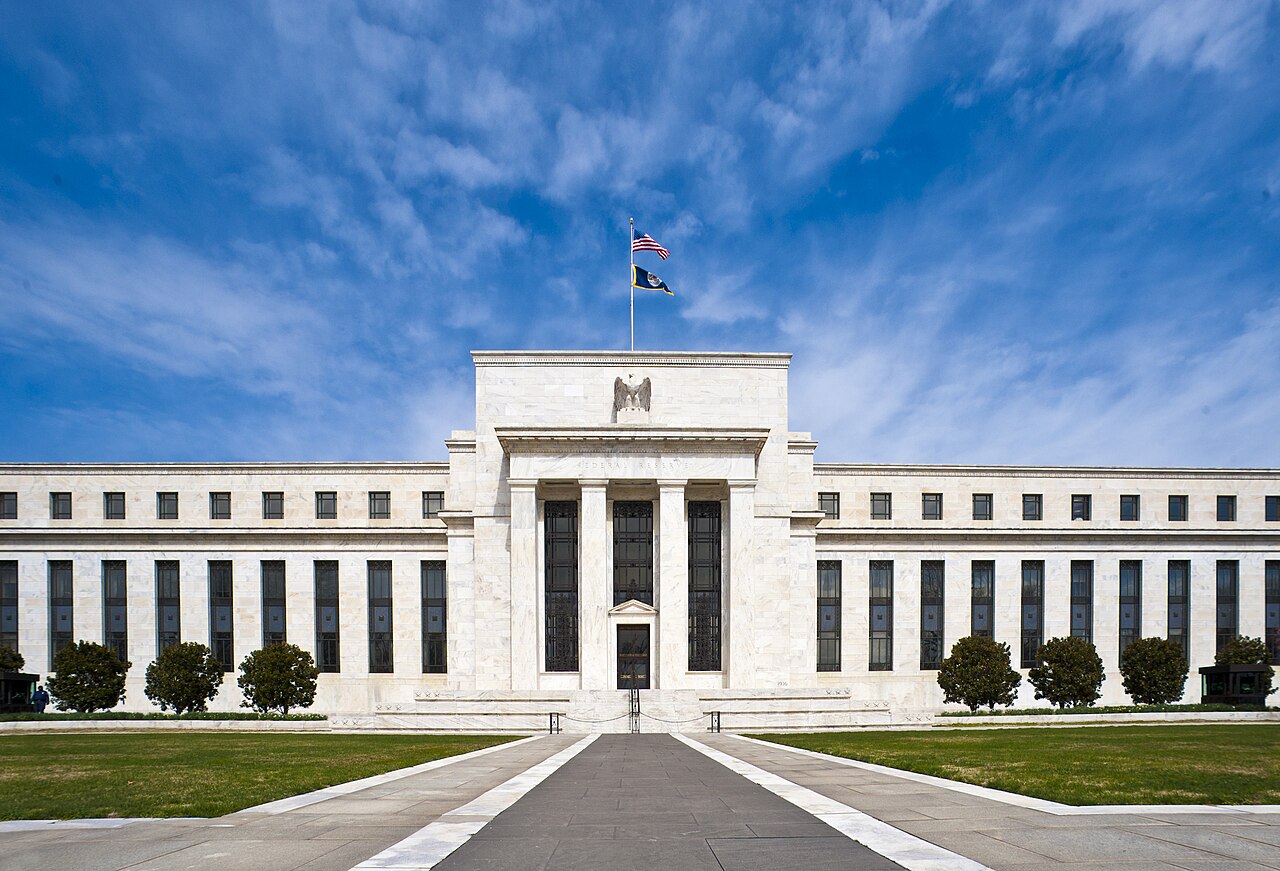
- Hero and in-body photo: Marriner S. Eccles Federal Reserve Board building, Washington, D.C. Source: Wikimedia Commons, "Eccles Building (26088200676)". Author: Federalreserve. Licence: public domain.