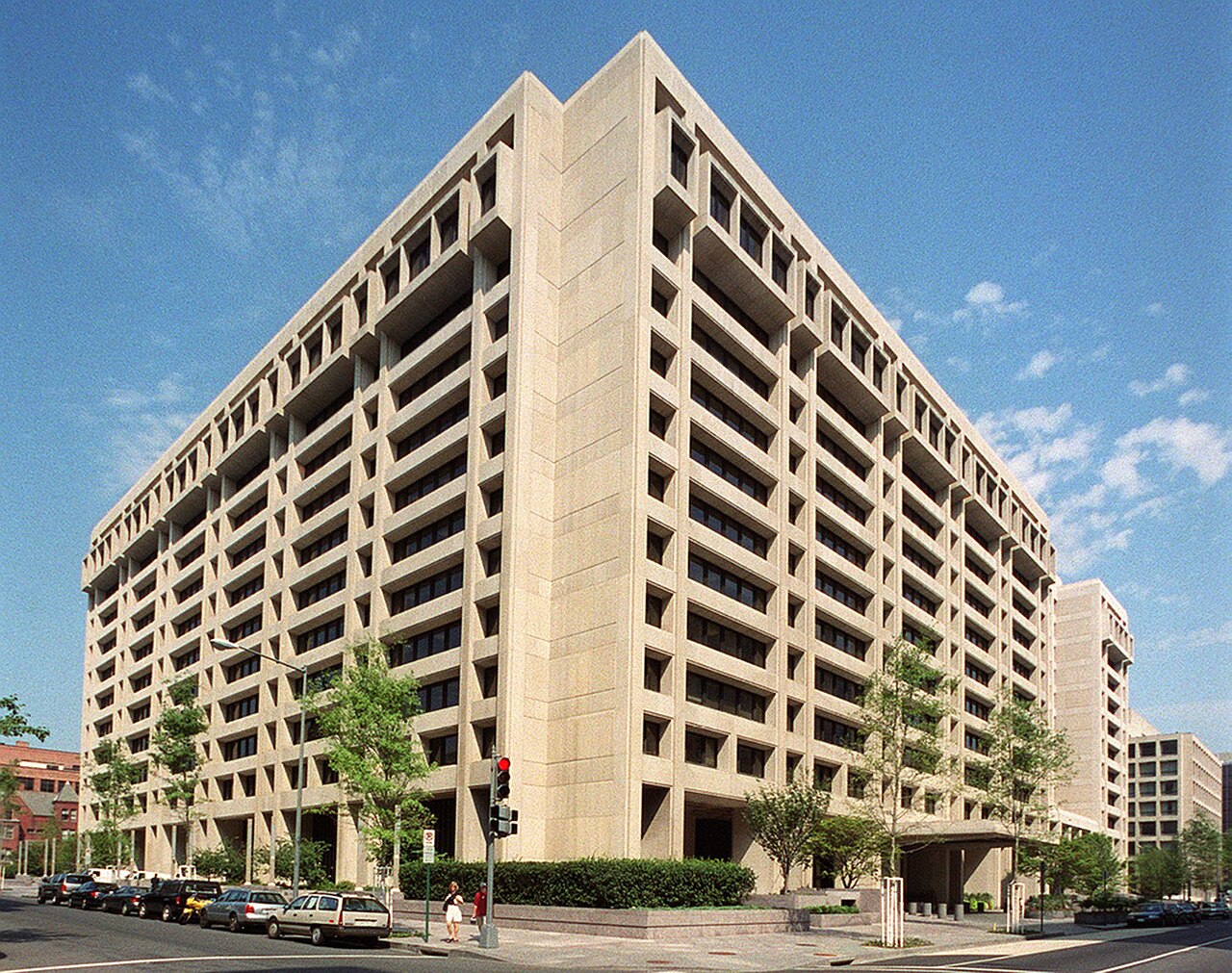
The International Monetary Fund released its October 2026 Global Financial Stability Report on October 13, 2026, during its Annual Meetings in Bangkok. According to the Securities.io summary of the IMF briefing, the IMF's deputy director for monetary and capital markets, Athanasios Vamvakidis, named three risks: an AI-related market correction, rising yields and cyber threats. Each may be manageable alone, but together they could worsen unresolved vulnerabilities.
The figures above are the report's most distinctive AI content, and they describe a structure rather than a single company. This post looks at what the numbers say, how the IMF's own officials weighed them, and where the reporting is secondary and should be checked against the full report.
What the IMF examined
Jason Wu of the IMF said the report studied 14 publicly disclosed AI transactions. Per Securities.io, Unite.AI and Startup Fortune, these involved about $300 billion of equity investment and about $650 billion of debt, including off-balance-sheet vehicles, in exchange for about $1.4 trillion of future revenue commitments. Unite.AI adds that roughly $320 billion of that debt sits with the investee firms, including investor-guaranteed and off-balance-sheet obligations.
The circular loop in 14 AI deals
US dollars, approximate, per the IMF as reported. Bars are drawn to scale.
Hyperscaler and chip-vendor equity into weaker AI firms
Includes off-balance-sheet vehicles; ~$320B sits with investees
Cloud contracts and chip orders flowing back to the investors
Wu described the future revenue commitments as the unusual, circular element compared with earlier investment cycles. In practice, an investor puts equity into an AI firm, that firm borrows, and the money returns to the investor through cloud contracts or chip orders. He called the resulting exposure a "triple whammy": equity could lose value, debt could be hard to service, and the revenue commitments might not materialize. The report refers to distress at key investees as "wrong-way risk", meaning the exposure grows exactly when the counterparty weakens.
A simple ratio helps frame scale. Dividing the commitments by the capital behind them ($1.4 trillion over $950 billion of combined equity and debt) gives roughly 1.5 dollars of promised future revenue for every dollar put in. That is our arithmetic on the reported totals, not an IMF statistic, and it says nothing about whether the commitments are firm.
Borrowing is moving into bond markets
Unite.AI reports that hyperscalers now account for about 10% of global investment-grade bond issuance, up from below 1% in 2024. Other leverage indicators moved too: hedge fund gross equity positions plus margin loans rose from about 10% to about 15% of advanced-economy GDP, and single stocks' share of leveraged ETFs rose from 16% to 28%, according to Startup Fortune.
Three leverage indicators the IMF highlighted
Percent, before versus now, as reported. Each pair uses its own scale of 0 to 30%.
Hyperscalers, share of global investment-grade bond issuance
Hedge fund gross equity positions plus margin loans, % of advanced-economy GDP
Single stocks as a share of leveraged ETFs
The three indicators measure different layers, from corporate borrowing to investor leverage. They matter because a correction in AI-linked assets would transmit most quickly through the layers that rely on borrowed money.
The IMF's own view is mixed
The report is not a straightforward bubble warning. Vamvakidis said valuations are not stretched, because price-to-earnings ratios have fallen as earnings keep beating forecasts, and he contrasted this with the dot-com period. He also called AI "the single most important engine of resilience at this point", and said rest-of-world exposure to US assets, particularly AI, is the highest it has ever been. In his reading, markets have differentiated between sectors this year, so first-round effects of an AI correction would not necessarily hit other stocks.
AI is both the engine of resilience and the concentration the IMF is asking markets to stress-test.
Reading of the IMF's October 2026 briefing remarks
Concentration figures add context. Startup Fortune reports that the seven largest US tech companies make up over 35% of S&P 500 market value, up from about 12% a decade ago, and that IMF modelling suggests a moderate AI valuation correction combined with tighter financial conditions could cut global growth by about 0.4% versus baseline, while a faster AI-driven surge could add about 0.3% to 2026-27 growth. Those two numbers are asymmetric in magnitude but not in direction, which is the core of the policy debate: AI both lifts and exposes the system.
Beyond AI: yields, cyber and non-bank finance
The same briefing covered rates and structure. Vamvakidis said rate levels and volatility are back to pre-global-financial-crisis levels and that "market discipline is back". He noted that risk has migrated to non-bank financial institutions, and that private credit borrowers are increasingly leveraged. On cyber risk, Caio Ferreira cited digitalization, concentration on a few software or cloud providers, and criminals' access to tools including AI, with an estimate that about 40% more cybersecurity workers are needed globally. Startup Fortune also reports that banks holding 22% of global banking assets showed weak capital under a severe stress scenario, up from 18% in the 2025 assessment.
What to watch
- Primary text. The IMF's own page listed the report and its chapter titles but, at the time of writing, we could not retrieve the full text, so the figures here come from secondary coverage that cites the briefing. Several of those outlets state their own content is AI-assisted. Check the report before quoting a number.
- Commitment quality. The $1.4 trillion is a commitment, not revenue. Whether it converts depends on end demand for AI services.
- Debt maturities. The roughly $320 billion held at investees is where a stress would first show.
- Policy room. Vamvakidis said macroeconomic policy room is much more limited than in previous shocks, which raises the cost of a disorderly repricing.
For people building on AI, the practical reading is that vendor financing and pricing can shift with market conditions. That is one reason many teams keep their workflows portable across model providers, an approach tools like Metir are designed around.
Sources:
- IMF Global Financial Stability Report flags AI, yield and cyber risks - Securities.io
- IMF Warns AI Market Correction Could Trigger Global Financial Turmoil - Unite.AI
- IMF warns an AI stock correction could threaten global financial stability - Startup Fortune
- Coming Soon: Global Financial Stability Report, October 2026 - IMF
Image credits
Header image: IMF Headquarters, Washington, DC, by the International Monetary Fund, public domain (source); a file photo of the institution, not of the report.