On Friday, November 20, 2026, Anthropic mathematician Levent Alpöge announced that he, working with Claude, had a proof of the Riemann Hypothesis, and that it extends to the Generalized Riemann Hypothesis (GRH). According to Interesting Engineering, the claim came with a four-page explanation and a Lean archive of about 239 MB and 175,187 source files. Nobody has yet confirmed the mathematics. This post separates what is reported from what remains open.
 Anthropic
What has been reported
Scientific American says MIT mathematician Andrew Sutherland independently compiled the proof in Lean, and that the mathematical details are still being studied. Interesting Engineering reports that an independent verification project found the main theorem statements compile against Mathlib, Lean's standard library.
On Hacker News, one commenter reported compiling all modules in about 2.4 hours on a 480-core machine, with no errors and no sorry placeholders, but did not check which axioms the theorem relies on. A secondary summary by CASRAI says the headline theorems use only the three standard Lean axioms. That page relies on other coverage, so treat it as unconfirmed. Two figures differ across sources: CASRAI gives 239.3 MB compressed, while the Hacker News commenter cites about 1.3 GB. We could not resolve this.
What a compiling Lean archive does and does not settle
Left: machine checks reported so far. Right: questions that remain with people.
- All modules compile (Lean 4.33.1, Mathlib)
- Kernel re-check by independent checkers (as summarised by CASRAI)
- Headline theorems use only the three standard axioms (CASRAI summary; one HN commenter had not checked)
- No sorry found by an independent compile (HN commenter)
- That the top-level theorem states GRH as mathematicians mean it
- That Mathlib definitions used are faithful, not vacuous
- That a human can follow why the argument works
- Community acceptance and any Clay process
Our synthesis of the cited coverage, not an official audit.
What a compiling Lean proof establishes
Lean's kernel checks that every step follows from the stated definitions and axioms. If the archive compiles with no sorry, a derivation of the Lean theorem exists. That is a strong guarantee, and several independent checker implementations reduce the chance of a kernel bug.
It does not tell you that the Lean theorem is the statement people care about. Interesting Engineering notes that compiling "does not automatically establish that the intended conjecture has been proven." Three questions remain:
- Statement fidelity. Is the top-level theorem GRH for all Dirichlet L-functions? A short statement is easy to audit, but it must be audited by experts, and Hacker News commenters name this as the key open check.
- Definitions. The result rests on Mathlib's definitions, such as the zeta function. A subtly wrong or vacuous definition could make a theorem easy. Mathlib's definitions have been reviewed by people, which helps, but it is the reviewer's job to confirm they apply here.
- Axioms. Classical mathematics normally uses the standard axioms. A custom axiom would be a red flag, which is why
#print axiomson the headline theorem matters.
The review burden
Alpöge reportedly said a prose version would exceed 250,000 pages, so only the Lean code was released (per CASRAI). Scientific American quotes Sutherland that "there is much work to be done to understand the mathematical details of the proof." A machine-checked proof can be trusted at the level of logic while remaining opaque to humans, which is why commentary has focused on understanding rather than checking. Hacker News commenters also questioned whether an unreadable proof advances mathematical frameworks, and some noted the release timing relative to Anthropic's IPO. Those are opinions, not findings.
Compiling the code does not automatically establish that the intended conjecture has been proven.
Interesting Engineering
Does the $1 million Clay prize apply?
Not as things stand. The Clay Mathematics Institute's Riemann Hypothesis page describes the classical problem about zeros of the Riemann zeta function. GRH, which covers Dirichlet L-functions, is not listed as its own Millennium Prize Problem. Our reading is that GRH includes the classical case, since the trivial character gives the zeta function, so a correct GRH proof would imply RH. That is our mathematical inference, not a Clay ruling.
Eligibility is separate. Clay's rules require publication in a qualifying outlet, at least two years since publication, and general acceptance in the global mathematics community. Clay does not accept direct submissions. None of these conditions has been met.
How this fits earlier AI math claims
Earlier this year we covered Claude's lower bound on zeros of zeta, Claude's Lean formalization of Fermat's Last Theorem and OpenAI's math manuscripts. The pattern is that Lean checking is becoming the standard for AI-generated proofs, while human understanding lags. For readers comparing outputs from different models, a workflow that keeps several providers in one place, as Metir does, makes it easier to cross-check claims.
What to watch
- Expert confirmation that the top-level theorem states GRH.
- A published axiom audit of the headline theorem.
- A human-readable account of the argument.
- Journal submission, which starts Clay's two-year clock only on qualifying publication.
Sources:
- Interesting Engineering: Claude helped prove 167-year-old Riemann hypothesis, researcher claims
- Scientific American: Anthropic mathematician claims to prove Riemann hypothesis
- Hacker News discussion of the claim
- CASRAI: Anthropic mathematician releases 175,000-file Lean archive
- Clay Mathematics Institute: Riemann Hypothesis
- Clay Mathematics Institute: Millennium Prize rules
Image credits
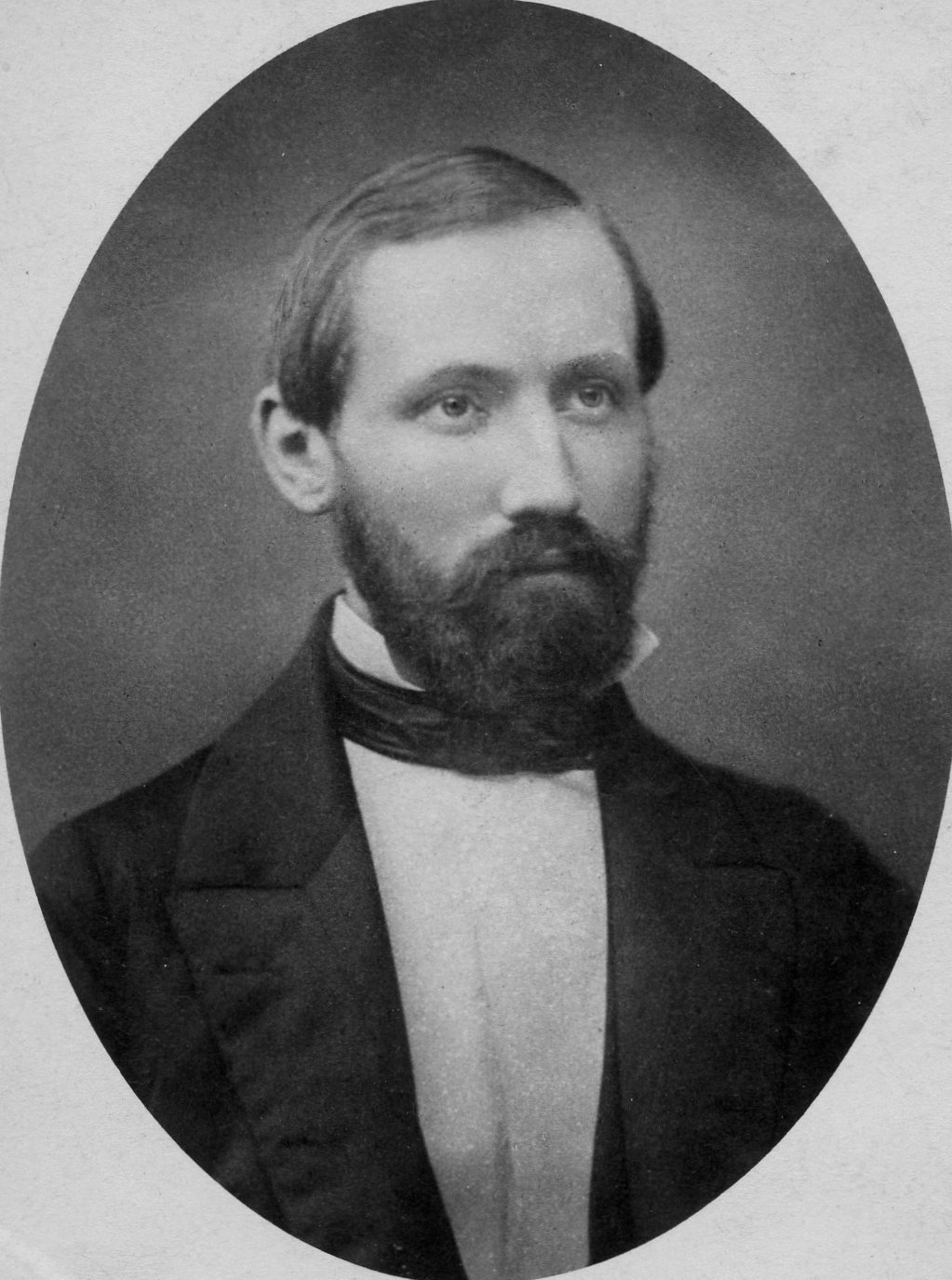
- Bernhard Riemann portrait (archive photograph, not related to the 2026 claim): unknown author, public domain, via Wikimedia Commons.
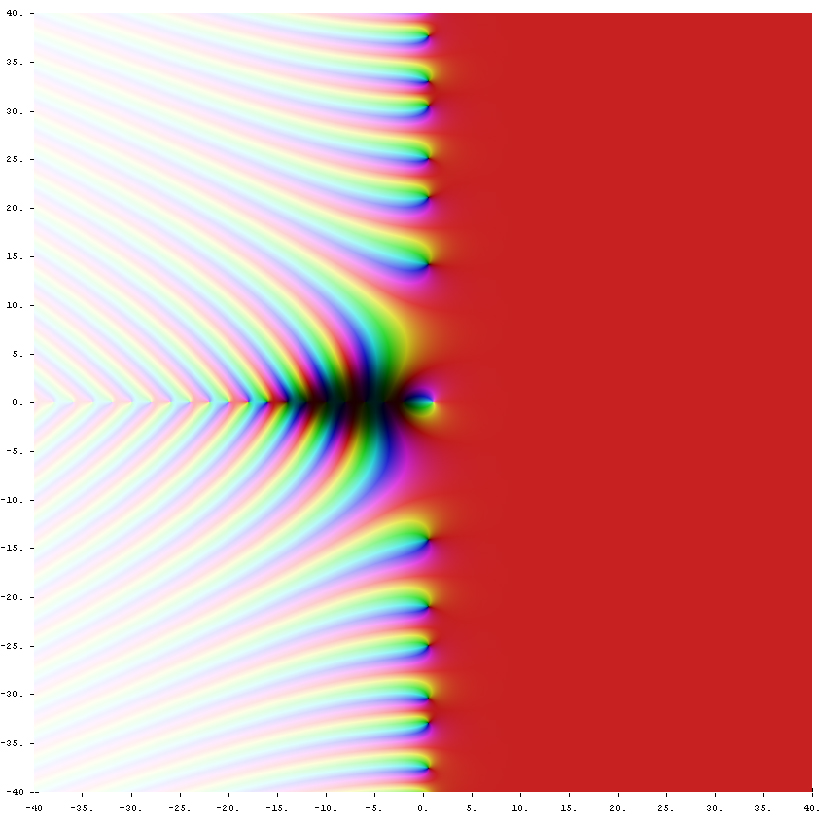
- Riemann zeta function plot: Jan Homann, public domain, via Wikimedia Commons.