On October 6, 2026, OpenAI published 722 math manuscripts produced by an unreleased internal model in a public GitHub repository, openai/math. The catalogue groups the papers into 372 families, and a Lean formalization accompanies the main result of 162 of them. It is the largest single release of AI-generated mathematics so far, and it raises a practical question more than a headline one: how does a research community check hundreds of papers at once? This article sets out what the repository says, what Lean verification does and does not guarantee, how the release compares with earlier AI math milestones, and what "a single prompt" implies for cost.
 OpenAIOpenAI
What OpenAI released in the openai/math repository
According to the repository README, the collection contains "722 manuscripts organized into 372 families." A family groups related papers, which may include a principal result, companion arguments, consequences or alternative proofs, and each family is classified by mathematical discipline. The code and papers are released under the Apache License 2.0, as the repository's LICENSE file shows.
The README describes the origin plainly. OpenAI evaluates its models on open research problems, and it "expanded these evaluations after performance on our existing mathematical evaluations saturated." Over the evaluation the model was posed approximately 4,000 problems, and "aggregating the output into result families and manuscripts and requiring an appropriate level of significance" produced the catalogue. The model itself is unnamed and unreleased. A third-party summary from Cellcog counts 17 fields, with theoretical computer science (40 families), combinatorics (37) and algebraic and complex geometry (36) the largest; we could not confirm those field counts in OpenAI's own files, so treat them as secondary reporting.
Ten of the families also come with abridged summaries of the model's reasoning, including the irrationality exponent of pi, the symmetric and general Mahler conjectures, and Kaplansky's direct-finiteness conjecture in characteristic two.
From about 4,000 problems to 162 Lean-backed papers
Scale of each stage in OpenAI's math repository. The units differ (problems, families, manuscripts, papers), so read it as a rough scale, not a strict pipeline.
Sources: openai/math README and lean/formalization.yaml (GitHub, read Oct 7, 2026). Hover a bar for details.
Single prompt, three hours: what it means for cost
The README says "the vast majority of results were obtained with the same procedure," and that on average "each result used three hours of ChatGPT Pro thinking compute." The Decoder, reporting on October 7, describes most results as coming from a single prompt to a single agent. OpenAI's own README does not use the phrase "single prompt," so that characterization rests on press coverage.
Three hours is a measure of compute time, not a price, and OpenAI has not published a dollar figure for this release. Two cautions apply when reading the number. First, it is an average per accepted result, while the model was posed roughly 4,000 problems; the cost of the attempts that did not make the catalogue is not captured by the per-result figure. Second, the README lists exceptions to the fixed procedure, including work on a zero-free region for the Riemann zeta function and a proof of the Hodge Conjecture for CM abelian varieties.
The contrast with OpenAI's earlier Navier-Stokes claim is instructive (our earlier coverage is in our analysis of the Navier-Stokes proof). That effort was presented as a flagship, large-scale run. If the three-hour average for this catalogue holds, the marginal cost of a single result is now closer to a routine workload than a flagship one, which changes who can afford to generate and to check such work.
Some of the unformalized results could have issues. We will endeavor to fix any such issues quickly.
openai/math README
What Lean verification does and does not guarantee
Lean is a proof assistant: a program that checks that each step of a formal argument follows from stated axioms and previously proved results. If a Lean proof compiles, the theorem as written in Lean is correct relative to Lean's kernel and the libraries it imports. That is a stronger guarantee than a human referee can usually give about a long paper.
The guarantee has edges, and the repository itself exposes them.
- Statement fidelity. Lean proves the formal statement, not the English one. If the formalized theorem is weaker than, or subtly different from, the claim in the paper, the proof can be valid and the paper still overstated. Someone has to read the Lean statement and judge that it means what the abstract says. Cellcog makes the same point: formalization checks technical correctness, not whether the formal statement matches the paper or whether the result is new.
- Main result only. The catalogue is described as papers "with a formalized main result." Supporting lemmas, remarks and secondary claims in the same manuscript are not automatically covered.
- Definitions and imports. A proof can depend on custom definitions written in the same repository. Those definitions are part of what must be trusted and read.
- Review status. The formalization.yaml file lists its own review status as "unchecked," and scopes itself as "Partial progress." The repository also points to Comparator, a tool that checks a proof against a fixed challenge statement, with 185 comparator-configured main results in the catalogue.
- Coverage. Formalized main results exist for 162 papers out of 722 manuscripts. The README states that not all manuscripts have Lean versions and that results are "at different stages of verification." Cellcog's table of headline claims shows some, such as a symmetric Mahler conjecture result, formalized and others, such as the irrationality exponent of pi, not yet.
A useful way to read the numbers: 162 divided by 722 is about 22 percent of manuscripts, though the unit counts differ (papers versus families versus main results), so we avoid treating that as a precise pass rate.

The referee bottleneck
Peer review was built for a world where papers arrive at human speed. A referee reading a research paper in a specialist area may spend days or weeks, and a handful of experts per subfield can follow any given argument. Seven hundred and twenty-two manuscripts across many fields arriving on one day is not a load that process can absorb in the ordinary way.
Lean shifts the bottleneck rather than removing it. For the 162 papers with a formalized main result, checking the proof becomes mechanical, and human attention can concentrate on whether the statement is the right one and whether the result is significant and new. For the other 560 or so manuscripts, the usual route applies: expert reading, and in practice a long wait. OpenAI says it will "continue to update this repository with Lean formalizations as we obtain them" and that it is exploring community-hosted repositories.
The release process also reflects this tension. OpenAI consulted the Advisory Group on Mathematics and Artificial Intelligence at the Institute for Advanced Study, whose members include Timothy Gowers and Edward Witten. The Next Web reported that the group has no decision-making authority, and The Decoder reports that it can advise on how results are communicated but not on whether or how fast they are produced. Whether a small panel can represent the wider community was an open question in coverage at the time of the group's announcement.
How this compares with earlier AI math milestones
Three AI math milestones by unit of output and how each was checked
The unit of output moved from a contest, to a single problem, to hundreds of papers. The check on correctness changed with it.
- Unit of output
- 1 contest, 6 problems; 5 solved, 35 of 42 points
- How it was checked
- Human graders; proofs in natural language
- Unit of output
- 1 open problem
- How it was checked
- Lean proof from Aristotle, writeup on arXiv
- Unit of output
- 722 manuscripts, 372 families
- How it was checked
- Lean main result for 162 papers; the rest unformalized
Sources: Entrepreneur (IMO 2025), arXiv:2601.07421 (Erdos 728), openai/math README on GitHub (Oct 2026).
At the 2025 International Mathematical Olympiad, models from Google DeepMind and OpenAI each solved five of six problems for 35 of 42 points, working in natural language rather than a formal system. Correctness there was judged by human graders on a contest with known answers. In January 2026, an arXiv writeup described Erdos problem 728 as the first Erdos problem regarded as fully resolved autonomously by an AI system, using GPT-5.2 Pro together with Harmonic's Aristotle, which produced the Lean proof. Our coverage of Fields Medalists on AI mathematics shows how the community has been responding.
Three things differ in October 2026. The unit of output is a catalogue of hundreds of papers rather than a contest or a problem. The problems are open research questions, not ones with known solutions. And formal verification is applied selectively and still in progress, not as a precondition for release.
What to watch next
- How many of the 560 or so unformalized manuscripts gain Lean main results, and how quickly.
- Independent audits of whether the Lean statements match the paper claims, including for the headline results.
- Whether errors surface and how OpenAI records corrections; the README says revisions will be preserved as new versions.
- Whether journals and preprint servers adopt a policy for AI-generated submissions at this volume.
- Whether OpenAI discloses the model name, the prompts and the compute cost behind the catalogue.
For teams that read papers rather than write them, the practical shift is toward tools that can summarize and cross-check large document sets across models, which is the kind of model-agnostic workflow Metir supports.
Sources:
- openai/math repository README (GitHub, OpenAI)
- openai/math manuscript map (CONTENTS.md)
- openai/math Lean formalization catalogue (formalization.yaml)
- openai/math Comparator challenges README
- OpenAI Releases 722 Math Manuscripts From an Unreleased AI Model (Unite.AI)
- OpenAI dumps 372 AI-generated math proofs on GitHub (The Decoder, Oct 7, 2026)
- OpenAI's largest math release tackles 4,000 problems with Lean proofs (Interesting Engineering)
- OpenAI's 722 AI Math Papers: What's Proved, What's Checked (Cellcog)
- Top mathematicians will advise OpenAI on releasing its AI maths results (The Next Web)
- Resolution of Erdos Problem #728: a writeup of Aristotle's Lean proof (arXiv:2601.07421)
- AI Models From Google, OpenAI Win Gold Medals in an International Math Competition (Entrepreneur)
Image credits
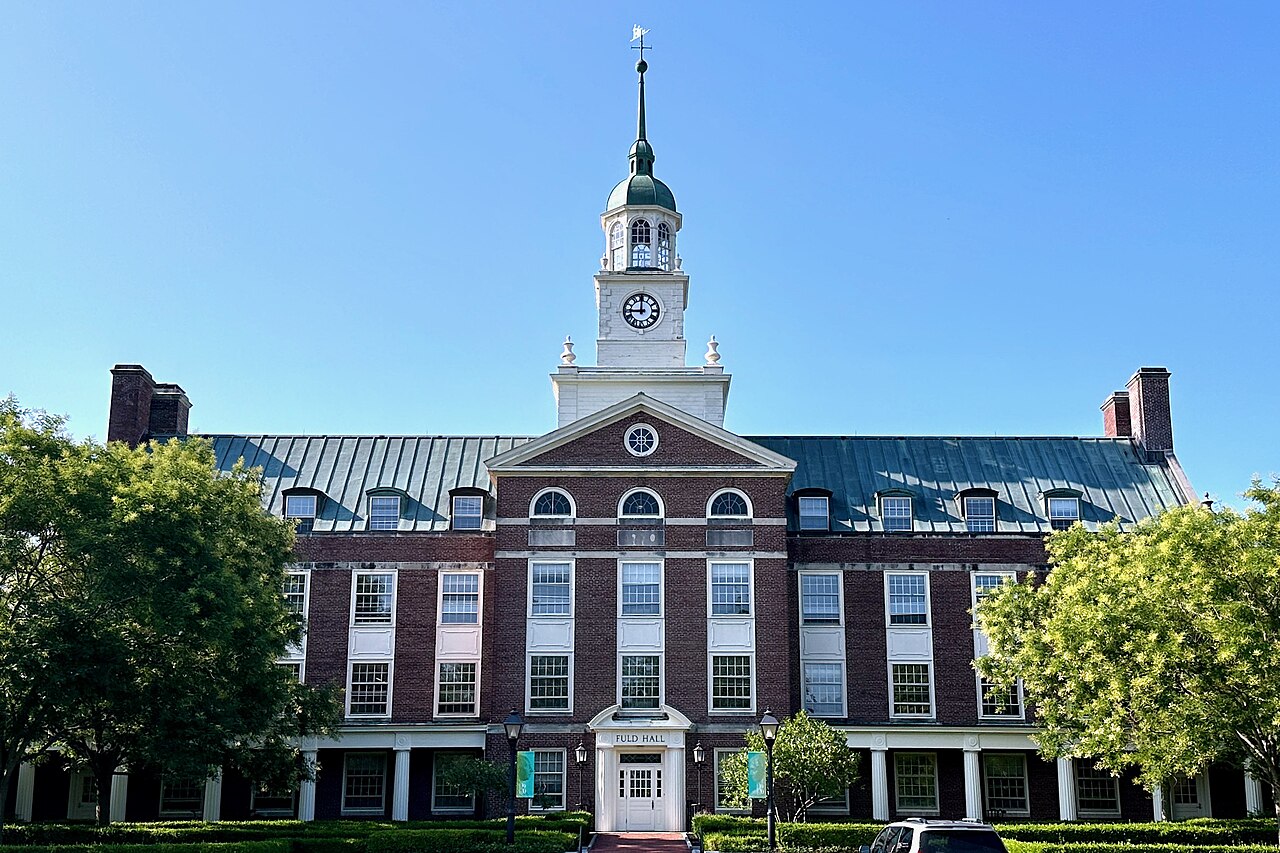
- Hero: Fuld Hall, Institute for Advanced Study, Princeton, photo by Zeete (2023), via Wikimedia Commons, CC BY-SA 4.0.
- In-body: View of Fuld Hall from the Institute Pond, photo by Zeete (2023), via Wikimedia Commons, CC BY-SA 4.0.