On August 10, 2026, Anthropic announced that an unreleased research version of Claude had taken on the Riemann Hypothesis, one of mathematics' oldest and most famous open problems. The model did not solve it. But it did make measurable progress on a related, well-defined quantity: the proven lower bound on the fraction of nontrivial zeros of the Riemann zeta function known to satisfy the hypothesis. Claude pushed that bound from 41.6% to 67.2%, the largest single jump on this specific figure in the problem's long history.
 Anthropic
What the Riemann Hypothesis actually asks
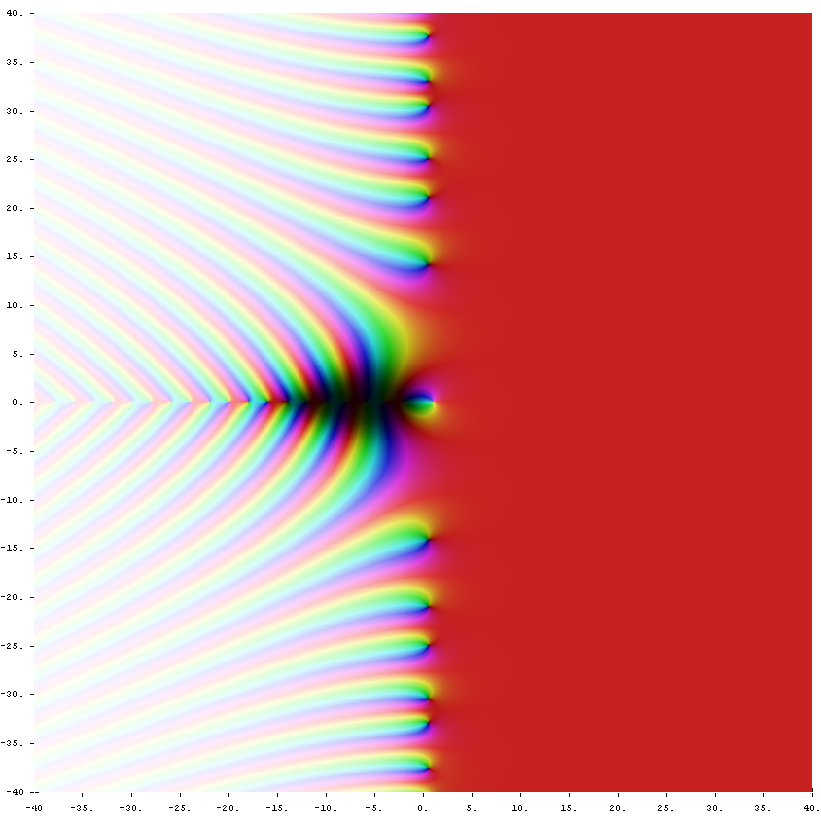
Formulated by Bernhard Riemann in 1859, the Riemann Hypothesis concerns the zeta function, an infinite sum that extends across the complex numbers. The function has a set of "trivial" zeros that are well understood, and infinitely many "nontrivial" zeros whose location is the heart of the problem. The hypothesis claims that every nontrivial zero has real part exactly one-half, meaning all of them sit on a single vertical line in the complex plane, the so-called critical line.
That claim matters well beyond pure curiosity. The distribution of prime numbers is tightly linked to where zeta's zeros sit, and a huge body of number theory, from prime-counting estimates to cryptographic assumptions, is built on results that would follow if the hypothesis is true. It is one of the seven Clay Mathematics Institute Millennium Prize Problems, each carrying a $1 million reward, and it remains the only one still unsolved.
Because proving that literally 100% of infinitely many zeros lie on the line has resisted every attempt for over 160 years, mathematicians have long worked a narrower, still-hard question: what fraction of the zeros can be proven to lie on the line, using today's techniques? That fraction is a genuine lower bound, each improvement is a real theorem, and it has crept upward in fits and starts across the twentieth and twenty-first centuries. Norman Levinson's 1974 result showed roughly one-third of zeros satisfy the hypothesis; Brian Conrey's 1989 refinement pushed that past two-fifths, a landmark that stood for decades as the figure most often cited in textbooks. Subsequent work by various number theorists nudged the bound further, to a standing record of 41.6% heading into this year.
The Riemann Hypothesis lower bound, over time
Share of nontrivial zeta zeros proven to lie on the critical line. Earlier milestones are textbook landmarks (approximate); the 2026 figures are the precise numbers Anthropic reported.
Levinson (1974) and Conrey (1989) figures are commonly cited approximations (~1/3, over 2/5). The 41.6% prior record and the 67.2% Claude result are the precise figures Anthropic reported on August 10, 2026.
How Claude got to 67.2%
According to Anthropic's account, the unreleased Claude model spent roughly a day and a half coordinating about 60 subagents working in parallel. Collectively they ran roughly 2,400 shell commands and wrote hundreds of Python scripts, testing ideas, checking calculations, and searching the existing literature. Anthropic's own breakdown of the effort is granular: two subagents were responsible for developing the key mathematical ideas that ultimately worked, thirteen contributed supporting ideas, thirty attempted approaches that did not pan out, thirteen served as validators checking the correctness of arguments, and a final two helped draft the write-up.
Before claiming anything, the system downloaded 54 papers from arXiv to check that the result had not already been established elsewhere, a due-diligence step that matters given how much of the value in a bound-tightening result depends on it actually being new. Anthropic also describes an adversarial self-review process: subagents were tasked with hunting for counterexamples and flaws in the proposed argument, and separate subagents attempted to re-derive the result independently from scratch, a check against the paper simply looking plausible without holding up.
The final step was formalization. Claude produced a Lean proof of its result, Lean being a proof assistant that checks each logical step by machine rather than by human eyeball, and Anthropic reports that this formal version passes standard validation. Anthropic mathematicians Levent Alpoge and Ralph Furman then reviewed Claude's work by hand, both to sanity-check the mathematics and to place the result properly in the context of decades of prior literature on the problem.
Anthropic frames this inside a broader research push: the company says Claude has contributed to progress on other longstanding open problems earlier in 2026, part of a stated effort to track and expand what its models can do in pure mathematics research, distinct from Claude's better-known coding and agentic-task capabilities.
Reading the result carefully
It's worth being precise about what did and did not happen. Claude did not prove the Riemann Hypothesis, and a lower bound of 67.2% is still very far from the 100% that a full proof would require; there is no known technique, human or machine, for closing that final gap. What Claude did was synthesize, extend, and machine-verify a piece of existing mathematical territory, using methods that build directly on decades of human work by Levinson, Conrey, and others. That is a genuinely different, and more modest, kind of achievement than an original conceptual breakthrough or a proof of the full hypothesis.
A bound improvement built largely by synthesizing and extending existing literature, then machine-verified in Lean, is a different kind of achievement than an original human breakthrough or a proof of the Riemann Hypothesis itself.
Reading Anthropic's result carefully
The more novel angle to sit with is the workflow, not just the output. This wasn't one model thinking harder in isolation; it was dozens of Claude instances divided across roles, generating and pruning ideas, checking each other's work, hunting for their own counterexamples, and only then handing off to a formal verifier that does not take anyone's word for it. That combination, orchestration across many agents plus a machine-checkable proof at the end, is arguably the more transferable lesson for AI-assisted research generally, independent of whether the specific mathematical result holds up as historically significant. It's a similar principle to why serious agentic workflows increasingly rely on coordinating multiple models and tools rather than one; a platform like Metir, built around orchestrating different AI models for a task rather than betting on a single one, reflects the same underlying idea that showed up here at research scale.
What comes next
Anthropic has not said whether or when the research version of Claude used for this work will be released more broadly, and independent mathematicians outside Anthropic have not yet had the chance to fully vet the result in the way that new theorems are ordinarily scrutinized by the field over months or years. The Lean formalization gives outside reviewers a concrete, checkable artifact to examine rather than having to take the informal write-up on faith, which should make independent verification faster than for a typical human-authored paper. Whether this specific bound holds up as a durable addition to the literature, and whether the multi-agent workflow behind it generalizes to other open problems, are both questions the mathematics community will now get to test.
Sources:
- Learning more about Claude's mathematical capabilities
- Anthropic on X
- Claude advances lower bound for Riemann zeta function to 67% - Crypto Briefing
- AI Weekly
Image credits
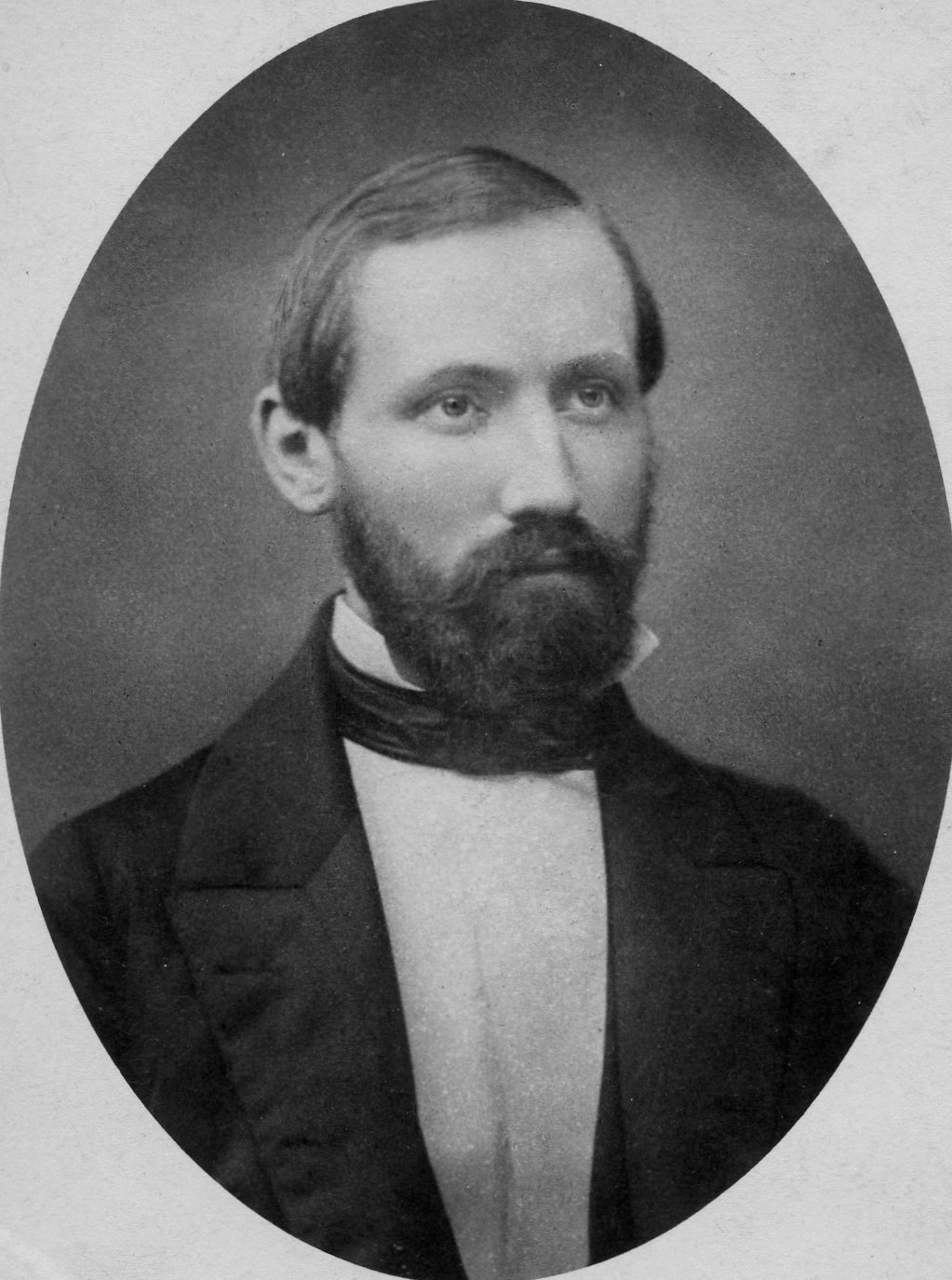
- Hero: Portrait of Bernhard Riemann (circa 1850), after whom the Riemann Hypothesis is named. Unknown author, Familienarchiv Thomas Schilling, public domain, via Wikimedia Commons.
- In-body: Domain-coloring plot of the Riemann zeta function in the complex plane. Jan Homann, public domain, via Wikimedia Commons.