Alphabet reported third-quarter 2026 results on October 28 with a split verdict. Google Cloud revenue more than doubled, rising 103% to $30.7 billion, and consolidated revenue grew 25% to $127.6 billion. But free cash flow was negative $9.1 billion, long-term debt had nearly tripled since the end of 2025, and the shares fell more than 11% after hours.
The quarter in numbers
From Alphabet's results exhibit filed with the SEC (quarter ended September 30, 2026, in millions of US dollars):
| Line | Q3 2026 |
|---|---|
| Total revenues | $127,577 |
| Google Search and other | $63,350 |
| YouTube ads | $11,207 |
| Google Cloud | $30,709 |
| Operating income | $40,576 (31.8% margin) |
| Google Cloud operating income | $11,121 |
| Diluted EPS | $2.12 |
CEO Sundar Pichai said the company is "now on a half-trillion dollar revenue run rate" and that Google Cloud revenues "grew 103%, powered by huge demand for our AI infrastructure and AI solutions." Coverage of the report notes that part of the Cloud growth came from sales of TPU systems, so not all of it is rental of capacity in Google's own data centres. EPS of $2.12 was below consensus according to market coverage, with losses on equity investments cited as a factor.
Our arithmetic: Google Cloud's operating margin was about 36% ($11.1 billion on $30.7 billion), and Cloud was roughly 24% of total revenue.
Capex and the guide
Purchases of property and equipment were $51.4 billion in the quarter and $132.0 billion for the first nine months. Alphabet held its 2026 capex guidance at $195 to $205 billion (raised from $175 to $185 billion given in February) and said capex should increase significantly in 2027. By our calculation, the guide implies fourth-quarter capex of roughly $63 billion to $73 billion, well above Q3.
Cloud revenue doubled, yet the market's attention went to the cash line: spending is running ahead of the cash the business generates.
The financing: debt up by $78.6 billion
The balance sheet shows how the build is being funded. Long-term debt was $125.1 billion at September 30, against $46.5 billion at December 31, 2025, an increase of about $78.6 billion by our calculation. Alphabet issued $28.7 billion of senior unsecured notes (net proceeds) in the quarter, and market coverage reports $12.4 billion raised through at-the-market stock sales. Cash and marketable securities were still $265.1 billion.
Alphabet's long-term debt rose from $46.5B to $125.1B in nine months
Long-term debt in billions of US dollars at the end of 2025 and at the end of Q3 2026, from Alphabet's balance sheet.
Source: Alphabet Q3 2026 results, Form 8-K exhibit 99.1 (SEC).
This matters for interpretation. A company with $265 billion of liquidity is not cash constrained, so the debt reflects a choice about financing, not a shortage. The more relevant signal is direction: a firm that historically funded capex from operations is now combining debt, equity sales and cash on hand. Earlier in the year Alphabet's Q2 report already showed the capex ramp, and the broader capex ROI debate has centred on exactly this gap.
Backlog
Coverage of the earnings call, including a Fortune report, cites a Google Cloud backlog of $561 billion, up from $462.3 billion at the end of Q1, with just over 55% expected to convert to revenue within 24 months. Backlog is contracted, not recognised, revenue, and the conversion depends on Alphabet delivering capacity on schedule.
 Google
 Google Cloud
 Gemini
Why the stock fell
Market coverage described the move as a record post-earnings loss for Alphabet. Reading the report, three explanations are consistent with the data, though none is confirmed by the company:
- Cash conversion. Negative free cash flow for a second quarter, alongside higher interest-bearing debt.
- Capex trajectory. A significant increase signalled for 2027 with no matching revenue guide.
- Search growth. Press coverage reported Search ad growth slowing, even as Alphabet said AI is driving query growth.
What to watch next
- Q4 capex against the implied $63 to $73 billion.
- Free cash flow. A third negative quarter would reinforce the financing story.
- Cloud growth after the TPU sales. Whether 100%-plus growth persists once one-time system sales are stripped out.
- The 2027 capex number.
For companies choosing where to build, the lesson is concentration of risk in the supply side: the labs and clouds supplying models are financing their capacity at very large scale. Keeping the model layer swappable, as in Metir, limits how much any one provider's pricing or availability can affect a workflow.
Sources:
- Alphabet Q3 2026 results, Form 8-K exhibit 99.1 (SEC)
- Alphabet's Google Cloud revenue doubles to $31 billion as cash flow stays deep red (Fortune)
- Alphabet Q3 2026 earnings call transcript (Motley Fool)
- Google expands AI Search ads globally as core ad growth slows (TechCrunch)
- Alphabet sinks 11% as AI spending pushes cash flow negative again (Yahoo Finance)
- Alphabet drags on Nasdaq futures as the stock faces a record post-earnings loss (CNBC)
Image credits
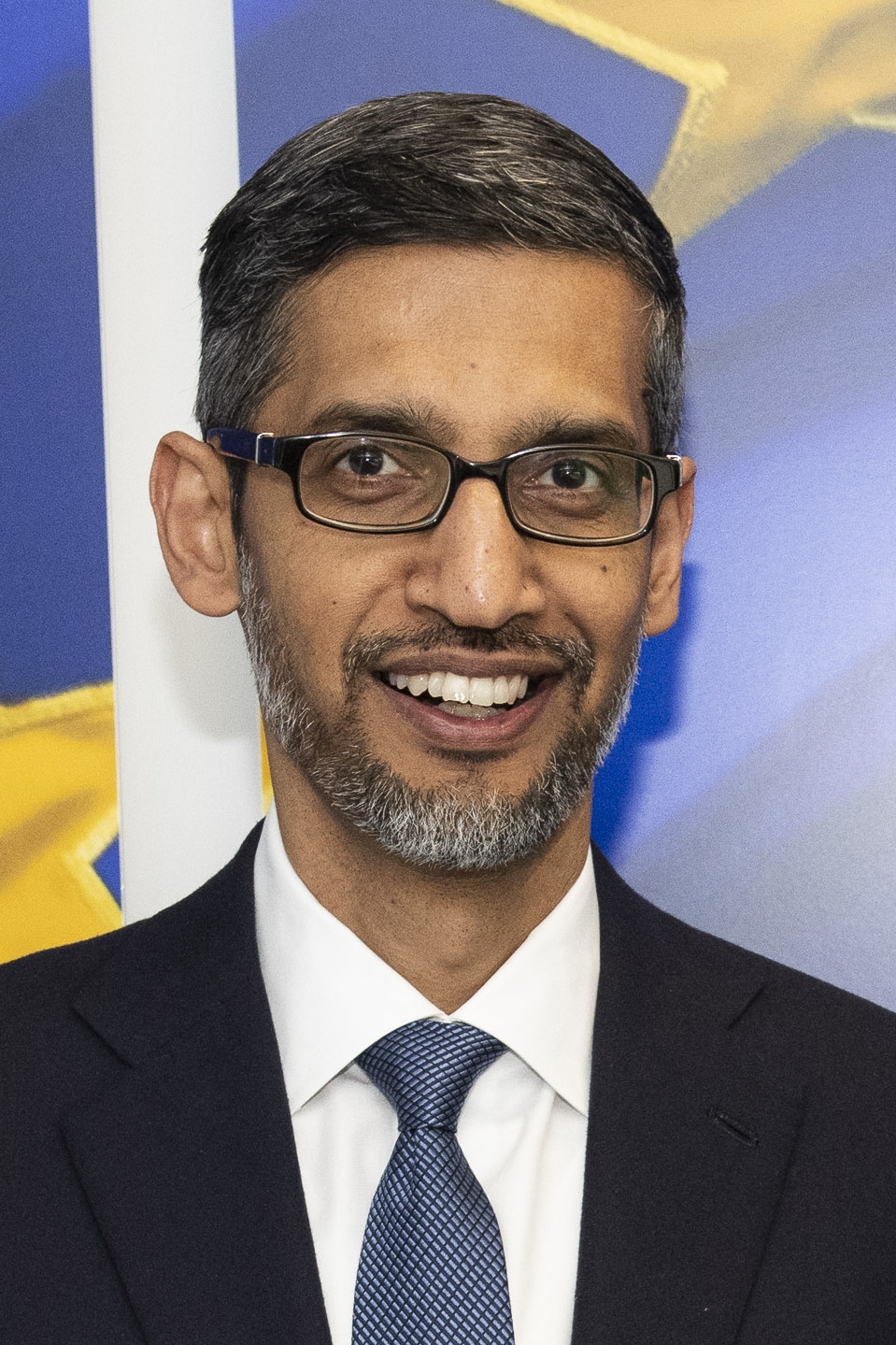
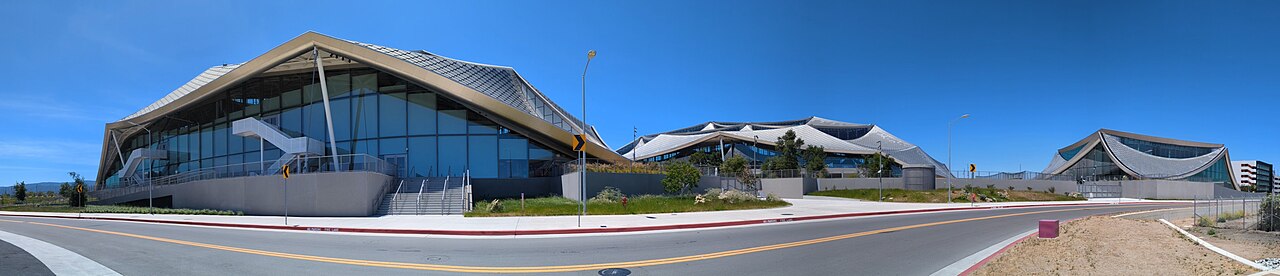
Header image: Sundar Pichai, CEO of Google and Alphabet, photographed in 2023 by Lukasz Kobus (European Commission), via Wikimedia Commons, CC BY 4.0. In-body photograph: Google's Bay View campus, by Dicklyon, via Wikimedia Commons, CC BY-SA 4.0. Both are file photos.