Alphabet's Q2 2026 earnings, reported on July 22, 2026, delivered a rare combination: a large revenue beat, an even larger acceleration in its fastest-growing segment, and a stock price that fell anyway. Total revenue reached $119.8 billion, up 24% year over year, comfortably ahead of Wall Street's roughly $116.5 billion estimate. The headline inside that number was Google Cloud, where revenue jumped 82% year over year to $24.8 billion. Yet shares dropped roughly 5% in after-hours trading, because the same earnings call carried a second number that investors found harder to like: Alphabet raised its full-year 2026 capital-expenditure guidance to $195 billion to $205 billion, up from the $180 billion to $190 billion range it had given just one quarter earlier. This piece walks through what actually changed in the cloud business, why the capex increase rattled investors despite the beat, what Alphabet's $514 billion cloud backlog does and does not tell us, and how the quarter fits into the broader hyperscaler spending race.
 Google
 Google Cloud
 Gemini
The headline numbers
Alphabet's Q2 2026 earnings put Google Cloud at the center of the story for the first time in the company's history as a public reporter of that segment. Cloud revenue growth had already been accelerating, from 32% year over year in Q2 2025 to 82% in Q2 2026, according to the company's SEC filing and coverage from CNBC and MLQ. Cloud operating income more than tripled to $8.8 billion, pushing operating margin from 20.7% to 35.6% in a single year. That combination, faster growth and a rapidly expanding margin, is unusual for a capital-intensive infrastructure business and is the clearest evidence that Google Cloud has crossed from a subsidized growth project into a genuinely profitable, scaled business.
Why cloud growth accelerated this much
Alphabet attributes the acceleration to three overlapping drivers: core Google Cloud Platform services, AI infrastructure (the GPU and TPU capacity Alphabet rents to enterprise and AI-lab customers), and what it calls Generative AI Solutions, essentially Vertex AI and Gemini model access sold to businesses. CEO Sundar Pichai told analysts on the call that the company still feels like it is in the "very early innings" of a broader secular shift toward AI-driven cloud consumption, a framing echoed across the earnings coverage from Investing.com and TheStreet. CFO Anat Ashkenazi was more specific about the constraint on the other side of that demand: "we're still in a supply-constrained environment," she said, adding that demand continues to outpace supply across the industry, not just at Alphabet.
Google Cloud's growth rate nearly tripled in a year
Quarterly Google Cloud revenue, in billions of dollars. Growth accelerated from 32% year-over-year in Q2 2025 to 82% in Q2 2026.
Cloud operating margin expanded alongside revenue, from 20.7% in Q2 2025 to 35.6% in Q2 2026, as the segment turned scale into profit.
That framing matters for how to read the capex number that follows. A company raising spending because demand is soft would be a warning sign. A company raising spending because it cannot build capacity fast enough to meet contracted and prospective demand is a different, though not risk-free, situation. Alphabet's own disclosures point to the latter, but that is a claim from the company itself and is worth treating as directional rather than independently audited.
The capex hike and the free-cash-flow tension
The number that actually moved the stock was capital expenditure. Alphabet spent $44.9 billion on capex in Q2 2026 alone, above the roughly $44.15 billion analysts expected and nearly double the $22.4 billion it spent in the same quarter a year earlier, according to Investing.com's earnings coverage. That level of spending pushed free cash flow negative for the quarter, roughly negative $5.9 billion by some calculations reported in earnings coverage. Alphabet also raised roughly $49.6 billion in June through a mix of Class A, Class C, and mandatory convertible preferred shares, issued about $2 billion in senior unsecured notes, and set up an at-the-market equity program of up to $40 billion, a financing mix that signals how much external capital this buildout now requires beyond operating cash flow alone.
Quarterly capex roughly doubled year-over-year
Alphabet's quarterly capital expenditure, in billions of dollars. The Q2 2026 figure pushed free cash flow negative for the quarter.
Full-year 2026 guidance was raised alongside the quarterly figure, from $180-190B to $195-205B, with roughly 60% earmarked for servers and 40% for data centers and networking.
We're still in a supply-constrained environment.
Anat Ashkenazi, Alphabet CFO, Q2 2026 earnings call
Roughly 60% of that technical infrastructure spending went to servers, with the remaining 40% split between data centers and networking equipment, per Data Center Dynamics' reporting on the call. Management also flagged that Google Cloud will lean on third-party capacity as a bridge while its own data centers come online, a step that Seeking Alpha's coverage noted is expected to put modest pressure on cloud margins in Q3, even after the margin expansion investors just saw in Q2. That is the tension at the core of the stock's reaction: the same AI demand driving 82% cloud growth and a beat-and-raise quarter is also the reason Alphabet says it needs to spend meaningfully more than it told investors just three months ago, and spend it before the market has full visibility into when it converts back into free cash flow.
What the $514 billion backlog means, and its limits
Alphabet's cloud backlog, the value of signed contracts not yet recognized as revenue, crossed $500 billion for the first time and now stands at $514 billion, up sharply from the prior year. Management and several outlets, including Cloud Wars, framed this as the justification for the capex increase: Alphabet is not spending ahead of demand speculatively, it is spending against contracts it has already signed. That is a meaningfully different story than capex funded purely by expectation.
Backlog numbers still deserve some caution. They represent multi-year commitments that convert to revenue over time, not cash already collected, and they can include large individual contracts whose actual delivery timelines, cancellation terms, and true margin profile are not fully visible from the topline figure alone. A backlog this large also reflects a small number of very large AI infrastructure deals, meaning it is more concentrated, and potentially more sensitive to a handful of customer decisions, than a backlog built from thousands of smaller enterprise contracts would be. None of that makes the number meaningless. It does mean $514 billion should be read as a strong demand signal with real contractual weight behind it, not as a guaranteed, risk-free revenue stream.
How Alphabet's spending compares to its peers
Alphabet's raised guidance does not exist in isolation. Microsoft has guided to roughly $190 billion in capital expenditure for fiscal 2026, up about 61% year over year, driven by the same AI data-center buildout and, per its CFO, an incremental $25 billion hit from higher component prices. Meta raised its own 2026 capex guidance to a range of $125 billion to $145 billion, up from $115 billion to $135 billion, also citing higher component costs and additional data-center spending. Combined, the largest hyperscalers are now on pace for roughly $700 billion or more in AI-related capital spending in 2026, up sharply from around $410 billion in 2025, according to compilations from CNBC and industry trackers. Alphabet's move to $195-205 billion puts it at or near the top of that group rather than trailing it, a shift from earlier in the AI buildout when Microsoft and Amazon were seen as the more aggressive spenders.
Seen across the sector, Alphabet's quarter is less an outlier than a data point confirming a pattern: every major cloud provider is telling investors the same thing at roughly the same time, that AI compute demand currently exceeds what they can build, and that the response is to spend more, not less, even as it depresses near-term cash generation. Whether that collective bet is proportionate to eventual returns is the open question the market is now pricing quarter by quarter, and it is the reason a genuine beat-and-raise quarter like Alphabet's can still send a stock lower.
The read-through for AI infrastructure, and for the layer above it
All of that spending, Alphabet's, Microsoft's, Meta's, and the rest of the industry's, is ultimately building capacity to run AI models, not any single model. A rack of servers funded by this capex cycle is agnostic about whether it ends up serving Gemini, a rival lab's model, or an open-weight model a customer chose to self-host. The economic value created by all this compute depends heavily on what happens one layer up, in the tools and workflows that decide which model runs which task. That is the same principle Metir AI applies at the application layer: rather than locking users into one provider's models, it gives teams model-agnostic access to leading AI systems in a single workspace, so the benefits of this infrastructure supercycle, whichever cloud or lab ultimately captures the most compute share, show up as better tools for the people actually using them.
The takeaway
Alphabet's Q2 2026 earnings are a genuinely strong quarter by conventional measures: a 24% revenue beat, 82% cloud growth, and cloud margins that more than tripled operating income in a single year. They are also a quarter where the market chose to focus on the cost of staying in that race rather than the results of running it. The $195-205 billion capex guidance, the negative free cash flow it produced this quarter, and the $514 billion backlog used to justify it are three sides of the same bet: that AI compute demand is real and durable enough to make today's spending look conservative in hindsight, not excessive. Alphabet's own numbers this quarter support that read. Whether the rest of the industry's spending, now approaching $700 billion combined for 2026, holds up to the same scrutiny is the question the next several earnings seasons will have to answer.
Sources:
- Alphabet Q2 2026 earnings takeaways: Google Cloud revenue jumps 82%, stock sinks on capex hike | CNBC
- Alphabet Raises 2026 Capex Guidance to $195-205B, Cloud Revenue Surges 82% | MLQ News
- Alphabet Q2 2026 slides: 24% revenue growth, cloud surges despite capex | Investing.com
- Earnings call transcript: Alphabet beats Q2 2026 estimates, shares fall on capex surge | Investing.com
- Alphabet signals $195B-$205B 2026 CapEx while expanding third-party capacity as a bridge | Seeking Alpha
- Alphabet Q2 2026 Earnings Highlights: Backlog Hits $514 Billion, Free Cash Flow Turns Negative | Bitget News
- Google Cloud Q2 Revenue Soars 82%, Backlog Jumps 390% | Cloud Wars
- Google spends almost $15bn on servers in Q2, boosts annual capex to $85bn | Data Center Dynamics
- Alphabet Stock Falls 5% After Hours as Record $205 Billion Capex Overshadows Cloud Beat | Eastern Herald
- GOOGL Drops Nearly 5% After-Hours - Alphabet Hikes 2026 Capex Spending To $205B | Yahoo Finance
- Alphabet Inc (GOOG) Q2 2026 Earnings Call Highlights: Record Revenue Growth and AI Innovations | Yahoo Finance
- Consolidated Alphabet operating income increased 30% | SEC 8-K Exhibit 99.1
- Microsoft calls for $190 billion in 2026 capital spending on soaring memory prices | CNBC
- Meta just bumped its 2026 capex forecast up to as much as $145 billion for the AI boom | Yahoo Finance
- Meta estimates 2026 capex to be between $115-135bn, as data center spend grows | Data Center Dynamics
- Hyperscaler CapEx Hits $690B in 2026 | Introl
Image credits
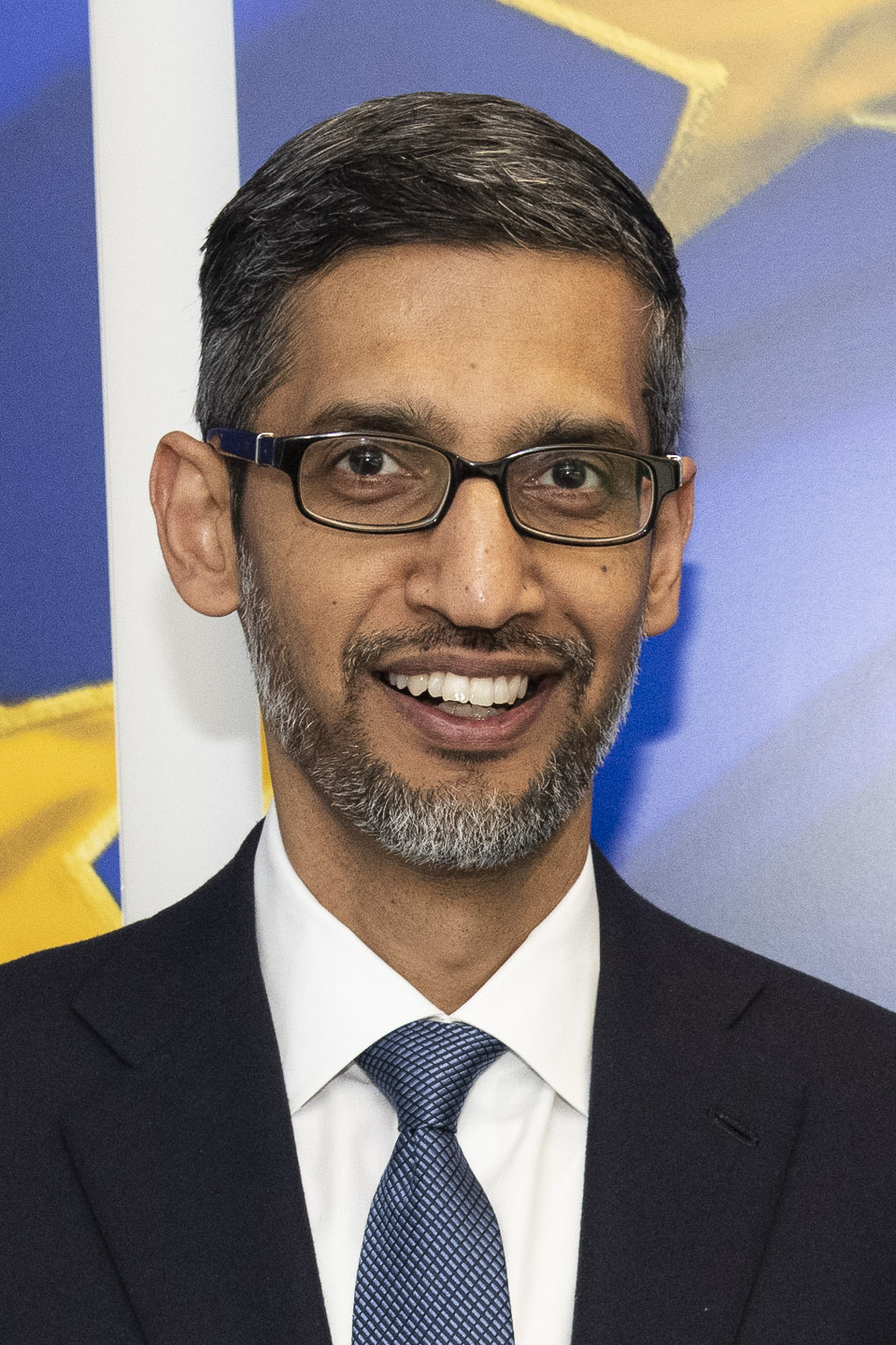
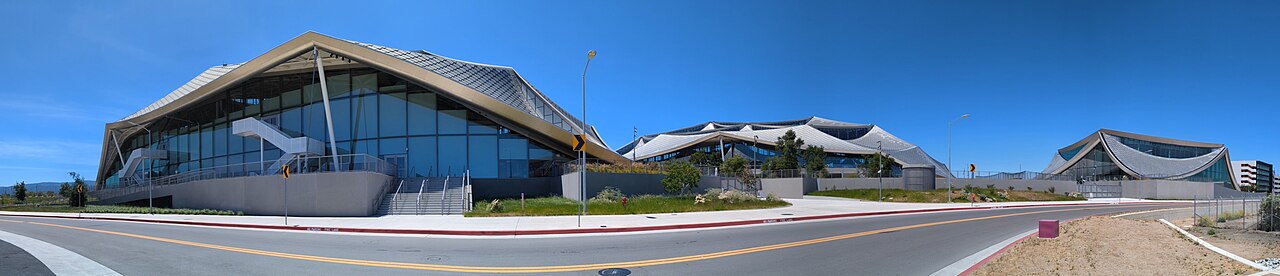
Header image: Sundar Pichai, CEO of Google and Alphabet, photographed in 2023, via Wikimedia Commons, licensed under CC BY 4.0. In-body photograph: Google's Bay View campus in Mountain View, California, the company's newest headquarters complex, opened in 2022, photographed by Dicklyon via Wikimedia Commons, licensed under CC BY-SA 4.0. No photograph exists of Alphabet's Q2 2026 earnings call itself or of the specific data-center capacity this quarter's capex funds, so both images depict the company and its leadership rather than the event.