Waymo, Alphabet's autonomous driving unit, has upsized its first private loan to $5 billion, according to Bloomberg reporting published on October 6, 2026. The deal is a notable step in robotaxi fleet financing: a company that has funded itself almost entirely with equity is now borrowing from private credit lenders. This article sets out what has been reported, what has not, and why a fleet operator might reach for debt.
 Waymo
Waymo Google
What was reported about the Waymo loan
Per Bloomberg coverage carried by Investing.com and Private Equity Wire, the facts are these:
- Size: $5 billion, up from an earlier target of more than $3 billion. Transport Topics, citing Bloomberg, first reported the larger-than-$3-billion talks on September 2, 2026.
- Lenders: Pacific Investment Management Co. (Pimco), Blackstone and Sixth Street Partners, with Goldman Sachs arranging the transaction.
- Pricing: 5.25 percentage points above the benchmark rate. The September report said it could price at more than 500 basis points over. One secondary summary rounds the spread to 5.2 points, so we use the figure in the Bloomberg-sourced reports.
- Structure: unrated, per Transport Topics and Crypto Briefing, meaning no credit rating agency graded it and lenders did their own underwriting.
- Status: reported as expected to close shortly, so terms could still be finalized.
The reports do not state the loan's maturity, whether it is secured by vehicles or other assets, or which benchmark it references. Those are the details that determine how much risk lenders carry, and they are not public in the sources we reviewed.
Waymo's 2026 financings: equity vs the new loan
Size in billions of US dollars. Grey is the February equity round; green shows the debut loan before and after it was upsized.
Sources: Electrive (Feb 3, 2026), Transport Topics (Sep 2, 2026), Private Equity Wire and Investing.com/Bloomberg (Oct 2026). The initial loan size was reported only as "more than $3 billion". Hover a bar for details.
Why a robotaxi operator turns to debt
The reported purposes are broad: scaling the fleet, expanding into more cities, and absorbing rising AI costs. Bloomberg-sourced coverage names Las Vegas and Detroit as US expansion markets, plus planned launches in Japan and Singapore. Reports differ on timing, and some summaries say the funds also cover custom silicon, so we treat the exact use of proceeds as reported in general terms only.
Several mechanisms make debt a natural fit for this business, and the points below are our analysis rather than company statements.
Vehicles are discrete, countable assets. A fleet is a set of identifiable cars with a purchase price, a build date and a depreciation schedule. Lenders in equipment and auto finance have long underwritten against exactly that kind of asset. Whether this particular loan is secured is not reported, but the underlying economics resemble asset-backed lending more than lending against pure software.
Debt does not dilute owners. Crypto Briefing notes the shift protects Alphabet shareholders from dilution while creating fixed interest obligations that do not flex with ridership. That second clause is the trade: equity absorbs a shortfall, while interest is owed regardless of how many rides are sold.
It diversifies the capital base. Waymo raised $16 billion at a $126 billion valuation in February, led by Dragoneer, DST Global and Sequoia with Alphabet participating, according to Electrive. That report puts total outside funding at about $27 billion including an earlier $11 billion. Adding a lender group means a growing fleet does not rely solely on repeated equity rounds.
Equity absorbs a shortfall in ridership. Interest does not.
Metir AI analysis of the trade-off the deal introduces
Fleet and rides: the numbers behind the borrowing
Waymo was giving about 400,000 paid rides a week in six US metro areas at the time of its February round, per Electrive and Travolution. It also reported 15 million rides in 2025. The October coverage cites more than 500,000 weekly paid rides and a goal of one million during 2026. City counts vary by source, from roughly a dozen to 14 or 15, so we do not give a single figure.
Waymo paid rides per week: reported vs target
Thousands of paid rides per week. Green bars are reported levels; the grey bar is a stated goal, not a result.
Sources: Electrive (Feb 3, 2026), Transport Topics (Sep 2, 2026), Private Equity Wire (Oct 2026). Hover a bar for details.
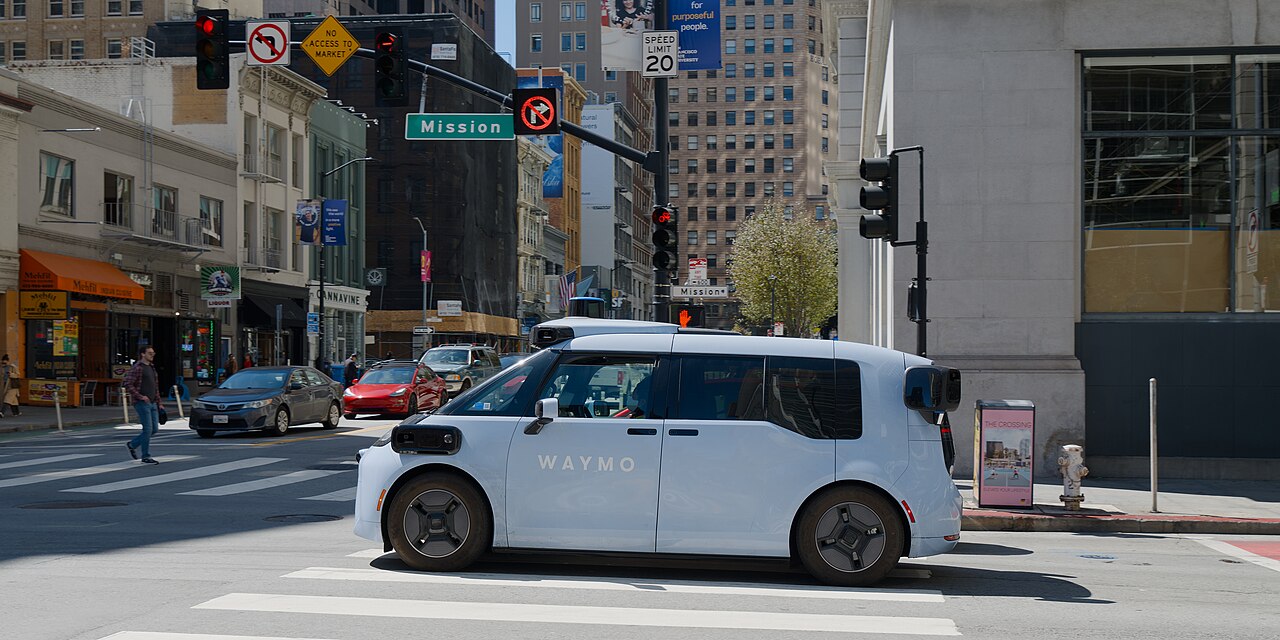
On the vehicle side, Waymo has not published a current total fleet size in the sources we reviewed. Electrek reported on August 12, 2026 that a community member's monthly aerial counts found 953 Ojai units at the Arizona factory, of which 684 were finished. That is an unofficial tally, not a company figure. The Ojai is the purpose-built sixth-generation vehicle, with a Zeekr base vehicle retrofitted by supplier Magna with Waymo's driver system, per the same report. We covered the vehicle's custom compute in our look at Waymo's 5nm robotaxi chip.
How this compares with other AI-era debt
Waymo is not the only capital-intensive AI builder leaning on credit. In our analysis of the AI leveraged-loan surge we reported figures attributed to Goldman Sachs showing AI-linked leveraged finance at $88 billion year to date, against $20 billion a year earlier. We also noted that GPU-backed loans such as CoreWeave's $3.1 billion facility pledge chips as collateral.
The comparison is instructive because the assets differ in how they age:
- Data center shells can support long debt because the building keeps its use.
- GPUs are replaced as newer generations arrive, so collateral life can be shorter than loan life.
- Robotaxis are vehicles with a service life measured by mileage and wear, plus a software and sensor stack that can be upgraded. Waymo's move to a new vehicle platform and custom chip means older and newer generations will coexist in one fleet.
A difference in borrower type matters as well. Many GPU borrowers are newer companies without a parent. Waymo sits inside Alphabet, though the reports describe a loan to Waymo itself and do not say Alphabet guarantees it. We could not confirm any guarantee, so that point is open.
Unit economics questions to watch
A $5 billion loan raises questions the public record cannot yet answer. These are the ones we would watch:
- Cost per vehicle versus revenue per vehicle. Waymo has not published per-vehicle cost or per-ride profit in the sources reviewed. Interest, depreciation, charging, cleaning, remote support and insurance all sit between a fare and a margin.
- Utilization. Debt service is fixed. A vehicle that completes more paid rides per day spreads that cost across more revenue. Weekly rides rising from about 400,000 to more than 500,000 helps only if the fleet grows more slowly than rides.
- Interest burden. Arithmetic only: each percentage point on $5 billion is $50 million a year. At a spread above 5 points, the annual cost is sizable even before the benchmark rate is added. The actual drawn amount and schedule are not reported.
- Vehicle residual value. If the loan is secured, lenders will care what a used robotaxi is worth. A purpose-built Ojai with a retrofitted driver system may not resell like a conventional car.
- Refinancing path. Unrated private loans are often refinanced into cheaper debt once a borrower has a track record. Transport Topics noted Uber issued its first debt in 2016 before going public in 2019, an analogy only.
What to watch next
- Whether the loan closes at the reported size and which terms are disclosed.
- Whether Waymo hits the one-million weekly ride goal this year.
- Whether other autonomous vehicle operators seek private credit.
- Whether lenders ask for collateral tied to vehicles, which would show how they value them.
For readers tracking AI infrastructure finance, the practical lesson is that the funding stack is widening beyond equity and hyperscaler bonds.
Sources:
- Waymo Taps Pimco, Blackstone for $5 Billion Loan to Accelerate Growth (Bloomberg, Oct 6, 2026). Headline and URL seen in search; page itself blocked, so details come from the syndicated versions below
- Waymo upsizes debut private loan to $5 billion to fund expansion (Bloomberg via Investing.com)
- Waymo expands private debt raise to $5bn to fund robotaxi growth (Private Equity Wire)
- Alphabet's Waymo Revs Up Debt Raise From $3B to $5B (TipRanks)
- Waymo upsizes its first debt deal to $5 billion (Crypto Briefing)
- Waymo seeks more than $3B in first debt deal to fund growth (Transport Topics, Sep 2, 2026)
- Waymo raises $16 billion from investors (Electrive, Feb 3, 2026)
- Waymo raises $16 billion to deploy its autonomous taxis (Travolution)
- Waymo Ojai robotaxis at the Arizona factory (Electrek, Aug 12, 2026)
Image credits
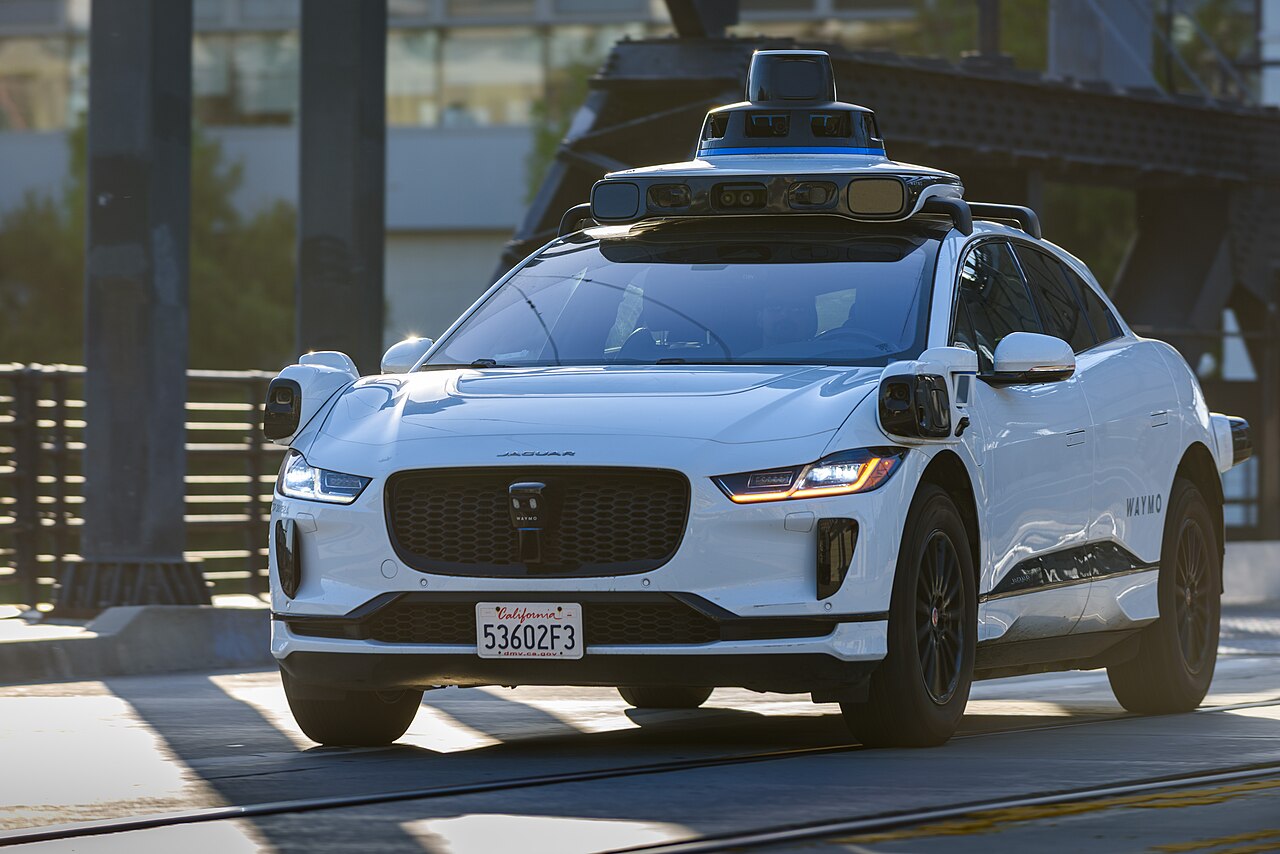
- Hero: a Waymo Jaguar I-Pace, by 9yz, via Wikimedia Commons, CC BY 4.0. The photo shows an earlier-generation Waymo vehicle, not the Ojai.
- In-body: Waymo Ojai on Mission Street, San Francisco, July 23, 2026, by Daniel Lu (dllu), via Wikimedia Commons, CC BY-SA 4.0.