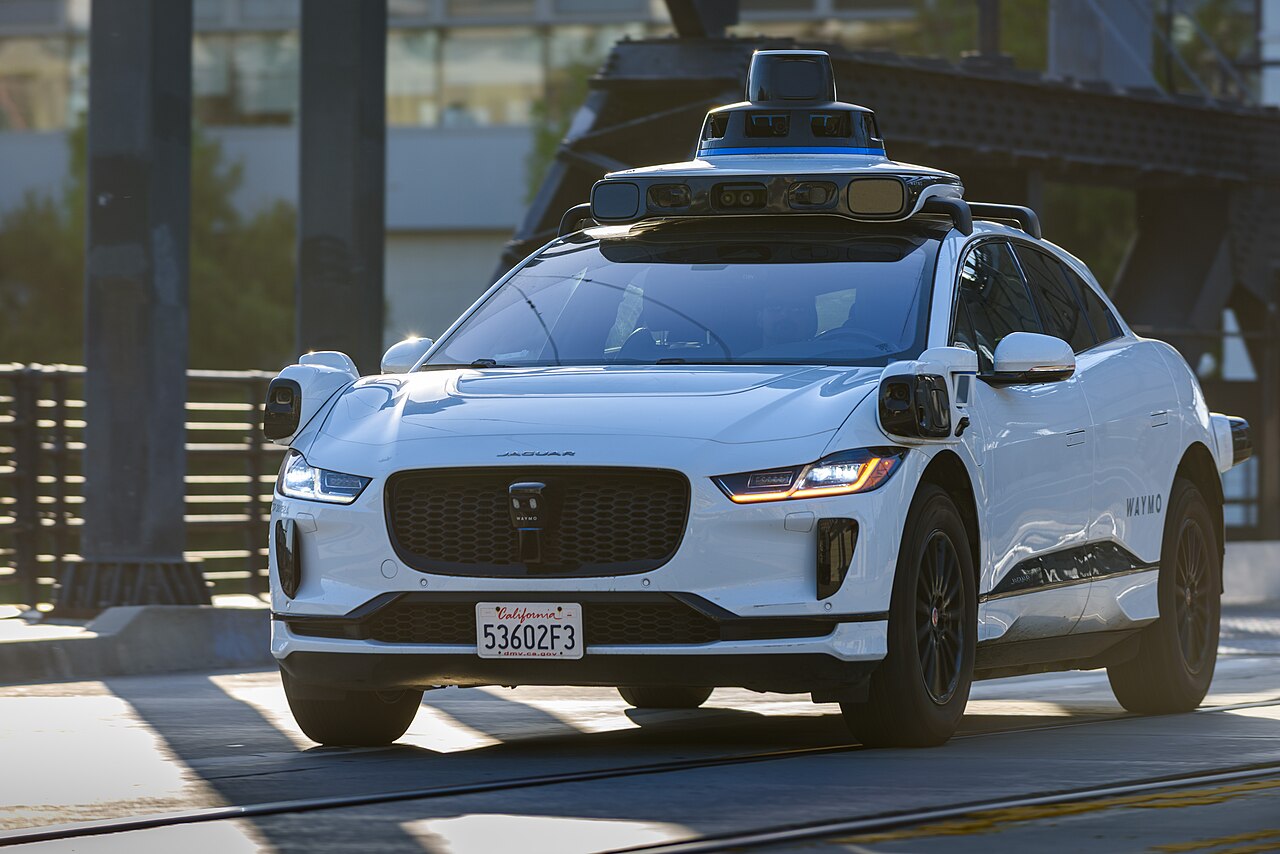
On August 20, 2026, Alphabet's Waymo disclosed that it has designed a custom silicon chip for its robotaxis, a 5-nanometer application-specific integrated circuit that delivers more than 1,000 trillion operations per second. The disclosure, first reported by Bloomberg and expanded in TechCrunch's mobility coverage three days later, landed the day after Waymo opened its newest-generation robotaxi, which it calls Ojai, to all riders across Los Angeles, Phoenix and San Francisco. It is a notable step for a company that has spent most of its life buying compute rather than building it.
 Waymo
Waymo Google
 NVIDIA
What the chip actually does
The most common misreading of this news is that Waymo has built the "brain" that drives the car. It has not. By Waymo's own description, the chip is an edge pre-processor: it sits at the front of the pipeline and handles the raw, noisy firehose of data coming off the vehicle's lidar, radar and thirteen camera feeds before that data reaches the core machine-learning system. Its jobs include temporal denoising, which improves perception in low light, and extracting structured information from raw streams so the main model works from a cleaner picture.
Where the custom chip sits in the stack
Waymo describes its chip as an edge pre-processor, not the driving model itself. It handles the raw sensor data before the core system ever sees it.
Lidar, radar and 13 camera feeds produce a firehose of raw, noisy data every second the vehicle is moving.
→The new 5nm chip, over 1,000 TOPS, cleans and compresses that data on the vehicle: temporal denoising, sensor fusion and early inference, close to where the signal is captured.
→The cleaned, structured data reaches the main driving model, which handles perception, prediction and planning. The pre-processing means it works from a sharper picture.
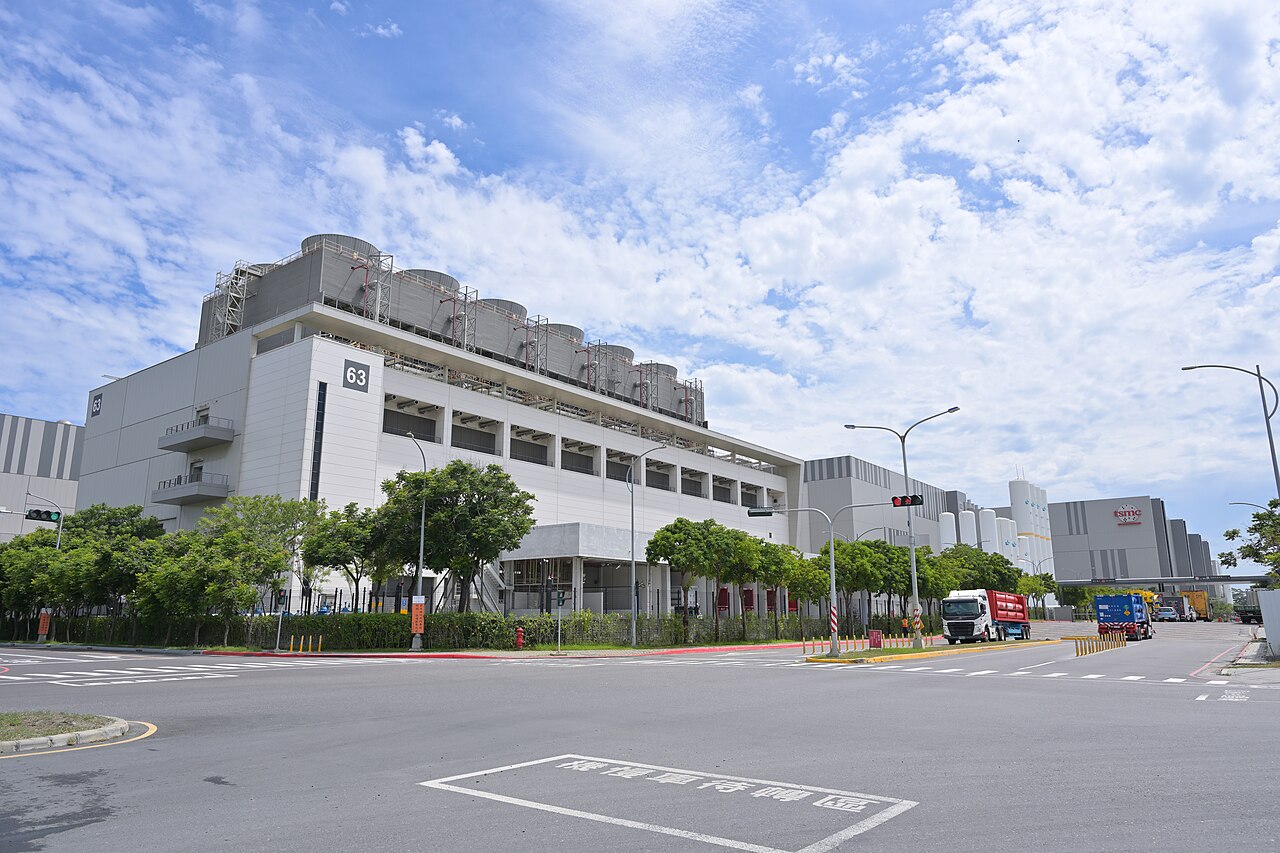
Simplified for clarity. Waymo built the chip with a group of partners including TSMC, which fabricates it on a 5-nanometer process.
That distinction matters for understanding the strategy. Pre-processing raw sensor data is a well-defined, high-throughput, latency-sensitive workload, exactly the kind of narrow task a custom ASIC is good at and a general-purpose GPU is expensive at. Waymo is not trying to replace the flexible compute that trains and runs its driving models. It is carving off the one part of the workload that is stable enough to bake into fixed silicon, and leaving the rest on programmable hardware.
Why a company owned by a chip designer built another chip
There is an obvious irony here. Waymo's parent, Alphabet, already designs some of the most advanced AI accelerators in the world in Google's Tensor Processing Units. Building a separate robotaxi chip underlines how specialized in-vehicle autonomy compute has become: a TPU is built for data-center training and inference, not for denoising camera frames inside a moving car on a tight power and thermal budget. The requirements are different enough that a purpose-built part wins.
The chip is an edge pre-processor, not the driving model. It cleans the data before the core system ever sees it.
Based on Waymo's August 2026 description
Waymo also framed the chip as a way to diversify its supply beyond third-party vendors such as Nvidia and to bring costs down. Both points deserve a careful read. The partner list Waymo published for the project still includes Nvidia, alongside AMD, Micron, Samsung, Sandisk, Socionext and TSMC, so this is not a clean break from any single supplier. It is better understood as adding an in-house layer that reduces how much of the total compute bill flows to outside chipmakers, at a moment when advanced AI silicon is both scarce and expensive.
The economics behind the silicon
The clearest reason to build your own chip is unit economics. A robotaxi business only works if the fully loaded cost of each vehicle, including the compute hardware bolted into it, falls far enough that per-mile revenue clears it. Custom silicon attacks that in two ways: a chip designed for exactly one workload can do more work per watt and per dollar than a general-purpose part doing the same job, and designing it in-house removes a supplier's margin from every unit built.
That math only pays off at scale, which is the other half of the August news. Waymo said roughly 300 Ojai vehicles are already in its commercial fleet, and analysts at MoffettNathanson have estimated the company is on pace to field around 5,000 of the vehicles in the United States by the end of 2026. Spreading a chip's fixed design and tape-out costs across thousands of vehicles, and eventually far more, is what turns a large upfront engineering bill into a lower cost per car. Below a certain fleet size, buying off-the-shelf is cheaper; above it, owning the design starts to win.
A wider pattern of vertical integration
Waymo is not alone in concluding that the company operating the autonomy system should also own the silicon underneath it. Tesla designed its own Full Self-Driving inference chips years ago, and across the broader AI industry the same logic is playing out: Google, Amazon, Meta, Microsoft and OpenAI have all invested in custom accelerators to reduce their dependence on merchant silicon. What is distinctive about Waymo's move is how narrowly the chip is scoped. Rather than trying to build a do-everything processor, it targeted the single workload where a fixed-function design gives the biggest advantage.
The honest reading is that this is an incremental, well-targeted piece of vertical integration rather than a dramatic reinvention of how a robotaxi thinks. The driving intelligence still runs on flexible, largely third-party compute. The custom chip cleans up the inputs, shaves cost and power off every vehicle, and gives Waymo one more lever it controls directly as it scales. Those are real advantages, but they are advantages of efficiency and supply-chain control, not a claim that the car now drives itself in some fundamentally new way.
For anyone building on top of fast-moving AI infrastructure, the takeaway is less about robotaxis and more about the direction of travel: the AI stack is verticalizing, and the parts that were once bought off the shelf are increasingly being pulled in-house. Keeping a layer of flexibility, rather than hard-wiring a product to one vendor's roadmap, is the same principle behind Metir AI's model-agnostic design, and it is why the question of who owns which layer of the stack is worth watching closely.
Sources:
- Alphabet's Waymo Has Built a Custom Chip for Its Robotaxis | Bloomberg
- TechCrunch Mobility: The custom chip driving Waymo's robotaxi ambitions | TechCrunch
- Waymo builds its own chip for its robotaxis, cutting its reliance on Nvidia | The Decoder
- Waymo's custom chip decides what the car sees | The Next Web
- Waymo details custom AI silicon for autonomous vehicles | Silicon Republic
Image credits
Header image: A Waymo-operated self-driving Jaguar I-Pace showing its roof-mounted lidar, radar and camera sensor pod, photographed in San Francisco, by 9yz via Wikimedia Commons, licensed under CC BY 4.0. Used to illustrate Waymo's sensor stack generally. In-body photograph: TSMC Fab 18 in the Southern Taiwan Science Park, by 4300streetcar via Wikimedia Commons, licensed under CC BY 4.0. Illustrative of TSMC's fabrication, not the specific Waymo chip line.