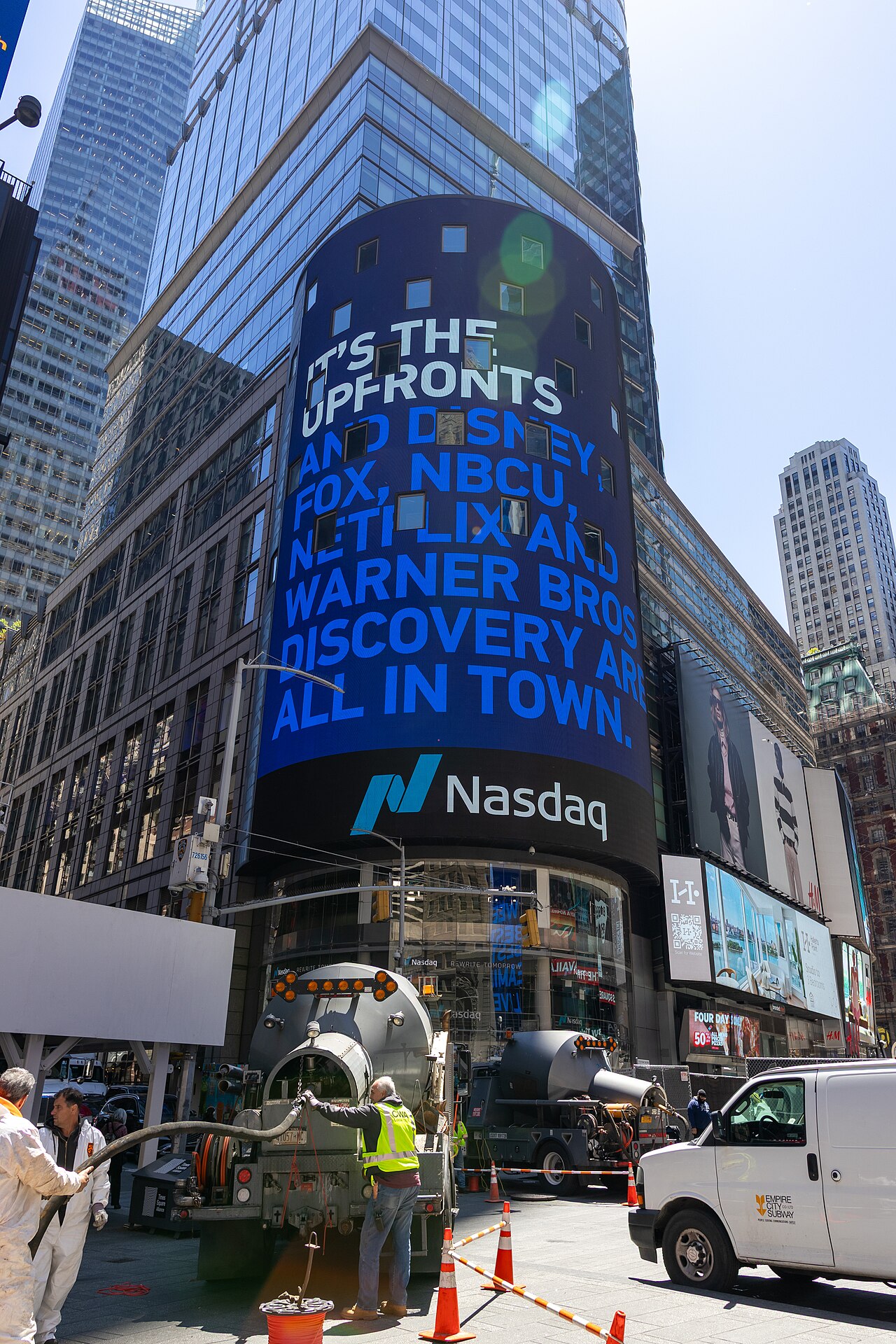
On Thursday, November 5, 2026, the Nasdaq fell 5.5%, its steepest one-day slide since April 2025 and its worst day in 19 months, according to CNBC. Nvidia and Qualcomm each fell more than 9%, and Nvidia alone lost almost $450 billion in market value. The day came two days after the US midterm elections and one day after Qualcomm gave a disappointing forecast.
This post lays out what was reported, separates the facts from the explanations offered for them, and looks at the one structural question underneath the headline: whether public resistance to data centers changes the economics of the AI buildout.
What happened on November 5
CNBC reported that Nvidia and Qualcomm each fell more than 9%, and that AMD, Micron and Applied Materials each suffered double-digit percentage losses. CoreWeave fell for a second straight day. Alphabet, Amazon, Microsoft and Meta each dropped between 2% and 4%, while Tesla and SpaceX each fell more than 9%.
Who fell, and by how much
One-day declines on November 5, 2026. Bars show the lower bound CNBC reported; labels show the reported figure.
Source: CNBC, November 5, 2026.
The spread matters. The companies that sell chips and chip equipment fell the most, the companies that buy them in bulk fell by a few percent, and the two Musk-linked companies fell as far as the chipmakers. CNBC noted that Elon Musk gave hundreds of millions of dollars to Republican candidates, and treats that as context for the Tesla and SpaceX moves. It does not establish that as the cause.
The explanations on offer
CNBC attributes the move to several overlapping concerns, which are worth keeping separate:
- Election results and the buildout. Democrats won key governor and Senate races in Texas and Ohio and the governor's race in Georgia, and Sen. Jon Ossoff won reelection. CNBC says the results raised concerns that the AI infrastructure buildout will slow.
- Data center ballot measures. Ballotpedia counted 41 local ballot measures in 10 states restricting data center construction. CNBC's summary says voters opposed all of them except one in Harwood, North Dakota. The wording of that line is ambiguous on its own, but a related CNBC piece is headlined "Voters rejected AI data centers over resource concerns," which suggests the votes went against new data center construction. Per-measure results are best checked against Ballotpedia directly.
- Qualcomm's forecast. Qualcomm reported on November 4 and issued a disappointing forecast for the current quarter. Its data center revenue was $650 million, mostly customization and connectivity work. CEO Cristiano Amon said: "We don't have a demand issue; it's a supply issue."
- Rates, capital and memory. CNBC also cites rising interest rates, heavy capital needs, fears of too much debt and too little revenue, and the global memory shortage, which raises component prices and pressures device makers.
We don't have a demand issue; it's a supply issue.
Cristiano Amon, Qualcomm CEO, via CNBC
Reading the numbers against each other
Two datapoints from the same week point in opposite directions, which is why the day is hard to interpret.
First, the demand side looked strong in company reports. AMD reported on November 3 that revenue rose 45% to $13.38 billion and that its data center business nearly doubled, and Intel reported a 78% jump in data center revenue for the third quarter. We analyse the AMD report in a separate post.
Second, the financing side showed strain. CNBC reports that hyperscalers plan spending well above $100 billion a year, that Meta became free-cash-flow negative last quarter, and that Alphabet and Amazon turned negative in the prior period. A selloff driven by funding capacity rather than demand would look like this: strong supplier results, weak supplier stocks.
By our own rough arithmetic, a loss of almost $450 billion at a decline of a little over 9% implies Nvidia's market value was around $5 trillion before the drop. That is our estimate from two rounded figures, not a reported number.
What the ballot measures do and do not tell us
Local measures restricting construction act on the supply side of the buildout: permitting, siting and water or power use. They do not change what a customer will pay for compute. If more jurisdictions restrict siting, capacity is added more slowly or in different places, which is the same pattern Qualcomm describes as a supply constraint, though for a different reason (chips and memory rather than land and permits). Meta's president Dina Powell McCormick said building data centers will be "going to be harder" after the elections, per CNBC.
What a single day cannot show is persistence. Richard Clode of Janus Henderson told CNBC there would be a "knee-jerk reaction, and that could lead to some delays," a framing that explicitly leaves open that the reaction fades. Peter Boockvar of OnePoint BFG Wealth Partners said that if development slows, the buildings and infrastructure would drive stock declines.
What to watch next
- Capex guidance. Whether hyperscalers change their spending plans in the next reporting cycle, since the debate is about funding and siting rather than demand.
- Supply disclosures. Whether memory and advanced-packaging constraints, cited by both Qualcomm and AMD, ease.
- Local permitting. Whether the 2026 ballot pattern is repeated in other jurisdictions or remains a set of isolated local decisions.
 NVIDIA
 AMD
 Microsoft
 Meta
 Anthropic
For teams building on top of these models, a market move like this is a reminder that infrastructure cost and availability can shift quickly. Keeping applications portable across providers, as platforms such as Metir allow, is one way to limit exposure to any single vendor's capacity or pricing, though it does not remove the underlying supply question.
Sources:
- AI meltdown: Nvidia and Qualcomm drop more than 9%, pushing Nasdaq to worst day since April 2025, CNBC, November 5, 2026
- AMD Q3 2026 earnings report, CNBC, November 3, 2026
Image credits
- Hero: "Nasdaq Tower May 2026" by Nielsoncaetanosalmeron, licensed CC BY 4.0, via Wikimedia Commons. Retrieved November 2026 and visually reviewed. It shows the exterior of the Nasdaq Tower in Times Square during the May 2026 network upfronts; it is a file photo of the building and does not depict the November 5 trading day.