Texas Instruments reported third-quarter 2026 results on October 21, and the headline was not a GPU or a model: it was an analog chip company whose data center revenue grew about 95 percent from a year earlier. Revenue for the quarter was $6.055 billion, up 28 percent year over year, with net income of $2.425 billion and diluted earnings of $2.62 per share, according to the company's release.
Most AI infrastructure coverage focuses on accelerators, memory and the networking that links them. Texas Instruments sits in a different layer: the power conversion, signal conditioning and sensing chips that surround those processors, and the industrial and automotive electronics that make up most of its business. Its quarter is a useful way to see how far AI demand is spreading, and how much of the company's recovery is something else entirely.
The numbers in context
From the earnings release, with ratios calculated from the reported figures:
- Analog revenue: $4.911 billion, about 81 percent of the total.
- Embedded Processing: $858 million, about 14 percent.
- Other: $286 million, about 5 percent.
- Operating profit: $2.874 billion, a margin of about 47.5 percent. BigGo's summary of the call put the year-over-year increase at 73 percent and gross margin at 64 percent.
- Cash: Operating cash flow was $3.419 billion for the quarter. Trailing 12-month free cash flow was $8.422 billion, which the company states is 40.6 percent of revenue.
- Capital spending: $463 million in the quarter and $2.578 billion over twelve months, with 2026 expected at the higher end of a $2 billion to $3 billion range.
- Dividend: Raised 7 percent to $1.52 per share, from $1.42, the 23rd consecutive annual increase per call coverage.
Texas Instruments Q3 2026: growth by end market
Year-over-year revenue growth as described by management. Bar heights use the stated figure; "over 40%" and "mid-teens" are approximate.
Data center is the smallest of the three by revenue but the fastest by growth rate.
Where the growth came from
Management described three end markets, summarized in transcript coverage by BigGo Finance and The Motley Fool:
- Data center: up about 95 percent year over year and about 20 percent from the prior quarter, now roughly 13 percent of company revenue. CEO Haviv Ilan said the data center market is not influenced by seasonality. TI said it sells about 10,000 generic part numbers into the market.
- Industrial: up more than 40 percent year over year and about 10 percent sequentially, passing its third-quarter 2022 peak for the first new high in four years. Strength was cited in aerospace and defense, energy infrastructure, test and measurement, and robotics.
- Automotive: up in the mid-teens year over year, with demand in China and the United States. Management said customers are ramping without building significant inventory.
How much of the growth is AI?
Data center is a small share but a large contributor to the increase. If it is about 13 percent of $6.055 billion, it generated roughly $0.8 billion this quarter, and a 95 percent growth rate implies about $0.4 billion a year earlier. Total revenue grew about $1.3 billion over the same period ($6.055 billion against roughly $4.73 billion implied by the 28 percent rate). On those rounded inputs, data center supplied about 30 percent of the incremental revenue from 13 percent of current revenue. This is our estimate from rounded figures, not a company-reported number.
Data center is about an eighth of the company but roughly three in ten of the new dollars. The rest of the recovery is industrial and automotive.
Analysis from reported figures
The other 70 percent is an ordinary cyclical recovery. Industrial surpassing a 2022 peak says that the post-pandemic inventory correction is over and that electronics content per system has kept rising. That distinction matters for anyone reading the quarter as a pure AI story: the AI contribution is real and fast-growing, but the company's results still depend mainly on the industrial cycle.
Pricing: a quiet signal
Analog pricing was flat in the first half of 2026 and rose modestly in the second half, with annual 2027 pricing negotiations under way and details expected on the January call, per the call summary. Ilan attributed the shift to demand and to limited new analog capacity outside China over the past four years.
Pricing power in a commodity-adjacent category is a lagging indicator of tightness. It does not mean shortage, and the inventory data argue against one: TI held $4.7 billion of inventory, up $67 million from the prior quarter, equal to 194 days, down two days. Ilan reportedly said that automotive customers who were caught short are not comparable to the shortages of the pandemic.
Guidance and the seasonal question
Fourth-quarter guidance is revenue of $5.80 billion to $6.30 billion and earnings per share of $2.45 to $2.79. The midpoint of about $6.05 billion is roughly flat from the third quarter, against a typical seasonal decline of mid-to-high single digits, according to the call summary. Management named industrial, automotive and data center as the drivers.
The range is wide, about $500 million, and it brackets both a seasonal dip and a further rise. Management's own framing is that the outlook reflects above-seasonal demand.
Manufacturing footprint
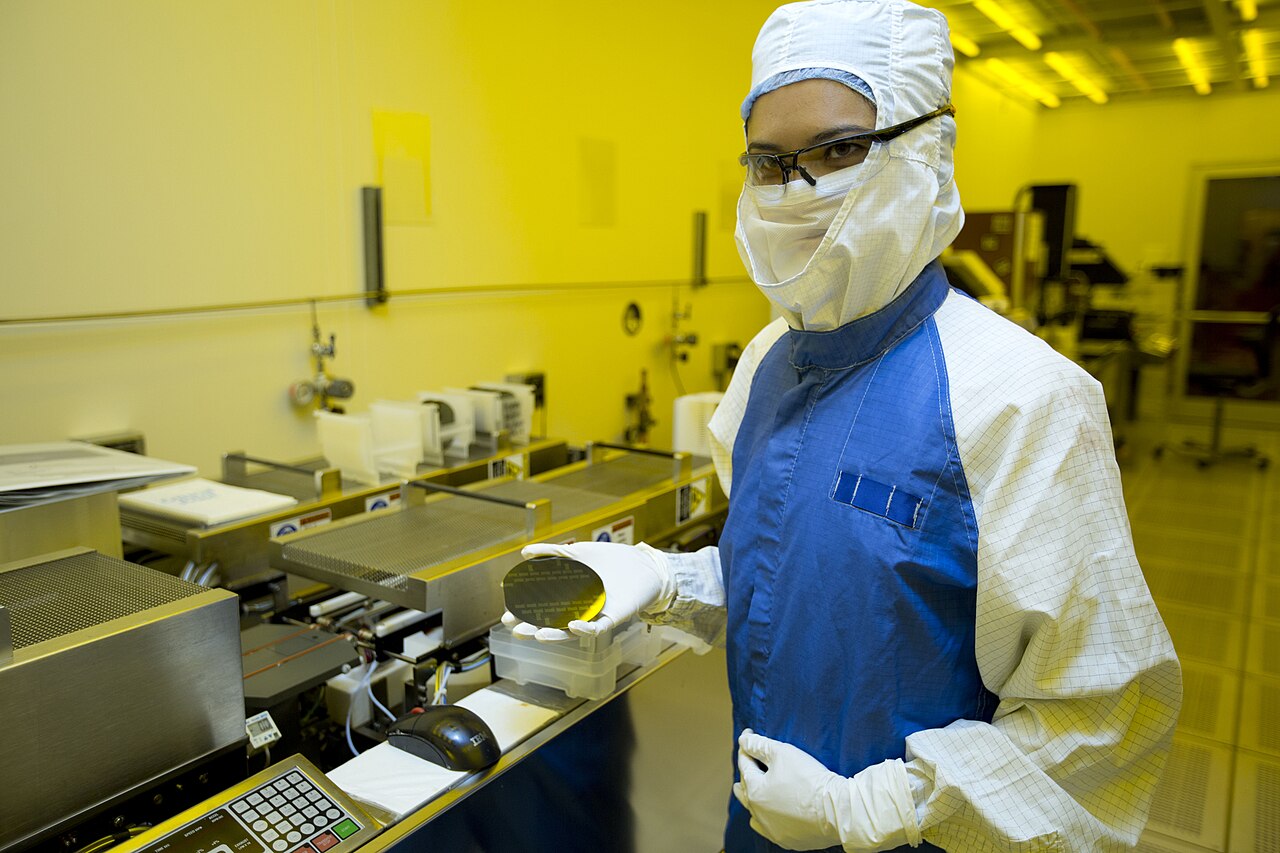
Call coverage said the Lehi, Utah LFAB1 fab has ample cleanroom space for growth, the LFAB2 shell is nearing completion, and a Malaysia assembly and test site is ramping and is now TI's largest. TI builds most of its own chips, which is a different model from fabless companies and from the foundry-dependent AI accelerators. Owning capacity gives it control over supply when demand is rising, and also fixed costs when it falls.
Market reaction
Reports of the stock's response were mixed in the sources we reviewed: BigGo described shares rising in after-hours trading, while another summary said analysts mostly raised price targets even as shares slipped. We did not find a confirmed closing move, so we do not state one. The pattern is consistent with the week's other chip results. Lam Research beat estimates and fell, as we covered in our analysis of its guidance, which shows how much results depend on what was already priced in.
What it means
- AI demand is broadening. Spending on accelerators pulls in power, sensing and signal chips from vendors that rarely feature in model-launch headlines.
- Not every recovery is AI. A four-year industrial high and mid-teens automotive growth carry most of the weight.
- Capital intensity is rising. Higher capex, new fabs and a 40.6 percent free cash flow margin show the economics of owning capacity at a good point in the cycle.
For teams that depend on AI services, physical supply chains of this kind are part of why costs and availability move over time, and why model-agnostic tools such as Metir make it practical to switch providers when conditions change.
Sources:
- TI reports third quarter 2026 financial results and shareholder returns | PR Newswire
- Texas Instruments Q3 2026 Earnings Call summary | BigGo Finance
- Texas Instruments (TXN) Q3 2026 Earnings Call Transcript | The Motley Fool
- TI reports third quarter 2026 financial results | Texas Instruments Investor Relations
- Texas Instruments 10-Q for the quarter ended September 30, 2026 | SEC
Image credits
Header image: Texas Instruments sign at its Dallas, Texas campus (photograph dated June 2018), released under CC0 via Wikimedia Commons. In-article image: a technician holding a silicon wafer in a cleanroom, U.S. Department of Energy, public domain, via Wikimedia Commons.