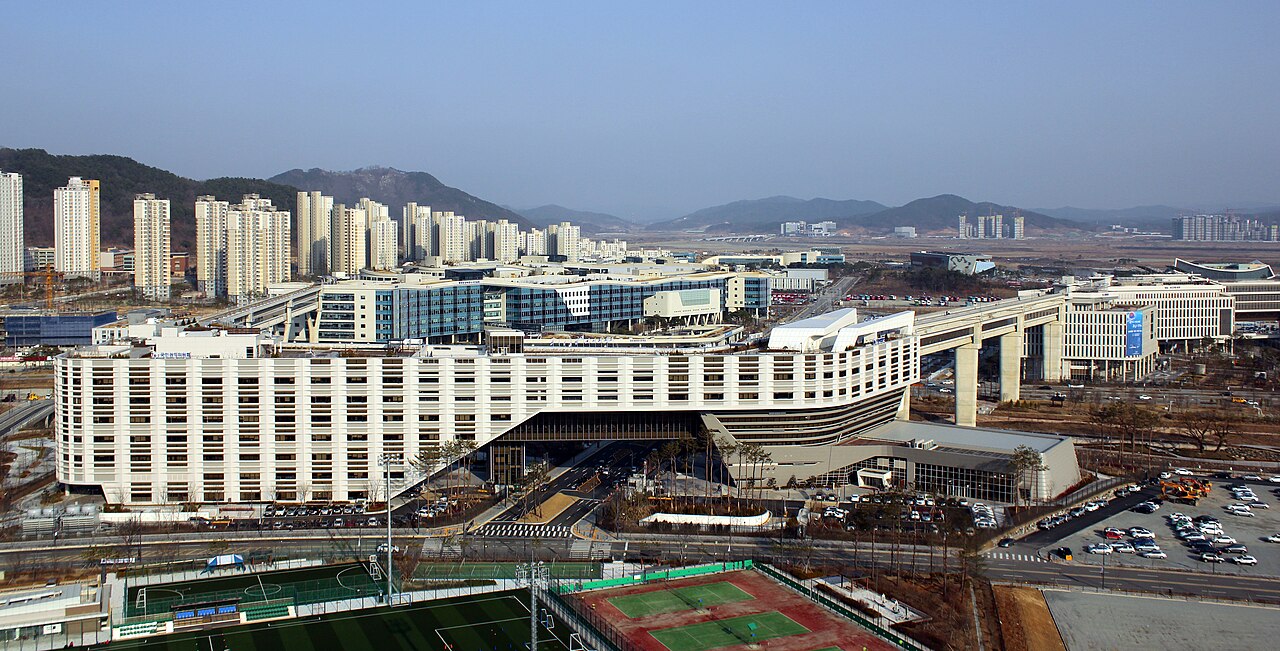
South Korea's science ministry says it plans to launch a frontier AI model program worth 4.7 trillion won (about $3.5 billion) from March 2027, according to a Reuters report published on October 6, 2026. The money would mostly buy computing power, and the plan is explicitly separate from the country's existing sovereign foundation model contest. It is a large number by Korean standards, and a small one next to the biggest national AI commitments elsewhere. This post separates what the ministry has stated from what remains undecided.
 NVIDIA
What South Korea has announced
The Ministry of Science and ICT (MSIT) said it will pick a lead developer through a competitive tender once parliament approves the 2027 budget, expected in December. The winner could be chosen as early as February, with the program starting in March 2027, per Reuters.
Reported structure and scope:
- Size: 4.7 trillion won, roughly $3.5 billion at the exchange rate Reuters used.
- Funding mix: state equity investment combined with private funding. The ministry has also been reported to plan an independent fund for the project.
- Compute: about 3.85 trillion won, most of the total, is for expanding GPU capacity.
- Who can bid: single companies, consortiums or special-purpose vehicles, with the stated aim of letting startups, firms, universities and researchers take leading roles.
- Goal: a model with leading global performance, with chips, data and talent concentrated on one effort.
The ministry has not published an official English program name that we could find, so this post uses the descriptive label "frontier AI model program." The figure sits inside a wider budget request: according to Korean press coverage of the 2027 request, MSIT is asking for a record 29.6 trillion won overall (up 24.5%), of which 9.4 trillion won (up 84.3%) is for the shift to AI. That request reportedly includes 5.59 trillion won for top-tier foundation models and infrastructure for roughly 10,000 GPUs. Because the program is part of a budget request, it is not yet appropriated money.
The initiative would be separate from the home-grown foundation model programme, which will continue.
Reuters, October 6, 2026, summarising the ministry's statement
How it fits with the existing foundation model project
Korea already runs a sovereign AI foundation model project, launched in 2025 with five teams: Nvidia named Naver Cloud, Upstage, SK Telecom, NC AI and LG AI Research as participants in its own announcement of the effort. The field has been narrowed in staged reviews. According to local reporting, three teams remain (SK Telecom, LG AI Research and Upstage), and per Reuters a third-stage review in February 2027 will pick two final teams.
The two programs therefore overlap in time. The existing contest produces models in the near term for a broad public and enterprise audience. The new program is pitched at a higher tier, funded at a scale that implies training runs on much larger clusters.
One open question, flagged in local coverage, is how GPUs will be divided between the two. The budget earmarks computing capacity, but reports say no specific allocation plan has been set. Developers in the current contest may reasonably wonder whether the new program will draw on the same pool of chips.
Why compute is most of the budget
Training a frontier-class model is dominated by accelerator cost, and spending 3.85 trillion of 4.7 trillion won on GPUs reflects that. For context on Korea's existing capacity, Nvidia said in 2025 that the government is backing over 50,000 of its latest GPUs across the National AI Computing Center and domestic cloud providers, and that Naver Cloud alone is expanding to more than 60,000.
A public tender raises several practical questions that have not been answered publicly:
- Who owns the hardware: the winning developer, the state, or a vehicle with both?
- Whether the model weights will be open, restricted to Korean users, or commercial.
- How performance will be judged, since "leading" depends on the benchmark and moves quickly.
- Whether the equity structure gives the state a say in governance.
Korea's memory advantage
Korea's AI position is unusual because it supplies a scarce input to everyone else's AI buildout. High-bandwidth memory (HBM) is a bottleneck component in modern accelerators, and two Korean companies sit at the center of that market. Industry estimates reported in the press put SK hynix at roughly half or more of HBM supply, with Samsung behind it and Micron third, and Samsung has been working to ship HBM4 to Nvidia. Figures vary by quarter and source, so treat any single share number as approximate.
This creates a two-sided picture. Korea earns from global AI demand through memory exports, while its own model developers are still working to close a gap with US and Chinese labs. The new program can be read as an attempt to convert hardware-supply strength into model-development capability. Whether that conversion works is untested. We covered the broader picture in our post on South Korea's wider sovereign AI and data center plan.
How the number compares with other national programs
Headline national AI figures are not like-for-like. They differ in timeframe, whether the money is public or private, and whether chips and data centers are counted. With that caveat, here is a rough scale comparison from the public record.
National AI commitments by headline size
Billions of US dollars as reported. Scope, timeframe and public versus private funding differ by country.
Sources: Reuters (Korea), CNBC (France), Reuters via ICIS (Japan), RCR Wireless (Humain).
- France: President Macron announced about 109 billion euros (roughly $112.6 billion, per CNBC) of AI investment in February 2025, drawing heavily on private and foreign capital, including funds from the United Arab Emirates.
- Japan: then-Prime Minister Ishiba pledged more than 10 trillion yen (about $65 billion) in support of AI and semiconductors by fiscal 2030, a package that includes chips as well as AI.
- Saudi Arabia: Humain, backed by the Public Investment Fund, planned a $10 billion venture fund, separate from its data center agreements. See our earlier post on Humain's funding and data centers.
- India: the IndiaAI Mission was approved in March 2024 with an outlay of 10,372 crore rupees over five years, and the government says it has onboarded more than 38,000 GPUs for startups and academia at subsidised rates. It is a compute-access program rather than a single-model bet.
Korea's 4.7 trillion won is smaller than the French and Japanese headline figures but is aimed at one narrow goal: a single frontier model. That is closer in spirit to a concentrated bet than to a broad ecosystem fund. It is also far larger than India's mission outlay in absolute terms, though the two programs target different problems.
What to watch next
- December 2026: whether parliament approves the 2027 budget with the 4.7 trillion won intact. Budget requests are often trimmed.
- February 2027: the tender result and the third-stage review that names two final foundation model teams.
- Tender terms: who qualifies as a lead developer, how the state equity stake works, and how chips are allocated.
- Benchmarks and openness: whether the resulting model is released openly or kept domestic.
Sovereign programs like this one are also a reminder that the model landscape is fragmenting by country and by license. Teams that rely on AI day to day tend to prefer tools that let them switch among several providers' models, an approach platforms such as Metir support, rather than tying work to a single national or corporate model.
Bottom line
The confirmed facts are narrow: 4.7 trillion won, MSIT as the sponsor, a March 2027 launch contingent on budget approval, most of the money for GPUs, and a tender open to many kinds of bidders. Everything about governance, openness and the relationship with the existing foundation model project is still undecided. The next two quarters will show whether this becomes Korea's flagship frontier effort or a more modest, trimmed program.
Sources:
- Reuters via The Star: South Korea plans to develop $3.5 billion frontier AI model starting next year
- Reuters via Yahoo: South Korea plans to develop $3.5 billion frontier AI model starting next year
- Superpowerdaily: South Korea keeps domestic AI contest alongside proposed 4.7 trillion won frontier program
- Korea JoongAng Daily: Science Ministry seeks nearly 30 trillion won for record AI-focused budget
- Asia Economy: 2027 Budget Proposal, Science Ministry allocates record 29.6 trillion won
- Nvidia: South Korea government and industrial giants build AI infrastructure
- Techspot: Samsung pushes HBM4, battles SK hynix in AI memory
- CNBC via NBC New York: France unveils 109 billion euro AI investment
- ICIS: Ishiba stays on as Japan PM; pledges $65bn semiconductor/AI support
- RCR Wireless: Humain to launch $10 billion AI fund
- YourStory: Cabinet approves India AI Mission with outlay of Rs 10,372 crore
- IANS: IndiaAI Mission onboards 38,000 GPUs
Image credits
- Hero: Aerial view of Government Complex Sejong. Author: IMKSv. Licence: CC BY-SA 4.0. Wikimedia Commons
- Figure: A ministry building in Government Complex Sejong. Author: *Youngjin. Licence: CC BY-SA 3.0. Wikimedia Commons