On June 29, 2026, South Korean President Lee Jae Myung announced that the country would invest more than 1.43 quadrillion won, roughly $919 billion, into chip manufacturing, AI-powered robotics and data centers, framing the package as a bid to "win the AI race." The centerpiece is a target of 18.4GW of AI data center capacity by 2035, built in two phases and led not by the state but by three of Korea's largest conglomerates. It is one of the largest sovereign AI compute pledges announced anywhere in the world, and it arrives while the country that hosts most of the world's advanced memory manufacturing tries to convert that position into a computing hub of its own.
The scale of the pledge
The 18.4GW target sits inside a broader "triple axis" strategy: homegrown AI chips, "physical AI" (robotics and industrial automation), and the AI data center (AIDC) buildout itself. The data center piece alone is expected to cost over 1,000 trillion won, close to $650 billion, across both phases, according to Data Center Dynamics and Light Reading's reporting on the announcement.
The build is split into two phases. Phase 1 runs through 2029 and targets 8.4GW of capacity at a combined investment of about 550 trillion won, roughly $352 billion. Phase 2 runs from 2030 to 2035 and adds another 10GW, bringing the cumulative total to 18.4GW and the cumulative investment past 1,000 trillion won.
South Korea's planned AI data center capacity, 2026 to 2035
Cumulative gigawatts targeted under the AIDC megaproject, in two build phases led by SK, GS and Naver.
Source: South Korea AIDC megaproject targets, announced June 29, 2026, reported by Data Center Dynamics and Light Reading.
To put 18.4GW in context: South Korea's own national grid posted a record summer peak demand of 95.3GW on August 7, 2026, its fifth-highest on record, with authorities projecting a peak near 98.8GW for the year. A fully built AIDC fleet drawing 18.4GW simultaneously would represent close to a fifth of the country's entire record peak demand, from data centers alone. That comparison is why the power question, covered below, is treated as the central execution risk rather than a footnote.
The scale also reads differently next to other sovereign and hyperscale compute commitments. OpenAI's Stargate project, backed by Oracle and SoftBank, had reached roughly 7GW of planned capacity and over $400 billion in investment by late 2025, working toward an original 10GW, $500 billion target; its international expansions, Stargate UAE and Stargate Norway, are each measured in single-digit gigawatts. The European Union's AI Gigafactories initiative, opened for bids in mid-2026, is scoped differently again: up to seven facilities each housing at least 100,000 advanced AI chips, backed by roughly 30 billion euros in investment, with no public gigawatt figure attached. Korea's 18.4GW is not obviously larger than Stargate's eventual ambition, but it is a national-government-anchored commitment built by domestic industrial conglomerates rather than a dedicated AI lab.
Who is actually building it
The AIDC megaproject is not a state-run build. Phase 1's 8.4GW is split across three private conglomerates, each assigned a capacity target and a home region:
Phase 1 capacity by builder (8.4GW total, targeted 2029)
SK, GS and Naver each committed to a share of the first-phase 8.4GW target, at a combined investment of about 550 trillion won (~$352B).
Source: South Korea AIDC Phase 1 allocations, announced June 29, 2026, reported by Light Reading and Seoul Economic Daily.
SK Group, led by SK Telecom, is building the largest share at 5GW, including 1GW sited in Ulsan. GS Group is building 2.4GW centered on Donghae. Naver, Korea's dominant search and cloud company, is building 1GW centered on Sejong. Beyond those three anchor regions, the government has named Chungcheong as a fourth priority zone, part of a deliberate effort to spread the buildout away from the already power-constrained Seoul metropolitan area and toward regions with more available land and grid headroom.
 NVIDIA
This structure makes the government's role closer to coordinator and financier of last resort than direct builder. Seoul Economic Daily reported in July 2026 that officials were weighing whether to tap the National Growth Fund, a state-backed vehicle, to help cover the roughly $374 billion phase-1 cost, suggesting the conglomerates' own balance sheets may not stretch to fund the full commitment alone.
Eighteen point four gigawatts is not a number South Korea's grid can absorb by decree. It is a number that has to be built, region by region, alongside the compute it is meant to power.
Metir AI analysis
Where NVIDIA and SK Hynix fit
Two companies sit at the center of the supply chain this buildout depends on, for very different reasons. NVIDIA supplies the GPUs that will fill these facilities once built, and stands to benefit directly as demand for accelerators scales with every gigawatt brought online. Financial analysis published by AllWeatherFinance in the wake of the announcement described NVIDIA as an unambiguous winner of Korea's sovereign AI push, since the buildout expands the addressable market for its chips regardless of which Korean conglomerate operates the resulting data center.
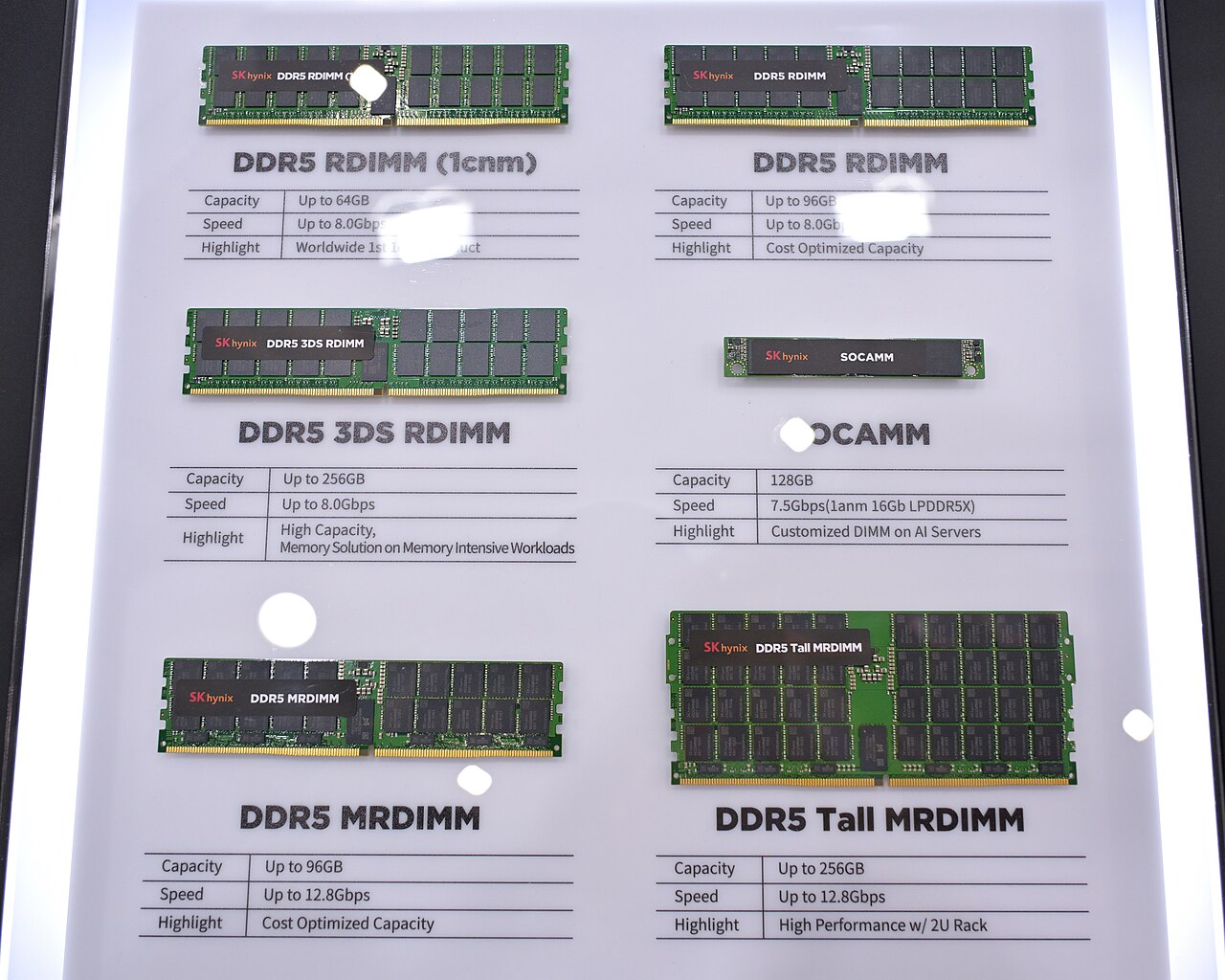
SK Hynix's position is more complicated. As the world's leading supplier of high-bandwidth memory (HBM), the specialized memory that sits alongside GPUs in AI accelerators, SK Hynix is a direct beneficiary: CNBC reported in July 2026 that NVIDIA had locked in a memory supply agreement with SK Hynix worth up to $500 billion over multiple years, and CNBC's August 2026 coverage of SK Hynix's own roughly $720 billion AI-driven buildout described a company racing to expand fabrication fast enough to keep up. But that same demand is a source of pressure, not just opportunity. Techtimes reported in August 2026 that SK Hynix's board had moved to lock in Korean AI memory allocation through 2033, a sign that supply, not demand, is the binding constraint, and that buyers without existing multi-year agreements face a tight allocation environment likely to persist for years. SK Hynix is simultaneously a primary beneficiary of the AI boom and one of the resources everyone else, including Korea's own AIDC builders, is competing for.
The power bottleneck
If NVIDIA and SK Hynix represent the supply-chain upside of this plan, electricity is its most concrete constraint. Korea's industrial electricity rates for large data center users have run about 179 to 182 won per kilowatt-hour, roughly 37 to 39% higher than the US average, according to reporting compiled by the Green Recruitment Company and Korea Herald in 2026. That cost gap sits on top of the sheer physical challenge of delivering 18.4GW of new, concentrated electrical load to specific regions on a fixed timetable.
The government's response, reported by Techtimes and Seoul Economic Daily around August 27, 2026, was to divide the country into 11 electricity pricing zones (Jeju excluded, due to its distinct power supply setup) and cut industrial rates by as much as 18 won per kilowatt-hour, about 10%, in southern regions with more available capacity. The goal is to steer large power users, fabs and AI data centers among them, toward regions like Chungcheong, Ulsan and Donghae rather than the already-strained capital area; Korea Herald put the aggregate industrial savings at 2.8 trillion won, roughly $2 billion, a year. It is a meaningful lever, but a partial one: a 10% discount narrows Korea's cost disadvantage against the US without closing it, and it does nothing to shorten the years-long lead time for building the new generation and transmission capacity 18.4GW actually requires.
This is also the throughline connecting the AIDC push to South Korea's July 2026 launch of an AIDC Alliance, which paired the 18.4GW domestic target with an ambition to export data center capacity and expertise to the UAE. A country positioning itself as a computing hub for others has to solve its own power delivery problem first, and the 11-zone pricing reform is best read as an opening move rather than a resolution.
Execution and financing risk
Three risk categories sit on top of the headline numbers. Financing: phase 1 alone runs to roughly $352 billion, and the reported interest in tapping the National Growth Fund suggests the conglomerates are not planning to fund the full buildout from their own capital. The grid: 18.4GW cannot exist independently of Korea's transmission and generation buildout, and the country's own record 2026 summer peak demand is a reminder that new industrial load competes with existing demand for the same finite capacity. The supply chain: the plan depends on GPU and HBM availability that is, by SK Hynix's own board actions, already allocated years out. A Korean data center operator is not exempt from the same global GPU queue every other builder is standing in, even with a domestic memory supplier down the road.
None of this makes the pledge implausible. South Korea has a track record of executing large industrial buildouts on compressed timelines, and the phase-1 regional and corporate allocations are specific enough to suggest real planning has already happened. But a 2029 phase-1 deadline for 8.4GW is close enough that the next two to three years of grid, financing and chip-supply developments will determine whether the number holds, slips, or scales back.
The sovereignty logic behind the whole plan is straightforward: Korea already anchors a critical piece of the global AI supply chain through its memory industry, and the AIDC push is a bet that owning compute capacity, not just the components that go into someone else's, is the more durable position as AI infrastructure becomes a matter of national industrial policy everywhere. Whether that compute stays useful to the companies renting it depends on a separate question this plan does not answer: infrastructure sovereignty says nothing about which AI models actually run on it, and any organization building on top of these data centers, in Korea or anywhere else, will still want the flexibility to choose and switch between models rather than being locked into whichever provider its hardware happens to favor.
Sources:
- South Korea announces $919bn investment into three "mega projects," plans to build 18.4GW worth of data centers by 2035 | Data Center Dynamics
- South Korea plans massive 18.4GW AI data center buildout by 2035 | Light Reading
- South Korea Unveils 18.4-GW AI Data Center Expansion Plan | Telecom Review Asia
- South Korea's AIDC Alliance Opens With 18.4GW Target and UAE Export Push | Techtimes
- South Korea Creates 11 Electricity Zones to Slash AI Data Center Costs | Techtimes
- South Korea seeks regional power pricing, W2.8tr in industry savings | Korea Herald
- South Korea announces more than $1 trillion AI, chip investment drive | Al Jazeera
- Korea Targets 550 Trillion Won AI Data Center Push in Ulsan, Donghae, Sejong | Seoul Economic Daily
- National Growth Fund Weighs Backing 550 Trillion Won AI Data Center Project | Seoul Economic Daily
- South Korea's trillion-dollar sovereign AI investment: Nvidia wins, SK Hynix under pressure | AllWeatherFinance
- Nvidia locks down memory supply from SK Hynix as part of $500 billion AI deal | CNBC
- An inside look at SK Hynix's $720 billion AI-fueled buildout that's taking over South Korea | CNBC
- SK Hynix Board Locks Korean AI Memory Through 2033; US Has Zero HBM Wafer Fabs | Techtimes
- South Korea posts fifth-highest power demand on record | PV Magazine
- AI Data Centre Growth in South Korea: Why High Energy Costs Are the Real Challenge | The Green Recruitment Company
- OpenAI, Oracle, and SoftBank expand Stargate with five new AI data center sites | OpenAI
- EU launches AI Gigafactories call to boost Europe's computing capacity and unlock more than €30 billion in investment | European Commission
Image credits
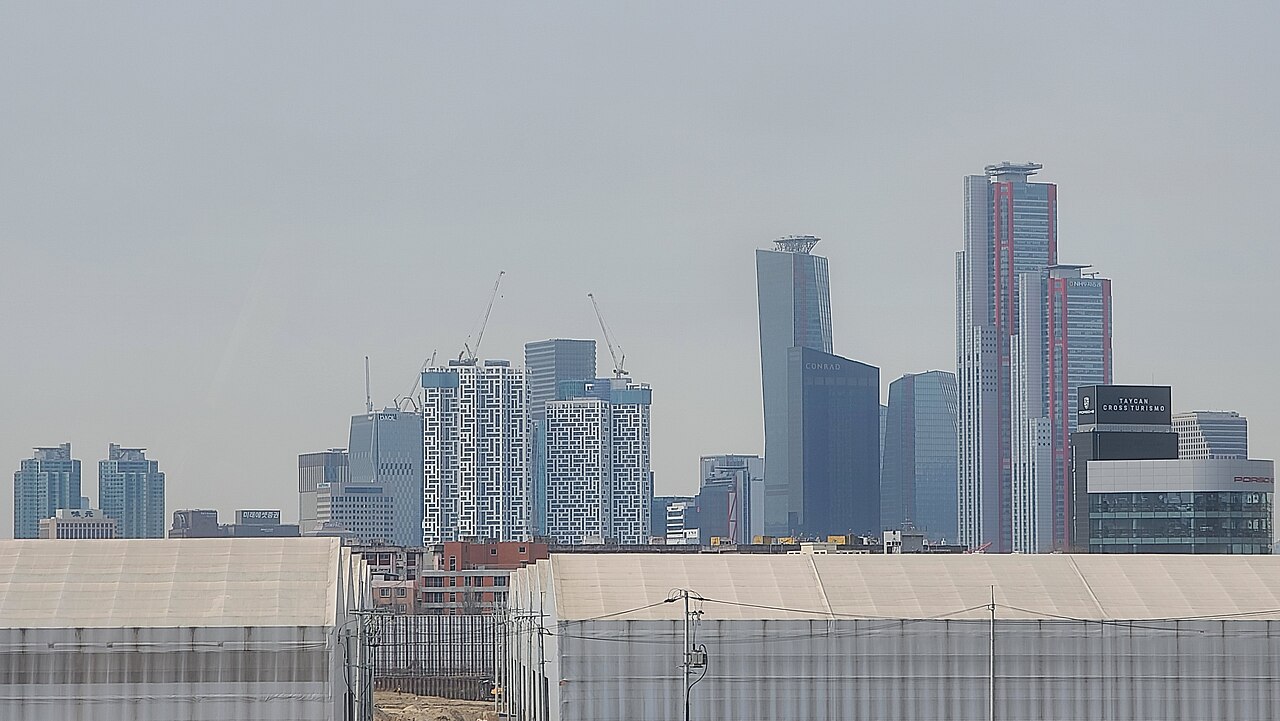
Header image: the Yeouido skyline in Seoul, South Korea, seen from Yongsan Station (2023), by Ox1997cow via Wikimedia Commons, licensed under CC BY-SA 3.0. The photo is a general skyline view of Seoul and does not depict any specific AIDC megaproject site. In-body photograph: SK Hynix DDR5 memory modules on display at a trade show, by 4300streetcar via Wikimedia Commons, licensed under CC BY 4.0. It shows SK Hynix's DDR5 product line to illustrate the company's memory business; it does not depict the HBM chips supplied to NVIDIA specifically.