
On Friday, September 4, 2026, The Seattle Times and Newsday filed federal copyright lawsuits against OpenAI and Microsoft, alleging that the companies used the outlets' published journalism, including articles behind paywalls, to train and operate AI products such as ChatGPT, Microsoft Copilot, and Bing's AI features. The filings add two more names to a lengthening list of publishers taking AI companies to court, and they arrive with a vivid phrase: the newspapers describe generative AI as "a snake eating its own tail," a system that consumes the journalism it depends on.
 OpenAI
 Microsoft
The case is worth understanding not because its outcome is predictable, but because it is one more test of a genuinely unsettled legal question. Whether training an AI model on copyrighted material counts as fair use has not been resolved by any final court ruling, and the industry has built enormously valuable products on the assumption that it does. Each new suit narrows or widens the range of possible answers.
Three claims, not one
It helps to separate the allegations, because the complaint bundles three different kinds of harm that a court will weigh differently.
What the publishers are actually claiming
The complaint bundles three distinct harms, then asks for a remedy far broader than money.
The first is the straightforward copyright claim: that OpenAI and Microsoft copied the outlets' articles, paywalled ones included, into the datasets used to train and run their models, without a license. This is the core of every case in this line, and it is where the fair-use fight actually happens.
The second is a market-substitution argument, and it is the one publishers increasingly lead with. The claim is that when an AI assistant answers a question by summarizing or reproducing the substance of a news article, the reader no longer clicks through, which erodes the traffic and digital advertising revenue that fund the newsroom. The "snake eating its own tail" framing captures the alleged dynamic: the AI is trained on journalism, then competes with that same journalism for the audience that pays for it. In fair-use analysis, the effect of a use on the market for the original work is one of the four statutory factors, so this is not just rhetoric, it maps to a specific legal test.
The third claim is distinct from copyright altogether: trademark dilution. The publishers allege that the models fabricated content and falsely attributed it to the Seattle Times and Newsday, damaging their brands by putting words in their mouths. This "hallucinated attribution" claim is a reminder that the legal exposure from generative models is not limited to what went into training; it also includes what comes out, and whose name gets attached to it.
The fair-use defense, stated plainly
OpenAI's response is the same one it has offered throughout: its models are trained on publicly available data, and that training is "grounded in fair use, which helps hundreds of millions of people improve their daily lives." Microsoft said it was "surprised by the lawsuit" but is "always happy to sit down and explore solutions to this type of dispute," a notably conciliatory posture that hints at the licensing negotiations happening in parallel with the litigation across the industry.
The unresolved question is not whether copying happened. It is whether training on copyrighted work is fair use, and no final ruling has answered it.
On the state of AI copyright law
The fair-use doctrine turns on four factors: the purpose and character of the use, including whether it is transformative; the nature of the copyrighted work; the amount used; and the effect on the market for the original. AI companies argue that training is transformative, that a model learns statistical patterns rather than storing and reselling articles, and that the output does not substitute for the source. Publishers argue the opposite on the fourth factor especially, that the output does substitute, and that the market harm is direct and measurable. Reasonable readings exist on both sides, which is precisely why these cases keep getting filed rather than settled at the doorstep.
Where this sits in the larger fight
The Seattle Times and Newsday did not open this front. The New York Times sued OpenAI and Microsoft in December 2023 in the case that set the template, and the trend has continued: CNN sued the AI search company Perplexity earlier in 2026, and music publishers including Sony and Warner Chappell have pursued Anthropic over copyrighted lyrics, a case we covered here.
A widening line of news-versus-AI cases
The Seattle Times and Newsday filing is the newest in a chain that the New York Times opened in 2023.
Each case tests the same unsettled question: is training an AI model on copyrighted work fair use?
The direction of the broader legal fight is genuinely uncertain, and it is worth resisting a tidy narrative. Some signals point toward AI companies: the U.S. Department of Justice filed a statement of interest supporting a fair-use reading in the New York Times case, which we examined here. Others point the other way: the sheer volume of well-resourced plaintiffs, and the market-harm argument gaining specificity, raise the odds that some claim, somewhere, produces a ruling that constrains training. The most likely near-term outcome is not a single decisive verdict but a patchwork of settlements and licensing deals, struck case by case, that quietly establishes market prices for training data without ever fully answering the legal question.
Why buyers of AI should care
For most people using these products, the litigation feels distant. For organizations that build on top of AI models, it is a live source of risk. A model's legal standing is now part of its profile alongside its accuracy and its price, and that standing can change with a court ruling that a buyer does not control and cannot predict. A workflow welded to a single provider inherits that provider's specific legal exposure wholesale.
That is a quiet argument for keeping AI systems portable rather than locked to one model. A team that can move its work across providers is better positioned to adapt if any single model's training data becomes the subject of an adverse ruling or a costly settlement that changes its terms. Platforms like Metir that keep workflows model-agnostic do not resolve the copyright question, but they reduce the cost of a buyer being on the wrong side of it. The point is not that one model is safer than another today; it is that no buyer can be sure which one will be safer after the next ruling.
The honest summary is that this is a serious, well-pleaded complaint in an area of law that remains open, brought by plaintiffs with real resources, against defendants with a coherent and untested fair-use defense. It will not settle the question by itself. It is one more data point in a fight whose eventual shape, ruling by ruling and deal by deal, is still being drawn.
Sources:
- Seattle Times and Newsday are the latest publications to sue OpenAI and Microsoft | TechCrunch
- Two more news organizations sue OpenAI and Microsoft for copyright infringement | Engadget
- The Seattle Times sues OpenAI, Microsoft over copyright infringement | The Spokesman-Review
- Seattle Times, Newsday sue OpenAI, Microsoft, alleging copyright infringement | Honolulu Star-Advertiser
- Seattle Times, Newsday Sue OpenAI, Microsoft for Copyright Infringement | The Silicon Review
Image credits
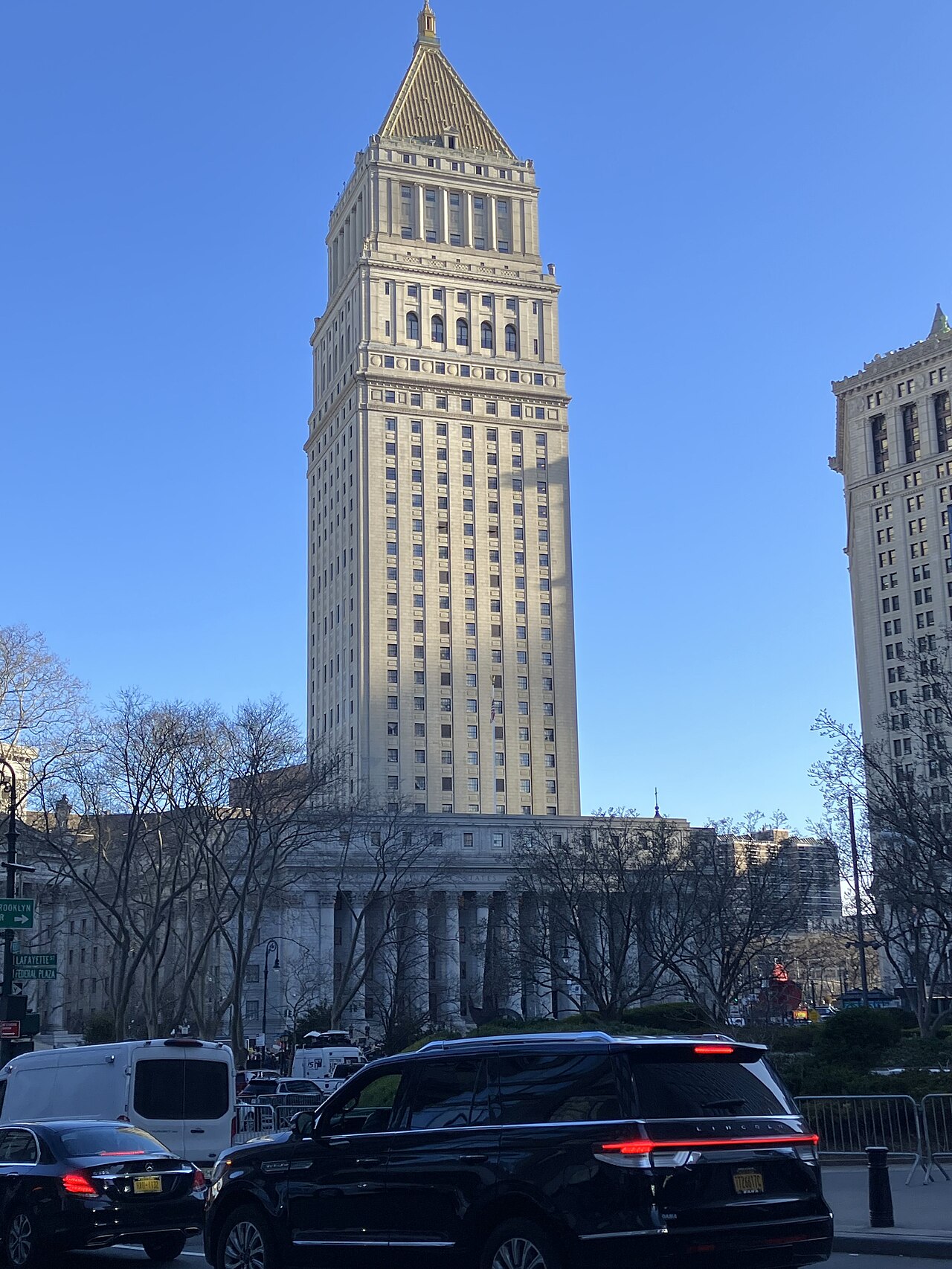
Hero image: the Seattle Times building in Seattle, Washington, photographed by Joe Mabel, via Wikimedia Commons, licensed under CC BY-SA 3.0. In-body photograph: the Thurgood Marshall United States Courthouse at Foley Square in Lower Manhattan, photographed by Bmzuckerman, via Wikimedia Commons, licensed under CC BY 4.0. Neither photograph depicts the lawsuit or the AI systems at issue; both illustrate the named subjects.