On August 23, 2026, The Information reported that Nvidia is in talks to invest in Perplexity, the AI search startup, at a valuation of more than $30 billion. Neither company had confirmed the discussions as of that reporting, so the specific terms remain unverified. What is not in doubt is the pattern the talks would extend: Nvidia increasingly takes financial stakes in the very companies that spend heavily on its chips, a strategy that has become one of the defining, and most debated, features of the current AI cycle.
 Nvidia
 Perplexity
From selling shovels to owning the mines
For most of its history, Nvidia's business was simple to describe: it sold the hardware that other companies used to build AI. Over the past year that has changed. Nvidia has moved money into OpenAI, into coding-model startup Poolside through a $6 billion license and $1 billion equity deal in August 2026, and reportedly into xAI's earlier funding rounds, among others. A stake in Perplexity would push that reach into AI search, the layer sitting directly on top of the inference hardware Nvidia sells.
Nvidia invests in companies that buy Nvidia chips
A recurring pattern: Nvidia takes a financial stake in AI companies whose growth, in turn, drives demand for its hardware. The Perplexity line reflects reported, unconfirmed talks.
Reported talks to invest at a valuation above $30B
AI search, runs inference on Nvidia hardware
$6B software license plus $1B equity, $12B valuation
Coding models trained on Nvidia GPUs
Multi-billion-dollar investment and supply commitments
One of the largest buyers of Nvidia compute
Participated in prior funding rounds
Builds large GPU clusters on Nvidia chips
Deal terms as reported publicly; see the Sources section. The circularity of these arrangements, capital flowing to customers who spend it on the investor's own product, is the crux of the debate around them.
The strategic logic is coherent. Perplexity runs its products on large volumes of inference compute, and reporting has pointed to rapid revenue growth over 2026 as its AI search and agent products gained users. By taking an equity position, Nvidia converts itself from a one-time hardware supplier into a long-term shareholder in the demand its own chips help create. If AI search becomes a durable category, Nvidia participates in the upside rather than merely booking the chip sale that made it possible.
The circularity question
The reason these deals draw scrutiny is circularity. When a chipmaker invests capital in a customer, and the customer spends heavily on that chipmaker's product, some of the investor's future revenue is, in effect, being funded by the investor itself. Critics argue this can make end demand look more organic and more diversified than it is, because the same dollars can appear as both an investment outflow and a hardware sale.
When a chipmaker invests in a customer that then buys its chips, some of the investor's revenue is, in effect, funded by the investor itself.
The core of the circular-financing debate
There is a reasonable counter-argument. Strategic investors have always backed companies in their own ecosystems, and a minority stake in a fast-growing startup is not the same as booking fake revenue. Perplexity would presumably keep buying inference compute with or without Nvidia's check, and Nvidia is far from its only supplier of capital. The honest position is that both readings hold some truth at once: the investments are real ecosystem bets, and they also blur the line between a vendor's customers and its portfolio in a way that makes the health of underlying demand harder for outsiders to judge.
What it would mean for AI search
For Perplexity, a large strategic investment would be validation and firepower at the same time. The company is trying to carve out a position against Google, which dominates search, and against OpenAI, which has folded search-like answers into ChatGPT. Capital at a $30 billion valuation would fund the compute, talent and distribution needed to keep competing in a market where the incumbents are enormous. It would also tie Perplexity more closely to a single, powerful infrastructure partner, which is a trade-off in itself.
There is a subtler point for the broader market. Perplexity's own pitch has long emphasized routing across multiple frontier models rather than betting the product on one lab, letting users pick among systems from different providers. That model-agnostic posture is what lets an AI product treat the fast-moving frontier as a menu rather than a lock-in, and it is the same principle behind Metir AI's design of working across OpenAI, Anthropic, Google and xAI models. A deep tie to one hardware vendor does not change which language models a product can call, but it is a reminder that neutrality at the model layer and concentration at the infrastructure layer are separate questions, and both are worth tracking as the AI stack consolidates.
The bigger picture
The reported Perplexity talks are, on their own, one more line in a lengthening list of Nvidia investments across the AI stack. Their significance is cumulative. Each individual deal is defensible as a strategic bet; together, they describe a company that has become not just the dominant supplier of AI compute but a major financial stakeholder in the demand for it. Whether that is a sign of a healthy, self-reinforcing ecosystem or of a market whose growth is harder to read than the headline numbers suggest is the question these deals keep raising, and the Perplexity report, if it firms up into a confirmed investment, will not settle it either way.
Sources:
- Nvidia in Talks to Invest in Perplexity, Valuing AI Startup at Over $30 Billion | Gate News (summarizing The Information)
- Nvidia's $30B Perplexity Bet Extends the Compute Landlord Thesis Into AI Search | Yahoo Finance
- Perplexity Deal Highlights a Pattern in Nvidia's AI Investments | Benzinga
- Nvidia to Pay AI Startup Poolside a $6 Billion License, Newcomer Says | Bloomberg
Image credits
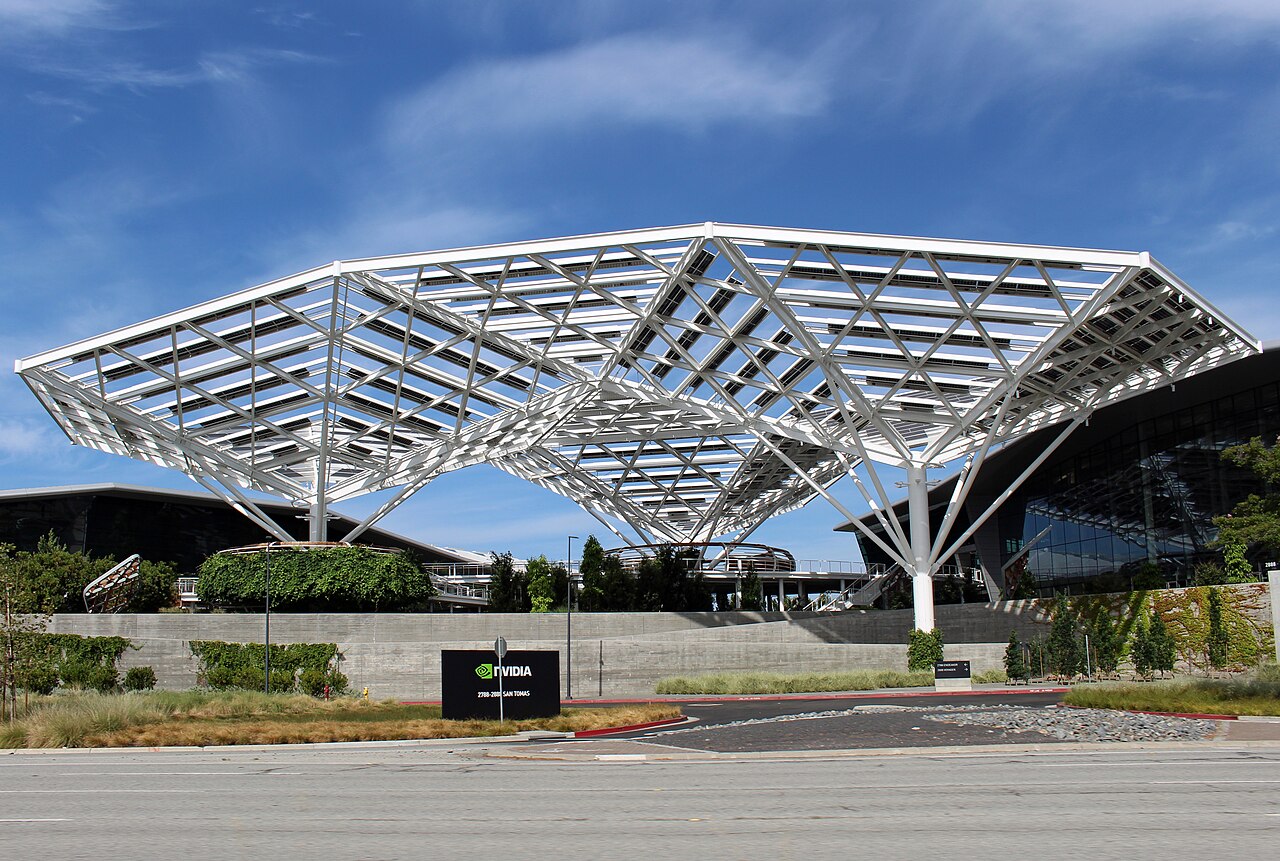
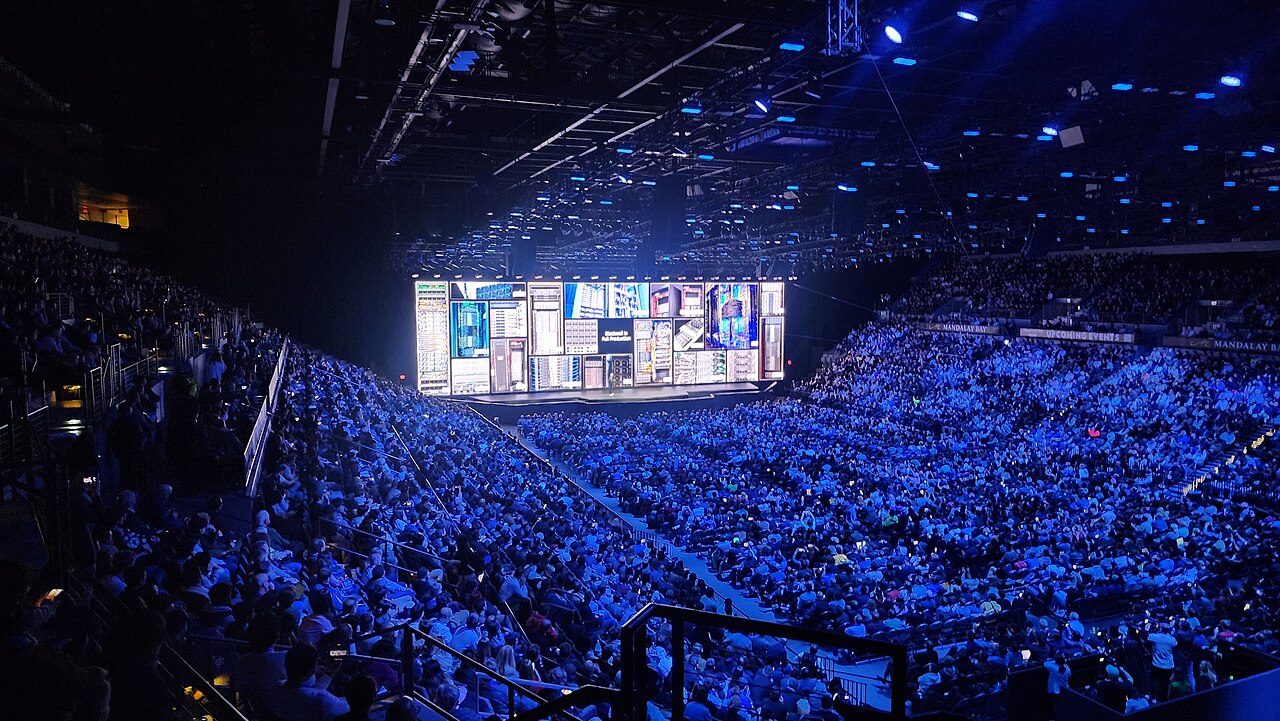
Header image: Nvidia's headquarters sign and canopy at 2788-2888 San Tomas Expressway, Santa Clara, California, by Coolcaesar via Wikimedia Commons, licensed under CC BY-SA 4.0. In-body photograph: the audience and stage screen at Nvidia CEO Jensen Huang's CES 2025 keynote in Las Vegas, by Joseph Zadeh via Wikimedia Commons, licensed under CC BY-SA 4.0. Used to illustrate Nvidia's public strategy generally, not the Perplexity talks.