On Thursday, November 5, 2026, US technology stocks had their sharpest one-day fall in roughly a year and a half. According to CNBC, the Nasdaq fell 5.5%, its worst day since April 2025, while NVIDIA and Qualcomm each lost more than 9%. Nvidia alone shed almost $450 billion in market value. The next day, chip stocks partly recovered, but the episode raised a question that matters well beyond one trading session: what, exactly, did the market reprice?
 NVIDIA
What happened on November 5
CNBC reported that AMD, Micron and Applied Materials each suffered double-digit percentage losses, that neocloud stocks such as CoreWeave fell for a second straight day, and that Tesla and SpaceX each fell more than 9%. The four large hyperscalers (Alphabet, Amazon, Meta and Microsoft) fell a more modest 2% to 4%. FinanceFeeds put Nvidia's close at $181.60, down $18.53, or 9.26%.
One-day declines, November 5, 2026
Percent change on the day. Nvidia is the reported close; CoreWeave is an afternoon reading; Nebius and IREN were each reported as down more than 16%, shown here at 16.
Sources: CNBC (Nasdaq 5.5%), FinanceFeeds (Nvidia close $181.60, down 9.26%), PrimeXBT citing Bloomberg and Reuters (neoclouds).
The pattern in the chart is worth reading carefully. The decline scaled with how directly a company's revenue depends on data center construction continuing at its current pace. The broad index fell least, the chip designer fell more, and the leveraged neocloud builders fell most.
The causes cited, and how they differ
No single cause is agreed. CNBC listed several at once:
- Election outcomes and a possible slowdown in buildout. Concern that AI data center construction would slow after the midterm elections, including a Democratic sweep in Congress.
- Rates and capital needs. Rising interest rates and ballooning capital requirements.
- Debt versus revenue. Fears that much of the market is weighed down by too much debt and too little revenue.
- Company news. Qualcomm's disappointing forecast for the current quarter, issued after it reported on November 4.
- Sustainability doubts. Investor questions about whether AI growth is sustainable and whether buyers can actually use the technology.
Qualcomm's own commentary is a useful counterweight. CEO Cristiano Amon said data center revenue was $650 million in the quarter, mostly from customization and connectivity work, and added: "We don't have a demand issue; it's a supply issue." A global memory shortage was also cited in CNBC's coverage as raising prices and constraining supply, and Intel's weaker-than-expected forecast last week was tied to the same shortage.
We don't have a demand issue; it's a supply issue.
Qualcomm CEO Cristiano Amon, as quoted by CNBC
The neocloud link
A separate thread ran through the same session. Bloomberg reported, via Reuters and PrimeXBT, that Microsoft was tightening oversight of some neocloud projects, and Nebius and IREN each fell more than 16% while CoreWeave fell 12.29% in afternoon trading. We cover that report separately in our post on Microsoft's neocloud oversight.
Nvidia's exposure to this part of the market was already under scrutiny. CNBC reported on October 24 that, as of its July filing, Nvidia had $36 billion in off-balance-sheet cloud agreements for neoclouds, and that it had guaranteed up to $105 billion for chips, land and power at a proposed 10-gigawatt OpenAI data center in Ohio. CoreWeave carried roughly $51.6 billion in total debt, with yields on its 2031 and 2032 bonds above 15%.
Disclosed Nvidia and CoreWeave obligations, late October 2026
US dollars, billions. These are different kinds of figures (a debt balance, guarantees and purchase commitments) and should not be summed.
Source: CNBC, October 24, 2026, citing Nvidia's July filing and company disclosures.
Jensen Huang had said neocloud demand was "off the charts" and that CoreWeave does not need Nvidia's backstop, according to the same report; Nvidia declined to comment on the exposure figures. Both views can be true at once: demand can be strong while financing structures remain sensitive to sentiment.
Reading the move: three scenarios
A one-day move cannot settle a question about multi-year spending, so a structured way to think about it is more useful than a verdict. These are analytical framings, not forecasts.
| Scenario | What it would mean | What would show it |
|---|---|---|
| Sentiment reset | Prices adjust to higher rates and election risk; spending plans unchanged | Hyperscaler capex guidance holds; Nvidia guides above consensus |
| Financing squeeze | Demand is intact but debt-funded builders cannot finance it | Neocloud bond yields stay elevated; more customers pause or delay projects |
| Local-permission constraint | Power and siting limits, not chips, cap the pace | More moratoria and ballot outcomes; delayed energization dates |
The CNBC report gives some support to each. Meta's free cash flow turned negative in the latest quarter, joining Alphabet and Amazon in the prior period, which fits the financing framing. The ballot results fit the third. And Qualcomm's supply comment fits the first.
What to watch next
- November 17. Nvidia is scheduled to report quarterly results. For fiscal 2026 it reported revenue of $215.9 billion, up 65%, and Q1 fiscal 2027 revenue of $81.6 billion, up 85% year on year, per Investing.com and SEC filings. Guidance and commentary on customer financing will matter as much as the headline number.
- Hyperscaler spending. CNBC noted the four hyperscalers have plans exceeding $100 billion a year in infrastructure spending. Any revision, up or down, is the cleanest signal.
- The recovery. Sources differ on the size of the November 6 rebound (one reports a 6% Nvidia gain, another a 3.91% close), so treat the exact figure with caution.
What this means for teams building with AI
For people who build on these models rather than trade the stocks, the practical angle is supply risk and price volatility in compute. Capacity that is financed with debt can be repriced or delayed, which is one reason many teams prefer tooling that lets them switch between model providers without rewriting workflows. Platforms such as Metir take that model-agnostic approach, though the underlying point holds regardless of which tool you use.
Sources:
- CNBC: AI meltdown, Nvidia and Qualcomm drop more than 9%, Nasdaq worst day since April 2025 (Nov 5, 2026)
- FinanceFeeds: Nvidia closes at $181.60 after 9.3% plunge
- PrimeXBT, citing Bloomberg News and Reuters: Microsoft tightens oversight of neocloud projects
- CNBC: Nvidia's role as AI financier faces first big test (Oct 24, 2026)
- Yahoo Finance: Stock market today, Friday November 6
- NVIDIA Form 8-K, Q1 fiscal 2027 results
Image credits
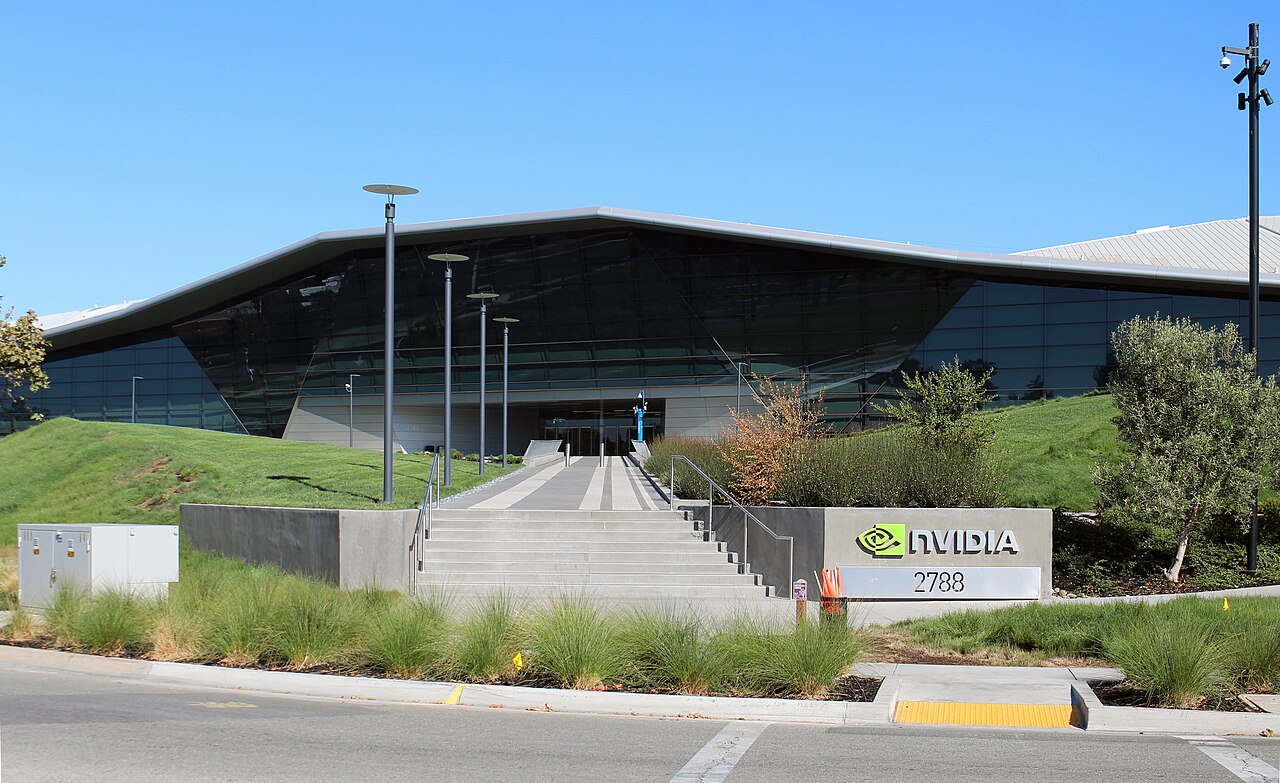
- Nvidia headquarters photo: Wikimedia Commons, "NVIDIA Headquarters.jpg", by Coolcaesar, licensed CC BY-SA 4.0. Full record in the post's credits file.