On October 7, 2026, Nous Research confirmed that it has raised a $90 million Series B at a $1.5 billion valuation, and launched a business product called Hermes for Businesses, according to TechCrunch. The announcement matters beyond one funding round. Nous is an open-weight lab whose most visible product is now an agent rather than a model, and it is moving into the enterprise market that open-model companies have struggled to monetize directly. This piece covers what was confirmed, how open labs make money, how the valuation compares with peers, and what to watch next.
What Nous Research confirmed
The round was led by Robot Ventures, with participation from Nvidia, Union Square Ventures, Menlo Ventures, Samsung and 1789 Capital, per TechCrunch. The financing brings the three-year-old company's total funding to $158 million. Nous says it will use the money to expand into the enterprise sector.
The round size is worth a note. When TechCrunch first reported the talks on July 13, 2026, the figure was "at least $75 million" from unnamed sources, as The Block relayed at the time. The confirmed number is higher, $90 million, while the valuation matched the earlier report.
TechCrunch also reports that Nous was at roughly $36 million in annualized revenue by mid-September 2026 and expects to pass $100 million before the end of the year, a projection the article attributes to The Wall Street Journal. That is a forecast, not a result. Annualized revenue is also a run-rate figure: it multiplies a recent period forward and can swing quickly when a company is early in a pricing change.
 NVIDIA
 Mistral AI
 Moonshot AI
From models to an agent: Hermes and Hermes for Businesses
Nous became known for its Hermes line of open-weight models. According to aggregator listings, Hermes 4 arrived on August 26, 2025 in 14B, 70B and 405B sizes, with the 405B variant built on Meta's Llama 3.1 and offering switchable reasoning through think tags. Treat those specifics as secondary-source details: we could not load Nous's own release page.
The product driving the attention now is Hermes Agent. Secondary sources describe it as an open-source, self-improving personal agent launched in February 2026, which creates reusable skills from experience and keeps a persistent model of the user across sessions. TechCrunch reports the open-source agent has been cloned more than 24 million times and drives roughly 2.5% of global AI token usage, both according to the startup's own estimates. Neither number is independently verified, and "cloned" counts repository copies, including automated ones, rather than active users.
Hermes for Businesses is the commercial wrapper. TechCrunch describes it as letting companies deploy customized AI agents that handle multi-step workflows. The article does not give pricing or a feature list. A separate report from September 2026, which we could not verify, mentions team and enterprise tiers with shared balances, per-member spending caps and on-premises deployment. If accurate, those are the controls procurement teams ask for before letting any agent touch company systems.

How open-weight labs make money
Releasing weights gives away the thing most closed labs sell. Open labs therefore monetize adjacent layers. The main routes, as observed across the field, are:
- Hosted APIs and subscriptions. Users who do not want to run a model pay per token or per month for someone else to operate it. Mistral and Moonshot both sell API access alongside their open releases.
- Enterprise deployment. Large customers pay for private deployment, fine-tuning on their data, support and compliance work. This is where the open license is a selling point, because the customer can inspect and host the model.
- Agents and applications on top of the models. The agent is the product, the model is a component. Nous's pivot fits here.
- Strategic capital. Chip makers and device makers fund open labs because open models create demand for their hardware. Nvidia and Samsung both appear in Nous's round, and Samsung also led Mistral's Series D.
Open weights do add one unusual advantage: distribution. A developer who tries the free version becomes a lead for the paid tier, which is the same open-core logic that worked for infrastructure software. The risk is the inverse. Anyone can host the same weights, so pricing power on pure inference tends to erode, which pushes labs toward services that are harder to copy, such as managed agents with governance controls.
Nous has also pursued a distinctive research angle. Its Psyche network, described in May 2025, coordinates training across volunteer or underused hardware, with Solana used for coordination, according to secondary reporting. The company has claimed throughput comparable to centralized training in a later Hermes post; that is a company claim, not an independent benchmark. It matters commercially because it is a possible cost lever, but nothing in the October announcement ties Hermes for Businesses to Psyche.
Valuation comparison with other open-model labs
Open-model lab valuations, side by side
Latest reported valuations in billions of US dollars. Only Nous Research's figure is confirmed by the company; the others come from press reports and currency conversion.
Valuations are not like-for-like: rounds differ in date, structure and how currency was converted.
Nous's $1.5 billion sits an order of magnitude below the other labs we cover. Mistral raised a roughly EUR 3 billion Series D at more than EUR 21 billion post-money, led by Samsung, announced September 8, 2026, as Orrick and Techzine report. Our earlier look at Mistral Large 4 covers its model side. Reflection AI is reported at about $25 billion, with coverage differing on whether that is pre-money, as discussed in our post on Reflection's Beam model. Moonshot's round was reported near $30 billion in July, per our Moonshot valuation coverage.
The comparison is imperfect for three reasons. The dates differ, the Mistral dollar number is a currency conversion, and several figures are press-reported rather than disclosed. There is a further wrinkle on Nous's own history: its April 2025 $50 million Series A led by Paradigm was reported at a $1 billion token valuation, per Fortune, not a conventional equity valuation, so the step to $1.5 billion is not a clean like-for-like increase.
Open weights give a lab distribution. The paid product has to be the part that is hard to copy.
A simple multiple helps frame the ask. Dividing $1.5 billion by roughly $36 million of annualized revenue gives about 42 times run-rate revenue, our own arithmetic. Reaching $100 million by year end would cut that to about 15 times at the same valuation. Moonshot's reported roughly $300 million of recurring revenue against a roughly $30 billion valuation implies about 100 times, by the same arithmetic using figures from our earlier post. By that rough yardstick Nous is priced closer to its revenue than some larger peers, though a small revenue base grows fast in percentage terms and says little about durability.
Why the shift to agents matters
A model is a component that gets compared on benchmarks and replaced when a better one ships. An agent is a workflow that holds context, tools and permissions, which makes it stickier. For an open lab it also solves a measurement problem: tokens consumed through an agent are a clearer demand signal than downloads of weights.
The enterprise version raises harder questions that the announcement does not yet answer:
- Governance. Who can approve actions, how are spending limits set, and where are logs stored?
- Model choice. Does Hermes for Businesses run only Nous models, or any model? The open-source agent is reportedly model-agnostic, which would affect lock-in.
- Data location. Private deployment is the usual reason enterprises pick open software, and Nous's pitch of keeping data private fits it.
- Unit economics. An agent that runs many steps consumes many tokens, so margin depends on inference cost and pricing structure.
The same portability logic applies to users. Teams that can switch between open and closed models behind one interface, as in a multi-model workspace such as Metir, are less exposed to any single lab's pricing or product direction.
What to watch next
- Pricing and tiers for Hermes for Businesses once published.
- Revenue disclosure against the $100 million year-end expectation.
- Independent usage data for the 24 million clone and 2.5% token-share claims.
- Whether Psyche becomes part of the commercial story or stays a research track.
- Peer moves. Mistral, Reflection and Moonshot are all deciding how much to build above the model layer.
Nous's round is small next to its peers, but it is a useful test of whether an open-weight lab can earn revenue primarily from an agent product. The next two quarters of revenue data will say more than the headline valuation.
Sources:
- Nous Research confirms it hit $1.5B valuation, launches AI agents for business users | TechCrunch
- Decentralized AI project Nous Research in talks to raise $75M at $1.5B valuation | The Block
- Paradigm leads $50 million Series A for Nous Research | The Block
- Paradigm, Nous Research and crypto AI | Fortune
- Orrick advises Mistral in its EUR 3B Series D at EUR 21B post-money valuation
- Mistral raises 3 billion, Samsung leads round | Techzine
- Reflection AI unveils Beam | Startup Fortune
- Hermes 4 405B listing | OpenRouter
- Moonshot AI plans Hong Kong IPO | Caproasia
Image credits
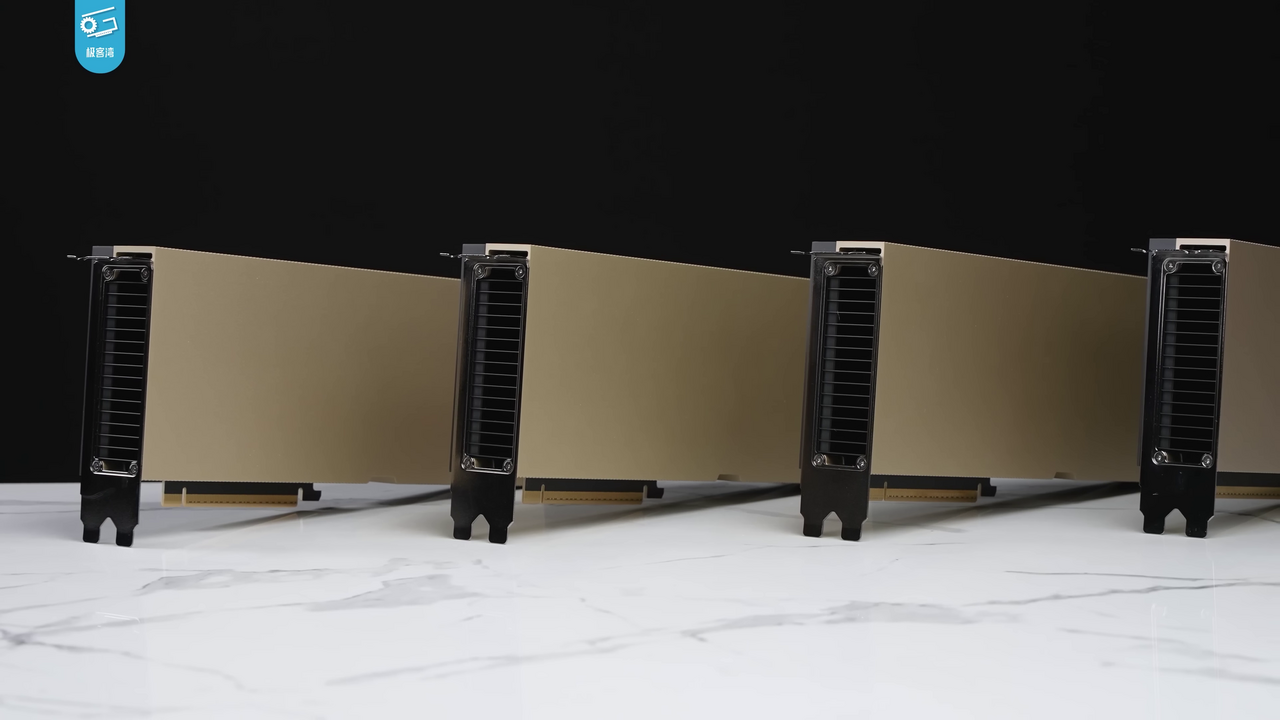
- Hero image: row of NVIDIA H100 PCIe cards. Author: Geekerwan. Source: Wikimedia Commons, File:NVIDIA H100 (Geekerwan) 011.png. Licence: CC BY 3.0. Generic hardware photo, not Nous Research infrastructure.
- In-body figure: hand holding an NVIDIA H100 PCIe card. Author: Geekerwan. Source: Wikimedia Commons, File:NVIDIA H100 (Geekerwan) 007.png. Licence: CC BY 3.0.