
On July 16, 2026, Moonshot AI shipped Kimi K3, an open-weights model that independent testing placed at the frontier tier. Within days, the story moved from the model to the balance sheet. Reporting through the week of July 20 said the Beijing lab is raising what would be its final private round before going public, at a valuation of up to $50 billion, with a Hong Kong listing possible before the year is out. This piece looks at the numbers behind that raise, the investor base underwriting it, and what it would mean for a Chinese frontier lab to reach the public markets.
The numbers behind the raise
Moonshot's valuation has moved at a pace that is hard to describe as anything but vertical. The company was worth roughly $4.3 billion at the end of 2024. By early 2026 that had more than doubled to around $10 billion, and in May a $2 billion round, led by Meituan, put it at $20 billion, the largest single funding event in China's large language model sector at the time. The round now closing values it near $30 billion, and the reporting says Moonshot wants one more round after that, at up to $50 billion, before listing.
A valuation that roughly doubled every few months
Moonshot AI's reported private valuation, USD billions. The final bar is the pre-IPO target under discussion, not a closed round.
From about $4.3 billion at the end of 2024 to a reported $50 billion pre-IPO target in mid-2026, an order of magnitude in roughly eighteen months.
An order-of-magnitude increase in eighteen months invites the obvious question of whether the business is growing into the price or the price is running ahead of the business. On the revenue side, the numbers are real and moving quickly.
Revenue growing into the valuation
Reported annual recurring revenue, USD millions. A 50 percent rise across two months underpins the funding story.
Annual recurring revenue rose from roughly $200 million in April to $300 million in June 2026, the demand curve the pre-IPO round is priced against.
Moonshot's annual recurring revenue reached about $300 million in June, up from roughly $200 million in April, driven by its Kimi chatbot and its model APIs. A 50 percent rise in two months is a genuine demand signal. It also frames the valuation honestly: a $50 billion price against $300 million of recurring revenue is a multiple that only makes sense if buyers expect that revenue line to keep bending upward for years, which is a bet on the category as much as on the company.
A $50 billion price against $300 million of recurring revenue is a bet on the category as much as on the company.
Who is funding it
The investor list is as informative as the numbers. Moonshot's backers include Meituan, Tencent, Alibaba, IDG Capital, China Mobile, and the Beijing AI Industry Investment Fund. Two features of that roster stand out. The first is the presence of China's largest internet platforms, Tencent and Alibaba, on the same cap table, a level of shared backing that reflects how strategically important a domestic frontier lab is seen to be. The second is the state-linked capital: China Mobile is state-owned, and the Beijing AI Industry Investment Fund is a government vehicle. That combination of platform money and state money is characteristic of how China is financing its frontier labs, and it is part of why a Hong Kong listing, rather than a US one, is the natural venue.
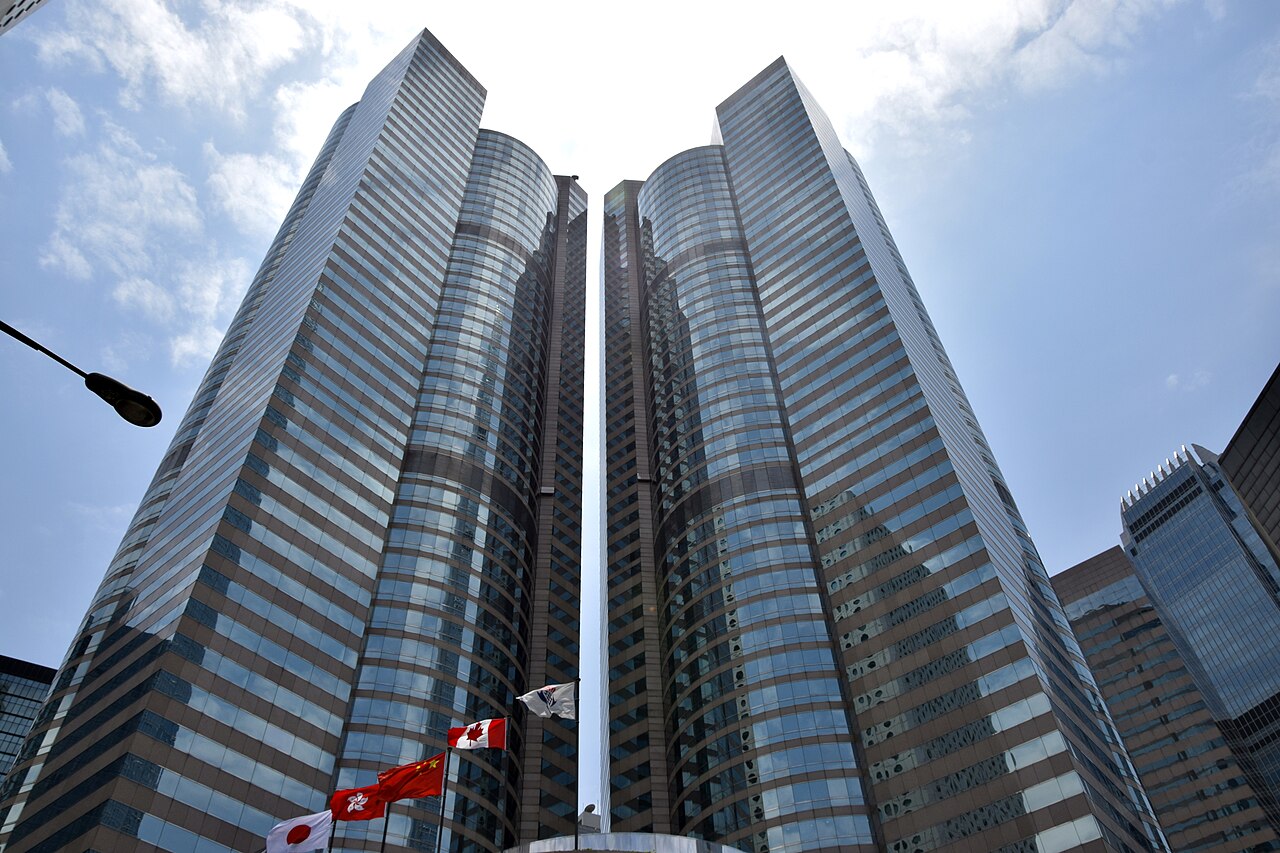
Why Hong Kong, and why now
The choice of venue is not incidental. A US listing would expose a Chinese AI company to audit-disclosure fights, delisting risk under existing US-China securities tension, and scrutiny of its state ties. Hong Kong offers deep capital, proximity to mainland investors, and a regulatory environment aligned with Beijing's interests. For a lab with government money on the cap table and national-champion status in view, it is the low-friction path to public capital.
The timing is the more interesting question. Going public just after a well-received model release, and while private valuations are still climbing steeply, lets Moonshot list into momentum rather than after it. It also locks in a war chest for the compute bills that a frontier lab runs up, at a moment when access to advanced chips is constrained for Chinese companies and training costs only rise. The risk of listing early is symmetric: public markets reprice fast, and a frontier lab with thin profits and heavy capital needs is exactly the kind of company whose stock can swing hard on a single benchmark result or export-control headline.
What it would signal
A successful Moonshot listing would be a milestone for the sector, and not only in China. It would put a hard, public number on what the market will pay for a frontier lab whose main product is open-weight models given away for download, with revenue coming from a hosted chatbot and APIs. That is a different business shape from the closed-model labs, and the public markets have not really priced one yet.
It would also mark a maturation. The Chinese frontier labs have spent the last two years competing largely on capability and price. A public listing forces a different discipline: quarterly disclosure, a defensible revenue story, and a valuation the market can vote on rather than one set in a private round. Whether Moonshot can carry a $50 billion private mark into public accountability is the question the listing would answer.
What it means for people building on these models
For teams choosing what to build on, the funding story is a reminder rather than a decision point. The relevant fact is not Moonshot's valuation; it is that the lab is well-capitalised enough to keep shipping competitive open-weight models, which widens the menu of credible options. That is good for buyers, and it is also a reason not to over-commit to any single provider. A lab flush with pre-IPO cash today can reprice, deprioritise a model line, or shift strategy after a listing, and a product hard-wired to one vendor inherits all of that risk.
The durable response is portability: route each job to whichever model fits it, and keep the freedom to move as prices, capabilities and corporate priorities change. A model-agnostic workspace such as Metir AI, which already offers Kimi K3 alongside closed frontier models, is one way to treat a fast-moving field as a menu to pick from rather than a set of walls to be locked behind.
The bigger picture
Moonshot's push toward a $50 billion valuation and a Hong Kong listing compresses the whole arc of the current AI cycle into one company: breakneck private valuation growth, real but early revenue, platform and state capital, geopolitical routing of where the money is raised, and an open-weights strategy that still has to prove it can support a public-market price. The model releases get the headlines, but the financing is where the sector's assumptions get tested. If the listing lands, it sets a public benchmark for what a frontier lab is worth. If it stumbles, it will be an equally public lesson in the gap between a private mark and a market price.
Sources:
- Moonshot AI seeks $50 billion valuation in pre-IPO round | Yahoo Finance
- Moonshot AI reportedly plans final pre-IPO round at $50 billion valuation | TechNode
- China's Moonshot AI is seeking a $50 billion valuation in pre-IPO funding talks | Quartz
- China $30 Billion AI Startup Moonshot AI Plans Hong Kong IPO | Caproasia
- China's Moonshot AI raises $2B at $20B valuation | TechCrunch
Image credits
Header image: the Beijing Central Business District skyline, in the city where Moonshot AI is headquartered, by N509FZ via Wikimedia Commons, licensed under CC BY-SA 4.0. In-body photograph of Exchange Square, home of the Hong Kong Stock Exchange, by Ank Kumar via Wikimedia Commons, licensed under CC BY-SA 4.0.