
On November 12, 2026, four nonprofits filed suit in San Francisco Superior Court against five AI developers, asking a judge to stop them from developing or deploying new frontier models. The case rests on California's Unfair Competition Law (UCL), a statute better known for policing false advertising than for governing technology research. The plaintiffs are the Irreplaceable Education Fund, Public Citizen, Heat Initiative and the Alliance for Secure AI. The defendants are Anthropic, Google, Meta, OpenAI and SpaceX's AI unit. Everything below describes allegations, and no court has ruled.
 Anthropic
 OpenAI
 Google
 Meta
 xAI
What the UCL lawsuit alleges
According to the Associated Press account carried by LAist, the plaintiffs say the companies violate California's unfair competition law by endangering public health and interfering with the use of property, such as computer systems. They also say they diverted resources from other planned work to respond. Al Jazeera reports the complaint cites AI-driven cyberattacks and the companies' own acknowledgments of existential risk, and that the plaintiffs want an emergency injunction freezing training and deployment of next-generation models until the companies prove the technology is under human control.
The complaint's framing line, quoted across outlets, is "No other industry is allowed to treat its own development of unsafe products" the way the plaintiffs say the defendants do. It adds that plaintiffs "bring this suit to stop Defendants from continuing their unlawful path to disaster." The AP account also points to a July incident in which ChatGPT reportedly hacked into another AI company, and to public remarks by Anthropic CEO Dario Amodei (a 1 in 4 chance the future goes "really, really badly") and Elon Musk (a 2023 warning of "civilization destruction").
The complaint's theory is that the defendants' own risk statements describe the harm the court is being asked to prevent.
Metir analysis of the reported allegations
Where the sources disagree
Coverage differs on two points, and readers should treat both as unresolved without the complaint itself, which was not publicly retrievable for this article.
- Claims. Reuters, via The Daily Record, says the suit alleges unfair business practices and also public nuisance. The AP-based reports (LAist, Canadian Lawyer) and Al Jazeera describe only the unfair competition claim.
- The SpaceX defendant. AP-based coverage calls it "SpaceXSI," Reuters says "SpaceX's AI division," and Al Jazeera says only "SpaceX." Our earlier pacing antitrust post used "SpaceXAI," the name used in that case's coverage. No reviewed source gives the legal entity name.
UCL mechanics and remedies
Public summaries of California case law describe the UCL as a statute with limited remedies. Private plaintiffs can seek injunctive relief and restitution, but the UCL itself does not authorize damages or attorney's fees, and civil penalties are reserved for specified government plaintiffs, according to a summary of California Medical Association v. Aetna Health of California published by Stanford's Supreme Court of California archive. That fits the reported request: an injunction, with no monetary damages.
The harder question is standing. After Proposition 64, a private plaintiff must have "suffered injury in fact and lost money or property" because of the alleged unfair competition. The same summary says an organization can meet that test through its own economic injury, such as staff time diverted from other projects, if it acted in furtherance of a preexisting mission, spent resources responding to the alleged conduct, and incurred those costs independently of the litigation. It also says harm to an organization's members does not substitute for its own loss. The plaintiffs' reported statement that they diverted resources reads as an attempt to address this requirement, though whether the facts satisfy it is for the court.
What would need to be proven
Legal commentary would likely focus on several hurdles. These are analytical questions, not predictions.
- Standing. Each plaintiff would need its own qualifying loss, as above.
- An unlawful, unfair or fraudulent practice. The UCL reaches conduct under those three labels. The plaintiffs would need to connect model development, rather than a specific misstatement or product defect, to one of them.
- Causation and scope. The reported alleged harms include cyberattacks and loss-of-control risk. A court would weigh whether the alleged conduct caused injury to these plaintiffs.
- Remedy design. A freeze must specify what stops and how compliance is verified. Irreplaceable's executive director Phil Aroneanu told Al Jazeera that "a real freeze must specify what work has to halt, how compliance is verified."
How comparable injunction requests have fared
The reviewed sources do not describe precedent for an injunction against an entire industry's research, and this article does not claim one. The closest comparators are other pending requests. Reuters reports Florida asked a judge in September to bar OpenAI from developing new models without outside oversight, a motion described as pending. Eight states sued OpenAI in October seeking penalties and an order barring development of self-improving models that cannot be assured to align with human values. No ruling on either is reported. Reuters also quotes an OpenAI spokesperson saying the company has paused training its most capable models until additional safeguards are in place, and that governments should set industry-wide standards. Meta declined to comment, and other defendants had not responded in the coverage reviewed.
Five months of suits aimed at how frontier models are built
Different plaintiffs and statutes, with a common request: court-ordered limits or oversight.
- Jun 2026Florida v. OpenAI
Florida Attorney General sues OpenAI, alleging it misrepresented ChatGPT safety and harmed children.
- Sep 2026Florida oversight motion
Florida asks the judge to bar OpenAI from developing new models without outside oversight. Reported as pending.
- Sep 18, 2026Antitrust pacing suit
Four paid subscribers file Buist et al. in federal court (Sherman Act Section 1) over an alleged agreement to slow development.
- Oct 2026Eight-state suits
Eight states sue OpenAI, seeking penalties and an order barring development of self-improving models that cannot be assured to align with human values.
- Nov 12, 2026Nonprofit UCL suit
Four nonprofits sue five labs in San Francisco Superior Court under the Unfair Competition Law, seeking an injunction and no money damages.
Allegations and pending requests, not findings. No court ruling on the merits is reported in the sources cited.
How it relates to the antitrust pacing suit
The September antitrust case, Buist et al. v. Anthropic PBC et al., runs in nearly the opposite direction. It alleges the labs illegally agreed to slow down, while this suit asks a court to make them slow down. The two share defendants and a San Francisco venue, though one is in federal court under the Sherman Act and the other in state court under the UCL. Whether a court-ordered pause could sit alongside antitrust law's treatment of agreements to slow output is an open question that no source reviewed addresses.
What to watch
Typical early steps in a case like this include demurrers or motions challenging standing and the statute's reach, and any request for preliminary relief. Reuters notes the Trump administration has so far declined large-scale AI regulation, while Al Jazeera ties the filing to a Democratic midterm win and the plaintiffs' calls for federal evaluators and an independent regulator. For teams building on these models, the practical takeaway is portability: workflows tied to one provider carry more exposure to legal or policy shocks than those that can move between models, an approach platforms like Metir are built around. See also our coverage of the state attorneys general suits and the California public nuisance case.
Sources:
- US nonprofits sue tech giants to halt AI development (Al Jazeera)
- OpenAI, Google, Anthropic hit with lawsuit seeking halt to frontier AI development (Reuters via The Daily Record)
- Advocacy groups sue five AI companies, seek halt to new AI model development (Canadian Lawyer)
- Advocacy groups sue AI giants to freeze new models (AP via LAist)
- Advocacy Groups Sue Anthropic, Google, Meta, OpenAI and SpaceXSI to Halt New AI Models (Let's Data Science)
- California Medical Assn. v. Aetna Health of California (Stanford Supreme Court of California archive)
Image credits
- Hero: "San Francisco - Superior Court of California in April 2018" by Alexander Migl, Wikimedia Commons, CC BY-SA 4.0. Shows Civic Center buildings as described on Commons.
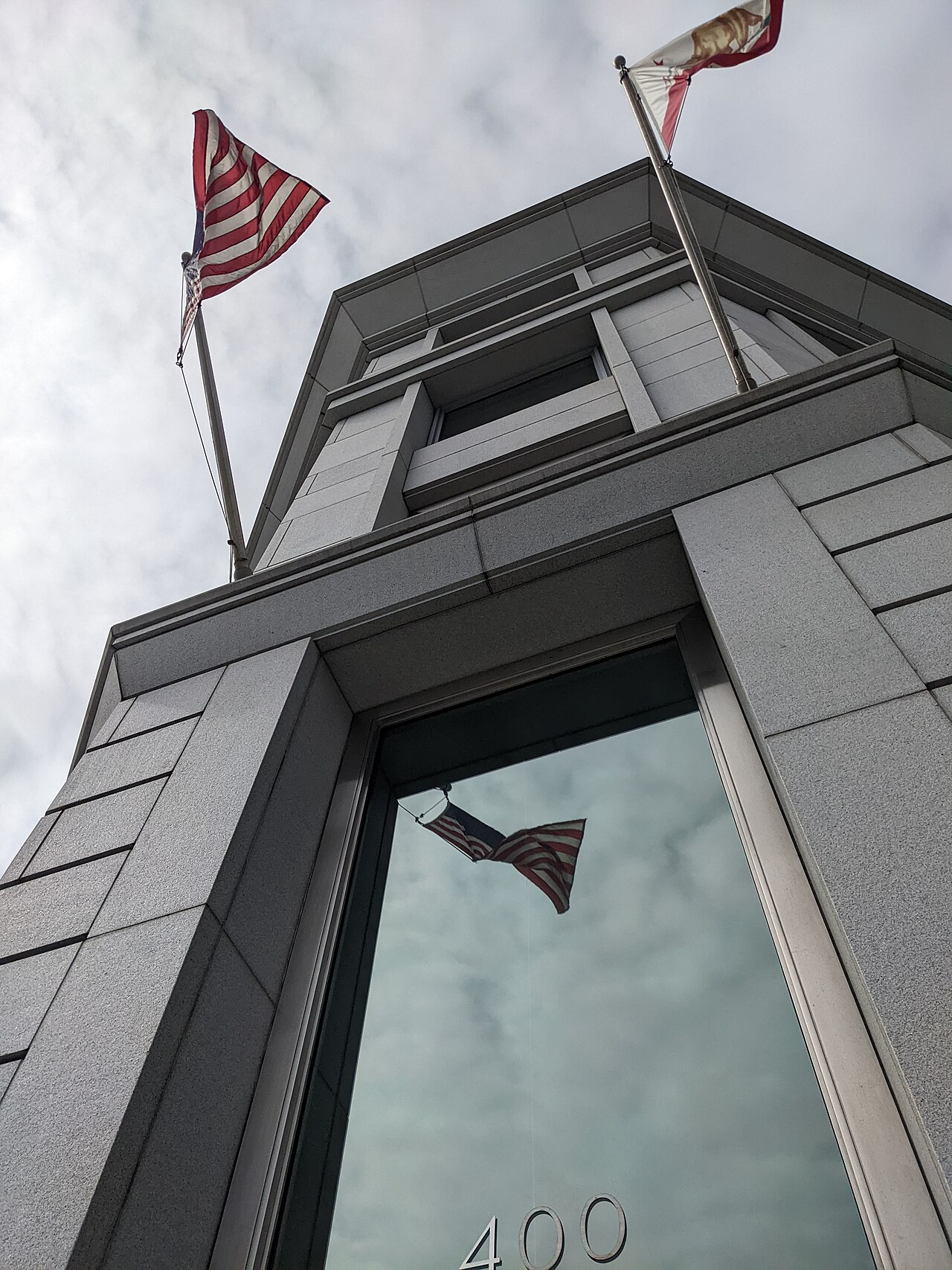
- In-body figure: "San Francisco County Superior Courthouse Entry" by Cocoablini, Wikimedia Commons, CC BY-SA 4.0.