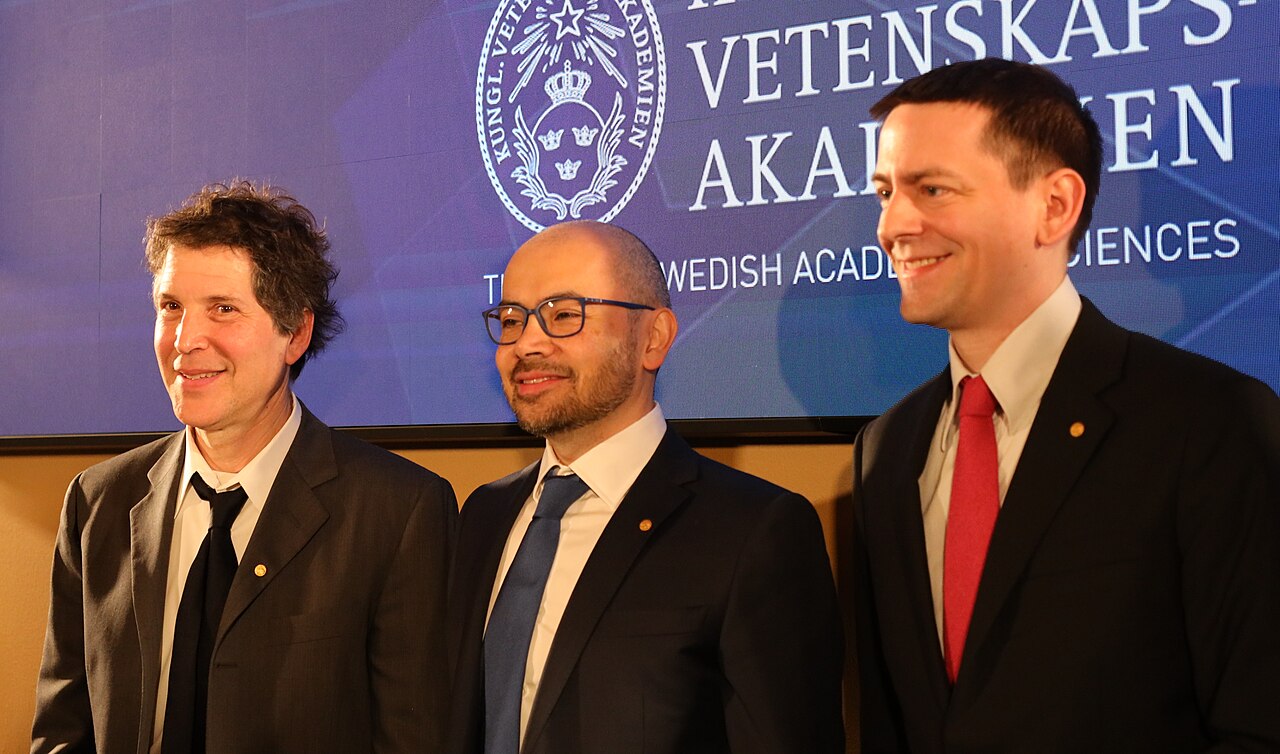
Isomorphic Labs, the Alphabet drug-discovery company that grew out of DeepMind's AlphaFold work, is reportedly in early talks to raise new funds at a valuation of at least $40 billion, and possibly as high as $50 billion. Bloomberg reported the talks this week, citing people familiar with the effort, and noted that the financing has not closed and details could change. The size of the round and the investors involved were not disclosed, and Isomorphic did not respond to a request for comment.
The headline number invites an obvious question: how does a market put a price this high on an AI drug discovery company that, by public accounts, has not yet dosed a patient? This post lays out what is confirmed, what the existing deal terms reveal, and the competing ways to read the figure.
 Google
 OpenAI
What is confirmed about Isomorphic Labs funding
Isomorphic was incorporated in 2021 as a spinout from DeepMind to commercialize AlphaFold, and is headquartered in London. Its capital history is short and has moved fast:
- April 2025: a $600 million round, described as its first external funding, led by Thrive Capital.
- May 12, 2026: a $2.1 billion Series B, again led by Thrive. Alphabet and GV were existing backers, and MGX, Temasek, CapitalG and the UK Sovereign AI Fund joined. No valuation was disclosed.
- October 2026: the reported talks at $40 billion to $50 billion.
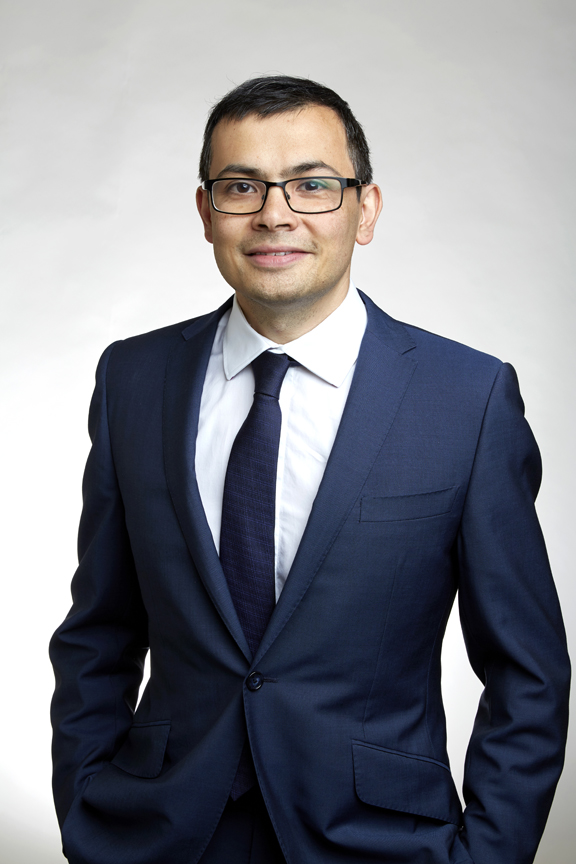
Demis Hassabis, who remains Isomorphic's CEO after moving to a chair role at Google DeepMind and becoming Alphabet's chief scientist in August, said Alphabet supplied a "large part" of the Series B and declined to comment on Alphabet's stake or the valuation, according to Bloomberg. For background on that leadership change, see our analysis of Hassabis moving to chair at Google DeepMind.
Adding the two disclosed rounds gives roughly $2.7 billion of external capital. A $40 billion to $50 billion valuation would be about 15 to 18.5 times that figure. That ratio is simple arithmetic on reported numbers, not a metric the company has published.
Pharma deal economics: upfront versus milestones
The only hard commercial terms in the public record come from Isomorphic's first two pharma agreements, announced in January 2024. Eli Lilly agreed to pay $45 million upfront and up to $1.7 billion in performance milestones, excluding royalties. Novartis agreed to $37.5 million upfront, up to about $1.2 billion in milestones, and funding for select research costs. Hassabis called them "lighthouse partnerships" at the time.
Isomorphic's first pharma deals: upfront versus conditional milestones
US$ millions, as reported in January 2024. Milestones are payable only if programs hit performance targets, and royalties are excluded.
The structure matters more than the headline "$3 billion." Upfront cash is about 2.6% of the Lilly package and about 3.0% of the Novartis package, by our arithmetic from the reported figures. Everything else is conditional on programs clearing scientific and clinical hurdles, and such milestones are commonly discounted heavily because most drug programs fail. A third collaboration, with Johnson & Johnson, was announced in January 2026 as a multi-target, cross-modality research effort in which Isomorphic handles in silico design and J&J runs experimental assays and development. Its financial terms have not been disclosed.
The deal headlines are mostly conditional value. What a valuation prices is the probability that conditions get met.
Reading the upfront-to-milestone split
Where the clinical pipeline stands
This is the part that complicates a $40 billion price. At Davos on January 20, 2026, Hassabis said Isomorphic expects its first clinical trials by the end of 2026, as reported by Reuters. A year earlier he had said AI-designed drugs would be in trials by the end of 2025, so the target moved by about a year. The Series B press release said funds would expand the pipeline "towards the clinic" without giving dates. We found no public announcement of an investigational new drug filing or a first patient dosed as of this writing. Bloomberg's report says few AI drug developers have reached clinical trials and none has brought a drug to market.
The company's technical claims point the same way as its fundraising. In February 2026 it unveiled IsoDDE, its drug design engine, and said it was more than 50% better at finding binding pockets than the closest competing tool, about twice as accurate as AlphaFold on protein-ligand structures, and about 2.3 times better on antibody interactions. Those are company statements, and benchmark gains do not by themselves show that a molecule will work in a patient.
How AI bio companies are valued without approved drugs
The comparables are sparse, and they measure different things:
- Insilico Medicine listed in Hong Kong in December 2025, raising about HK$2.28 billion (roughly $293 million) at HK$24.05 per share. Its AI-discovered IPF drug rentosertib completed a 71-patient, 12-week Phase 2a trial published in Nature Medicine, which met its safety endpoint.
- Xaira Therapeutics launched in April 2024 with more than $1 billion in committed capital led by ARCH Venture Partners and Foresite Capital. No valuation was reported.
Set side by side, a reported $40 billion is an order of magnitude beyond these figures, and it is a private negotiating position rather than a trading price. Three readings coexist. One treats Isomorphic as a platform whose value lies in repeatable design across many targets and partners, closer to infrastructure than to a single-asset biotech. A second ties part of the price to its parent, since Alphabet, its venture arms and sovereign-linked funds are not purely financial buyers, and strategic value can exceed standalone cash flows. A third holds that the figure embeds a large option on clinical success that no trial has yet tested, which makes the first human data a pivotal repricing event in either direction.
What to watch next
- Whether the round closes, at what size, and who leads it.
- An investigational new drug filing or first dosing, against the end-2026 target.
- Disclosure of financial terms for the Johnson & Johnson collaboration.
- Whether Alphabet's share of the round rises, which would signal how much of the price is strategic.
For readers tracking the wider field, our coverage of the Biohub virtual cell initiative shows the same AI-biology lineage attracting public and philanthropic money alongside private capital.
Sources:
- SiliconANGLE: Alphabet spinoff Isomorphic Labs reportedly raising funding at up to $50B valuation
- Yahoo Finance (Bloomberg report): Isomorphic Labs funding talks
- Isomorphic Labs: Series B press release, May 12, 2026
- Isomorphic Labs on Wikipedia
- MarketScreener (Reuters): Isomorphic Labs delays clinical trial timeline, January 20, 2026
- BioSpace: Lilly, Novartis sign AI partnership with Alphabet's Isomorphic
- pharmaphorum: Isomorphic signs up Lilly, Novartis for $3bn AI drug hunt
- pharmaphorum: J&J bets on Isomorphic for AI-powered drug hunt
- Isomorphic Labs: research collaboration with Johnson & Johnson
- pharmaphorum: Insilico ends 2025 with $293m Hong Kong IPO
- Nature Medicine via PubMed: rentosertib Phase 2a trial
- GEN: Xaira Therapeutics launches with $1B
Image credits
- Hero: David Baker, Demis Hassabis and John Jumper at the 2024 Nobel Prize press conference, Royal Swedish Academy of Sciences. Photo by Jennifer 8. Lee, Wikimedia Commons file, licensed CC BY-SA 4.0.
- In-body: Portrait of Demis Hassabis by Duncan Hull, Wikimedia Commons file, licensed CC BY-SA 4.0.