On August 5, 2026, Google restructured the leadership of its most important research organization. Demis Hassabis, who co-founded DeepMind in 2010 and had run it as CEO ever since, is moving into a newly created role as chair of Google DeepMind and chief scientist of Alphabet. Koray Kavukcuoglu, previously DeepMind's chief technology officer and already Google's chief AI architect, becomes the senior vice president effectively responsible for the lab's day-to-day operations and its Gemini roadmap. Alphabet's stock dipped on the news before recovering, a reminder that markets read leadership changes at frontier labs as signals about product velocity, not just org charts.
The move is easy to misread in either direction. It is not a demotion: Hassabis keeps a Nobel Prize, a knighthood, control of Isomorphic Labs, and a mandate over Alphabet's long-term scientific direction. It is also not cosmetic: handing operational control of DeepMind and Gemini to a different executive changes who makes the daily calls on one of the three most consequential model families in the world. The useful question is not whether this is good or bad for Google, but what the specific shape of the change tells us about how Google now wants to run the race.
 Google
 Gemini
 Anthropic
 OpenAI
What actually changed
The clearest way to understand the restructure is to notice that a single job has been split into two. For sixteen years, one person set DeepMind's research agenda and ran its operations. As of this week, those responsibilities sit with two people.
Who runs what after the August 2026 reset
The change splits a single CEO job into a research-and-strategy chair and an operational lead, rather than replacing one leader with another.
- Long-horizon AGI research direction
- Continues to lead Isomorphic Labs (drug discovery)
- Company-wide scientific strategy across Alphabet
- Day-to-day operational leadership of DeepMind
- Gemini model and product development
- Bridges research into shipped Google products
Roles as described in Alphabet's leadership announcement and reporting from Bloomberg, Axios and 9to5Google, August 5, 2026. Titles summarized for clarity.
Hassabis framed his new role as a chance to "focus on the big picture and help influence what is to come," which in practice means concentrating on the long-horizon path to artificial general intelligence and on Isomorphic Labs, the drug-discovery company spun out of DeepMind's protein-folding work. Kavukcuoglu, a longtime DeepMind researcher who rose to CTO and then to Google's chief AI architect, inherits the parts of the job that touch shipping: turning research into Gemini releases and getting those releases into Google's products on a competitive cadence.
A single job that one person held for sixteen years has been split into a research chair and an operational lead.
On the real content of the reorganization
Why split the role now
Running a frontier lab has become two jobs that pull in different directions. One is open-ended research toward systems that do not yet exist. The other is a relentless product cadence: shipping Gemini updates, defending share against OpenAI and Anthropic, and wiring models into Search, Workspace, Android, and Cloud. Those objectives compete for the same executive's attention, and the tension has grown as the model race has shifted from lab benchmarks toward deployed products and revenue.
Splitting the role is one recognized answer to that tension. It lets a founder-scientist keep steering the long-term bet while a dedicated operator owns the quarterly reality of releases and integration. The structure is common enough in large technology companies that the surprise is less that Google did it and more that it waited until 2026. Read that way, the change is an admission that the AGI research mission and the Gemini product mission had become large enough to each need a full-time owner.
The talent context that arrived the same day
The restructure did not happen in isolation. On the same day, Google confirmed that Jeff Dean, its chief scientist and one of the architects of its modern computing stack, was leaving after nearly 27 years to co-found a startup called Discovery Loop, taking senior figures Sanjay Ghemawat, Oriol Vinyals, and Quoc Le with him. Earlier in 2026, other senior DeepMind researchers had reportedly moved to rival labs.
One day, six senior moves
The DeepMind reset and the Discovery Loop departures were reported together on August 5, 2026. Two leaders were reassigned inside the company; four left to start a new venture.
Sources: Bloomberg, Axios, 9to5Google, TechCrunch, Unite.AI, August 5, 2026.
Clustering these events is informative even if they have different causes. A leadership reset plus a high-profile founding team walking out the door, all reported in the same news cycle, is the kind of moment that concentrates attention on retention at the top of the field. The competition for a few hundred senior researchers has become one of the defining constraints on frontier AI, and Google is both a top destination and, this week, a visible source of departures.
What it means for Gemini
The most watched consequence is what happens to Gemini. Kavukcuoglu already held the chief AI architect title and has been close to the model program, so this is continuity more than a handoff to an outsider. That argues against near-term disruption to the release schedule. The open question is emphasis. An operational lead measured on shipping and integration may push Gemini further toward product-grade reliability, latency, and cost, the attributes that decide enterprise adoption, rather than toward headline benchmark records. Whether that shift materializes will show up in the cadence and positioning of the next Gemini releases, not in this week's press.
For Hassabis, the chair role is a bet that Google's edge over a multi-year horizon comes from fundamental research: the AlphaFold-style breakthroughs that open new scientific markets, and the harder problem of general intelligence. That is a different clock from the quarterly product race, and giving it a dedicated leader is a statement about where Google thinks its durable advantage lies.
Reading it in context
Zoom out and the restructure fits a broader 2026 pattern. As frontier AI matured from a research contest into a product-and-revenue contest, the labs that lead it have been forced to professionalize their management: separating research from operations, standing up dedicated product leadership, and competing openly for scarce senior talent. Google's move is a particularly visible instance because DeepMind is a particularly visible lab, but the underlying pressure is industry-wide.
There is a practical lesson in this for the organizations that build on these models rather than train them. Frontier labs are large institutions undergoing rapid internal change, and leadership resets, roadmap shifts, and talent moves all feed into how a given model line evolves. A team that has hard-wired its product to a single provider inherits that provider's organizational turbulence along with its capabilities. Keeping applications portable across models, the model-agnostic posture Metir AI is built around, is one way to treat any single lab's roadmap as an input you can swap rather than a dependency you are stuck with.
The takeaway
What is verifiable is straightforward: Hassabis has moved from DeepMind CEO to chair of Google DeepMind and chief scientist of Alphabet, Kavukcuoglu has taken over operational leadership and the Gemini program, and both changes were announced on August 5, 2026 alongside a wave of senior departures. The structural signal is a single leadership job being split into research and operations, an acknowledgment that AGI research and the Gemini product race had each grown large enough to need its own owner. The thing to watch is not the org chart but the next Gemini releases, where any real change in priorities will actually show up.
Sources:
- Google DeepMind Boss Hassabis Moves to Chair Role in Shakeup | Bloomberg
- Google DeepMind CEO Demis Hassabis is stepping aside | Axios
- Demis Hassabis no longer DeepMind CEO to focus on new AGI role, Jeff Dean departs | 9to5Google
- Google names insider Kavukcuoglu to lead AI-powered product development | AOL
- The next chapter of our AI momentum | Google blog
- Jeff Dean and other top AI researchers are leaving Google to launch their own startup | TechCrunch
Image credits
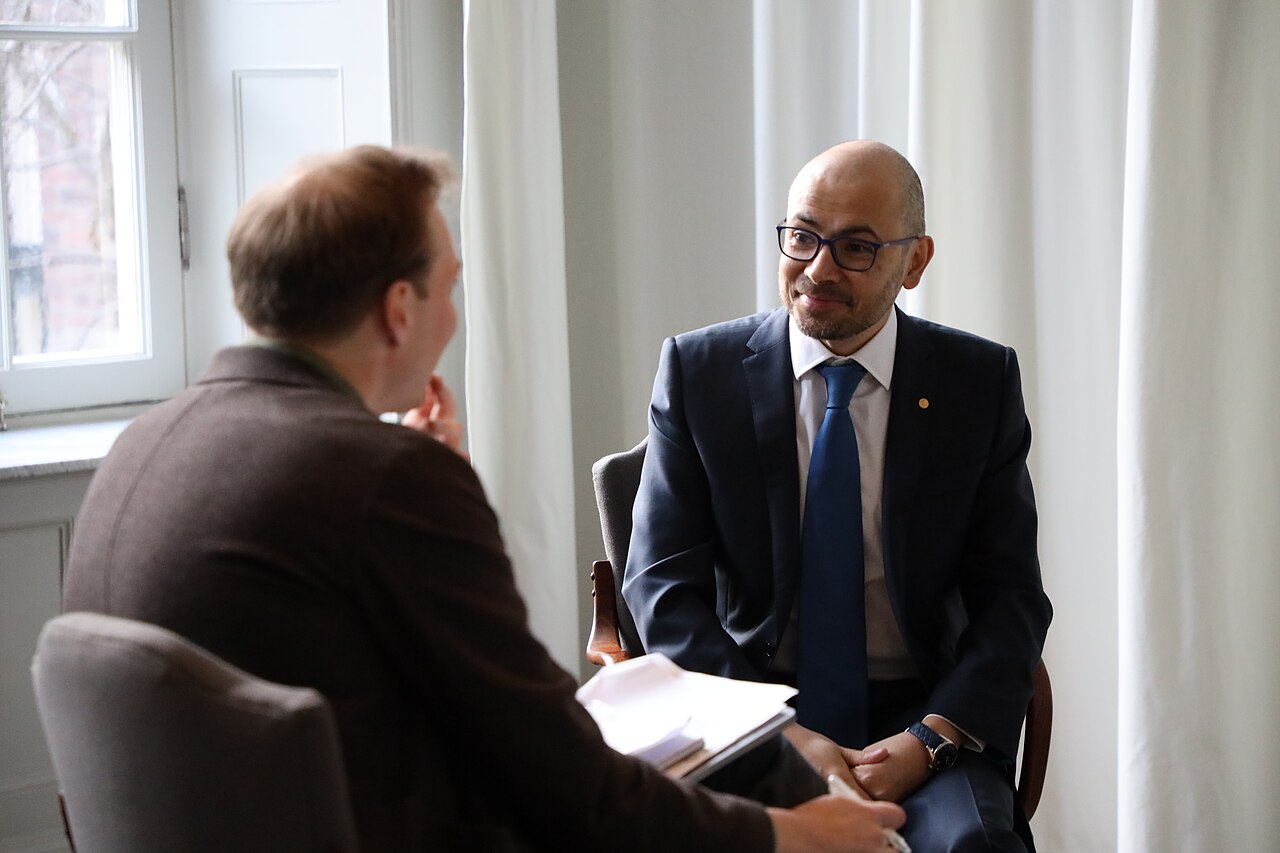
Header and in-body image: Demis Hassabis at the 2024 Nobel Week, by Jennifer 8. Lee via Wikimedia Commons, licensed under CC BY-SA 4.0. The photograph predates the August 2026 leadership change and is used to depict the individual. Reviewed before use.