Insilico Medicine says its AI platforms have produced a new class of PROTAC drug candidates for blood cancers, and The National reported the work on October 4, 2026. The molecules are PROTACs, or targeted protein degraders, designed to destroy Bruton's tyrosine kinase (BTK), a protein that helps some leukemias and lymphomas grow and spread. This post explains what PROTACs are, what Insilico actually reported, how its earlier pipeline has fared, and how to read the claimed speed and cost advantages.
What PROTACs are and why they matter
A conventional drug usually works as an inhibitor: it sits on a protein and blocks its activity, and it must keep occupying the protein to keep working. A PROTAC takes a different route. According to a review of PROTACs in leukemia, a PROTAC is a bifunctional molecule with one end that binds the target protein, another end that binds an E3 ligase, and a linker between them. Bringing the two together makes the cell tag the target with ubiquitin, and the proteasome then degrades it.
The same review notes that this mechanism is event driven. A single PROTAC molecule can dissociate after triggering degradation and go on to act on further target proteins, so it can work at low concentrations. The authors list potential advantages over inhibitors, including reach to proteins without a usable active site and the ability to overcome many resistance-conferring mutations. They also list obstacles: PROTACs are large and exceed Lipinski's rule of five, E3 ligase choices are limited, and cell permeability and the move from preclinical to clinical efficacy remain hard. The review counts six antileukemic PROTACs in Phase 1 or 2 trials.
What Insilico reported
According to Insilico's own announcement, the team in its Abu Dhabi R&D center designed BTK degraders with two lead compounds, ISM-PR25 and ISM-PR44. The company reports BTK degradation DC50 values of 0.04 nM and 0.05 nM respectively (DC50 is the concentration that degrades half of the target), oral bioavailability in mice of 26% and 29%, and two new CRBN-binding warheads, ISM-WH1 and ISM-WH2. More than 40 compounds were evaluated during optimization, and the work was published in the Journal of Medicinal Chemistry on August 14, 2026.
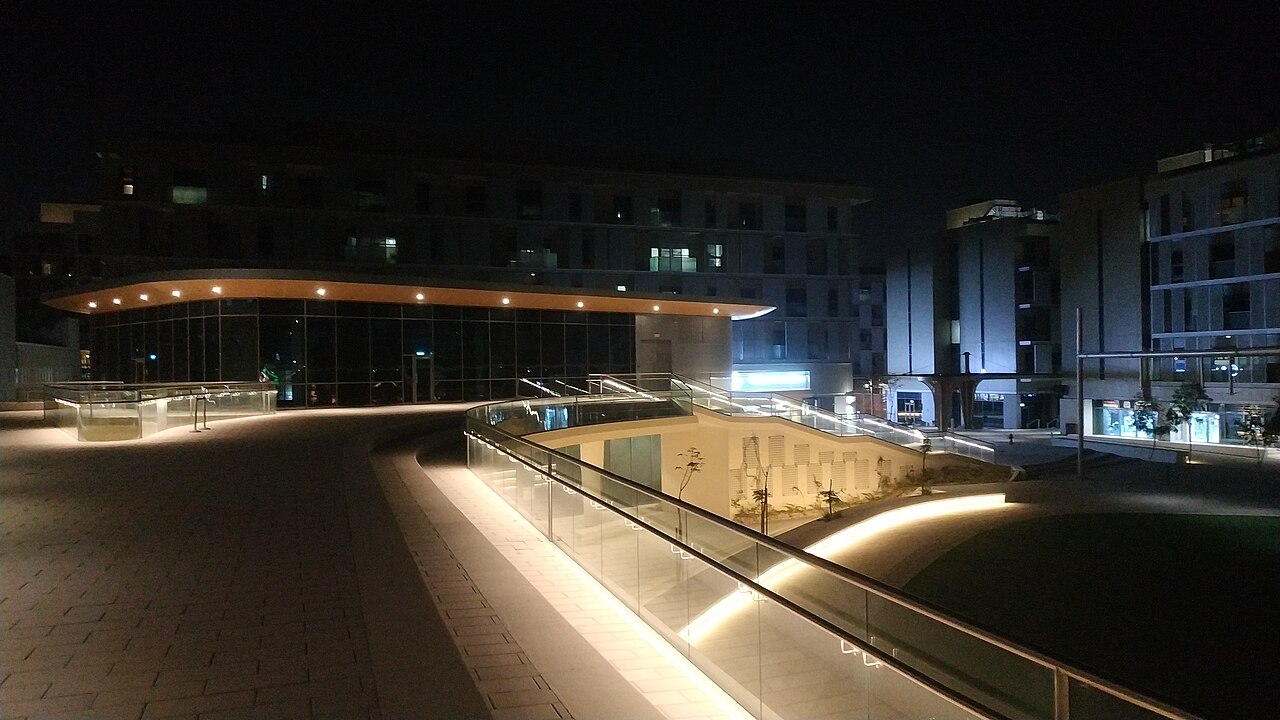
The National's report says the team used two platforms: PandaOmics, which identifies disease-related target proteins, and Chemistry42, which designs molecules to bind them. It places the work after an April 2026 brain cancer candidate and a July 2026 non-opioid pain molecule from the same lab. Insilico's release ties it to ISM0387, a PRMT5 inhibitor announced on April 23, 2026 as the first drug discovered in the UAE.
Two cautions apply. These are preclinical results, and The National notes human trials are several years away pending preclinical work and regulatory approval. DC50 and mouse bioavailability are also early signals; they say little about efficacy or safety in patients.
The hope of AI is that it will increase the success rate, reduce time spent and reduce costs.
Ahmad Alghaith, organic chemist at Insilico Medicine, to The National
The track record: rentosertib
The more telling evidence for Insilico's approach sits in a different disease. Rentosertib (ISM001-055) is a TNIK inhibitor for idiopathic pulmonary fibrosis (IPF) whose target was found by AI and whose structure was designed with generative AI. Insilico says the program went from target discovery to the start of Phase 1 in under 30 months, with the preclinical candidate nominated in December 2020 and Phase 1 starting February 24, 2022.
The GENESIS-IPF Phase 2a trial enrolled 71 patients at 22 sites in China across placebo, 30 mg once daily, 30 mg twice daily and 60 mg once daily arms for 12 weeks. According to Insilico's Nature Medicine announcement, published June 3, 2025, the 60 mg once daily group had a mean forced vital capacity (FVC) change of +98.4 mL versus -20.3 mL for placebo, with similar adverse event rates across groups. Insilico then announced a Phase 3 trial on July 7, 2026: 320 patients at 47 centers in China over 52 weeks. Phase 2a trials are small and short, so Phase 3 is the real test.
AI versus traditional timelines and costs
The National quotes Insilico putting drug selection at 12 to 18 months with its AI pipeline, against 2.5 to 4 years with traditional methods. It also reports that 9 in 10 potential drugs fail before approval.
Drug selection time: AI pipeline vs traditional methods
Months from program start to selecting a drug candidate, at each end of the ranges Insilico gave The National (12 to 18 months vs 2.5 to 4 years, converted to months).
Company-stated ranges, not an independent benchmark. Drug selection is an early stage and excludes clinical trials.
Converting units, 2.5 to 4 years is 30 to 48 months. Comparing the ranges, the derived speedup is about 1.7 times (30 months against 18) at the narrow end and 4 times (48 against 12) at the wide end. That is a smaller multiple than the headline cost claim. For rentosertib, Insilico states that target discovery through preclinical candidate cost about $2.6 million, versus around $430 million in out of pocket costs for traditional discovery, with capitalized costs above $1 billion. The derived ratio is roughly 165 times, but the comparison is not like for like: the $430 million figure covers more than the early stage the $2.6 million covers. Both numbers also come from the company, not an independent audit.
Speed in early discovery also does not shorten trials. Rentosertib's path from a 2022 Phase 1 start to a 2026 Phase 3 start suggests clinical stages still take years.
The market's view: Hong Kong IPO
Investors have put money behind the thesis. Insilico listed on the Hong Kong Stock Exchange on December 30, 2025 under ticker 3696.HK, raising HKD 2.277 billion from 94,690,500 shares. Cornerstone investors included Lilly, Tencent, Temasek and others, the international offering was oversubscribed 26.27 times, and the Hong Kong public tranche about 1,427 times. The release describes it as the first AI-driven biotech listed on the HKEX Main Board under Chapter 8.05.
For context on how other AI drug developers are funded, see Metir's analysis of Enveda's $311 million Series E.
What to watch
- Efficacy, not just degradation. Whether ISM-PR25 and ISM-PR44 degrade BTK in disease models and tolerate dosing is the next gate.
- Rentosertib Phase 3. The 52 week readout is the clearest test of whether AI-designed molecules clear late-stage trials.
- Independent benchmarks. The 12 to 18 month and $2.6 million figures are company statements; third-party comparisons would sharpen them.
- Platform spread. Insilico presents a repeatable pipeline across cancer, pain and fibrosis, which matters more than any single molecule.
Teams tracking fast-moving research like this can pull papers, press releases and trial records into one model-agnostic workspace such as Metir.
Sources:
- The National: UAE scientists harness AI to discover potential blood cancer drug
- Insilico Medicine: AI-generated BTK PROTAC announcement
- Insilico Medicine: From target discovery to Phase 1 in 30 months
- Insilico Medicine: Nature Medicine publication of rentosertib Phase 2a results
- Insilico Medicine: Rentosertib Phase 3 initiation
- PROTACs in leukemia: overview and future perspectives (PMC)
- PR Newswire: Insilico lists on the Hong Kong Stock Exchange
Image credits
- Hero and in-body: "Masdar City in March 2022 01.jpg" by Renek78, licensed CC BY-SA 4.0, via Wikimedia Commons.