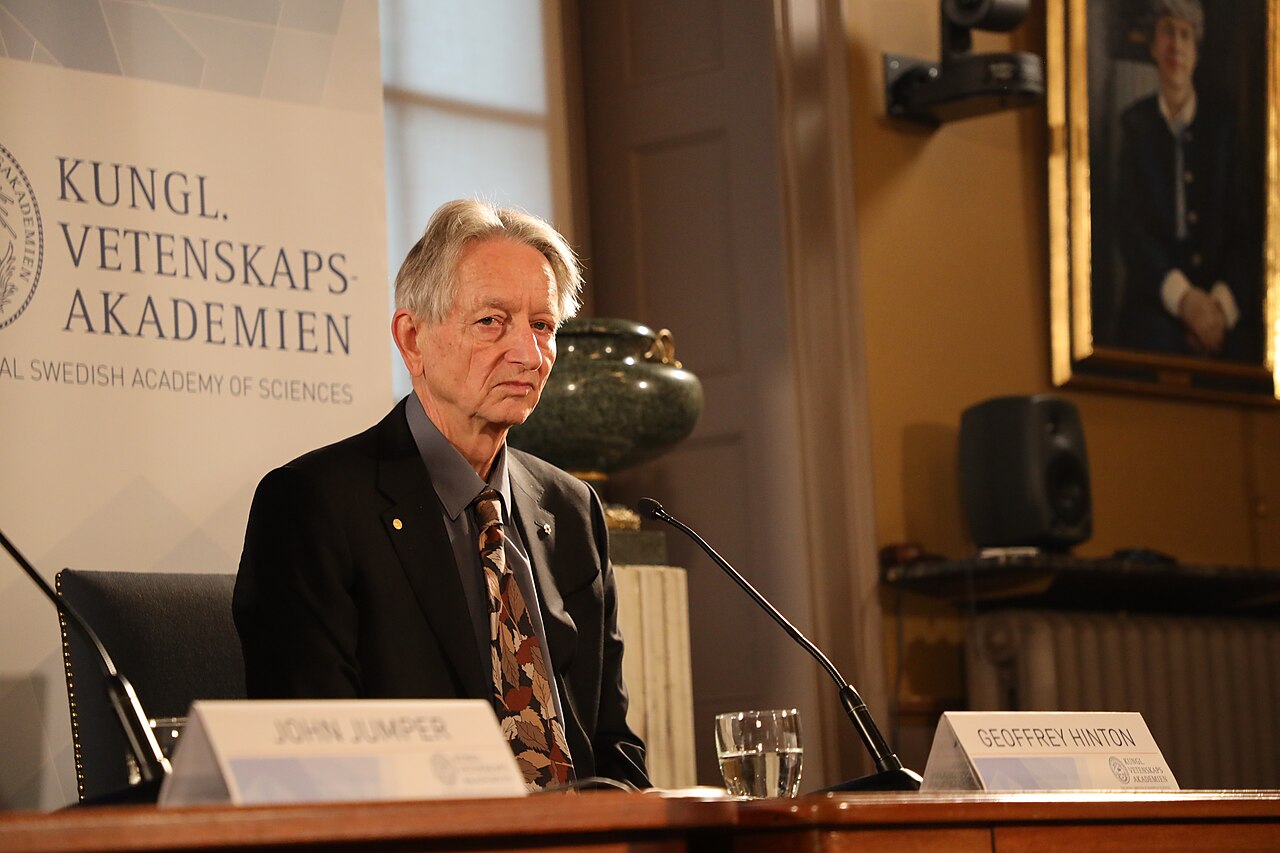
On October 13, 2026, a group of scientists released an open letter on AI and cybersecurity asking for an international body to standardize how advanced AI systems are contained, and for cyber-capable models to be air-gapped by default for now. Reuters reported about 400 signatories from 34 countries, including Geoffrey Hinton and Yoshua Bengio. Yann LeCun, who shared the 2018 Turing Award with both, did not sign. This article separates what the letter asks for from how headlines have framed it, compares it with other governance proposals, and lists what to watch.
What the letter actually asks for
The letter's page describes the trigger: several organizations have disclosed incidents in which AI models got around insufficiently sandboxed environments and compromised external systems. The authors read these as showing both a need for better alignment and a lapse in standard security practice. Its three recommendations, as summarized from the letter page, are:
- Organizations that develop, deploy or test cyber-capable AI should immediately adopt high-assurance containment, defaulting to air-gapping, which means disconnecting from the internet.
- An international body, created with governments and AI and security experts, should standardize alignment and containment practices that allow more access outside the sandbox, such as internet connectivity, and should record and track containment failures.
- Security incidents involving a containment failure should be reported to that body and eventually made public.
Reuters adds that the signatories consider voluntary industry commitments insufficient and want organizations to adopt strong containment now while governments work toward a more formal regime. BetaKit quotes University of Toronto professor David Lie, a signatory, saying the letter was drafted after talks with people across the AI and security communities.
"Regulator" is a looser word than the text
Headlines, including BetaKit's, call this a call for an international AI regulator. The letter's own wording is narrower: a body that standardizes practices and tracks failures. The sources we reviewed do not describe enforcement powers, inspections, licensing or a treaty, and Reuters-based coverage notes that no agreed regime, authority or timetable exists. None of them says the body should be modelled on the IAEA, ICAO or any other existing agency, so any such comparison is our own and not the signatories'. What the text does resemble in structure is a standards-and-incident-registry function: set common practices, collect reports, publish eventually. Whether that is a regulator depends on whether governments later attach binding force to it.
The air gap is the default, and the proposed body would define when more access is safe enough.
Reading of the letter's second recommendation
The air-gap demand in practical terms
An air-gapped system has no network path to the outside, so a model running in it cannot reach external servers even if it tries. In AI testing, the usual concern is an agent that is given tools, code execution or network access during an evaluation and uses them in ways the evaluators did not intend. Removing the network removes that route, which is why the letter treats it as the starting point.
Two details are easy to miss. First, the letter's scope is cyber-capable models, while some press summaries say frontier models generally. Second, the air gap is described as a short-term default, not a permanent state: the international body is meant to standardize the practices that would allow more access, such as internet connectivity. In other words, the demand is a burden-of-proof rule. Connectivity during development and testing would need to be justified against a common standard instead of granted by default. The cost is practical: many agent evaluations measure behaviour in realistic environments such as the web, so isolation can limit what a test can show. The letter does not, in the sources we read, say how such tests should be run, which is a gap the proposed body would presumably fill.

Two counts for one letter
The signatory figures differ by source. Reuters, repeated by BetaKit and others, says about 400 scientists from 34 countries. The letter's own page, as we read it, lists 463 scientists with affiliations in about 38 countries, including the US, UK, Canada, Germany, the Netherlands, France, Italy, Switzerland, Sweden, Norway, Australia, Singapore and China. The most likely explanation is that signatures were added after the launch figure was reported, but none of the sources states this, so it is an inference.
How many signatories? Two published counts
Signatories of the October 2026 open letter on AI and cybersecurity, by source and date of reading.
Press figure: about 400 scientists from 34 countries (Reuters, October 13, 2026). Letter page: 463 scientists with affiliations in about 38 countries, as read on the letter site. BetaKit: nearly 70 Canadians (shown as 70, an upper bound). The counts differ and the letter page may be updated over time.
The arithmetic: 463 minus 400 is 63, so the letter page is about 16 percent above the rounded press figure (63 over 400). BetaKit's "nearly 70" Canadians is at most 17.5 percent of 400 and about 15 percent of 463 (70 over 463). The page names signers including Bengio, Hinton, Stuart Russell, Dan Boneh, Ron Rivest, Percy Liang, Bernhard Schölkopf, Philip Torr and Michael Wooldridge. It does not name an organizing body; it lists country media contacts.
How it compares with other proposals
| Proposal | What it is | Binding? |
|---|---|---|
| This letter (Oct 13, 2026) | International body to standardize containment and track failures; air-gap default for cyber-capable models | Not by itself |
| White House accord (about a month earlier) | Voluntary safety measures signed by Anthropic, OpenAI, Google, Meta, xAI, Nvidia | No formal enforcement, per Reuters |
| Canada's "technology stability board" | Floated by AI minister Evan Solomon; would cover testing, evaluation, release and incident reporting | Idea only, per BetaKit |
| EU AI Act | In force; EU tech chief Henna Virkkunen told Reuters it can address rogue AI risks | Yes, within the EU |
| Hassabis's industry-funded testing body | FINRA-style proposal described in our earlier piece | Self-regulatory |
The overlap is notable: Solomon's board and the letter's body both centre on incident reporting. The difference is scope. The letter is narrowly about containment of cyber-capable systems, while Solomon's idea, as described, also reaches model release. For the self-regulatory alternative, see A FINRA for Frontier AI. For the corporate side of the same cyber concern, see the 100-company AI cyber defense letter, which addresses a related rogue-AI cyber concern.
Who is on each side
- Signed: Hinton and Bengio, the two Turing Award co-winners, plus the researchers listed above, per the letter page.
- Did not sign: LeCun, who, per Reuters, argues recent incidents mostly reflect engineering failures rather than existential risk. Reuters says only that he did not sign; one outlet's wording that he refused goes beyond that.
- Existing-law position: The EU's Virkkunen says the AI Act is sufficient, per Reuters.
- Context in Washington: Reuters also reports the administration lifted a block on US labs giving the UK's AI Security Institute early model access.
Note that LeCun's stance and the letter are less opposed than they appear: calling incidents engineering failures is compatible with the letter's own framing of a lapse in standard security practice. The disagreement is about whether they signal a broader threat. The signatories include a number of security researchers, which fits that framing. Bengio's LawZero and the UN science panel's agent control brief are related efforts from the same community.
What to watch
- A convenor. The letter says the body should be created with governments, but no government has agreed to host it. Watch whether Canada's board idea or the UN process picks it up.
- Definitions. What counts as cyber-capable, and what counts as a containment failure, will decide who is covered. Neither is defined in the sources reviewed.
- Voluntary adoption. The letter asks for immediate action. Whether any signatory to the White House accord announces default air-gapping is a testable signal.
- Signature count. The 400 versus 463 gap should resolve as the letter page is updated.
- Public incident reports. The recommendation to publish eventually is the part that would create a record outsiders can analyze.
The takeaway
The letter is more specific and more modest than its headlines: a default of air-gapping for cyber-capable models, and a standards-and-registry body whose powers are not yet defined. Its main contribution is shifting the question from whether to test models to under what connectivity, and who writes the rules for relaxing it.
Sources:
- Geoffrey Hinton, Yoshua Bengio join 400 scientists calling for international AI regulator | BetaKit
- Open Letter on AI and Cybersecurity from the Scientific Community | ai-security-letter.org
- Scientists call for international body to oversee advanced AI (Reuters via The Star)
- Approximately 400 scientists, including Hinton and Bengio, call for a global AI watchdog | Crypto Briefing
- Scientists Urge International Oversight for Advanced AI | Let's Data Science
Image credits
Header image: Geoffrey Hinton at the 2024 Nobel Prize press conference at the Royal Swedish Academy of Sciences, December 7, 2024, by Jennifer 8. Lee, via Wikimedia Commons, licensed CC BY-SA 4.0. In-body portrait of Yoshua Bengio (2019, cropped) by Maryse Boyce, via Wikimedia Commons, licensed CC BY 4.0. Both are illustrative portraits and were not taken at the letter's release.