Google and Constellation Energy announced on October 6, 2026 a 20-year agreement under which Google will fund roughly 890 MW of nuclear uprates, upgrades that squeeze more output from existing reactors, across the PJM grid. It is a different kind of nuclear deal from the reactor restarts that dominated the last year of AI power news, and it is worth separating from them.
 Google
 Google Cloud
What Google and Constellation announced
According to Google's announcement, the agreement has two main parts. The first is a 20-year power purchase agreement (PPA) for 890 MW of new nuclear capacity created by uprating 11 Constellation-owned units in Illinois, Pennsylvania and New Jersey. The second is a separate 15-year energy supply agreement for a further 2,700 MW from Constellation in PJM that is not tied to a specific source. Taken together, trade coverage counts 3,590 MW contracted, with new nuclear making up roughly a quarter.
The announcement attaches several other figures. Constellation is to invest more than $4.3 billion in the upgrades, which are expected to create roughly 7,200 construction jobs and sustain about 4,400 existing jobs. The first uprate is expected by 2028. A five-year technology alliance also covers Google Cloud and Gemini Enterprise, including an "AI for energy" blueprint intended to speed delivery of capacity, optimize how assets are dispatched and protect critical infrastructure.
Amanda Peterson Corio, Google's global head of energy and power, said the agreement "will strengthen the PJM grid, which serves 67 million people." Joe Dominguez of Constellation said the collaboration "can serve as a model for how technology companies and the energy industry can work together."
One caveat on sourcing: the unit-by-unit breakdown was not in the Google announcement or the coverage reviewed for this post, so which plants will gain how many megawatts is not confirmed here.
Our agreement with Constellation to fund nuclear reactor uprates will strengthen the PJM grid, which serves 67 million people.
Amanda Peterson Corio, Google
Uprate, restart or SMR: three ways to add nuclear power
The three terms get blurred in headlines, but they describe different engineering and regulatory paths.
- Uprate. The plant keeps running, and its owner gets approval to operate at a higher power level. The US Nuclear Regulatory Commission (NRC) groups uprates into three categories: measurement uncertainty recapture (under 2%), stretch uprates (typically 2% to 7%) and extended uprates (up to about 20%, usually needing significant equipment changes). The NRC says a power uprate only occurs after it approves a plant's request.
- Restart. A closed plant is refurbished and relicensed. Microsoft's deal at Crane (the former Three Mile Island Unit 1) and Google's deal at Duane Arnold in Iowa are the examples. Our earlier piece covers that case: Why a Dead Iowa Reactor Is Restarting for AI.
- Small modular reactors (SMRs). New, smaller reactors built from scratch. Google's release itself frames 890 MW as equivalent to "several" SMRs or one large conventional reactor, a comparison that highlights how little commercial SMR capacity exists today.
Uprates are not new. As of January 2022 the NRC had approved 171 of them, adding about 8,030 MW electric, which the agency equates to roughly eight new reactors. What is new is the buyer: a technology company paying to bring forward a very large batch at once. For scale, 890 MW is slightly more than the roughly 835 MW reported for Crane after its restart (World Nuclear News cites 837 MWe).
Why PJM, and why now
PJM Interconnection is the grid operator for the mid-Atlantic and Midwest, and the region where AI-driven load growth has been most visible in capacity prices. In its December 2025 auction for the 2027/2028 delivery year, capacity cleared at $333.44 per MW-day, the cap and a record for the third auction in a row. Without a temporary cap negotiated with Pennsylvania Governor Josh Shapiro, reporting put the price near $530 per MW-day. PJM procured about 6,625 MW less than its 20% reserve margin target, and its peak load forecast rose by about 5,250 MW, nearly all of it attributed to data centers.
Against that backdrop, the Google announcement says it responds to PJM's "Bring Your Own Power" proposal, under which large new loads would supply their own electricity or risk being curtailed in peak periods, and aligns with the White House Ratepayer Protection Pledge, which is aimed at keeping data center costs away from household bills. In that light, the deal is a way for a large buyer to show it is adding supply rather than drawing down a tight market.
Big-tech nuclear power deals by contracted capacity
Megawatts (MW). Deals differ in structure, term and what the buyer is paying for.
Sources: Google, Foley, Data Center Dynamics, World Nuclear News, NextEra and DOE coverage.
The big-tech nuclear landscape
The chart compares deals by megawatts, but the bars are not like-for-like. Amazon's expanded agreement with Talen, announced in June 2025, covers up to 1,920 MW from the Susquehanna plant in Pennsylvania through 2042, ramping to full volume by 2032, and Meta's 20-year PPA with Constellation covers the 1,121 MW Clinton plant in Illinois, with its term beginning in 2027. Both buy output from plants that already run. Talen and Amazon have also said they will explore uprates and SMRs at Susquehanna. Microsoft's 20-year Crane deal (about 835 MW) and Google's Duane Arnold deal (615 MW, 25 years) depend on restarts. The new Google agreement is the only one on the list built around uprates.
Additionality: the question behind the megawatts
Additionality asks whether a deal causes new generation to exist or simply reassigns power that was already on the grid. Contracts for existing plants can still be valuable, since they keep a plant open, but a common objection is that they add no new supply while a hyperscaler's load grows. Uprates sit between the two cases: the reactors already exist, yet the extra megawatts would not exist without new equipment and investment.
Google's release says the capacity is "entirely new, expanding total electricity generation available across the PJM footprint." That is the company's characterization; it is plausible given the structure, but the evidence is the timeline. Uprates need NRC approval and equipment work, so the 890 MW is expected to arrive in increments starting in 2028, not at signing. The separate 2,700 MW supply agreement is not described as new capacity, so the 3,590 MW headline overstates the new-supply portion.
What to watch
- Which plants and when. A unit-level schedule would show how much of the 890 MW arrives by 2028 and how much later.
- Regulatory approvals. Each uprate needs NRC sign-off, and extended uprates involve larger modifications than smaller ones.
- PJM's next steps. The outcome of the "Bring Your Own Power" proposal will shape whether more buyers copy this structure.
- Cost allocation. The announcement says costs are not meant to shift to residential customers; how that is measured in practice is not yet public.
- Price signals. Future capacity auctions will show whether added supply of this size moves clearing prices.
For anyone tracking AI infrastructure, power is now as much a bottleneck as chips. Teams who want to compare how different models describe and analyze energy filings can do so across providers in a multi-model workspace like Metir, but the underlying constraint remains megawatts, not tokens.
The takeaway
The deal is notable less for its size than its shape: a buyer funding upgrades at operating plants across three states, in the grid region with the tightest capacity picture. Whether it becomes a template depends on schedule, approvals and how additionality is verified, none of which is settled on announcement day.
Sources:
- Google Cloud press corner: Google and Constellation announce landmark agreement to bring 890 MW of new nuclear capacity to PJM grid
- BIC Magazine: Google and Constellation Energy partner to add 890 MW nuclear capacity in PJM
- Yahoo Finance: Google enters massive 3.6-GW power deal with Constellation Energy
- US NRC: Power uprates fact sheet
- Utility Dive: PJM capacity auction and data center demand
- Foley: Constellation and Meta PPA preserves existing nuclear generation
- Data Center Dynamics: Meta signs 20-year PPA with Constellation for Illinois nuclear plant
- Talen Energy: Talen expands nuclear energy relationship with Amazon
- World Nuclear News: Constellation to restart Three Mile Island unit, powering Microsoft
- Metir AI: Duane Arnold nuclear restart for Google
Image credits
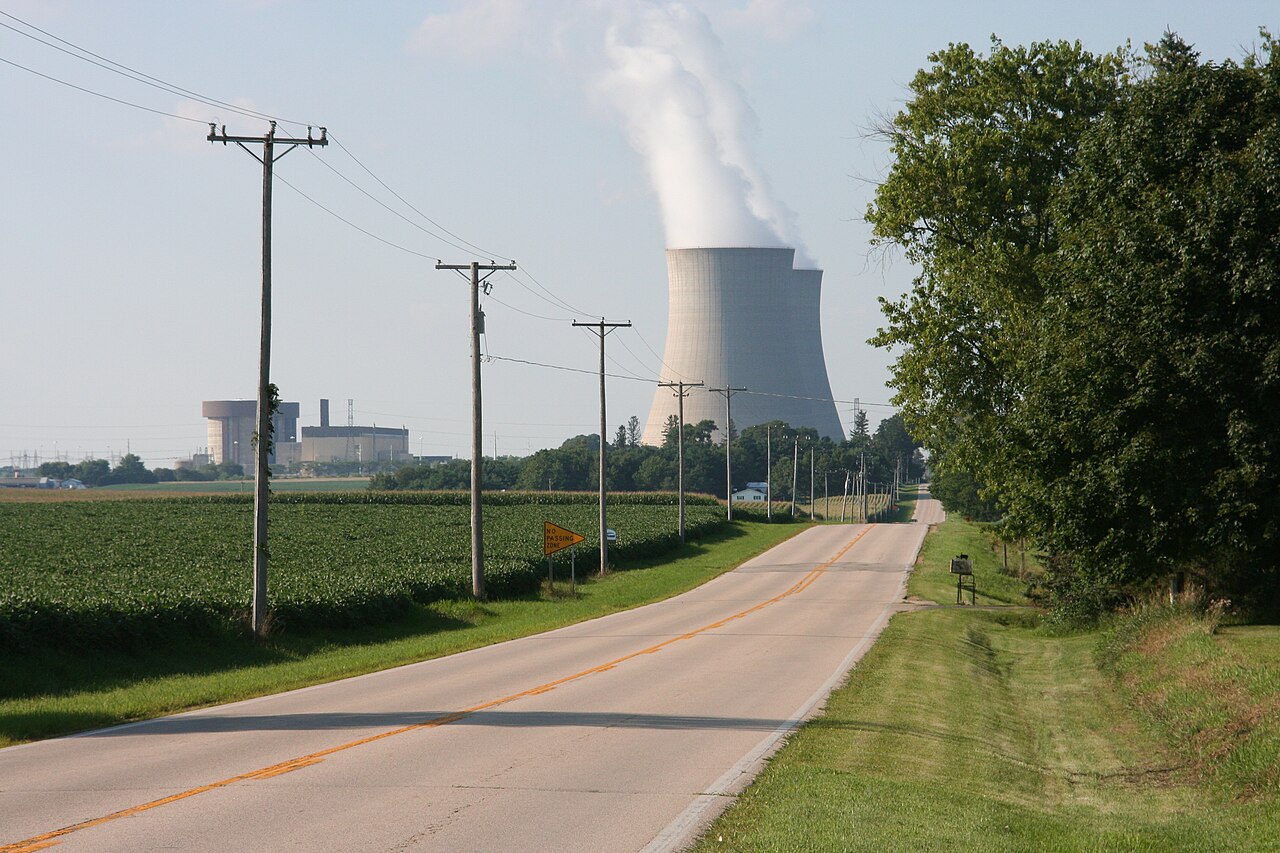
- Hero: "Byron Nuclear Power Plant, IL 02" by Ben Jacobson, via Wikimedia Commons, licensed CC BY 2.5. Byron is a Constellation-owned plant in Illinois, shown for illustration only.
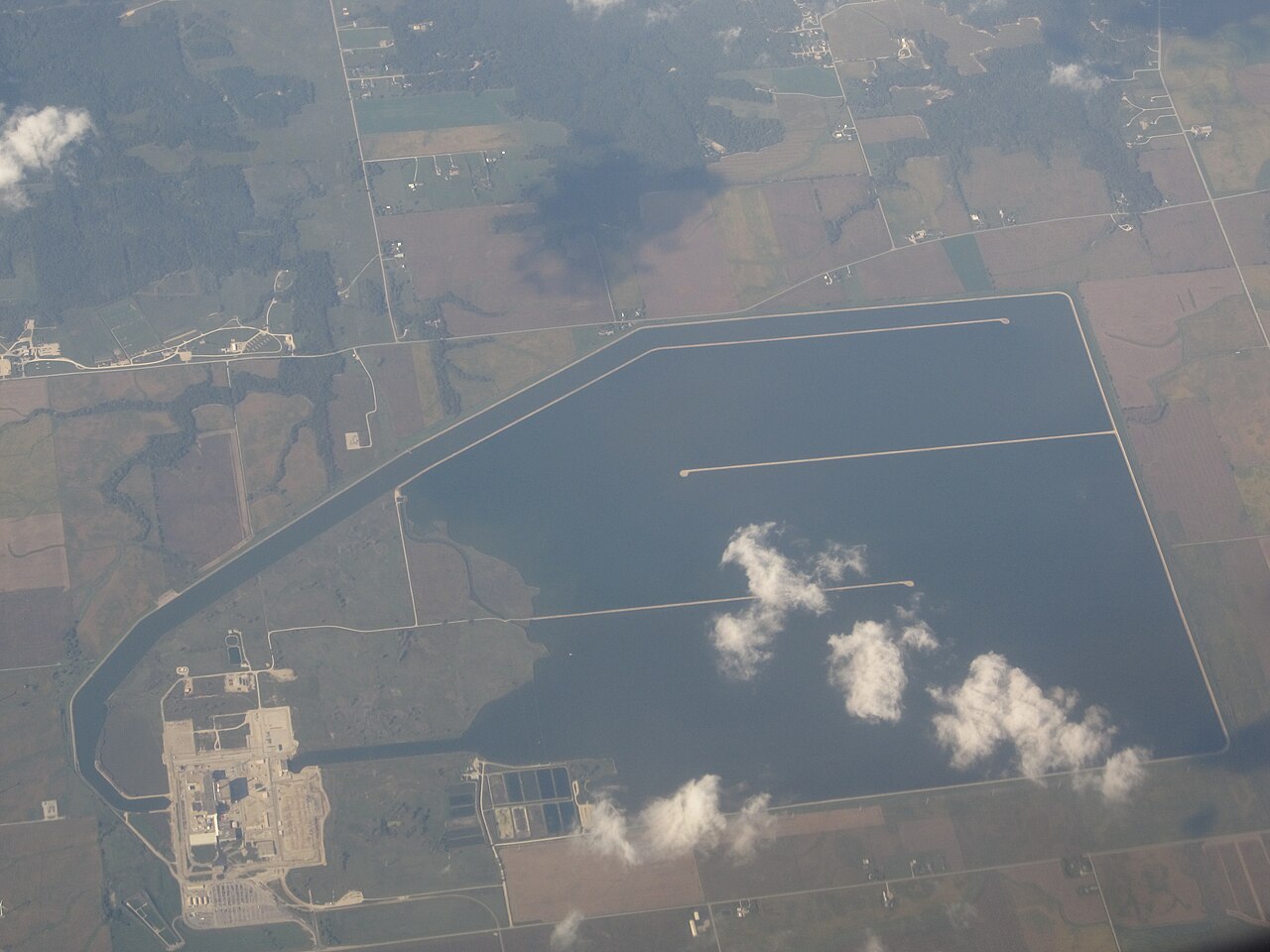
- In-body: "LaSalle County Nuclear Generating Station, Near Ottawa, Illinois" by Ken Lund, via Wikimedia Commons, licensed CC BY-SA 2.0.