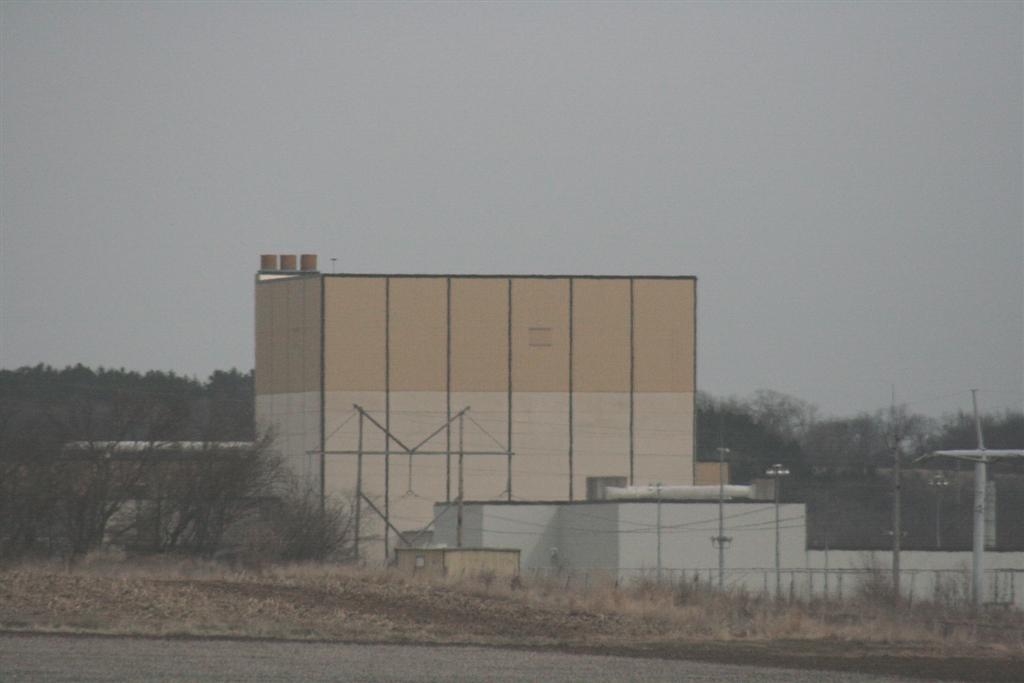
On September 8, 2026, the US Department of Energy closed a loan of up to $1.9 billion to NextEra Energy to restart the Duane Arnold Energy Center, a nuclear plant near Palo, Iowa, that shut down in 2020. The plant is not coming back because Iowa suddenly needs more household electricity. It is coming back because Alphabet's Google has signed a 25-year agreement to buy its power, and because the demand curve for electricity has been bent upward by a load that barely existed at this scale when the reactor closed: AI data centers.
Duane Arnold is the third recent US reactor restart, and the second tied directly to a hyperscaler's power needs. That makes it a good lens for a broader question: why is the AI build-out reaching for old nuclear plants, and what does bringing one back actually take?
Why AI wants nuclear specifically
Data centers have an unusual electricity profile, and it maps almost perfectly onto what a nuclear plant provides.
The first feature is that the load is close to constant. A large AI training or inference cluster runs around the clock, so it wants power that is available every hour, not power that arrives when the wind blows or the sun shines. Nuclear is baseload: it runs continuously at high output, which is exactly the shape of demand a data center creates.
The second feature is scale in one place. A single campus can draw as much power as a small city, concentrated at one point on the grid, and standing that up from scratch through new generation and transmission takes years. A reactor that already exists, already sits on the grid and already has its switchyard is a rare way to add a large, steady block of power without building it from nothing.
The third feature is the carbon commitment. The largest AI buyers have public clean-energy targets, and adding fossil generation to hit their compute goals would break those promises. Nuclear produces no carbon while running, which lets a hyperscaler grow its energy footprint without abandoning its climate goals.
Put those together and a shuttered reactor stops looking like a stranded asset and starts looking like the cleanest available answer to a specific problem.
 Google
 Microsoft
The mechanism: a power deal makes the restart bankable
The part that is easy to miss is why the Google agreement matters as much as the DOE loan. Restarting a reactor costs billions and takes years, and no operator spends that money on a hope that someone will buy the output later. A long-term power-purchase agreement, or PPA, is a contract to buy a set amount of electricity for a set period, and a 25-year PPA from a buyer as creditworthy as Google is what turns a restart from a gamble into a financeable project. The PPA guarantees the revenue; the federal loan lowers the cost of the capital; together they make the numbers work.
This is the same structure that revived the former Three Mile Island Unit 1, now called the Crane Clean Energy Center, where Microsoft contracted for the full output under a 20-year deal, supported by a separate DOE loan. The pattern is becoming a template: a hyperscaler anchors the demand, the government de-risks the financing, and a retired reactor comes back to serve a load that is effectively a single customer.
A wave of US reactor restarts, increasingly tied to tech buyers
Duane Arnold is the third recent restart, and the second signed directly to a hyperscaler's power needs.
| Plant | Operator | Capacity | Power buyer | Target |
|---|---|---|---|---|
| Palisades (MI) | Holtec | ~800 MW | Grid (DOE-backed) | 2025 |
| Crane, ex-Three Mile Island Unit 1 (PA) | Constellation | 835 MW | Microsoft, 20-yr PPA | 2027 |
| Duane Arnold (IA) | NextEra | 615 MW | Google, 25-yr PPA | 2029 |
Sources: public reporting on the Palisades, Crane and Duane Arnold restarts, 2024 to 2026. Some figures approximate.
What a restart actually involves
A closed reactor is not a light switch. Bringing Duane Arnold back means refurbishing equipment that has sat idle since 2020, and, critically, clearing a regulatory path that no US operator had walked until very recently. The plant cannot return to the grid until the Nuclear Regulatory Commission grants the approvals to restart it, and that process is deliberately slow because the thing being approved is a nuclear reactor. That is why the target date is early 2029 rather than next year, even with the money in place.
From shutdown to AI-powered restart
A reactor retired in 2020 is being brought back to serve demand that did not exist at that scale when it closed.
Source: reporting on the NextEra Duane Arnold restart and DOE loan, September 2026.
The distance to 2029 is the honest caveat on this whole story. A signed PPA and a closed loan are real commitments, but they are commitments to a project that still has to survive years of refurbishment and licensing before it delivers a single megawatt. NextEra estimates the restart could generate more than $9 billion in economic benefit for Iowa over 25 years, a figure from a commissioned study that assumes the plant actually returns and runs. The upside is large and the timeline is long, and both are true at once.
A shuttered reactor stops looking like a stranded asset and starts looking like the cleanest available answer to a specific problem.
The logic behind the AI-nuclear restart wave
The debate this does not settle
Restarting carbon-free plants to power AI is, on its face, a cleaner path than building new gas. But it raises questions that the announcement does not answer, and a neutral read has to name them.
The first is who benefits from the grid. When a hyperscaler contracts for the entire output of a reactor, that power is dedicated to its data centers rather than added to the general supply. Supporters argue this is the point: the buyer funds generation that would not otherwise exist, so it is additive, not subtractive. Skeptics counter that a grid straining under new AI load does not obviously get less strained when the newest large, clean block of power is spoken for by a single customer before it comes online. Both are defensible, and which one holds depends on details of each local grid that a national headline flattens.
The second is timing. Demand from AI is arriving now, and restarts like Duane Arnold deliver late in the decade. In the gap, that demand is met by whatever the grid already has, which in many regions still includes fossil generation. A restart is a good answer to the multi-year problem and does little for the immediate one.
The other half of the equation
Almost all of the attention on AI and energy is on the supply side: more reactors, more turbines, more transmission. The demand side matters just as much and gets discussed far less. How much power a given AI workload consumes is not fixed. It depends on how efficiently the work is done, and a large part of that is whether each task runs on a model sized to it rather than on the largest model available by default. Routing a simple request to a smaller model, and reserving frontier-scale compute for the problems that need it, is a lever on total energy use that sits entirely on the software side. Platforms built to match each task to an appropriately sized model rather than send everything to one, the way Metir AI treats model choice as a per-task decision, are one way that lever gets pulled. It does not remove the need for plants like Duane Arnold, but it changes how fast the demand they serve grows.
What to watch next
Three signals will show where this goes. The first is the NRC process, since the restart timeline lives or dies on regulatory approval, and any slippage there moves the whole project. The second is whether more hyperscaler-anchored restarts are announced, which would confirm that the demand-anchor-plus-federal-loan template has become the standard way to bring reactors back. The third is how state regulators and grid operators treat dedicated data-center power, because the question of whether this generation is additive or captured will shape the politics of the next deal more than the engineering will. Duane Arnold is a concrete example of a pattern that is still forming, and the pattern, not the single plant, is the thing to watch.
Sources:
- NextEra secures up to $1.9B U.S. loan to restart Duane Arnold nuclear center (BNN Bloomberg, Sept 8, 2026)
- NextEra secures $1.9B DOE loan for Duane Arnold nuclear restart (Utility Dive, Sept 2026)
- US regulator approves $1.9 billion loan to spin up Iowa's dead nuclear reactor for Google (Engadget, Sept 8, 2026)
- DOE Closes $1.9 Billion Loan to Restart Duane Arnold Nuclear Plant in Iowa (Neutron Bytes, Sept 8, 2026)
- Constellation to restart Three Mile Island unit, powering Microsoft (World Nuclear News)
Image credits
Header and in-body photograph: the Duane Arnold Energy Center near Palo, Iowa, in the public domain, via Wikimedia Commons.