Flapping Airplanes, an AI research lab founded in late 2025, announced $1 billion in new funding on October 21, 2026, at a valuation Bloomberg reported as $6 billion. The San Francisco company has no product on sale. What it has is a team of a couple of dozen people, a stated goal of training AI with far less data and compute, and a first year spent writing low-level GPU software.
The round
According to SiliconANGLE's reporting, Index Ventures and Lux Capital co-led the Series A. Sequoia Capital and GV, which backed the January seed, returned. Other listed backers include Kleiner Perkins, Valor Equity Partners, Atreides Management, Jump Trading, XTX Ventures and Nvidia. Mark Xu of Index is joining the board.
Flapping Airplanes' valuation roughly quadrupled between its seed and Series A
Reported valuation in billions of US dollars. The seed ($180M, January 2026) was reported at $1.5B; the Series A ($1B, October 2026) at $6B.
The seed valuation comes from a Harvard Statistics Department news item; the Series A valuation is Bloomberg's report. Neither source states whether $6B is pre- or post-money.
The seed was $180 million in January 2026, reported at a $1.5 billion valuation by a Harvard Statistics Department news item. Bloomberg said the valuation roughly quadrupled in nine months, which matches the arithmetic ($6 billion divided by $1.5 billion is 4.0). Neither source says whether $6 billion is pre- or post-money. If it is post-money, a $1 billion raise would represent about 17% of the company (our calculation).
 NVIDIA
What the lab says it is building
The stated goal is models that learn from much less data than today's frontier systems. In a TechCrunch interview, co-founder Asher Spector said a far more data-efficient model would be much easier to put into the economy. The company has previously estimated that humans are 100,000 to 1,000,000 times more data-efficient than current models, according to the Decoder's earlier reporting.
Most of the first year, however, went into something more mundane: GPU primitives. SiliconANGLE reports that the company describes its framework as "the world's most complete megakernel framework" and says it could "dramatically reshape AI's cost structure."
What a megakernel is
A GPU program is normally split into many small kernels, each launched separately, with gaps while one finishes and the next starts and while data moves in and out of memory. A megakernel runs an entire program as a single kernel, which reduces that idle time. Index says the Flapping Airplanes framework can run a full training run, serve inference, and even play a video game at once within one kernel, letting memory-bound inference overlap with compute-bound training on the same chip.
That overlap is the economic point. Training is usually limited by arithmetic throughput, while serving a model token by token is usually limited by memory bandwidth. Using both limits on the same chip at the same time is a way to raise utilization of expensive hardware. Co-founder Asher Spector told The Next Web that even a 10% gain per chip would be "tremendously economically valuable."
The team
- Ben Spector, chief executive, started the student accelerator Prod at MIT and is a Stanford computer science PhD student. In 2024 he was lead author of ThunderKittens, an open-source toolkit for writing fast GPU kernels.
- Asher Spector, co-founder, holds a Stanford statistics doctorate.
- Aidan Smith, co-founder, is a Thiel Fellow who worked at Neuralink during college.
The kernel background explains the order of work: build the efficient substrate first, then train models on it.
Reading the round: three possible theses
| Thesis | What would support it | What is unproven |
|---|---|---|
| Efficiency is a product | Kernel-level gains reduce cost per token for others | The company says it plans to eventually sell the technology, but no customers or pricing are disclosed |
| Data efficiency is a research breakthrough | A model matching frontier quality on far less data | No model or benchmark has been published |
| Neolab optionality | Investors pay for a strong team before a product exists | Valuation relies on future results rather than revenue |
The Next Web places the company in a group of research-first neolabs alongside AMI Labs and Mirendil. The common feature is that capital precedes product. The $6 billion price is therefore best read as an option on the research direction, not a claim about current revenue, which is none.
It also fits the supply picture in the market. Chip and equipment suppliers have said demand exceeds capacity, as covered in our analysis of TSMC's Q3 results. When hardware is the bottleneck, software that extracts more from each chip has a clear economic case, and so does a method that needs less training data.
What this means for people who use AI
If the efficiency thesis holds, the effects would arrive indirectly: lower inference prices and more capable smaller models. For individuals and teams, the practical response is flexibility rather than prediction. A workspace such as Metir lets users move between models as prices and capabilities change, so gains from any lab can be adopted without rebuilding processes.
What to watch next
- A first model or paper. Any benchmark showing data-efficiency gains would test the central thesis.
- Whether the kernel framework is released or licensed. The company says it will eventually sell the technology.
- Customers in robotics, trading or life sciences. Index named these as markets that need more efficient AI.
- Follow-on rounds across neolabs. More large raises with no product would indicate a broader pattern.
Sources:
- Year-old AI research lab Flapping Airplanes raises $1B at a reported $6B valuation (SiliconANGLE)
- Flapping Airplanes: $1B at $6B valuation (The Next Web)
- AI research startup Flapping Airplanes valued at $6 billion in round (Bloomberg)
- Asher Spector featured in the Wall Street Journal (Harvard Statistics Department)
- Two startups want to replace how AI learns (The Decoder)
Image credits
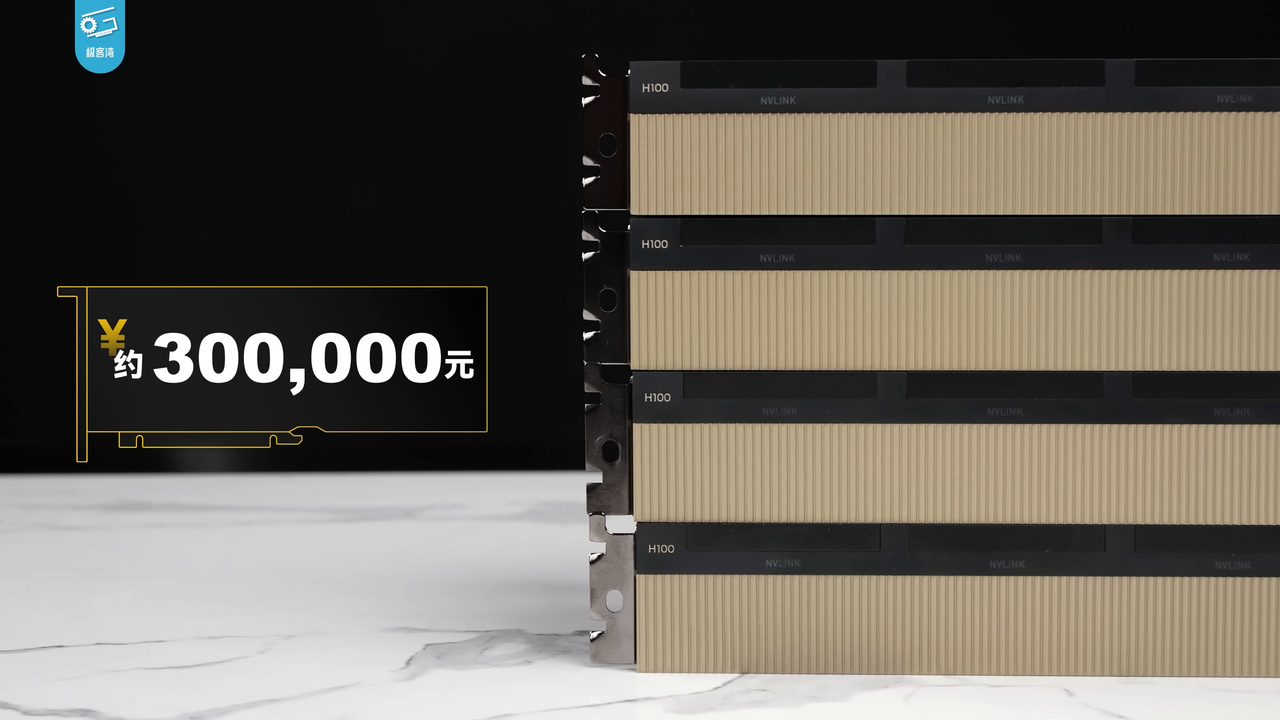
- Hero and in-body image: "NVIDIA H100 (极客湾Geekerwan) 002.png" by Geekerwan, licensed CC BY 3.0, via Wikimedia Commons. Pulled 2026-10-22 and reviewed visually before use.