On August 7, 2026, Firmus, an Australian AI data center and AI cloud company, announced a fully subscribed $2 billion strategic equity investment. The round lifts the company's valuation above $10.5 billion and brings the new equity Firmus has raised over the past year to more than $3 billion. The backers are a mix of new and returning names: Blackstone, through its Tactical Opportunities strategy and other Blackstone vehicles, and Jane Street are investing for the first time, alongside existing backers Coatue and Nvidia. Proceeds are earmarked for the next phase of Firmus's Project Southgate AI Factory network in Australia and for expansion into Southeast Asia, including a recently announced 170,000-GPU cluster on the Indonesian island of Batam.
The deal is a useful data point for a broader question the AI infrastructure industry is working through: where the next wave of GPU capacity gets built, who finances it, and how much of that financing traces back to the same handful of participants.
 NVIDIA
What Firmus just announced
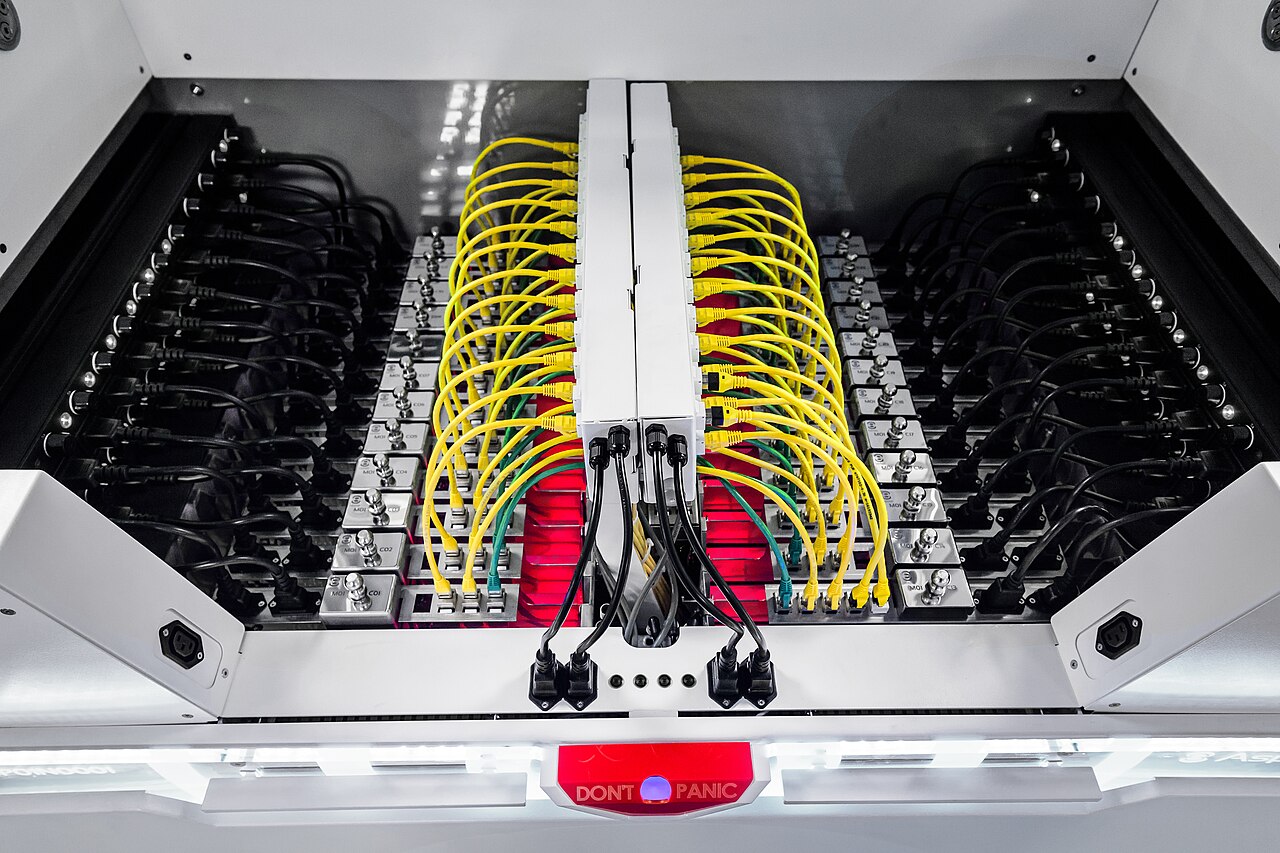
Firmus describes itself as an "AI Factory" builder, a term the industry now uses for purpose-built, high-density data center campuses designed around GPU clusters rather than general-purpose enterprise IT. Its infrastructure lineage traces back to Sustainable Metal Cloud, a specialist in immersion cooling, the practice of submerging servers in a dielectric fluid to pull heat away more efficiently than air-based systems at the density modern AI accelerators require. Industry coverage of the raise ties that cooling approach directly to how Firmus positions its campuses against competitors.
Inside Firmus's $2 billion round
Reported structure of the fully subscribed strategic equity investment: who funded it, what it values Firmus at, and where the money is earmarked to go.
Figures reflect Firmus's own August 7, 2026 announcement and contemporaneous press coverage.
The August 7 round is Firmus's largest single raise to date, and it was fully subscribed, meaning investor demand met or exceeded the amount the company sought. That detail matters more than it might appear: a fully subscribed round at a rising valuation is a market signal that the story being told to investors, in this case sovereign and regional AI infrastructure across Australia and Southeast Asia, found a receptive audience among some of the largest pools of alternative capital in the world.
Some reporting has also floated that Firmus is weighing an eventual ASX listing and that part of its broader capital stack may include Blackstone-related debt financing alongside this equity round. Those details vary across outlets and are not confirmed in Firmus's own announcement, so they are worth flagging as reported rather than established fact.
From bitcoin miner to AI factory operator
Firmus did not start as an AI company. Like a number of players now building AI data centers, its roots are in cryptocurrency mining, an industry that spent the 2010s and early 2020s assembling exactly the assets an AI campus needs: land in places with cheap or available power, negotiated electricity contracts, substation and grid interconnection work already done, and, in Firmus's case, cooling expertise built for a different kind of dense compute.
That pivot is not unique to Firmus. Across the industry, miners that once ran ASIC rigs for proof-of-work have repositioned as AI infrastructure providers, because the underlying constraint, power availability at scale, is the same one AI campuses now compete over. What differs company to company is how much of that prior infrastructure translates cleanly. Power contracts and land are largely transferable. Cooling systems built for immersion of crypto ASICs required real re-engineering to serve GPU racks reliably, and that is the specific technical claim behind Firmus's "AI Factory" branding.
Regional compute as a buying signal
Firmus's expansion plan, the next phase of Project Southgate in Australia plus a 170,000-GPU cluster in Batam, Indonesia, reflects a pattern that has become more visible through 2026: demand for AI compute that is deliberately regional rather than concentrated in the handful of established U.S. hyperscale corridors.
Two forces are driving that. The first is data residency and sovereignty. Governments and regulated industries across Asia-Pacific increasingly want AI workloads, and the data that trains or feeds them, to stay within national or regional borders. That is a compliance requirement for some customers and a trust signal for others, and it is not something a data center in Virginia or Iowa can satisfy no matter how much capacity it has. The second is simply queue position. Grid interconnection and power availability in the most AI-saturated U.S. markets have become genuine bottlenecks, which pushes some capacity-seeking demand toward regions where power and land are comparatively more available, even if the logistics of building there are harder in other ways.
Batam is a specific illustration of that logic: an Indonesian island close to Singapore, positioned to serve Southeast Asian demand without competing directly for power and land inside Singapore's own tightly constrained data center market. Building sovereign-adjacent capacity just outside a capacity-constrained hub is a pattern likely to repeat elsewhere in the region.
Nvidia's recurring pattern, and the circular financing question
Nvidia's continued participation in Firmus is not an isolated move. Through 2026, Nvidia has taken positions across multiple layers of the AI buildout, in model labs, in cloud and neocloud providers, and now again in a regional AI factory operator that will fill its campuses with Nvidia GPUs. Metir has covered a related instance of this pattern: Nvidia's reported investment in Lancium, the power developer behind the OpenAI and Oracle Stargate campus in Texas, is a similar story of the chip supplier investing in the infrastructure layer that lets more of its own product get deployed.
When the company that sells the chips also helps finance the campuses that buy them, the question is not whether the deal is real. It is how much of the resulting demand is independent.
On the circular financing pattern across recent AI infrastructure deals
The same scrutiny that has been applied to Nvidia's stake in Lancium, and separately to the financing arrangements behind large OpenAI and Oracle infrastructure commitments, applies here in a milder form. Nvidia is one of four investors in Firmus's round, alongside Blackstone, Jane Street, and Coatue, and its stake does not by itself fund the buildout; the vast majority of the new capital comes from investors with no chip business to protect. That distinguishes this round from a scenario where a supplier is the primary financier of its own demand. Still, the underlying dynamic, a chipmaker with a direct commercial interest in more GPU clusters getting built also sitting on the cap table of a company building GPU clusters, is worth naming plainly rather than treating as incidental. It is neither proof of manufactured demand nor a reason to dismiss the concern; the honest position is that both readings remain available until the buildout either fills up with paying workloads or does not.
Firmus's pace of capital raising
New equity raised, in billions of dollars. The $2 billion round announced August 7, 2026 is itself more than half of the over $3 billion in new equity Firmus has raised across the preceding twelve months.
The 12-month total includes the Aug 7 round; the split of the remainder across earlier raises is not itemized in public reporting.
What Blackstone, Coatue and Jane Street signal
The composition of new money in this round is its own signal. Blackstone is one of the largest alternative asset managers in the world, and its Tactical Opportunities strategy specifically targets large, complex, often infrastructure-adjacent deals that do not fit neatly into traditional private equity or credit buckets. Jane Street is a quantitative trading firm making what is, for it, an unusually direct infrastructure equity commitment rather than a market-making or liquidity position. Coatue, a technology-focused investment firm, returns as a repeat backer.
Taken together, this is private capital, not public infrastructure funds or government-backed lenders, underwriting a data center buildout that ultimately depends on long-dated bets: that regional AI compute demand across Australia and Southeast Asia will be durable enough over the coming decade to justify billions in physical build-out today. That kind of financing, large private-market checks into unlisted infrastructure operators, has become one of the defining features of the AI buildout globally, not just at Firmus. It reflects both the appetite institutional capital has for AI-adjacent yield and the reality that public capital markets alone have not been sized to fund the current pace of AI data center construction.
The risks worth naming
None of this makes the bet a sure thing, and a neutral read of the deal has to hold several open questions at once.
Demand durability is the first and largest. A 170,000-GPU cluster and an expanded Southgate network are enormous commitments of capital and power, made on the expectation that AI compute demand across the region continues to grow at something like its current pace for years. If enterprise AI adoption or foundation model training demand slows meaningfully before that capacity fills, the economics compress quickly, since data centers carry substantial fixed and financing costs regardless of utilization.
Concentration is the second. Nvidia sits on Firmus's cap table, supplies the chips that fill its campuses, and has made similar moves elsewhere in the industry. A buildout this reliant on one chip architecture and one repeat investor-supplier is exposed if Nvidia's own competitive position, pricing, or supply changes, or if the concentration itself becomes a regulatory or customer concern.
Execution and power are the third and fourth, and they are related. Firmus's plan requires securing power, land, and interconnection across two countries, then building and cooling AI Factory campuses to spec on schedule. That is precisely the kind of work that regularly slips in this industry even for well-capitalized builders, because it depends on permitting timelines, grid capacity, and construction schedules that money alone does not accelerate.
The read-through
For companies and teams building on top of AI models rather than building the data centers themselves, the more useful takeaway is structural. Regional AI capacity, whether in Australia, Indonesia, or elsewhere, is becoming a real and growing part of global compute supply, and where a workload physically runs increasingly depends on the mix of power, residency requirements, and capital available in that specific region. Treating any single campus, provider, or region as a fixed dependency creates exposure if that particular pocket of capacity tightens, whether from demand outpacing supply or from a project slipping its build schedule. Staying model- and provider-agnostic, as a platform like Metir AI is built to do, turns a capacity crunch at any one site into a routing decision rather than a disruption.
Firmus's $2 billion round is a genuine, fully subscribed vote of confidence from serious private capital in a specific thesis: that Asia-Pacific will need substantially more AI Factory capacity, that data residency and regional demand make that capacity durable, and that Firmus's cooling and power-siting expertise, carried over from its cryptocurrency mining roots, gives it a credible path to build it. Whether that thesis holds is a multi-year question the deal itself cannot answer. What it does answer, for now, is that the capital to try is there.
Sources:
- AI Data Center Group Firmus Draws $2 Billion From Coatue, Nvidia | Bloomberg
- Australia's Firmus raises $2B from Blackstone, Coatue, Nvidia to expand AI factories in APAC | TechNode Global
- Nvidia-backed Firmus raises $2 billion at $10.5 billion valuation to build AI factories across Asia-Pacific | Tech Startups
- Aussie AI cloud company Firmus raises $2bn via equity sale | Data Center Dynamics
- Firmus Announces Fully Subscribed US$2 Billion Strategic Equity Investment to Accelerate Nvidia AI Factory Expansion Across Australia and Asia-Pacific | Firmus Newsroom
Image credits
Header image: an Asperitas AIC24 immersion cooling system, an industrial dielectric-liquid server cooling tank, illustrating the immersion-cooling category of AI Factory infrastructure generally rather than a Firmus facility specifically. By Rolf Brink via Wikimedia Commons, licensed under CC BY-SA 4.0. In-body photograph: the exterior of a Leading Edge Data Centre facility in New South Wales, Australia, unrelated to Firmus and shown to illustrate the region's data center sector. By Bidgee via Wikimedia Commons, licensed under CC BY-SA 3.0 AU.