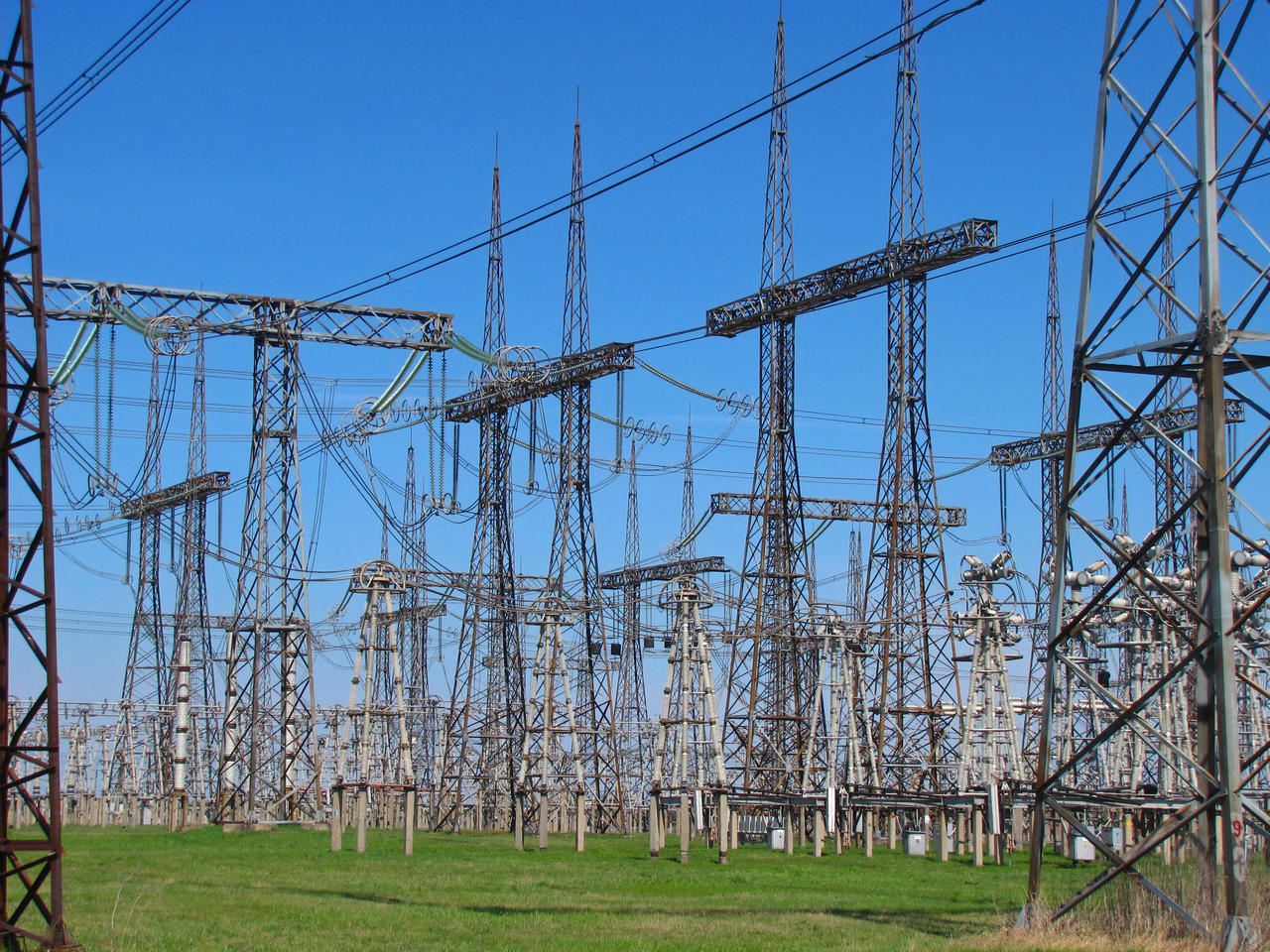
On August 7, 2026, The Information reported, and Reuters relayed, that Nvidia had agreed to invest up to $3 billion in Lancium, a Blackstone-backed developer of power infrastructure. The structure is telling: an initial $2 billion for a stake of roughly 20%, with another $1 billion tied to Lancium hitting milestones, including securing grid connections for planned capacity. The deal reportedly values Lancium and its portfolio of land and power connections at around $10 billion. Lancium is the power provider behind the OpenAI and Oracle "Stargate" AI campus in Texas. The most important thing about the transaction is not its size, which is modest for Nvidia, but its direction. The company that sells the industry's most sought-after chips is now buying the electricity those chips need. That tells you where the binding constraint on AI has moved.
 NVIDIA
 OpenAI
From a chip shortage to a power shortage
For most of the AI boom, the scarce input was the accelerator. Nvidia described its data-center GPUs as sold out and pointed to roughly a trillion dollars of demand visibility. But a chip only produces useful work if it is powered and cooled, and building the electricity to run millions of accelerators has turned out to be slower and harder than building the accelerators. Grid interconnection queues stretch for years. Substations, transformers, and transmission lines have long lead times. New generation, whether gas, nuclear, or renewables plus storage, takes even longer to bring online. The result is that the practical ceiling on how much AI compute can actually run is increasingly set by megawatts, not by silicon.
That reframing is the entire logic of the Lancium investment. Lancium's value is not a product; it is position: land in the right places, and above all interconnection rights and secured power on a grid where those are the genuinely scarce assets. By taking a stake, Nvidia is reaching past its own product and investing in the constraint that limits how many of its chips can be deployed at all.
Lancium's power: secured versus still in the pipeline
Disclosed capacity in gigawatts. For scale, a single gigawatt is roughly the output of a large power plant and can supply a data-center campus of considerable size. Most of Lancium's position is still awaiting grid interconnection.
Roughly 4 GW is committed and about 15 GW more sits in the interconnection queue. Turning queued megawatts into delivered power is the hard, slow part, and part of Nvidia's money is tied to it.
What the deal structure reveals
The staged shape of the commitment is worth reading closely, because it encodes what Nvidia is actually buying and how much confidence it has.
The first $2 billion buys equity outright. The remaining $1 billion is contingent, tied to Lancium achieving thresholds that reportedly include grid hookups. That contingency is not a footnote; it is an acknowledgment that the hard part of a power developer's job is precisely the part that has not happened yet. Securing land and signing interconnection agreements is one thing. Turning queued capacity into delivered, energized megawatts is another, and it is where projects slip. By tying part of its money to those milestones, Nvidia both shares the risk and creates an incentive: it pays more as the power becomes real.
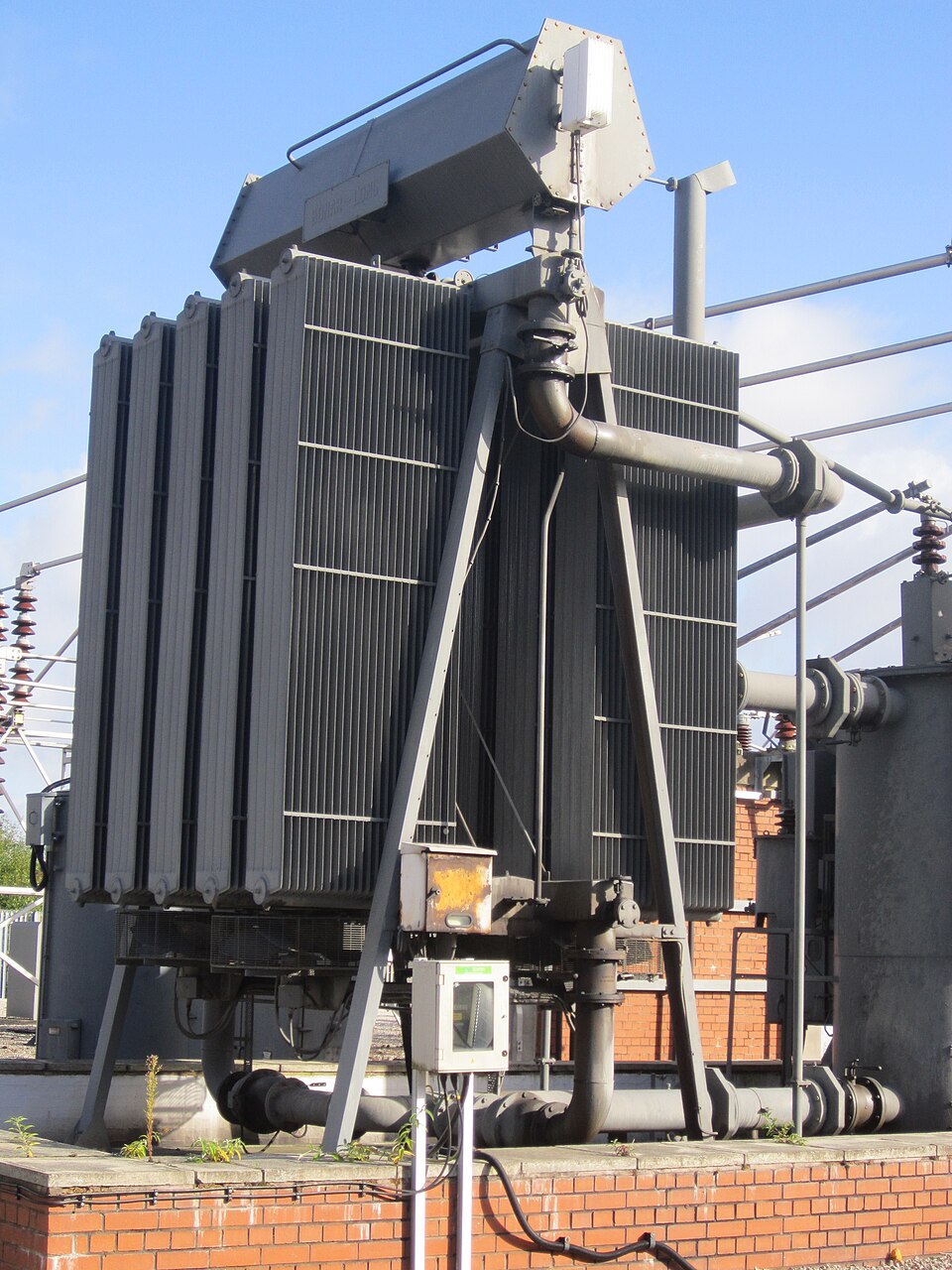
The reported ~20% stake for $2 billion, implying an enterprise value near $10 billion, also says something about how the market now prices power position. A developer whose main assets are interconnection rights and secured capacity is being valued like a strategic scarce resource, because on today's grid that is what it is.
Inside the Nvidia-Lancium deal
Reported structure of Nvidia's investment of up to $3 billion in the power developer. Most is upfront for equity; the rest is earned as power is delivered.
Figures reflect press reporting of a deal that had not been formally detailed by the companies at the time of writing. Contingent capital means the full $3 billion is not guaranteed.
Nvidia moving up the stack
Step back and the investment fits a broader pattern of Nvidia extending beyond selling chips. The company has taken positions across the AI supply chain: in model labs, in cloud providers that buy its GPUs, and now in the power that those GPUs consume. Each move follows the same instinct, which is to remove or de-risk a bottleneck that could otherwise cap how many accelerators the world can install.
This vertical reach has an obvious upside for Nvidia. Every gigawatt of power that comes online is, in effect, demand for more of its chips; investing to accelerate that power is investing in its own future sales. It also has an obvious tension. When a supplier invests in its customers and in the infrastructure that enables its customers to buy more, the lines between genuine end demand and vendor-financed demand blur. Observers have raised this "circular financing" question across several of Nvidia's recent deals. The Lancium investment is not the strongest example of it, because power is a real, external constraint that benefits the whole industry rather than only Nvidia. But it belongs to the same story, and it deserves the same scrutiny: how much of the AI buildout is pulled by independent demand, and how much is primed by the main beneficiary putting money into every layer.
The company that sells the industry's scarcest chips is now buying the scarcest thing those chips need: power.
The risks that remain
Three caveats keep the deal in proportion.
First, contingency cuts both ways. If Lancium's pipeline power does not connect on schedule, the extra $1 billion may never be paid, and more importantly the campuses waiting on that power do not get energized. An investment in a power developer does not make interconnection queues move faster; it bets that this developer navigates them better than average.
Second, valuations built on scarcity can compress. Interconnection rights are extraordinarily valuable while power is the bottleneck. If generation and grid capacity eventually catch up, or if AI compute demand cools, the premium on position could fall. A ~$10 billion valuation is a judgment about how long the shortage lasts.
Third, none of this changes the underlying physics or timelines. Power plants, transmission, and substations still take years. Money can improve the odds and the priority of a given project, but it cannot conjure megawatts. The Lancium deal is a bet on execution inside a hard constraint, not a way around it.
The read-through for the rest of the market
For companies building on AI rather than building the data centers, the signal is that the cost and availability of AI are increasingly governed by infrastructure most users never see. The price of a token is, further and further upstream, a function of electricity and interconnection. That makes the economics of AI more capital-intensive and more concentrated among the few players who can finance power at this scale.
The defensive posture for a buyer is the same as it is for chips: do not tie a product to a single provider whose costs move with one region's grid or one campus's power schedule. Keeping the option to route work across models and providers means an energy or capacity crunch at one of them is a price signal to shift, not an outage. A model-agnostic workspace such as Metir AI reflects that logic, keeping the infrastructure beneath a model, down to which campus and which megawatts serve it, abstracted away from the person using it.
The bigger picture
Nvidia's investment in Lancium is a small check with a large meaning. It marks, in a single transaction, the moment the AI industry's public conversation about scarcity shifted from chips to the grid. The deal is rational for Nvidia, whose sales depend on power coming online, and it is structured with appropriate caution, paying more as real megawatts appear. It also carries the recurring questions of this era: how much AI demand is truly independent, how durable the premium on power position will prove, and whether capital can meaningfully compress timelines set by physics and permitting. The most accurate way to hold it is as evidence that building AI is now as much an energy project as a computing one, and that the companies at the center are integrating accordingly.
Sources:
- Nvidia to Invest Up to $3 Billion in Blackstone-Backed Power Firm Behind Stargate | The Information
- Nvidia to invest up to $3 billion in Stargate data center developer Lancium, the Information reports | Reuters via Yahoo Finance
- Nvidia to invest up to $3 billion in Lancium, the Information reports | Investing.com
- Nvidia Invests $3 Billion in Texas Power Developer Lancium, Securing Position in Stargate AI Infrastructure | BigGo
Image credits
Header image: the switchyard of a 750-kilovolt electrical substation, by Novoklimov via Wikimedia Commons, licensed under CC BY 4.0. In-body photograph of a substation power transformer on Love Lane, Liverpool, by Rept0n1x via Wikimedia Commons, licensed under CC BY-SA 3.0.