On September 30, 2026, DoorDash announced a text-to-order AI agent that lets customers place food orders through Apple Messages (iMessage) without opening the DoorDash app (TechCrunch; Bloomberg). It is a clear example of agentic commerce, where an AI agent completes a purchase rather than only recommending one, now arriving on a messaging surface.
What DoorDash's text-to-order agent does
Users text a plain-language command such as "order my usual protein bowl to the office." The agent infers intent, so "my usual" can resolve to the order the customer typically places on a given day, and it matches the sender's phone number to a DoorDash profile to draw on order history and preferences. It then checks out with the payment method already stored on that profile (TechCrunch; Yahoo Finance).
The agent can also search local restaurants, suggest a cart from the prompt, and text photos of recommended food. For group orders it can handle mixed dietary preferences and quantities in a single order (TechCrunch).
Availability is limited for now. The agent is live in an iOS pilot with 20,000 U.S. users, and DoorDash has opened a U.S. waitlist (Hoodline; TechCrunch).
 Apple
AppleHow agentic commerce works: from text to checkout
Agentic commerce describes software that acts on a buyer's behalf through the full purchase, from interpreting a request to paying. A recommendation engine stops at "you might like this." An agent continues to the cart and the charge. The reported DoorDash flow follows four steps.
From a text message to a placed order
Four steps that replace opening an app, browsing a menu and tapping through checkout.
User texts a request in Apple Messages, e.g. "order my usual protein bowl to the office"
Agent infers what "my usual" means; phone number is matched to a DoorDash profile and order history
Agent searches local spots and suggests a cart from the prompt
Order is placed with a stored payment method, without opening the DoorDash app
Flow reflects TechCrunch and Yahoo Finance reporting on DoorDash's agent. The error points are illustrative analysis, not reported incidents.
Each step carries a different kind of risk. Intent inference can misread an ambiguous request, cart building can pick the wrong item or quantity, and checkout turns any earlier error into a real charge. This is general analysis, not a reported incident, but it explains why the design of confirmation matters more for agents that spend money than for agents that only answer questions. The coverage we reviewed does not detail how DoorDash handles approvals or corrections on a wrong order, so those specifics are worth watching as the pilot expands.
Why messaging is a strategic surface
Messaging has several properties that suit an ordering agent. These are analytical observations rather than DoorDash statements.
- No new download. The customer already has Messages, so the agent meets them where they are.
- Conversation is the interface. Free-form text suits requests like "my usual" or a group order with mixed preferences better than menus and filters.
- Identity comes with the number. DoorDash matches the phone number to an existing profile, which supplies history, preferences and payment details without a separate login step (Yahoo Finance).
A recommendation stops at the suggestion. An agent keeps going to the cart and the charge.
App ordering versus agent ordering
| Ordering in the app | Ordering by text agent | |
|---|---|---|
| Starting point | Open app, browse or search | Send a text message |
| Repeat orders | Find past order, re-add items | Say "my usual" and the agent infers it |
| Group orders | Manual, item by item | Agent handles mixed preferences and quantities |
| Checkout | User taps through payment | Agent uses stored payment method |
| Main risk | User picks the wrong item | Agent misreads intent, then pays |
| Control | User sees every screen | Depends on how the agent confirms |
Sources: TechCrunch; Yahoo Finance. The last row and the risk row are analysis, not reported product details.
Where this fits in the wider agent shift
TechCrunch frames the launch as DoorDash positioning itself against Uber Eats and Grubhub amid a broader push toward personal AI agents that finish tasks without making people navigate apps or websites (TechCrunch). The same pattern shows up elsewhere in commerce. Our earlier coverage looks at Stripe's agentic commerce tooling, Google's agentic shopping test in India, and the Amazon and Meta agentic commerce standoff. The common thread is that whoever controls the agent increasingly controls the moment of purchase. Assistants such as Metir follow the same general pattern of taking actions across apps on a user's behalf.
What to watch next
- How the pilot's 20,000 users respond, and when the waitlist converts to wider access.
- How confirmation, correction and refund handling work when an agent places the wrong order.
- Whether rivals bring their own text-based agents to messaging.
Sources:
- TechCrunch: DoorDash launches an AI agent you can text to order food
- Bloomberg: DoorDash unveils text-to-order AI agent that works with Apple's iMessage
- Yahoo Finance UK: DoorDash debuts text-to-order AI
- Implicator.ai: DoorDash text-to-order AI agent in Apple Messages
- Hoodline: DoorDash opens waitlist for text-to-order AI in Apple Messages
Image credits
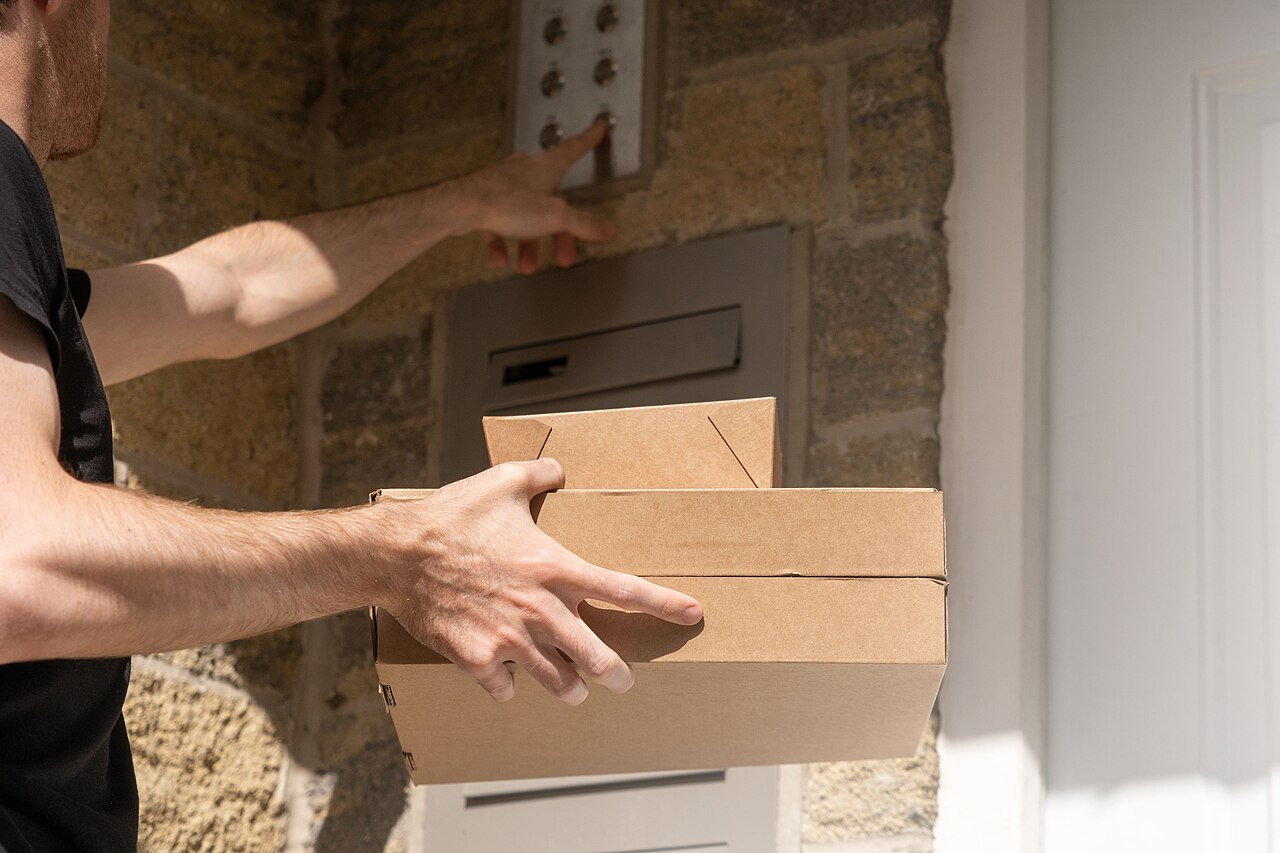
- Hero: a delivery driver ringing a doorbell while carrying two takeaway boxes. Generic illustration, not DoorDash. Source: Wikimedia Commons, photo by Meanwell Packaging, licensed CC BY 2.0.
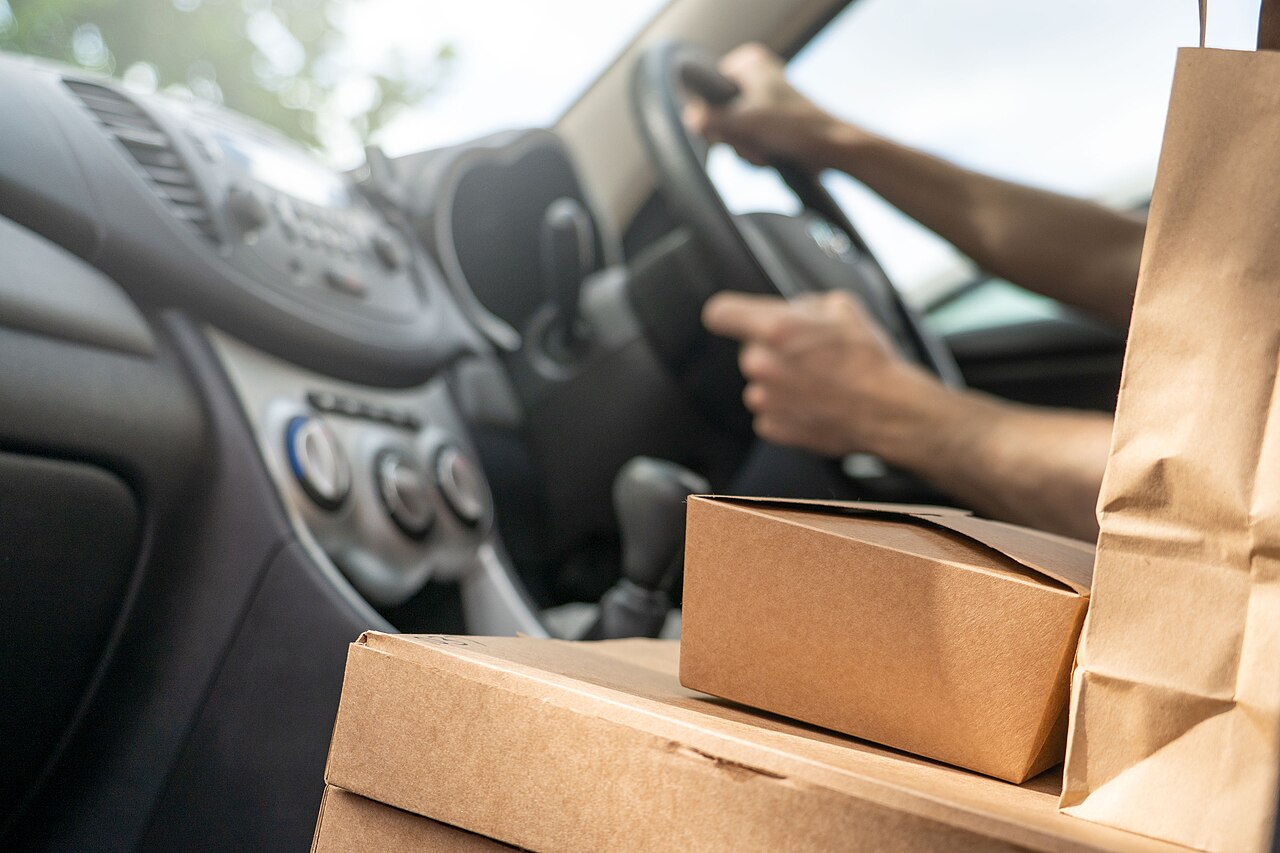
- In-body: a delivery driver with takeaway boxes and a paper bag on the passenger seat. Generic illustration, not DoorDash. Source: Wikimedia Commons, photo by Meanwell Packaging, licensed CC BY 2.0.