On October 5, 2026, the research firm SemiAnalysis published a report titled Anthropic Subscriptions Offer 5x+ More Value Than OpenAI. Written by Andrew Megalaa, Max Kan and Dylan Patel, it limit-tested consumer and developer subscription plans from Anthropic, OpenAI and several other providers, then translated each plan's usage allowance into what the same tokens would cost at API list prices. The headline finding: on mid-tier models, a Claude subscription delivers roughly five times the API-equivalent value of a comparably priced OpenAI subscription. This piece explains how that number is built, what it does and does not say, and why subscription limits have become a financial question for AI labs as much as a product one.
 AnthropicClaude
 OpenAIOpenAI
What SemiAnalysis Found
The report's central comparison sets Anthropic's Claude Opus 5.5 against OpenAI's GPT-6.1 Sol, the two companies' mid-tier models for agentic work. In the authors' words, "Anthropic is an overwhelmingly better deal, offering ~5x the API-equivalent value across the board" on those models. Coverage by AI Weekly and Techmeme frames the result around the $200 tier, where both companies sell their high-usage plans.
The gap is specific to that model class. For the flagships, SemiAnalysis writes that "limits are quite similar across the board for GPT-6 Astra vs Fable 5.1." The free portion of the report gives two flagship figures for the $200 plans: about $2,485 of API-equivalent Fable 5.1 usage on Anthropic's plan, and about $2,897 of GPT-6 Astra usage on OpenAI's. The Anthropic figure reflects a cap: according to the report and Implicator, Anthropic restricts Fable to half of a plan's allowance, leaving the rest for other models.
The report also notes that Anthropic "already offered the same per-dollar value for all subscription tiers," meaning a higher-priced Claude plan scales allowance roughly in proportion to price. OpenAI has now moved to the same structure, which is covered below.
How API-Equivalent Value Is Measured
A subscription does not publish a token count. It publishes a usage meter, typically a rolling window plus a weekly cap, that fills up as you work. To turn that meter into a dollar figure, SemiAnalysis describes a three-step method:
- Isolate each token type. Run experiments that generate mostly input, cache writes, cache reads or output, and watch how fast each one moves the meter.
- Convert to monthly limits. Work out how many tokens of each type fit inside the meter's windows over a month.
- Price the result. Multiply those token counts by API list prices, weighted by a typical agentic workload mix. Implicator reports that the mix is SemiAnalysis's own September usage for agent workloads and that the measurements carry roughly plus or minus 5% accuracy.
The step that matters most is the first. As the authors put it, "credit cost ratios can differ dramatically from API price ratios, the 'value' of the same plan changes depending on what model and workload you're running." A plan that charges very little meter for cache reads, for instance, is worth far more to an agent that re-reads a large codebase on every step than to someone writing short prompts.
Because credit cost ratios can differ dramatically from API price ratios, the value of the same plan changes depending on what model and workload you're running.
SemiAnalysis, October 5, 2026
The Price Gap Behind the Value Gap
The authors anticipate an obvious objection: "you could argue that this is unfair for OAI because 6.1 Sol is much cheaper per token than Opus 5.5." The list prices bear that out. Per Anthropic's pricing page, Opus 5.5 costs $4 per million input tokens, $0.20 per million cache reads and $20 per million output tokens. Per OpenAI's model page, GPT-6.1 Sol costs $2, $0.10 and $10 for the same categories. Opus 5.5 is exactly twice the price on each.
That has a useful implication, and the following is our own arithmetic rather than a SemiAnalysis figure. If a Claude plan delivers about five times the dollar value while each Claude token costs twice as much, then for the same workload mix it delivers roughly 2.5 times as many raw tokens. Measured in work rather than dollars, the gap is narrower than the headline, though still large. Whether Opus 5.5 completes a given task in fewer tokens than GPT-6.1 Sol would shift that figure again, and the report's free portion does not address it.
Both companies have also cut prices recently, which moves the API-equivalent numbers even when meters stay put. SemiAnalysis lists the changes: Fable 5.1 cut cache reads by 75% versus Fable 5; Opus 5.5 cut input and output prices by 20% versus Opus 5 and cache reads by 60%; and GPT-6.1 Sol cut cache reads by 50%. A cheaper API price, with an unchanged allowance, mechanically lowers a plan's API-equivalent value. According to AI Weekly and Implicator, Anthropic lifted Max-tier Opus allowances about 20% and Pro-tier about 50% with Opus 5.5, which Implicator says was not enough to fully offset the API price cut. SemiAnalysis similarly notes that the API-equivalent value for OpenAI's Sol-class models "actually decreased" because of the 6.1 Sol price cut.
OpenAI Halved the $200 Plan and Added Pro 500
The report lands a week after OpenAI reworked its plans at DevDay 2026. Per The Next Web, starting October 30 the $200 Pro plan's Work and Codex allowance falls from 20x to 10x the Plus allowance, and weekly GPT-6 Pro messages fall from 200 to 100. Existing subscribers keep their limits through October 29 and receive a one-time grant of usage credits worth $2,500 that expires at year end. OpenAI also added Pro 500, a $500 per month tier that is the only Pro plan with the Ultrafast speed tier, up to 300 tokens per second in Codex, as reported by Engadget.
SemiAnalysis reads these changes in dollar terms. OpenAI's update was "halving the API-equivalent value for the $200 plan," and "the new $500 plan only offers 21% more Astra than the old $200 plan." The report adds that OpenAI made its Pro tiers equivalent in tokens per dollar, where higher tiers previously carried larger multipliers. Its characterization of the two strategies is pointed: Anthropic gradually reduces the value of premium models, while "OpenAI, on the other hand, picked the nuclear option of just immediately cutting to Fable-level limits across the board."
Why Subscriptions Are a Compute Problem
The most consequential numbers in the report are about Anthropic's own economics. SemiAnalysis writes that "despite being just 10% of overall revenue, subscriptions can take up over 40% of inference compute and lower blended revenue per MW by ~$36M." Put simply, a flat monthly fee turns heavy users into the largest consumers of capacity per dollar collected. When a lab is constrained by data center power, revenue per megawatt is the metric that decides whether a block of capacity is better sold to API customers or to subscribers.
The report models this at the plan level. "Assuming 100% utilization and 92% API gross margins, maxing out Opus 5.5 vs Fable 5.1 usage corresponds to -369% and 1% gross margins respectively." At a more realistic 20% average utilization, the same plan returns 6% on Opus 5.5 and 80% on Fable 5.1.
Modeled gross margin on a $200 Claude plan
SemiAnalysis estimates, assuming 92% API gross margins. The same plan swings from deeply negative to healthy depending on model and utilization.
Source: SemiAnalysis, October 5, 2026. Modeled estimates, not company-reported figures.
Two points follow. First, average utilization is the whole game: a flat-rate plan is profitable because most subscribers use a fraction of their allowance. Second, the model mix inside a plan matters as much as the plan's price. The Fable cap at half a plan's allowance looks, in this light, like a way to bound exposure to the most expensive model, although Anthropic has not explained the rationale in the sources reviewed here.
This is not a new concern. In June 2026, TechSpot reported an earlier SemiAnalysis analysis estimating that a fully used $200 ChatGPT Pro plan could cost OpenAI about $14,000 at API rates, against about $8,000 for Claude Max 20x, and that OpenAI's higher tiers turned unprofitable at around 5.7% utilization versus roughly 10% for Anthropic. Read together, the two reports suggest OpenAI's DevDay changes moved its plans from the more generous side of that comparison to the less generous one.
What It Means for Heavy Coding Users
For developers running agents such as Claude Code or Codex all day, the subscription versus API question comes down to a few practical points. These are analysis, not findings from the report:
- A subscription is a subsidy with a ceiling. Up to the meter limit, the effective price per token can be far below API rates. Past it, work stops or moves to pay-as-you-go. Heavy users should know where their plan's ceiling sits relative to their actual usage.
- The workload shape changes the answer. Long agent sessions are dominated by cache reads of a growing context. A plan's value depends on how its meter prices those reads, not on the headline multiplier.
- Model choice inside a plan matters. On Anthropic's plans, the report's numbers imply that Opus 5.5 stretches an allowance much further than Fable 5.1, which is capped. On OpenAI's, Sol-class models cost less per token but the allowance was cut.
- Limits are policy, and policy moves. OpenAI changed its $200 plan with about a month's notice. Anthropic adjusted allowances alongside a model launch. Any plan comparison is a snapshot.
That last point is the main argument for keeping workflows portable. Teams that can move work between Claude, GPT and other models, whether through direct API access or a model-agnostic workspace such as Metir, are less exposed when one provider retunes its limits.
What to Watch
- Anthropic's response. A 5x gap on mid-tier models is a cost as well as a selling point, given the compute share SemiAnalysis attributes to subscriptions. Watch for allowance changes at the next Opus or Fable release.
- OpenAI's October 30 cutover. Whether Pro 200 subscribers trade up to Pro 500, move down, or switch providers will show how price-sensitive heavy users are.
- Third-party tools. The report's paywalled section reportedly compares first-party plans with tools such as Cursor and Cognition's Devin. Those products buy API capacity and resell it, so they cannot easily match a lab's own subsidy.
- Independent replication. The method is reproducible in principle. Other testers measuring the same meters with different workload mixes would show how sensitive the 5x figure is to assumptions.
FAQ
Is a Claude subscription really five times cheaper than ChatGPT? Not in general. SemiAnalysis found about 5x the API-equivalent dollar value when comparing Opus 5.5 on Claude plans with GPT-6.1 Sol on OpenAI plans. For the flagships, Fable 5.1 and GPT-6 Astra, it found limits "quite similar." Because Opus 5.5 costs twice as much per token as GPT-6.1 Sol, the gap in raw tokens is closer to 2.5x by our arithmetic.
What does API-equivalent value mean? It is what the tokens a plan allows each month would cost if bought through the provider's API at list prices, using a typical agentic workload mix.
What changed on OpenAI's $200 plan? From October 30, Work and Codex usage falls from 20x to 10x the Plus allowance and weekly GPT-6 Pro messages fall from 200 to 100. A new $500 Pro 500 plan adds Ultrafast speed.
Why does this matter to Anthropic's finances? SemiAnalysis estimates subscriptions are about 10% of Anthropic's revenue but over 40% of its inference compute, lowering blended revenue per megawatt by roughly $36 million.
Sources:
- Anthropic Subscriptions Offer 5x+ More Value Than OpenAI | SemiAnalysis
- SemiAnalysis: Claude $200 Plan Offers ~5x OpenAI's API Value | AI Weekly
- Claude Opus Plans Buy 5x OpenAI's Sol Value, Tests Show | Implicator
- Techmeme summary of the SemiAnalysis report
- Pricing | Claude Docs
- GPT-6.1 Sol model page | OpenAI
- OpenAI DevDay: Pro 200 usage cut and Pro 500 plan | The Next Web
- OpenAI adds $500 Pro subscription, nerfs its existing $200 tier | Engadget
- A $200 ChatGPT subscription could cost OpenAI $14,000 | TechSpot
Image credits
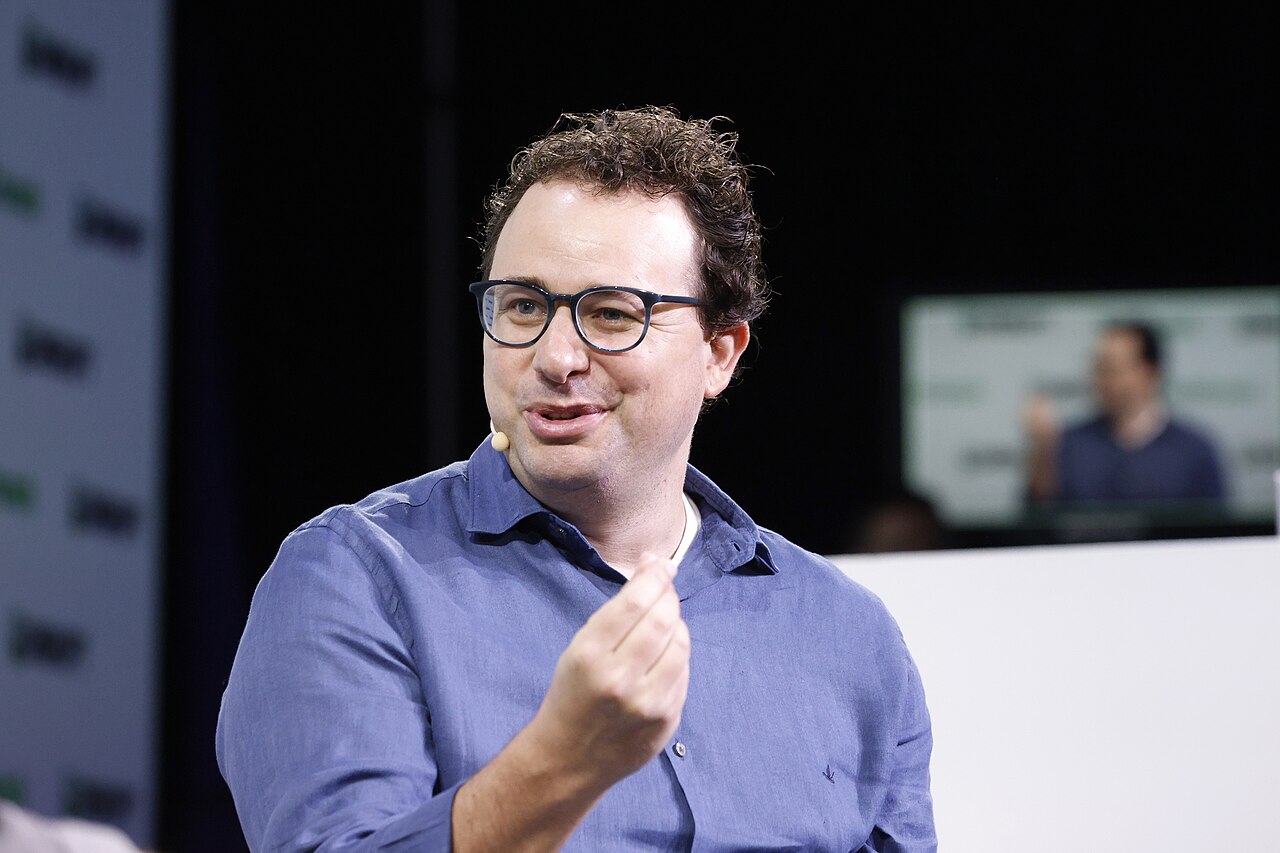
- Header: Dario Amodei at TechCrunch Disrupt 2023, by TechCrunch via Wikimedia Commons, licensed CC BY 2.0. Archive photograph.
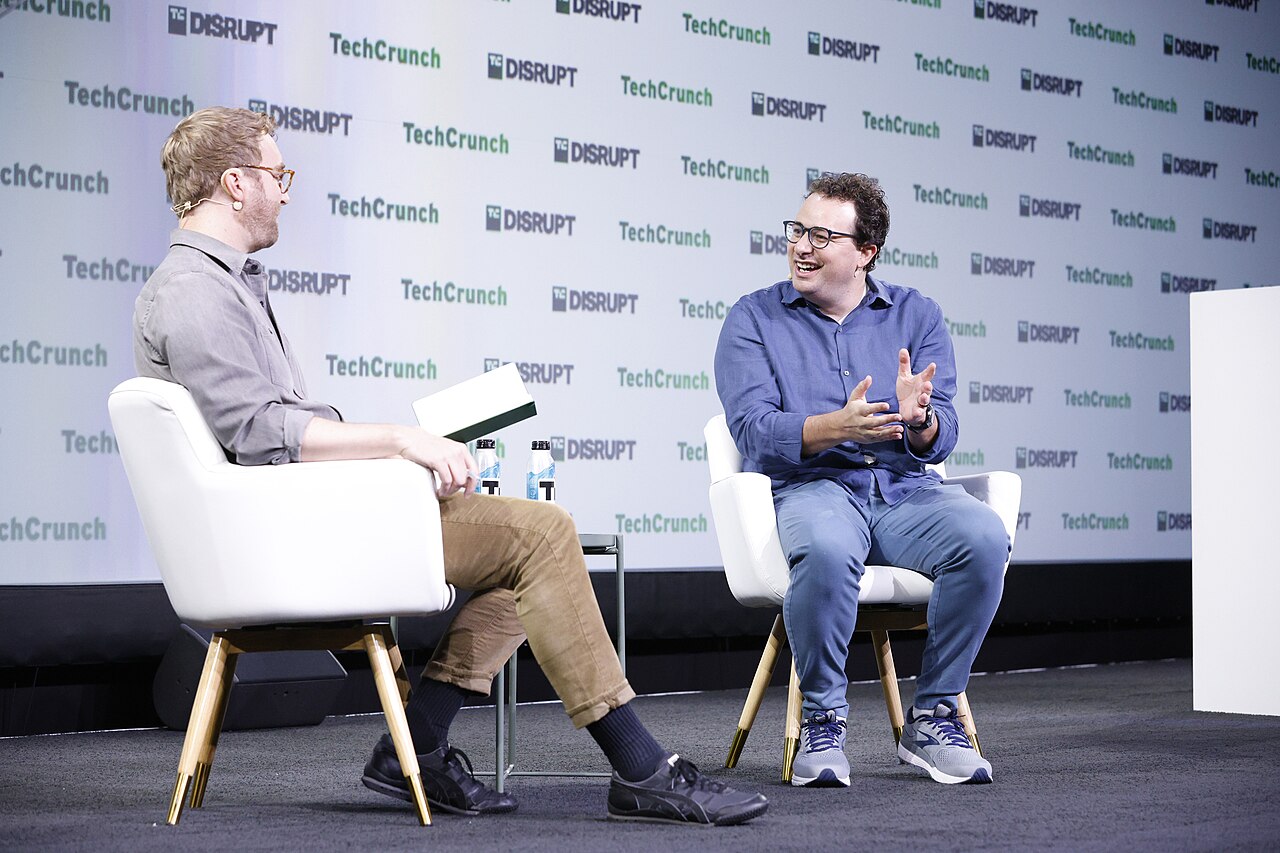
- In-body: Dario Amodei at TechCrunch Disrupt 2023, by TechCrunch via Wikimedia Commons, licensed CC BY 2.0. Archive photograph.