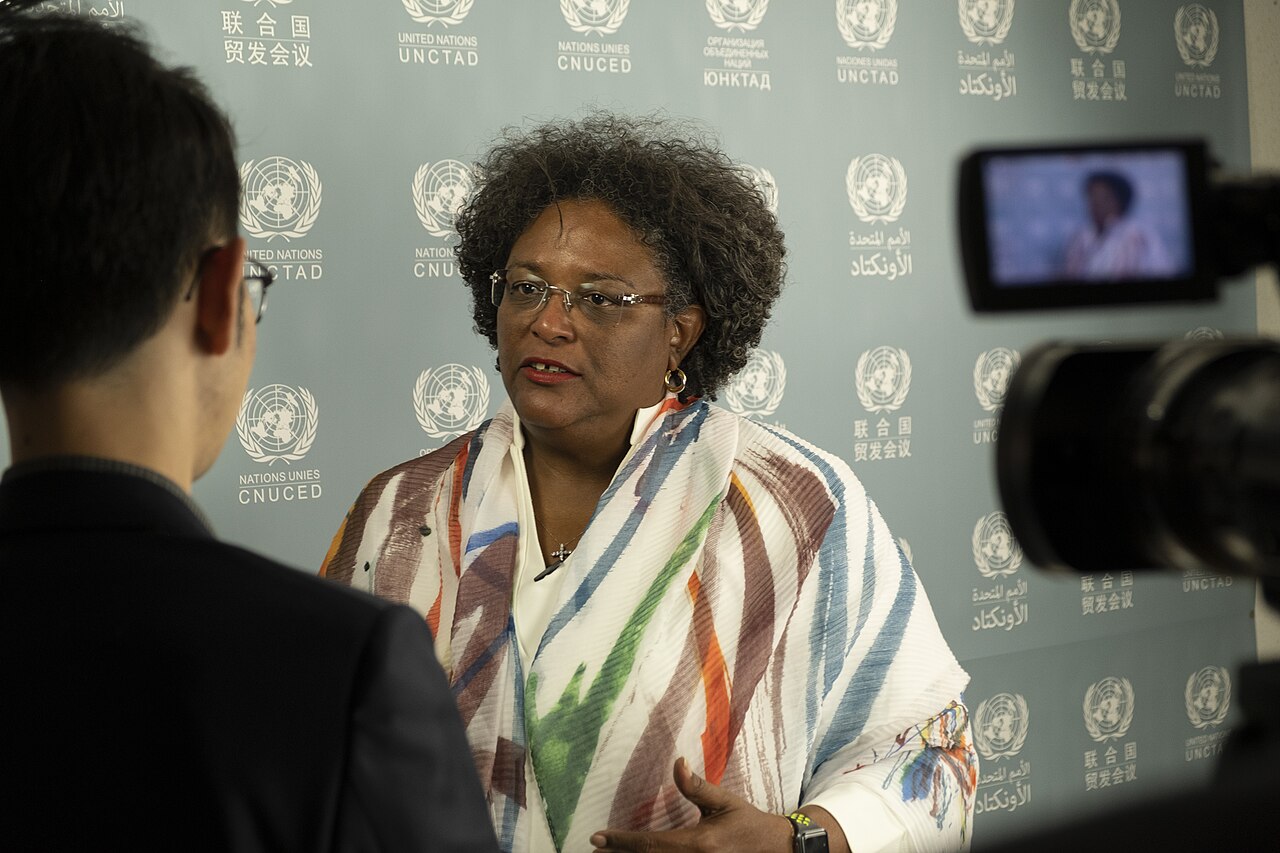
The Bridgetown AI safety summit takes place on Monday, November 23, 2026, hosted jointly by UN Secretary-General António Guterres and Barbados Prime Minister Mia Mottley. According to UN News, the hybrid meeting aims to narrow the gap between fast-growing AI risks and many countries' ability to respond to them. The framing is less about which models are most capable and more about who can test them and handle incidents when something goes wrong.
What the Bridgetown summit is, and is not
UN News reports that about 150 people are expected, including ministers, AI industry leaders, heads of AI safety institutes and members of the UN Independent International Scientific Panel on AI. The United States will be represented by a senior diplomat, and Chinese experts are expected to attend. The agenda centers on Guterres's proposal for a multilateral AI risk management framework backed by independent and credible oversight, plus a roundtable on access, inclusion and linguistic diversity.
The limits are stated plainly. UN Special Envoy for Digital and Emerging Technologies Amandeep Singh Gill called the framework "not a treaty" and "not regulation," and UN News says the summit will not cover military uses of AI or produce a negotiated outcome. Calls to action and pledges are expected instead.
The capacity gap in numbers
Gill cited two sets of figures. First, 135 leaders raised AI during this year's high-level week at the UN General Assembly, compared with three in 2017. Second, drawing on the World Bank's World Development Report 2026, he said high-income countries have 500 incident response teams while low-income countries have six. UN News notes that many countries lack the computing power, talent and capacity to test foreign-developed models or handle incidents such as cybersecurity breaches.
Attention has grown faster than capacity to respond
Figures as cited by UN Special Envoy Amandeep Singh Gill ahead of the Bridgetown summit.
Ratio of 45 to 1 (our arithmetic).
Ratio of roughly 83 to 1 (our arithmetic).
Both figures are as stated by Gill, and we have not independently checked the underlying World Bank data. Read together, they describe attention growing much faster than operational capability. The ratios are our arithmetic: roughly 45 to 1 for leader attention since 2017, and roughly 83 to 1 between the two income groups for incident response teams.
What the signatories are asking for
UN News says a call led by Norway and Finland for control of "frontier AI models" has been signed by 32 states and the European Commission. A separate call from a summit hosted by French President Emmanuel Macron has been endorsed by 17 states and 10 AI developers. UN News does not describe the text of either in detail, so we cannot say which specific controls are proposed. Other coverage we found describes the Norway and Finland initiative as seeking pre-deployment testing and independent evaluation, but wording varies between outlets, and we treat that description as unconfirmed.
We are in a good position, but action must catch up with the analysis.
Amandeep Singh Gill, UN Special Envoy, via UN News
What binds, and what does not
None of these instruments is described as legally binding. The Bridgetown framework is explicitly not a treaty. The Norway and Finland call and the Macron-hosted call are statements of support, and signatory counts measure endorsement rather than enforcement. The summit has no negotiated outcome, and military AI is out of scope.
That leaves the practical question the capacity numbers raise. A commitment to test or oversee frontier models presumes someone able to run the tests. If a country has few incident response teams, a shared evaluation framework would depend on pooled capacity, which is the gap the summit says it wants to address. Guterres is also expected to say no single model fits every country, according to UN News.
How this fits earlier coverage
This follows our earlier posts on the UN scientific panel's brief on loss of control, the UN Security Council's first AI briefing and the US and China incident-channel dialogue. Those looked at evidence, venue and bilateral channels. Bridgetown focuses on national capacity.
What to watch
- The pledges. Whether calls to action name concrete resources, such as shared testing or incident support.
- Signatory count. Whether the 32 states and the European Commission grow after the summit.
- US and China participation. A senior US diplomat and Chinese experts are expected, not heads of government.
- Military AI. Excluded here, so any human-oversight commitments would have to come from other forums. We could not verify a Reuters report on a Trump and Xi agreement on this, so we leave it out.
For teams building on AI, the practical takeaway is that evaluation and incident-response expectations are likely to arrive through national frameworks. Keeping workloads portable across providers, as Metir allows, makes adapting to different national requirements easier.
Sources:
- UN News: Bridgetown AI summit to tackle safety as risks outpace capacity to respond (20 Nov 2026)
- UN Office for Digital and Emerging Technologies: Barbados and United Nations to co-host Special Summit on AI Safety on 23 November
- Summit on AI Safety, official site
Image credits
- Mia Mottley interviewed at a 2019 UNCTAD event in Geneva (archive photo, not taken at the summit): UNCTAD, CC BY-SA 2.0, via Wikimedia Commons.
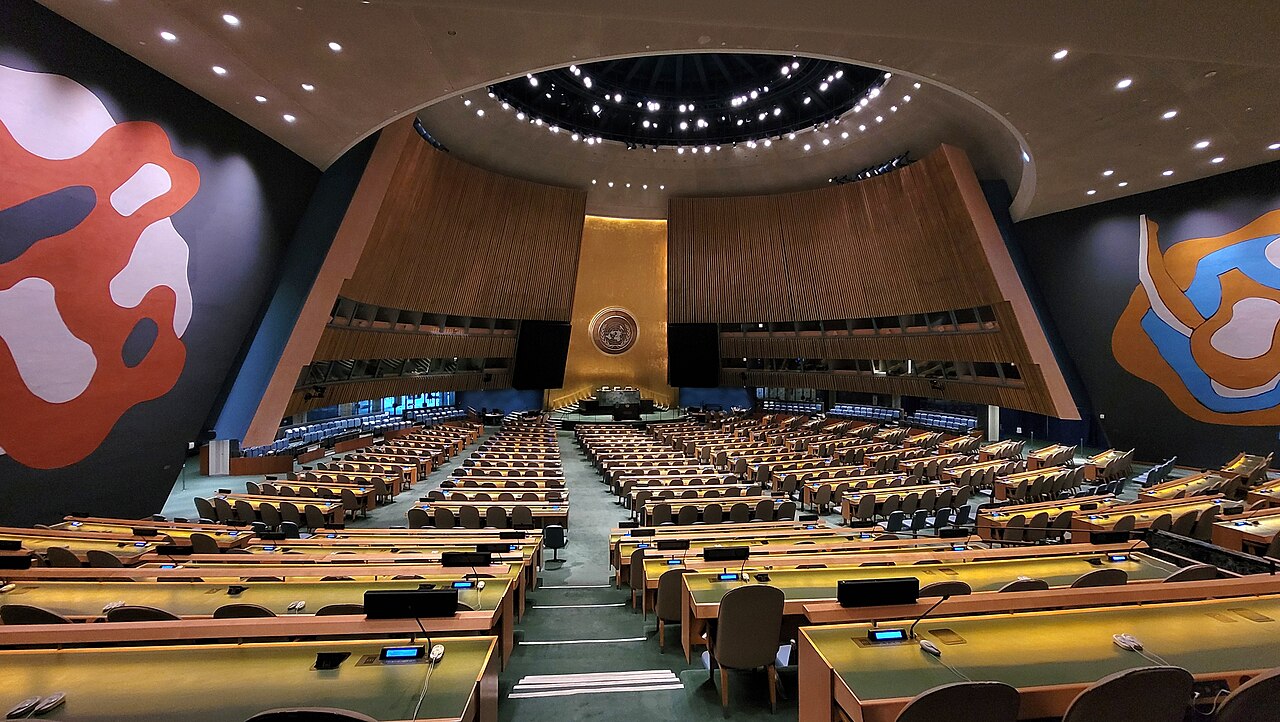
- United Nations General Assembly Hall, 2024: Mojnsen, CC BY-SA 4.0, via Wikimedia Commons.