On July 21, 2026, Jack Dorsey posted a short message on X: "we're launching BUZZ! a new groupchat platform for teams of people and agents." Behind that announcement sits a genuinely unusual bet. Buzz, built by Dorsey's company Block, is a free, open-source workspace that combines team chat, code hosting, and workflow automation into a single system, built entirely on Nostr, the decentralized protocol Dorsey has funded since 2022. Its stated goal is to reduce Block's own dependency on Slack and GitHub, and its defining design choice is that AI agents do not sit inside the workspace as bolted-on bots. They hold the same cryptographic identity primitive as a human teammate. This piece looks at what Buzz actually ships, why identity is the hard problem it is trying to solve, and where the decentralization angle is a genuine architectural bet rather than marketing language.
What Buzz actually is
Strip away the framing and Buzz is a self-hostable Nostr relay with a chat, Git, and workflow client built on top of it. Every message, code patch, review approval, and workflow run is recorded as a signed event in that relay, which Block describes as the workspace's single source of truth. Channels, threads, direct messages, shared canvases, and full-text search live in the same interface as a Git forge and YAML-defined workflows with approval gates, according to reporting from Decrypt and CryptoBriefing. That is the direct pitch against the incumbents: instead of a team paying for Slack, GitHub, and a separate workflow tool and stitching them together, Buzz consolidates that surface into one event log.
The whole codebase ships under an Apache 2.0 license at github.com/block/buzz, and Block explicitly invites forking, modifying, and commercializing it. At launch, a free desktop app was available for macOS, Windows, and Linux, while mobile clients, push notifications, and workflow approval gates were still described as incomplete, per Decrypt's reporting. Teams can either self-host their own relay or use a managed instance Block operates. Dorsey called Buzz "model-agnostic, decentralized, self-sovereign and open source," and that model-agnostic framing is concrete: Block says teams can plug in agents built on Claude Code, OpenAI's Codex, or Block's own open-source Goose framework, rather than being locked to one vendor's agent runtime.
Why identity is the hard problem
The interesting design decision is not the chat-plus-Git bundling, which other tools already do. It is how Buzz treats an agent's identity. In most AI-agent deployments today, an agent acts through a shared bot account, a service token, or an API key issued by whichever platform it plugs into. That means the agent's identity, its history, and its permissions all belong to the platform, not to the agent or the person who deployed it. Buzz instead gives every participant, human or agent, its own Nostr keypair, independent of Buzz, Block, or any specific AI provider. According to Business Today's reporting, that keypair-based identity is what makes an agent's history and reputation portable across any Nostr-compatible system, rather than trapped inside one vendor's account graph.
How a human and an agent participate as equal members
Both hold a personal keypair rather than routing through a shared account or a vendor API key, and both write to the same shared, signed event log.
- Identity primitive
- Personal Nostr keypair, held by the person
- What it can do
- Posts messages, reviews patches, approves workflow runs
- Identity primitive
- Independent Nostr keypair, scoped to the agent itself
- What it can do
- Posts messages, opens patches, runs approved workflows, edits canvases
Every action from either side becomes a signed event in the same audit trail, which is what lets a workspace show one continuous record from discussion to shipped code rather than separate logs per tool.
That identity model then carries real permissions. Reporting from Business Today describes agents that can search prior discussions, open repositories, submit patches, review code, run approved workflows, edit canvases, and create channels, the same surface area available to a human teammate, gated by the same kind of channel- and thread-level rules. Every one of those actions becomes a signed event in the shared audit trail, per CryptoBriefing, which is what lets a team trace a shipped feature back through the specific messages, patches, and approvals that produced it, whether a human or an agent did each step.
Why Nostr, specifically
Buzz's choice of protocol is not incidental. Dorsey has backed Nostr's development since December 2022, when he sent 14 bitcoin, worth roughly $245,000 at the time, to the protocol's pseudonymous lead developer, fiatjaf, and he followed that with a further $5 million contribution routed through the OpenSats Initiative in 2023, according to CoinDesk and Forbes. Nostr's core idea is that identity and content are represented as cryptographically signed events that any relay can host, rather than a platform-issued account that only exists inside that platform's database. Applied to a workspace, that means an agent's keypair, message history, and reputation are not Buzz's property. In principle they can move to another Nostr-compatible application entirely.
The tradeoff is that Buzz's decentralization is currently more architectural than operational. Business Today's reporting on Block's own documentation notes there is "no peer-to-peer event exchange, gossip layer, or replication between relays" yet, meaning each workspace's relay is still a single authoritative server rather than a federated network. That is an important, unresolved gap between the pitch and the current implementation, and it is worth tracking as Buzz matures rather than assuming decentralization is fully realized on day one.
Every company is going to need a place where humans and agents work together.
Bradley Axen, Block's head of AI, on Buzz's launch
Where this sits next to agent-interoperability standards
Buzz is easy to conflate with the separate wave of 2026 agent-interoperability standards, MCP, A2A, and ARD, but it solves a different layer of the problem. MCP standardizes how an agent connects to a tool or data source. A2A standardizes how one agent hands off work to another agent. Buzz does not replace either; it is a workspace and identity substrate that an agent built on any of those standards could plug into, the same way Slack is a workspace rather than a messaging protocol. What Buzz does add that neither standard addresses directly is a portable, workspace-independent identity for the agent itself, plus a single audit log spanning chat, code, and workflow execution.
The competing bet: staying inside the incumbent
Buzz is not the only 2026 answer to "where should an agent live." In May 2026, Paradigm and its payments venture Tempo open-sourced Centaur, a self-hosted "virtual employee" agent designed to run inside a team's existing Slack rather than replace it. Centaur's own pitch, from Paradigm partner Georgios Konstantopoulos, is that enterprises want to self-host the agent for security and control but still want people using it inside the chat tool they already have. That is close to the opposite bet from Buzz: instead of moving the workspace to a new protocol, keep the workspace and add a self-hosted agent underneath it.
Three answers to the same problem, live at the same time
Centralized incumbents, a decentralized challenger, and a self-hosted agent that stays inside the incumbent, all addressing where agents should live relative to a team's existing tools.
- Timing
- Incumbent, in place for over a decade
- Agent identity
- Agents act through bot accounts or platform API tokens
- Hosting model
- Centrally hosted SaaS, vendor controls the data and the account graph
- Timing
- Launched July 21, 2026
- Agent identity
- Every human and agent holds its own Nostr keypair, independent of any vendor
- Hosting model
- Self-hostable Nostr relay per workspace, or a Block-managed instance; Apache 2.0
- Timing
- Open-sourced May 21, 2026
- Agent identity
- A shared agent identity operating with scoped credentials, no independent protocol identity
- Hosting model
- Self-hosted, but runs inside a team’s existing Slack rather than replacing it
Buzz bets that agent identity needs to be portable and protocol-level; Centaur bets that enterprises will keep agents self-hosted but inside the chat tool they already run. Neither has displaced the incumbent yet.
Neither approach has displaced Slack or GitHub as of this writing, and both are young enough that the comparison is directional rather than settled. The Buzz bet requires convincing teams to migrate an entire workspace, a much higher switching cost than adding an agent to a tool they already use. The Centaur bet inherits whatever centralization and lock-in already exists in Slack. Which one wins likely depends less on either product's feature set than on how much enterprises end up caring about agent identity being portable across vendors at all.
What's confirmed and what's still early
A few things are worth holding apart. Buzz's core architecture, the Nostr relay, the Apache 2.0 license, the chat-plus-Git-plus-workflow bundling, and the per-participant keypair model, are confirmed by Block's own GitHub repository and consistent across multiple outlets' reporting. Some of the surrounding claims are earlier-stage: mobile clients, push notifications, and workflow approval gates were not complete at launch, and the relay-federation piece of the decentralization story does not exist yet. Block also disclosed that it built Buzz's own interface largely using AI agents, a detail principal designer Thomas Petersen described as making the design "more sculpted over time than designed up front" rather than planned from a fixed spec, per CryptoBriefing's reporting. That is a notable data point about how the tool was made, though it is not independent verification of how well it will hold up at scale.
Why this matters beyond one company
The underlying question Buzz is asking, whether a team's core workspace should treat an AI agent as a first-class member with its own identity or as a feature bolted onto a human's account, is going to come up again regardless of whether Buzz specifically succeeds. It is a version of the same principle that shows up one layer up the stack, in how a team accesses AI models at all: betting everything on one vendor's account graph, one vendor's agent runtime, or one model provider tends to create the same kind of lock-in that Buzz is explicitly trying to avoid at the protocol level. Metir AI applies that same portability logic to the model layer, giving teams access to multiple leading AI models inside one workspace rather than tying every conversation and workflow to a single provider's infrastructure.
The takeaway
Buzz is a real, working piece of open-source software, not just an announcement, and its core technical bet, giving every human and agent an independent, portable identity inside a single signed event log, is a genuine attempt to solve a problem that most agent deployments currently paper over with shared API keys. Whether that bet pays off depends on questions Buzz has not yet answered: whether teams will migrate off Slack and GitHub at all, whether the promised relay federation ever ships, and whether "decentralized" ends up mattering to buyers as much as "consolidated." For now, Buzz is best read as one live experiment in a broader 2026 argument about where agents belong in a company's tools, running alongside centralized alternatives like Centaur rather than having already settled the question.
Sources:
- Jack Dorsey's Block launches Buzz, an AI agent rival to Slack | Cryptopolitan
- Jack Dorsey's Block Launches Buzz, a Nostr-Based Slack and GitHub Rival for AI Agents | Decrypt
- Jack Dorsey's Block launches Buzz: Open source Slack rival for humans and AI agents | Business Today
- Block launches Buzz, a Nostr-based rival to Slack and GitHub | CryptoBriefing
- Buzz by Block: Chat + AI Agents + Git on Nostr (2026) | ExplainX
- block/buzz | GitHub
- Jack Dorsey is taking on Slack with Buzz, a group chat platform for teams and their AI agents | TechCrunch
- Jack Dorsey Gives Decentralized Social Network Nostr 14 BTC in Funding | CoinDesk
- Jack Dorsey Donates $10 Million To Turn Bitcoin Into 'The Native Currency Of The Internet' | Forbes
- Jack Dorsey just halved the size of Block's employee base, and he says your company is next | TechCrunch
- Open Sourcing Centaur: Multiplayer, self-hosted, secure agents | Paradigm
- Slack Statistics 2026: Revenue & Market Share Data | Demandsage
Image credits
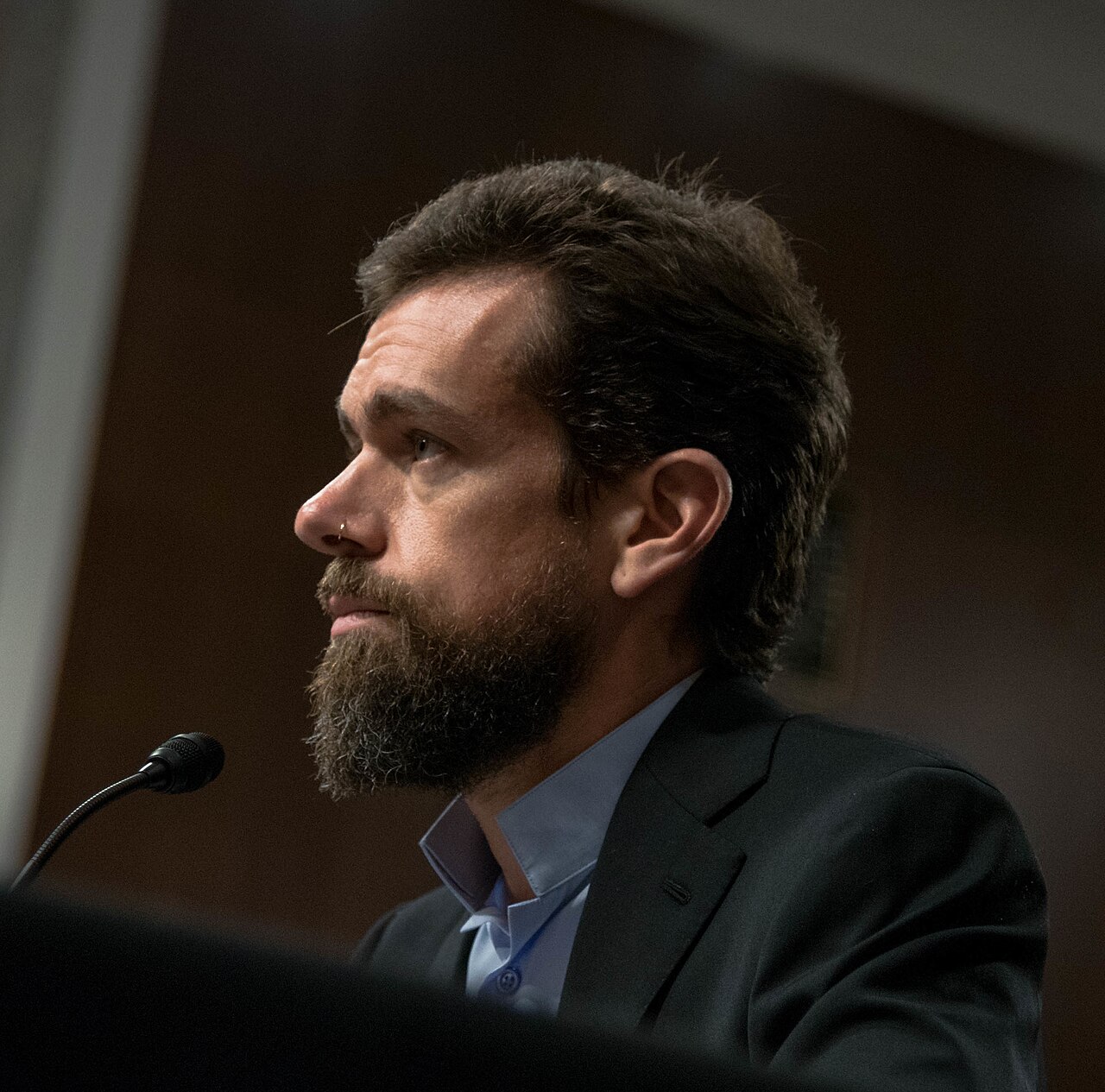
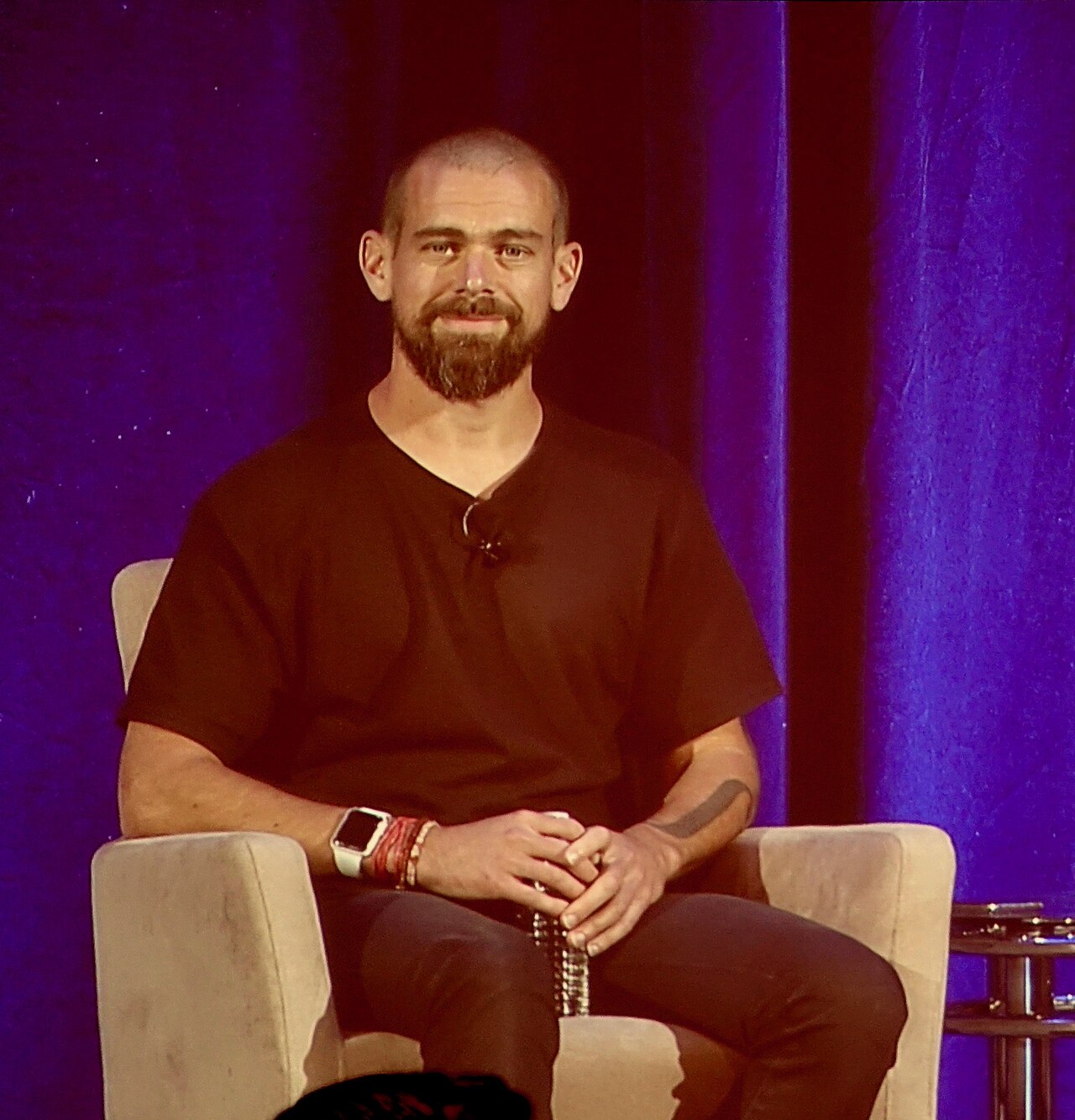
Header image: Jack Dorsey testifying before a U.S. Senate committee in Washington, D.C., September 5, 2018, via Wikimedia Commons, credited to Senator Mark Warner's Flickr stream, licensed under CC BY 2.0. In-body photograph: Jack Dorsey at the Goldman Sachs Technology Conference, February 13, 2018, via Wikimedia Commons, photographed by Steve Jurvetson, licensed under CC BY 2.0. No editorial-licensed photograph of the Buzz product or Block's offices exists yet, so both images depict Dorsey himself rather than the software or the 2026 launch event.