Every enterprise that wants to plug AI agents into its software runs into the same wall almost immediately: which agent talks to which tool, using which protocol, defined by whom. For most of 2025 there was a reasonably clean answer. In mid-2026, that answer got a new neighbor, and the industry is still working out whether the two get along.
The neighbor is Agentic Resource Discovery, or ARD, an open specification published on June 17, 2026 by Google together with Microsoft and a wider coalition. It joins a stack that already includes Anthropic's Model Context Protocol (MCP) and Google's Agent2Agent (A2A) protocol. Understanding how these three pieces fit together, and who is backing each one, says a lot about where enterprise AI standards are actually headed.
The stack, in plain terms
It helps to separate three distinct jobs that get lumped together under "agent interoperability."
Connection is the question of how an agent or LLM reaches into a specific tool or data source and calls it: read this file, run this query, send this email. This is the job Anthropic's Model Context Protocol was built to solve. MCP launched in late 2024 and was picked up broadly enough, by Anthropic, OpenAI, Google, Microsoft, Salesforce, Snowflake and most of the API gateway vendors, that it is now the closest thing the industry has to a default wire format for tool access. It is no longer controlled solely by Anthropic; MCP moved under the Linux Foundation, and in 2026 it gained a standardized enterprise auth layer covering OAuth, role-based access control and audit logging, the kind of plumbing large IT departments actually require before they will connect an agent to production systems.
Communication is a different question: how does one agent talk to another agent, delegating a sub-task or coordinating a multi-agent workflow. That is the job of Google's A2A protocol.
Discovery is the newest and least settled layer: given a large enterprise with hundreds of tools, dozens of agents, and a constantly changing catalog of both, how does an agent find out what is even available to call in the first place. That is the gap ARD is aimed at.
The agent-interoperability stack: three complementary layers
Discovery, communication, and connection solve different problems. Each layer can be swapped or upgraded without replacing the others.
How agents find which tools, agents, and resources exist across an enterprise.
Backers: Google, Microsoft, Salesforce, Snowflake, ServiceNow, Nvidia, Databricks, GitHub, Hugging Face, Cisco, GoDaddy. Apache 2.0, published June 17, 2026.
How one agent talks to another agent to delegate or coordinate work.
Originated at Google as an open protocol for cross-vendor agent-to-agent messaging.
How an agent or LLM connects to a specific tool or data source and calls it.
Originated at Anthropic, now governed by the Linux Foundation. Near-universal vendor support by 2026.
These are complementary layers, not competing replacements. ARD is explicitly designed to build on and work alongside MCP and A2A, cataloging the very MCP servers, A2A agents, and tools that the other two layers connect and coordinate.
What ARD actually does
Agentic Resource Discovery standardizes how AI agents and tools get cataloged, searched, and dynamically discovered across an enterprise. It builds on an "AI Catalog" data model maintained by a Linux Foundation working group, and it is licensed under Apache 2.0, the same permissive, vendor-neutral licensing posture MCP itself adopted after moving under Linux Foundation governance.
The list of companies collaborating on the spec is notably wide: Google, Microsoft, Salesforce, Snowflake, ServiceNow, Nvidia, Databricks, GitHub, Hugging Face, Cisco and GoDaddy. That is a cross-section of hyperscalers, enterprise SaaS platforms, a chipmaker, a dev-tools platform, and an open-model hub, all agreeing on one thing: enterprises need a standard catalog format for "what agentic resources exist here," independent of which vendor built any individual tool or agent.
 Anthropic
 Google
 Microsoft
 NVIDIA
Crucially, ARD's own documentation frames it as working alongside MCP servers, A2A agents, Skills, and traditional API tools, defining how those resources get cataloged and found rather than replacing how they connect or communicate. The stated goal is discovery, not a rival connection protocol.
One spec, two readings
That official framing has not stopped a second, more competitive reading from circulating. Some coverage in the days after ARD's publication described the coalition as an effort to counter Anthropic's influence over the agent-tooling ecosystem, given that Anthropic and OpenAI are notably absent from ARD's initial list of backers. Under that reading, a group of hyperscalers and enterprise platforms publishing their own open spec, with its own governance and its own list of founding companies, is a way of making sure no single lab's protocol becomes the sole gate to enterprise agent infrastructure.
ARD sits at the discovery layer and is explicitly designed to work with MCP servers, A2A agents, Skills, and traditional API tools, not to replace them.
ARD specification positioning
Both readings can be true at once, and that is the honest position to hold in July 2026. Technically, ARD solves a real, distinct problem: catalog and discovery are not the same job as tool connection, and MCP was never designed to answer "what exists" at enterprise scale, only "how do I call the thing I already know about." Politically, the composition of a standards coalition, who signed on and who did not, is never neutral information. A spec built by Google, Microsoft, Salesforce, Snowflake, ServiceNow, Nvidia, Databricks, GitHub, Hugging Face, Cisco and GoDaddy, without Anthropic or OpenAI at the table, tells you something about competitive posture even while the spec's technical content stays genuinely complementary.
Why any of this matters to enterprises
The practical reason enterprises care about standards at all is the alternative: a custom integration for every agent-to-tool pairing and every agent-to-agent pairing, an N-by-M combinatorial problem that gets worse every time a company adds a new agent or a new system of record. A shared connection protocol means a tool built once, as an MCP server, works with any compliant agent. A shared discovery layer means a new agent dropped into an enterprise can find the hundreds of existing tools and agents without a bespoke onboarding project for each one.
Standards also function as an anti-lock-in mechanism, at least in principle. An MCP server is not tied to any one model vendor; an ARD catalog is not tied to any one agent platform. That is precisely why governance matters as much as technical merit. MCP sitting under the Linux Foundation, and ARD publishing under Apache 2.0 with input from more than a dozen companies rather than shipping as one vendor's proprietary format, are both signals pointed toward neutral, multi-stakeholder control rather than a single company owning the rails everyone else has to build on. Whether that neutrality holds in practice, or whether governance quietly tracks whoever contributes the most engineering effort, is a fair question to keep asking as both specs mature.
For teams building on top of all this rather than authoring the standards themselves, the practical takeaway is the same one that shows up in most infrastructure standards fights: build for portability rather than betting on one side of a coalition. A workspace that can speak MCP for tool connection today and adopt whatever discovery or agent-communication layer wins out tomorrow avoids getting stranded by a standards outcome nobody can predict yet. That is part of the thinking behind Metir AI, a model-agnostic workspace built so teams can connect their tools once through open protocols and swap the underlying models and agents without re-plumbing everything downstream.
Where this settles
Nothing about the July 2026 landscape suggests MCP is going away. Its adoption is too broad, its governance already moved to neutral ground, and its new enterprise auth layer answers exactly the objection large IT buyers had been raising. What ARD adds is a layer MCP was never built to cover: a common way to catalog and discover agentic resources at the scale a real enterprise operates at. The more interesting open question is not whether ARD threatens MCP, but whether the same broad coalition that agreed on a discovery format can hold together as the harder governance questions, who arbitrates disputes, how the catalog schema evolves, whether Anthropic and OpenAI eventually join, get decided over the following year.
Sources:
- Announcing the Agentic Resource Discovery specification | Google Developers Blog
- Agentic Resource Discovery specification | Snowflake Blog
- Agentic Resource Discovery specification (ARD) | Microsoft Commandline
- Google, Microsoft back draft AI agent discovery spec | Search Engine Journal
- MCP: Model Context Protocol enterprise adoption, July 2026 | andrew.ooo
Image credits
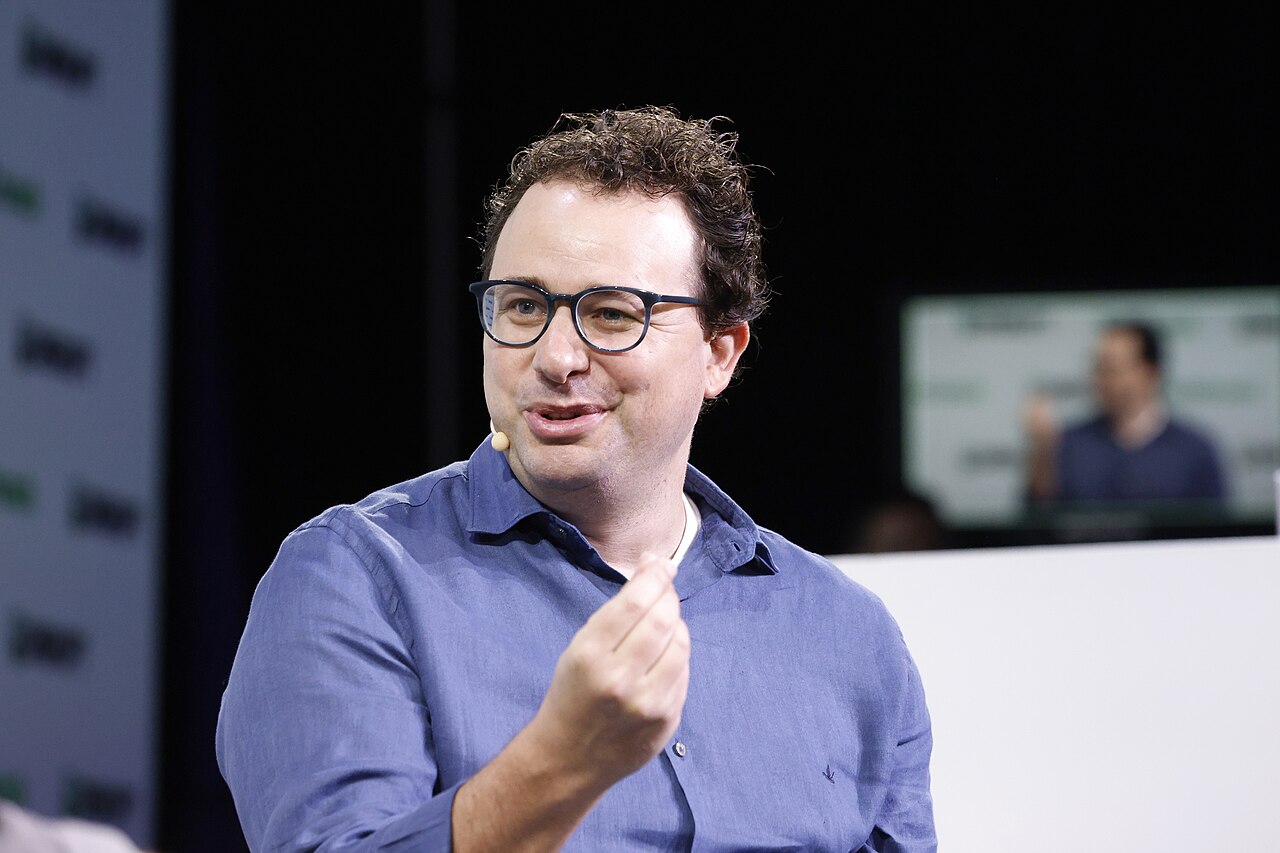
- Hero: Dario Amodei, co-founder and chief executive of Anthropic, speaking at TechCrunch Disrupt 2023. Anthropic created the Model Context Protocol. Photo by TechCrunch via Wikimedia Commons, CC BY 2.0.
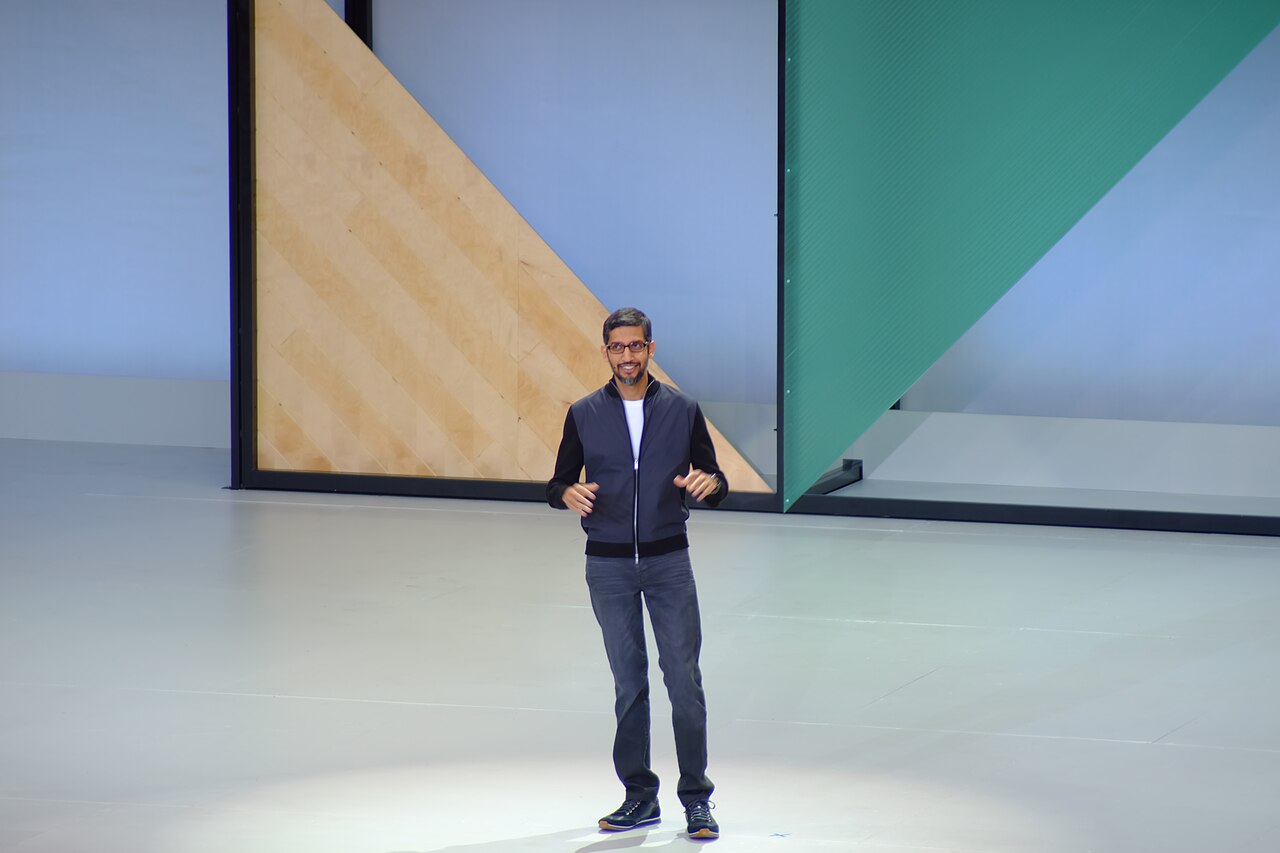
- In-body: Sundar Pichai at the Google I/O keynote, 2017. Photo by Steven Zimmerman via Wikimedia Commons, CC BY-SA 4.0.