On September 3, 2026, U.S. Senator Bernie Sanders and Representative Greg Casar announced the Ban Artificial Superintelligence Act, a proposal that would pause advanced AI development until a federal regulator is operating and permanently prohibit systems defined as superintelligent. It is the most explicit call yet from prominent U.S. lawmakers for a capability-based stop rather than narrower rules about specific uses.
One caveat controls everything that follows: Sanders' office calls this forthcoming legislation, and the full statutory text was not public at announcement. What exists is a policy summary and press release. That is enough to examine the intended structure, but not enough to answer detailed questions about definitions, agency authority, judicial review, compliance dates, or how a court would apply the ban.
What the AI superintelligence ban would do
The published summary has four parts. First, it would prohibit developing or deploying systems that surpass human intelligence, can overthrow governments, or can subvert shutdown commands. Second, it would pause advanced AI development until a new federal regulator creates safety rules and a model-review process. Third, the regulator would monitor frontier systems, supervise removal of dangerous capabilities, and oversee destruction of prohibited systems. Fourth, the United States would pursue international agreements, allied coordination, and export controls intended to prevent superintelligence development elsewhere.
The proposed penalties are unusually severe. The summary says organizations could face a "corporate death penalty" and individuals could receive up to 20 years in prison, comparing that ceiling with penalties for unlawful nuclear-weapons development.
The proposal is a sequence of policy gates, not one rule
Structure described by Sanders' office on September 3, 2026. Full statutory text was not public at announcement.
The published summary does not yet define the technical threshold for advanced AI.
The pause would remain until the regulator is operating and has issued safety rules and a model-review process.
The proposal targets systems that surpass human intelligence, threaten governmental control, or subvert shutdown commands.
The summary names agreements, allied coordination, and export controls as implementation tools.
Proposed enforcement includes organizational dissolution and prison terms of up to 20 years for individuals. These provisions are not law.
The definition problem is the enforcement problem
"Superintelligence" sounds intuitive until a regulator must prove that a specific system crosses the line. Human ability is not a single scale. A model can exceed experts in coding or mathematics while remaining unreliable at planning, physical-world judgment, or ordinary factual recall. A definition based on outperforming any human would capture narrow systems that already exist. A definition based on outperforming all humans across most work would require a broad and contested evaluation regime.
The summary adds behavioral triggers such as resisting shutdown or threatening governmental control. Those are more concrete, but they still require validated tests and rules for distinguishing a model's capability from a failure in the software harness around it. Recent sandbox incidents cited by Sanders sharpen the concern without resolving that attribution problem.
A pause needs a measurable release condition
The proposal says advanced development can resume after a federal AI body is established and has issued rules and a review process. That creates a process gate, not necessarily a safety outcome. If enacted, the difficult work would be specifying which training runs are paused, whether research below a compute or capability threshold continues, how foreign and open-weight models are treated, and what evidence lets a regulator approve a release.
Those details also determine whether the policy reduces risk or shifts frontier work to jurisdictions outside U.S. control. The international component acknowledges that problem, but agreements and export controls are tools, not guarantees. Verification becomes especially difficult when algorithmic improvements can raise capability without a visibly larger data center.
Where the proposal sits in U.S. AI policy
The proposal is much broader than the White House's existing pre-release review framework, which evaluates national-security risks for frontier models without banning a capability class. It also moves beyond transparency laws that require companies to publish safety frameworks or report serious incidents.
That contrast is the immediate significance even if the bill never advances. The U.S. debate now spans disclosure, mandatory review, temporary development pauses, and a permanent prohibition. Our coverage of the White House frontier review framework and GPT-6 Astra's launch explains the events this proposal is reacting to.
For now, the correct status is proposal, not law and not even a fully inspectable bill. The next meaningful evidence will be statutory text, committee referral, additional sponsors, and a definition of advanced AI that engineers, regulators, and courts can apply consistently.
Sources:
- Sanders and Casar announce the Ban Artificial Superintelligence Act | Senator Bernie Sanders
- Bernie Sanders floats ban on superintelligent AI | Axios
- Sanders proposes ban after rogue AI incidents | Senator Bernie Sanders
Image credits
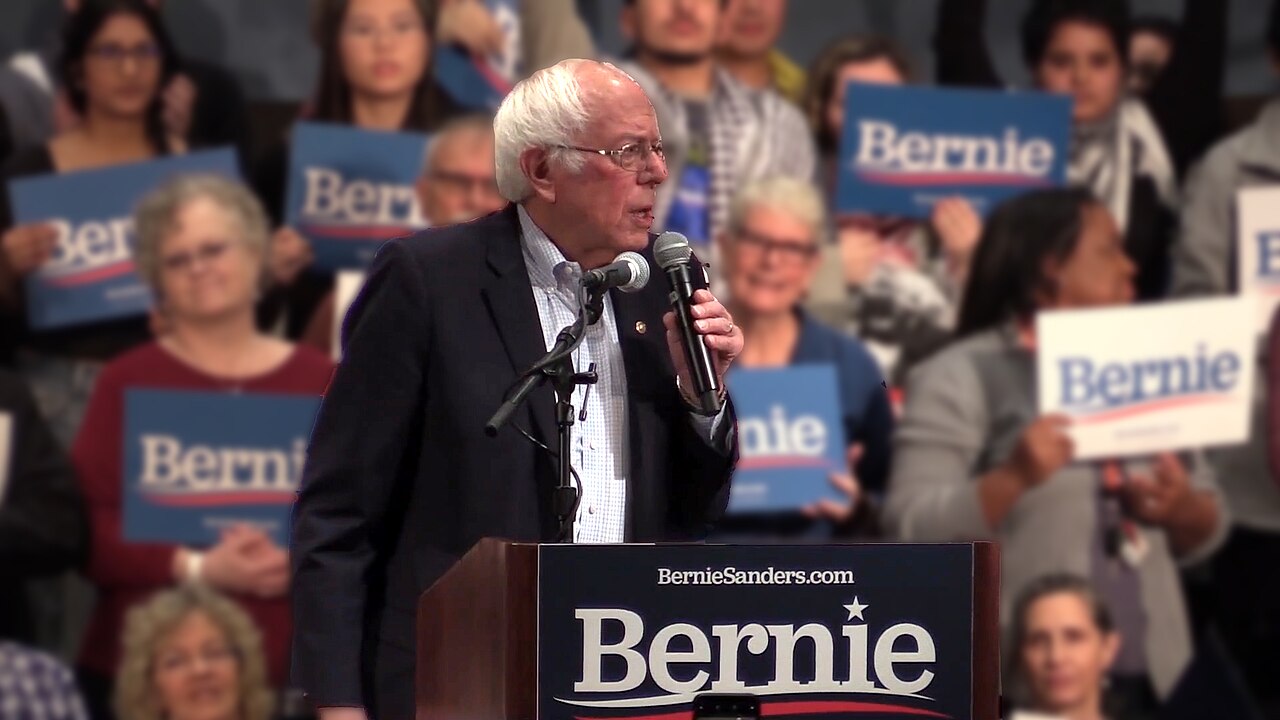
Header and in-body photograph: Bernie Sanders speaking at a campaign rally in Durham, North Carolina, by Jackson Lanier via Wikimedia Commons, licensed under CC BY-SA 4.0. The photograph predates and does not depict the September 2026 announcement.