Australia's government reached a deal on Tuesday, November 24, with the Greens to pass its Digital Duty of Care bill through the Senate, according to an Associated Press report carried by BNN Bloomberg. Under the amendments, the maximum penalty would rise from A$109 million (US$72 million) to 5% of a company's global revenue. The bill covers AI chatbots, which makes it relevant well beyond social media. This post sets out what the report says, what it does not say and what the penalty structure means in practice.
What the AP report says
The bill would require large technology companies to proactively reduce the risk of harm before it occurs, according to an Australian government statement quoted by AP. AP describes it as similar in approach to the EU Digital Services Act and the UK Online Safety Act. The reported provisions are below.
| Provision | Reported detail |
|---|---|
| Duty | Proactively reduce risk of harm |
| Scope | Minimum safety standards for online services, including games, apps and AI chatbots |
| Algorithms | Users could opt out of algorithms that feed them content |
| Fabricated images | The eSafety watchdog could remove apps and websites that fabricate naked images from genuine images of people |
| Child protections | Content promoting eating disorders, hostile ideas about women, pornography, crime or dangerous stunts, or causing serious mental health distress |
| Enforcement | Penalties rise to 5% of global revenue under the Greens amendments |
| Private action | A right to sue social media companies in Australian courts for online harms |
Source: AP via BNN Bloomberg, November 24, 2026.
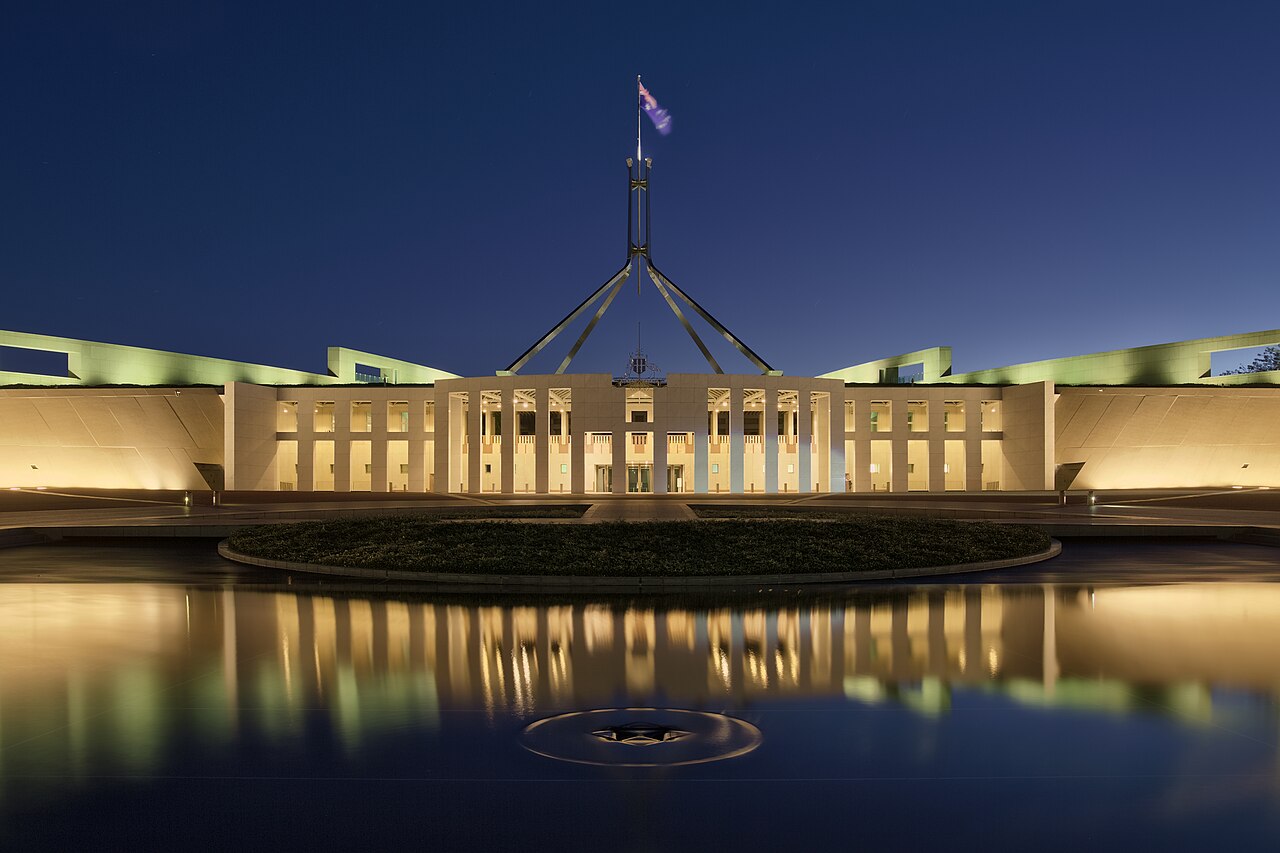
The parliamentary path
AP reports that the government needs the Greens because no party holds a Senate majority, and that Greens leader David Shoebridge confirmed the party backs the amended bill. The Senate vote was expected on Wednesday, November 25, with the House of Representatives expected to pass the amended bill before Parliament rises for the year on Thursday, November 26. The government holds a House majority.
An earlier version of the bill cleared the House of Representatives and went to the Senate, as MLex reported. The new step is the Senate agreement on amendments. At the time of AP's report the bill had not passed, so any statement that it is law should wait for the final votes.
Opposition is reported on the Liberal side. Senior Liberal senator Sarah Henderson said the bill undermines online safety and freedom of expression, per AP. AP also reports that US ambassador David Brat conveyed US objections to Communications Minister Anika Wells on Tuesday, and that the US government had made a submission on the draft in September. Wells said the parties have points of difference and are working through them.
What the penalty change means
The cap moves from a fixed sum to a revenue share. The chart below compares the two at three hypothetical revenue levels. The revenue figures are illustrative and the multiplication is our arithmetic, not a company estimate.
Fixed A$109.2M cap versus a 5% of global revenue cap
Illustrative arithmetic only: the maximum penalty at three hypothetical levels of annual global revenue, in millions of Australian dollars. The two caps cross at about A$2.18B of revenue.
Source: penalty figures from AP (via BNN Bloomberg), November 24, 2026; the revenue levels are hypothetical and the multiplication is ours.
- Crossover point: A$109.2M divided by 5% is about A$2.18B of annual global revenue. Below that level the old fixed cap would be larger; above it, the percentage cap is larger.
- Scaling: at A$100B of revenue the cap would be A$5B, about 46 times the earlier fixed figure.
- Small providers: a company below the crossover would face a lower ceiling than before, which may be relevant to smaller AI chatbot providers.
AP does not say whether 5% is a ceiling or the penalty for each breach, so the table above describes a maximum, not a typical outcome.
Why it matters for AI chatbots
Chatbots appear in the scope list alongside games and apps. Separately, an earlier report from The Next Web described the bill as aimed at stopping AI chatbots from building emotional intimacy with children. AP's article does not repeat that detail, so we treat it as a report on an earlier version rather than confirmed final text.
Related coverage in Australia shows why chatbots draw attention. In the same news cycle, an ABC News investigation reported child-harm allegations around the Chinese companion app Talkie, which Apple removed from its App Store. Our other posts on chatbot liability cover US state lawsuits over Grok deepfakes.
What the report does not say
- No commencement date or compliance timeline.
- No definition of harm. AP notes that US concerns focus on how harm is defined, and that Liberals say ministers and the watchdog would judge it.
- No named companies or thresholds. Which services count as covered is not stated.
- No detail on the right to sue. Scope and remedies are not described.
What to watch next
- Final votes. Both chambers need to pass the amended text before Parliament rises.
- The definition of harm. It will decide how far the duty reaches into AI products.
- US reaction. The government's response to the objections conveyed by the US ambassador.
For teams deploying AI assistants, duty-of-care regimes put the emphasis on risk controls built into the product. Platforms that let you pick and swap models, such as Metir, can adapt more easily when a regulator targets a particular provider or feature.
Sources:
- AP via BNN Bloomberg: Australia set to pass a digital duty of care law with fines up to 5 per cent of tech giants' global revenue
- MLex: Australia's digital duty-of-care bill clears lower house, heads to Senate
- The Next Web: Australia moves to ban AI chatbots from emotional intimacy with children
- Australian Government: Digital Duty of Care
Image credits
- Hero and in-body: Parliament House at dusk, Canberra ACT. Author: Thennicke. Wikimedia Commons. CC BY-SA 4.0.