On July 24, 2026, Nvidia CEO Jensen Huang used his first-ever post on X to circulate an open letter called "Open Weights and American AI Leadership." Anthropic did not sign it. For three days, the company said nothing in public. Then on July 27, CEO Dario Amodei published a statement on anthropic.com laying out where the company stands. This piece covers that holdout, the reaction it drew, and the position Anthropic ultimately put on the record.
 NVIDIA
 Anthropic
 Microsoft
 Meta
MetaThe letter, briefly
The letter urges Washington not to impose sweeping restrictions on open-weight AI models, the kind whose parameters can be downloaded, inspected, modified, and run on a company's own infrastructure. It launched with roughly 25 signatories, including Nvidia, Microsoft, Meta, Palantir, Dell, IBM, Hugging Face, Mistral, and Andreessen Horowitz, and the list roughly doubled within about 48 hours as OpenAI and others added their names. Anthropic and Amazon did not sign at launch, and neither had by July 27. The full case for the coalition's argument, and who eventually joined it, is covered in the Nvidia-led open-weights letter; this piece stays focused on Anthropic's side of the story.
Three days of silence, then criticism
In the gap between the letter's launch and Anthropic's statement, the company's absence became a story of its own. Anthropic did not respond to multiple outlets' requests for comment in that window. Investors close to the administration filled the silence with their own reading of it. David Sacks, the venture capitalist who served as the White House's first AI and crypto czar and now co-chairs the President's Council of Advisors on Science and Technology, said on the All-In Podcast that restricting open-source models would "basically put a dagger through the heart of the entire American open source ecosystem" and argued Anthropic "doesn't want to have the competition." Bill Gurley, a general partner at Benchmark, wrote that the real problem with open weights "is it competes with their corporate economic strategy."
Excited to see Anthropic acknowledge the real problem with open is it competes with their corporate economic strategy.
Bill Gurley, general partner, Benchmark
The sharpest jab came from inside the building. Julian Schrittwieser, a Member of Technical Staff at Anthropic, posted a string of sarcastic replies on X the day the letter went up: "I'm so excited that @JensenHuang is a believer in open source now, looking forward to the CUDA and GPU driver open source release!" and a similar line aimed at Microsoft's Satya Nadella about open-sourcing Windows and Office. When the posts drew backlash, he clarified his position rather than walking it back: "funny to see people jump to the conclusion I must want to ban open weight models.. I actually think open models can be very useful! But it's interesting how some historically extremely anti-open source companies are suddenly all in favor of openness." These were one engineer's posts on a personal account, not a company statement, but they previewed the argument Anthropic would make formally three days later: several signatories keep their own crown-jewel products closed while asking Washington to protect openness elsewhere.
Amodei's prior record on open weights
Anthropic's silence was not a blank slate. Amodei has been on the record about open-source AI since at least 2023, when he told a Senate Judiciary subcommittee that scaling open-source models was going down "a very dangerous path," arguing that once a model's weights are released, its developer permanently loses the ability to monitor or withdraw it, unlike a hosted product that can be pulled back. He has also called the open-versus-closed framing itself "a red herring," saying that when a new model ships, including DeepSeek, he does not care whether it is open or closed; what matters to him is what the model can do. Critics point to this history as evidence Anthropic was always going to be the odd company out. Anthropic's July 27 statement did not retreat from this record, but it did sharpen exactly what the concern is and is not.
What Anthropic actually said on July 27
In "Our position on open-weights models," published on anthropic.com, Amodei opened by directly rejecting the main accusation being made in his company's absence: "Anthropic has never advocated for a ban on open-weights models." He went further, describing open-weights models that lack dangerous capabilities as "a public good" that provide value to businesses, developers, and researchers at no cost beyond the compute to run them. He agreed with much of the coalition letter's underlying case, that open weights "expand access to the AI economy," "strengthen competition" for some use cases, and "give customers greater control."
Where he broke from the letter was on two specific assumptions. He disputed the idea that open models necessarily make it easier to build safeguards, and he disputed that broad access to capabilities "necessarily helps defenders more than attackers," arguing the reverse can also be true. His stated national security concerns split into a primary and a secondary worry. The primary one: authoritarian governments building AI more powerful than what the US builds, and using it to seek lasting military advantage, a risk he says exists "whether these models are released with open weights" or not. The secondary one is misuse, cyberattacks, biological attacks, and alignment failures, where he argues open-weight models do carry higher risk than closed ones, but says banning them from US businesses "does nothing to address this risk" since the underlying weights already exist elsewhere.
Anthropic's July 27 position, in three parts
Agreement, disagreement and an alternative policy ask, as laid out in Dario Amodei's post on anthropic.com.
- "Anthropic has never advocated for a ban on open-weights models"
- Open-weights models without dangerous capabilities are "a public good" for businesses, developers and researchers
- Open weights "expand access to the AI economy," "strengthen competition" for some use cases, and "give customers greater control"
- Disputes that open models necessarily make it easier to build safeguards
- Disputes that broad access to capabilities "necessarily helps defenders more than attackers"
- Primary concern: authoritarian governments building more powerful AI than the US, a risk that exists whether or not models are released open
- Secondary concern: misuse for cyberattacks, biological attacks or alignment failures, where it argues open-weight models carry higher risk, but a US-business ban would not fix it
- Chip export controls: keep advanced chips and chipmaking equipment out of China and crack down on smuggling
- An anti-distillation policy targeting "industrial-scale distillation operations" against US models
- Mandatory, empirically-driven safety testing for cyber, bio and alignment risk on all sufficiently capable models, open or closed, with smaller startup and academic models exempted
Quoted phrases are from Anthropic's own July 27, 2026 statement, not paraphrase by this post.
The alternative Anthropic is pushing
In place of restrictions on open weights themselves, the statement lists three measures Anthropic says it has been pushing for. First, tighter chip export controls: not selling advanced chips or chipmaking equipment to China, and cracking down on smuggling. Second, an anti-distillation policy aimed at "industrial-scale distillation operations," the practice of training a new model by learning from a rival's outputs at scale. Third, mandatory safety testing, for cyber, biological, and alignment risk, applied to "all sufficiently capable models, open and closed," with an exemption for smaller startup and academic models, and driven by empirical testing rather than assumption.
That second proposal is not abstract for Anthropic. On July 22, five days before Amodei's post, White House Office of Science and Technology Policy Director Michael Kratsios accused China's Moonshot AI of running a "sophisticated internal platform" to distill Anthropic's Fable model at scale to help build its Kimi K3 model, switching between access methods to avoid detection. That accusation followed an earlier, separate episode: on June 12-13, the Commerce Department ordered Anthropic to cut off foreign-national access to Fable 5 and Mythos 5 over a possible jailbreak and concern that a China-linked group had accessed Mythos, prompting Anthropic to disable both models worldwide for 18 days until the restriction was lifted on new safety terms. Both events sit directly behind the specific policy Anthropic is now proposing rather than a general anti-open-weights stance.
From an export-control freeze to an official position, in six weeks
The chain of events connecting Anthropic's own models, a distillation dispute, Nvidia's letter and Anthropic's July 27 response.
- Jun 12-13, 2026Commerce orders Fable 5 and Mythos 5 restricted
Citing a possible jailbreak and concerns that a China-linked group accessed Mythos, the Commerce Department orders foreign-national access cut off. Anthropic disables both models worldwide rather than build a partial block.
- Jun 30-Jul 1, 2026Export controls lifted after 18 days
Commerce and Anthropic reach an agreement to restore access with new guardrails and classifiers. Anthropic had argued the restriction was disproportionate and handed time to competing open-weight developers.
- Jul 22, 2026White House accuses Moonshot AI of distillation
OSTP Director Michael Kratsios says China’s Moonshot AI ran large-scale distillation against Anthropic’s Fable model to help build Kimi K3, evading detection by switching access methods.
- Jul 24, 2026Nvidia publishes the open-weights letter
“Open Weights and American AI Leadership” launches with roughly 25 signatories. Anthropic and Amazon are not among them.
- Jul 25-26, 2026Signatory list roughly doubles; criticism grows
OpenAI and others join, reported counts reach 35 to 50. Anthropic still has not signed. Investors including David Sacks and Bill Gurley publicly question its motives.
- Jul 27, 2026Anthropic publishes its official position
Dario Amodei posts "Our position on open-weights models" on anthropic.com, stating the company has never advocated a ban and proposing chip controls, an anti-distillation policy and mandatory safety testing instead.
Dates reflect when each event was reported or published; see this post's Sources section for individual citations.
Reading the incentives honestly
None of the parties in this dispute are disinterested. Nvidia sells chips and infrastructure regardless of which lab's models run on them, and a world with more capable open-weight models to fine-tune and deploy is, on balance, good for chip demand. Meta has built its AI strategy around publishing open-weight Llama models and benefits directly from a permissive policy environment. Anthropic sells access to closed frontier models and gated programs like Project Glasswing, and a restriction that fell more heavily on open-weight competitors than on its own API business would plainly serve its commercial position, a point critics like Sacks and Gurley made forcefully. It is also fair to note the tension inside Anthropic's own practice: the company publishes a great deal of its safety and interpretability research openly, including its Responsible Scaling Policy, even as it keeps the model weights themselves closed. Whether that combination is coherent, publish the reasoning but not the artifact, or whether it is special pleading dressed up as a safety framework, is a genuinely open question, and reasonable people read it differently. The honest position is that both the coalition's letter and Anthropic's rebuttal mix real technical arguments with real business interests, and neither should be read as free of the other.
Why this matters beyond one letter
The open-versus-closed debate is not going to resolve cleanly in either direction this year, and Washington is unlikely to adopt a single, tidy rule that satisfies chipmakers, closed labs, and open-weight publishers all at once. For teams building on AI day to day, that argues for staying agnostic to the outcome rather than betting a workflow on one camp winning. Metir AI's approach at the application layer, giving teams access to leading models from multiple providers, whether closed frontier systems or open-weight alternatives, in one workspace, reflects that same logic: the policy fight over open weights is worth watching, but it should not determine which tools a team can actually use.
The takeaway
Anthropic's absence from Nvidia's letter was read for three days as an unexplained silence, and critics filled that gap with an accusation of naked self-interest. Anthropic's July 27 statement did not fully settle that argument, since the company's own business model is plainly served by limits that fall more heavily on open-weight competitors, but it did put a specific, checkable position on the record: no support for a ban, agreement with much of the letter's economic case, and three concrete asks (chip controls, an anti-distillation policy, and mandatory safety testing for capable models regardless of openness) in place of restricting open weights outright. Whether Washington adopts any of it is a separate question from whether Anthropic explained itself. As of July 27, it has.
Sources:
- Nvidia and 24 other companies sign open-weights letter as Washington weighs Chinese AI model ban | Tom's Hardware
- Nvidia Open Weights Letter Doubled To 50 Without Amazon And Anthropic | Forbes
- Nvidia, Microsoft, Meta warn against 'premature restrictions' of open-weight models | CNBC
- Nvidia-hosted open-weights letter doubles to 50 signatories as Washington weighs China restrictions | MLQ News
- OpenAI quietly signs letter from Nvidia, Microsoft, and Meta warning about dangers of 'premature restrictions' on open-weight AI models, as the White House accuses China of stealing from Anthropic | TechRadar
- Our position on open-weights models | Anthropic
- Not Advocating For Ban On Open Models, Says Anthropic CEO Dario Amodei After Being Isolated In Open Letter | OfficeChai
- Julian Schrittwieser (@Mononofu) on X, Jul 24, 2026
- Julian Schrittwieser (@Mononofu) on X, Jul 24, 2026 (Satya Nadella reply)
- Julian Schrittwieser (@Mononofu) on X, Jul 24, 2026 (clarification)
- David Sacks Warns Anthropic Doesn't Want Competition | Benzinga
- Anthropic gets heat for being the only major AI lab not supporting open models | AOL
- Anthropic's open-weights silence after its own Fable 5 ban | The Next Web
- Anthropic Disabled Fable 5 And Mythos 5 After A U.S. Export-Control Order. Here's What Happened | Forbes
- Anthropic says Trump admin has lifted export controls on Claude Fable 5 and Mythos 5 | CNBC
- Anthropic Wins As Commerce Lifts Fable 5 And Mythos 5 Export Controls | Forbes
- White House accuses Chinese company of distilling Anthropic's Fable | CyberScoop
- White House accuses Chinese AI developer of IP theft | Nextgov/FCW
- David Sacks Steps Down as White House AI and Crypto Czar After 130-Day Limit | Creati.ai
Image credits
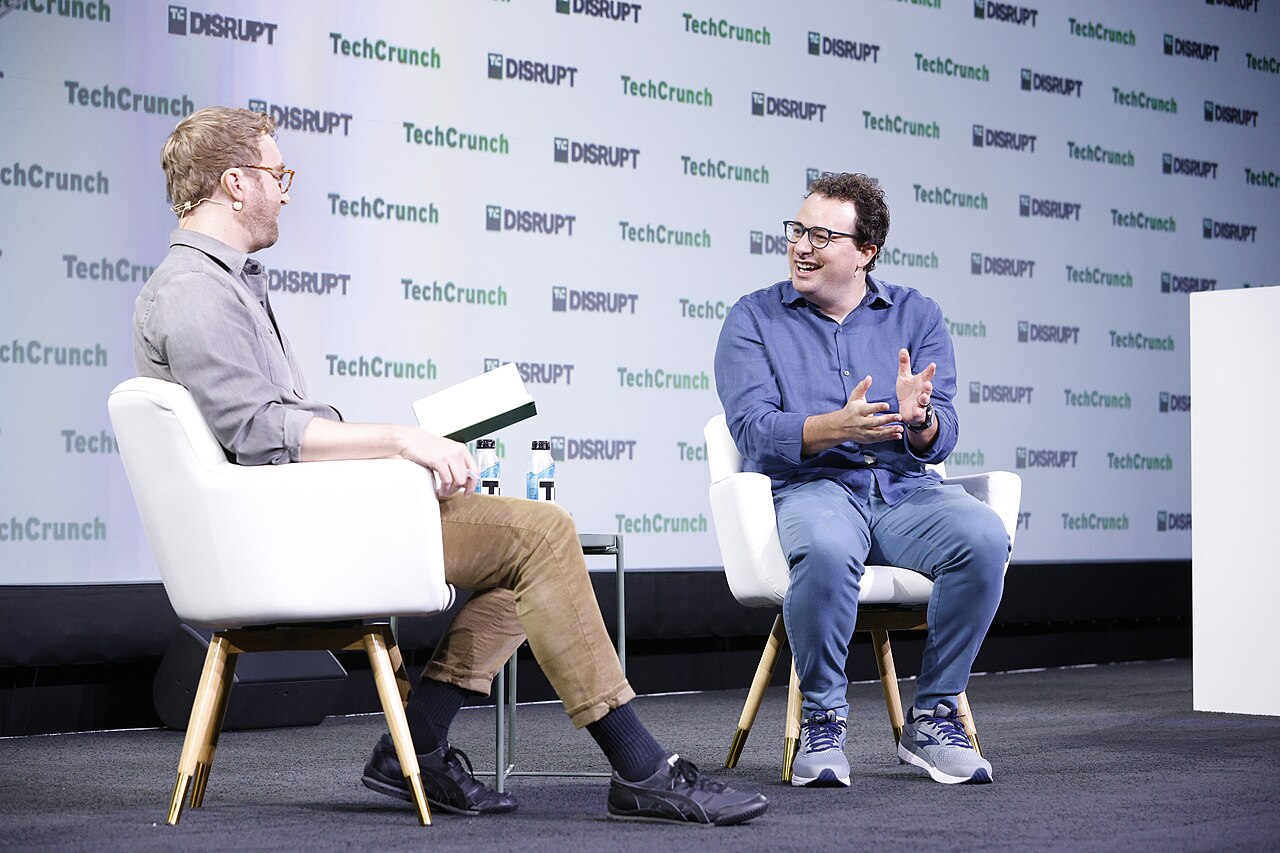
Header image: Dario Amodei, CEO of Anthropic, being interviewed on stage at TechCrunch Disrupt 2023, via Wikimedia Commons, photo by TechCrunch, licensed under CC BY 2.0. In-body photograph: the United States Capitol, west front, Washington, D.C., via Wikimedia Commons, public domain. The Capitol photo illustrates the general Washington policy setting for this debate and does not depict any specific event described in this post.