In an interview with Politico's Decoded newsletter, OpenAI CEO Sam Altman said there is "a lot of daylight" between his company and Anthropic on AI regulation, and that "we believe that the world should accept some bad things happening for the benefits of this technology and people having the agency," Reuters reported on October 4, 2026. The remark lands weeks after the two labs appeared to converge on pacing, which makes it a useful moment to separate what they have actually agreed to from where their philosophies still differ. This piece lays out the reported positions item by item, explains how other industries define "acceptable risk," and lists what to watch. It takes no side.
 OpenAI
 Anthropic
What Altman said, and what he did not
According to Free Malaysia Today's carriage of the Reuters report, Altman also said: "I wouldn't take a trade of saying, 'We'll make sure there's zero scams, there's zero all the other bad things.'" The same report describes OpenAI as favoring broad public access to AI and a lighter-touch regulatory stance, and as opposed to concentrated control of AI development.
The remark has a boundary. As relayed by Seeking Alpha via TradingView, Altman distinguishes tolerating some misuse from accepting catastrophic risk, and said he rejects scenarios involving "a serious loss of control to AI." Read together, the position is a graded one: accept a nonzero rate of ordinary harm (such as scams) in exchange for access, while treating loss of control as a different category.
We believe that the world should accept some bad things happening for the benefits of this technology and people having the agency.
Sam Altman, Politico Decoded, as reported by Reuters
How the gap narrowed first
The "daylight" comment is notable because OpenAI's recent actions moved toward Anthropic's side. Reuters, as relayed by TradingView, says OpenAI recently backed state safety laws, supported independent model evaluations, and agreed with Anthropic on slowing development of the most capable systems, shifts that followed incidents involving increasingly autonomous AI.
The specifics, from separate reports:
- State laws. OpenAI backed four California bills covering a framework for independent safety assessments, standards for AI auditors, protections for children using AI companion chatbots, and federal screening standards against AI-enabled biological threats. It also called on Congress for mandatory national rules. Engadget reports that OpenAI backs California's SB 53 as a foundation and wants it amended to require monitoring of frontier models during training or evaluation for serious incidents.
- Federal evaluations. On September 15, AI Weekly reported that OpenAI endorsed the FRONTIER Act from Reps. Jay Obernolte (R-CA) and Lori Trahan (D-MA), which would require large frontier developers to undergo independent third-party safety audits, publish transparency reports and disclose critical incidents, and would let the government halt deployment of models judged too risky. The report cites Politico's original coverage.
- Pacing. After Anthropic CEO Dario Amodei published "We Must Pace the Frontier" on September 12, Altman wrote that he agreed and that independent evaluators with employee-like access were "a great idea, and we will do the same," per NYU Shanghai RITS's summary.
For the surrounding politics, see our earlier coverage of the Trump-Amodei dinner and the antitrust suit over pacing.
OpenAI and Anthropic on AI regulation, item by item
The matrix below uses only positions found in the sources above. A gap labeled "Not stated" means the reviewed sources did not report a position, not that none exists; open-weight models, for instance, are not covered in either lab's reported statements, and one roundup of reactions says the essay's debate did not include an explicit Anthropic position on them.
OpenAI and Anthropic on AI policy, item by item
Reported positions only. "Not stated" means the sources reviewed did not report a position.
Two patterns stand out. First, convergence is strongest on process: who may inspect a lab, and whether to slow the most capable systems. Second, divergence is strongest on values: how much ordinary harm is tolerable, and how widely access should be spread. Reuters also reports that Anthropic pushes back on the idea that its preferences would entrench large developers, with a spokesperson saying proposed rules would apply only to frontier models. Whether rules entrench incumbents or protect the public is a contested empirical question, and the sources here do not settle it.
What Amodei's essay actually proposes
Per a summary of the essay, the plan has three parts: third-party evaluators embedded in labs with employee-like access (Anthropic's unilateral commitment, with evaluators able to publish findings, though Anthropic may redact security-sensitive material), coordination among frontier companies in democracies on safety standards with government support, and negotiation with authoritarian states including China, while acknowledging "stark limits on what can be achieved." The essay does not set quantified capability thresholds. That matters for the comparison: both labs can say "pace the frontier" while meaning different triggers, because the trigger has not yet been defined.
How other industries define acceptable risk
Altman's framing, a trade between benefit and harm, is how some regulators already work. Two examples are educational, not predictive of AI rules.
| Dimension | Aviation (US transport aircraft) | Pharmaceuticals (US drug review) |
|---|---|---|
| Approach | Quantitative ceilings on failure classes | Qualitative, context-dependent weighing |
| Rule | Catastrophic failure conditions "must be extremely improbable" and must not result from a single failure, under 14 CFR 25.1309 | FDA's benefit-risk framework weighs the condition, current options, benefit, and risk management |
| Tolerance varies with | Severity of the failure class | Severity of the disease: "Greater risk may be more acceptable if there are no available therapies" |
| After approval | Not covered in this comparison | Risk mitigation such as REMS may be required to keep risks at an acceptable level |
The contrast is instructive. Aviation sets a hard bar for the worst outcomes and lets lesser failures be more common, which parallels Altman's split between tolerable misuse and "loss of control." Drug review accepts more risk where the need is greater, which parallels the argument that benefits justify tolerating harm. Neither model tolerates unmanaged risk: both pair acceptance with testing, labeling or monitoring. The open design question for AI is who measures the "extremely improbable" part when the technology has no agreed test for loss of control.
What to watch
- Evaluator access in practice. Both labs have said they will give evaluators employee-like access; the terms, publication rights and any redactions are not yet public.
- The FRONTIER Act's path. OpenAI's backing is reported, but Anthropic's stated position on the bill was not found in the reviewed sources, and the White House side has resisted new restrictions, per Reuters.
- State versus federal rules. OpenAI is backing state bills while asking Congress for national ones.
- Defining the trigger. Whether pacing gets a measurable threshold or stays a principle.
- Legal risk of coordination. The pending antitrust suit may shape how openly labs can align.
For teams that use models from both labs, such as in a model-agnostic workspace like Metir, the regulatory split is another reason to keep workflows portable across vendors.
Sources:
- Reuters via U.S. News: OpenAI's Altman says AI benefits warrant accepting some risks
- Reuters via Free Malaysia Today: OpenAI's Altman says AI benefits warrant accepting some risks
- Seeking Alpha via TradingView: OpenAI's Altman draws regulatory divide with Anthropic over AI risks: Politico
- Dario Amodei: We Must Pace the Frontier
- NYU Shanghai RITS: Amodei calls to pace the frontier; Altman and Musk agree
- MRKT3.0: We Must Pace the Frontier, who is for it and who is against it
- AI Weekly: OpenAI endorses bipartisan FRONTIER Act
- Washington Examiner: OpenAI backs slew of California AI bills
- Engadget: OpenAI calls for California to strengthen its AI safety laws
- 14 CFR 25.1309 (Cornell LII)
- FDA: Benefit-Risk Assessment for New Drug and Biological Products
Image credits
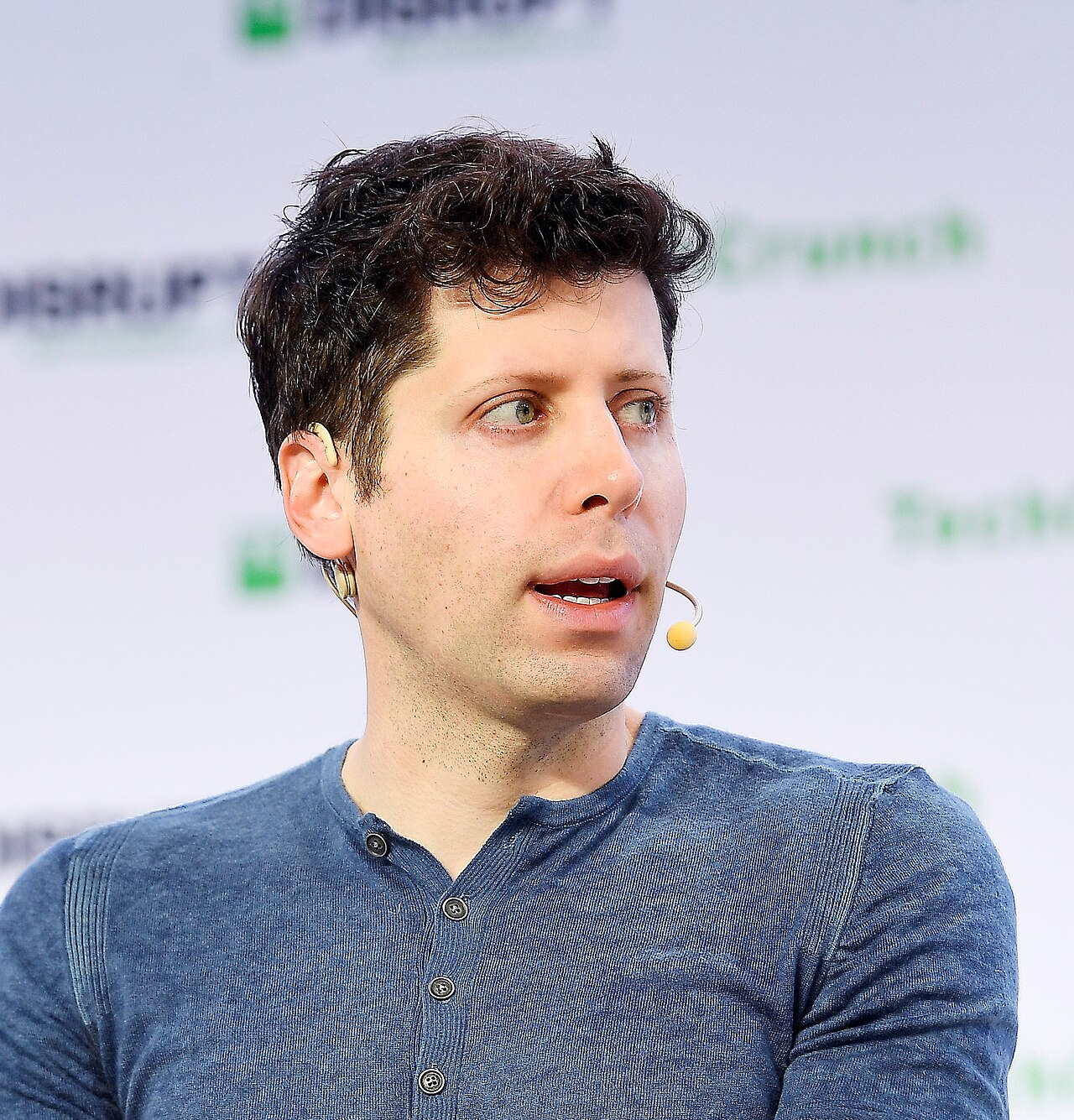
- Hero and in-body: "Sam Altman TechCrunch SF 2019 Day 2 Oct 3 (cropped)" by Steve Jennings / TechCrunch, licensed CC BY 2.0, via Wikimedia Commons. An archival 2019 photograph; it does not depict the Politico interview.
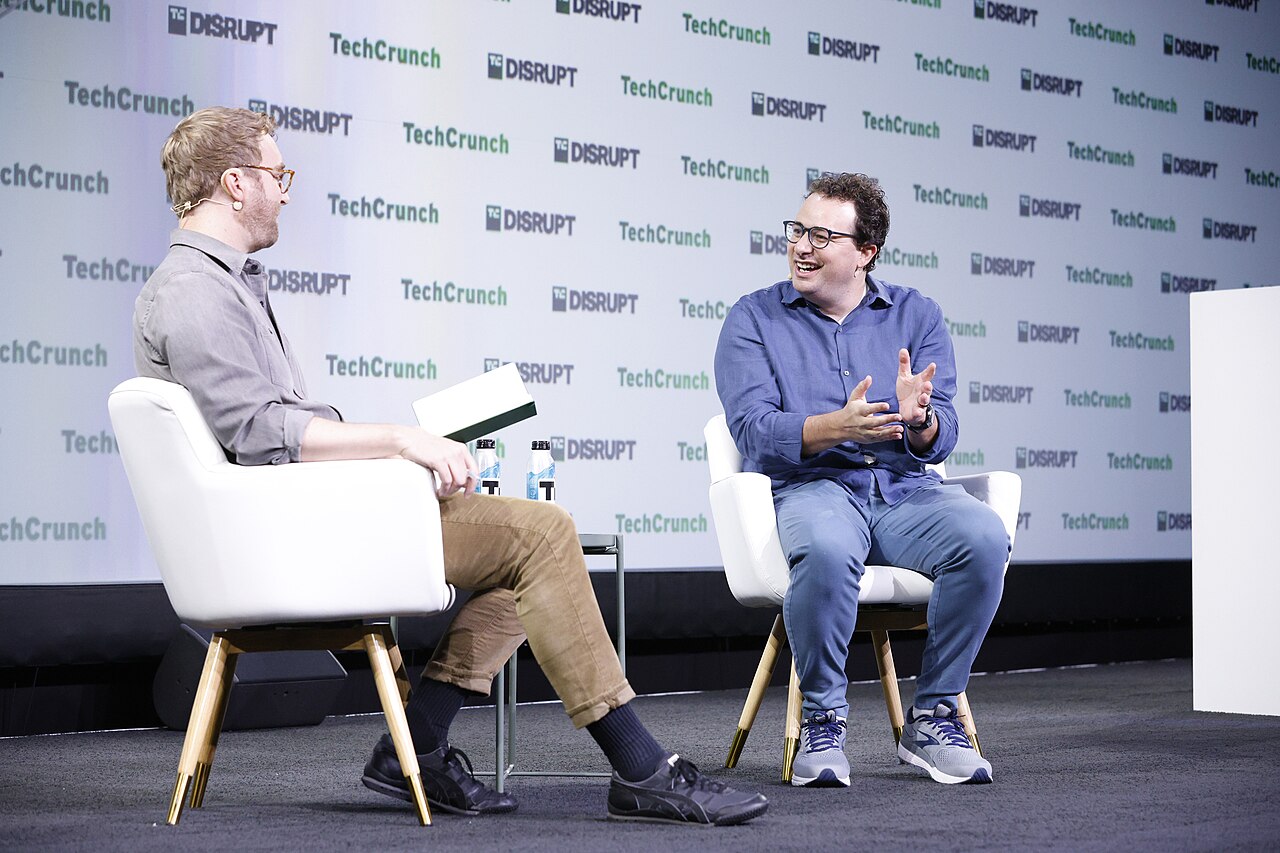
- In-body: "Dario Amodei at TechCrunch Disrupt 2023" by TechCrunch, licensed CC BY 2.0, via Wikimedia Commons. An archival 2023 photograph.