Google DeepMind announced AlphaGenome 2 on November 11, 2026, a model that predicts how a DNA sequence and its variants behave in a specific human cell type. According to the company's announcement, it finds "nearly twice as many variants" that change gene expression compared with the previous state-of-the-art model. Genetic studies often flag a region of the genome as linked to a disease without saying which cells are affected, and the new model is aimed at that gap. This post covers the design change, the reported benchmarks, availability and the caveats. For the first-generation work, see our post on the AlphaGenome Atlas.
 Google DeepMind
What changed from AlphaGenome 1
The key design change is conditioning. Per DeepMind's description, AlphaGenome 1 produced fixed parallel outputs for bulk tissues and cell lines, predicting thousands of experiments at once. The announcement says this spread model capacity thin and made closely related cell types hard to distinguish. AlphaGenome 2 instead takes a 1-million-letter DNA sequence plus a target condition, such as a tissue, a cell type or a cell state, and predicts one condition at a time.
| Feature | AlphaGenome 1 | AlphaGenome 2 |
|---|---|---|
| Output design | Fixed parallel outputs for bulk tissues and cell lines | Conditional: one target condition per prediction |
| Cell-type resolution | Closely related types hard to separate | Resolves specialized cell types |
| Readouts | Gene expression, chromatin and related tracks | Gene expression, histone modifications, chromatin accessibility and DNA methylation (new) |
| New data | Needs fine-tuning | A cell encoder can build conditions from a researcher's own single-cell experiment |
Two further capabilities stand out. A cell encoder can generate conditions directly from a single-cell experiment, and cross-modality imputation can predict an unmeasured readout from a single measurement, for example chromatin accessibility from single-cell gene activity. The announcement says training used bulk and single-cell data from human and mouse samples; its introduction cites "more than 100 million" cell profiles across 68 tissues while the body cites "over 107 million", which we read as the same dataset described two ways.
Reported benchmarks
AlphaGenome 2 on TenK10K: causal variants and effect direction
Percent on the TenK10K benchmark (28 primary immune cell types), versus AlphaGenome fine-tuned on single-cell data and other specialized tools.
Source: Google DeepMind, AlphaGenome 2 announcement, 11 Nov 2026 (company-reported).
On TenK10K, a benchmark covering 28 primary immune cell types, the announcement reports that causal variants identified rose from 16% to 30% and directional gene effects from 23% to 43%. The comparison is against AlphaGenome fine-tuned on single-cell data and other specialized tools. In relative terms, our arithmetic gives about 1.9 times for causal variants (30 divided by 16) and about 1.9 times for direction (43 divided by 23), consistent with the "nearly twice" description. In absolute terms the gains are 14 and 20 percentage points.
Other reported results:
- Out-of-training regions: the model explains significantly more cell-type variation in gene expression within a tissue, for instance during blood cell maturation.
- Hematopoiesis check: across nine cell types and seven genes, predictions track observed expression more closely than a fine-tuned AlphaGenome 1.
- Inflammatory bowel disease case study: it reproduced a published finding that a variant overactivates ETS2 in gut macrophages and singled out the causal variant.
- Adapting without retraining: using a scRNA-seq snapshot of a few dozen cells, it matched or outperformed models trained or fine-tuned on new datasets.
- COVID-19 vaccine study: it distinguished vaccine-activated T cells from resting ones and indicated that a variant linked to severe COVID-19 disrupts gene activity more strongly in the activated state.
All of these are company-reported. The announcement points to a linked paper for the full methodology and gives no detailed accuracy breakdown beyond the figures above.
Why cell-type context matters
A genome-wide association study can link a stretch of DNA to a trait such as height or type 2 diabetes, but most associated variants lie outside genes, in regulatory regions whose effect depends on the cell. The same variant may raise a gene's activity in one cell type and do nothing in another. A model that predicts per cell type can, in principle, help narrow which variant is causal and in which cells, which is the problem DeepMind says it addresses. The announcement says it extends enhancer-gene mapping to primary cell types such as brain astrocytes and helps pinpoint causal GWAS variants and cell types for traits including height and type 2 diabetes. It also notes that precomputed predictions cover trait-associated variants across hundreds of cell and tissue conditions, and that direction-of-effect calls are made only when the model is confident.
It adapts directly to new single-cell data without retraining.
Sarah Teichmann, Human Cell Atlas co-founder, quoted by Google DeepMind
Availability and limits
- Non-commercial research: available now through the AlphaGenome API, with interactive Colab tutorials for expression conditioning.
- Commercial research: private preview.
- Coming soon: AlphaGenome 2 Skills in Google Antigravity.
- Not for clinical use: DeepMind states it is for research only and has not been validated or approved for clinical or diagnostic purposes.
Peter Donnelly, CEO of Genomics Limited, is quoted calling it "an impressive advance in the field" and saying his company plans to use it in its Mystra platform. As with any model benchmark, performance on held-out public datasets does not guarantee the same accuracy for a given lab's tissue or rare variant.
Questions the announcement leaves open
- How well the gains hold on independent benchmarks run by outside groups.
- How uncertainty is reported for variants where the model is not confident enough to call a direction.
- How performance varies for cell types with little training data, since the model's strength depends on its single-cell inputs.
- How the commercial preview will be priced and licensed.
What it means for teams working with AI in research
Specialized scientific models like this one sit alongside general-purpose assistants, which are typically used to read papers, write analysis code and summarize results. Researchers often combine both, and platforms such as Metir let people switch between general models for that surrounding work.
Sources:
- Google DeepMind: AlphaGenome 2, deciphering how cells read DNA (Nov 11, 2026)
- The Neuron: Everything that happened in AI today, Nov 12, 2026
- Metir: AlphaGenome Atlas
Image credits
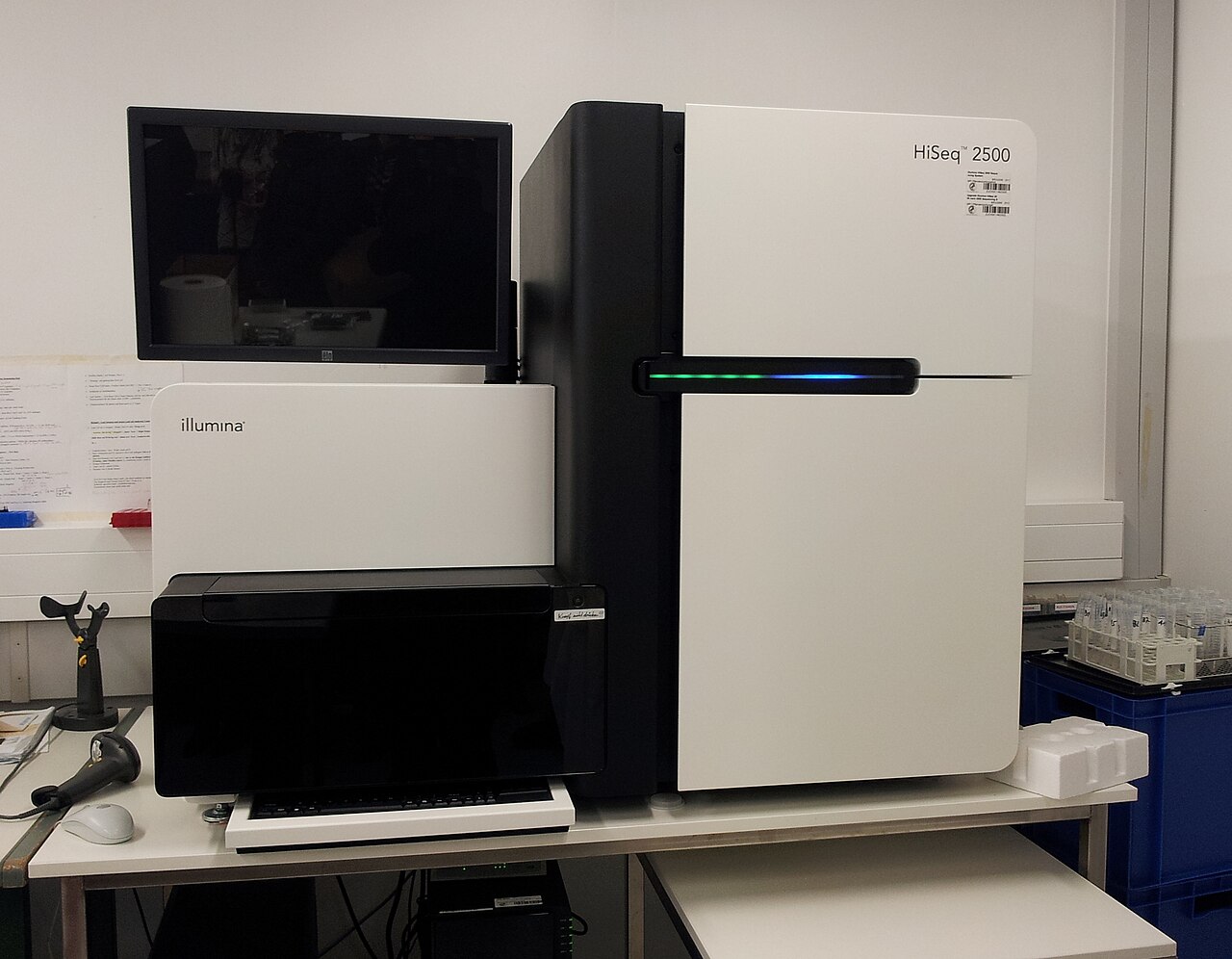
- Illumina HiSeq 2500 DNA sequencer, Wikimedia Commons, CC0 1.0. Illustrative only.
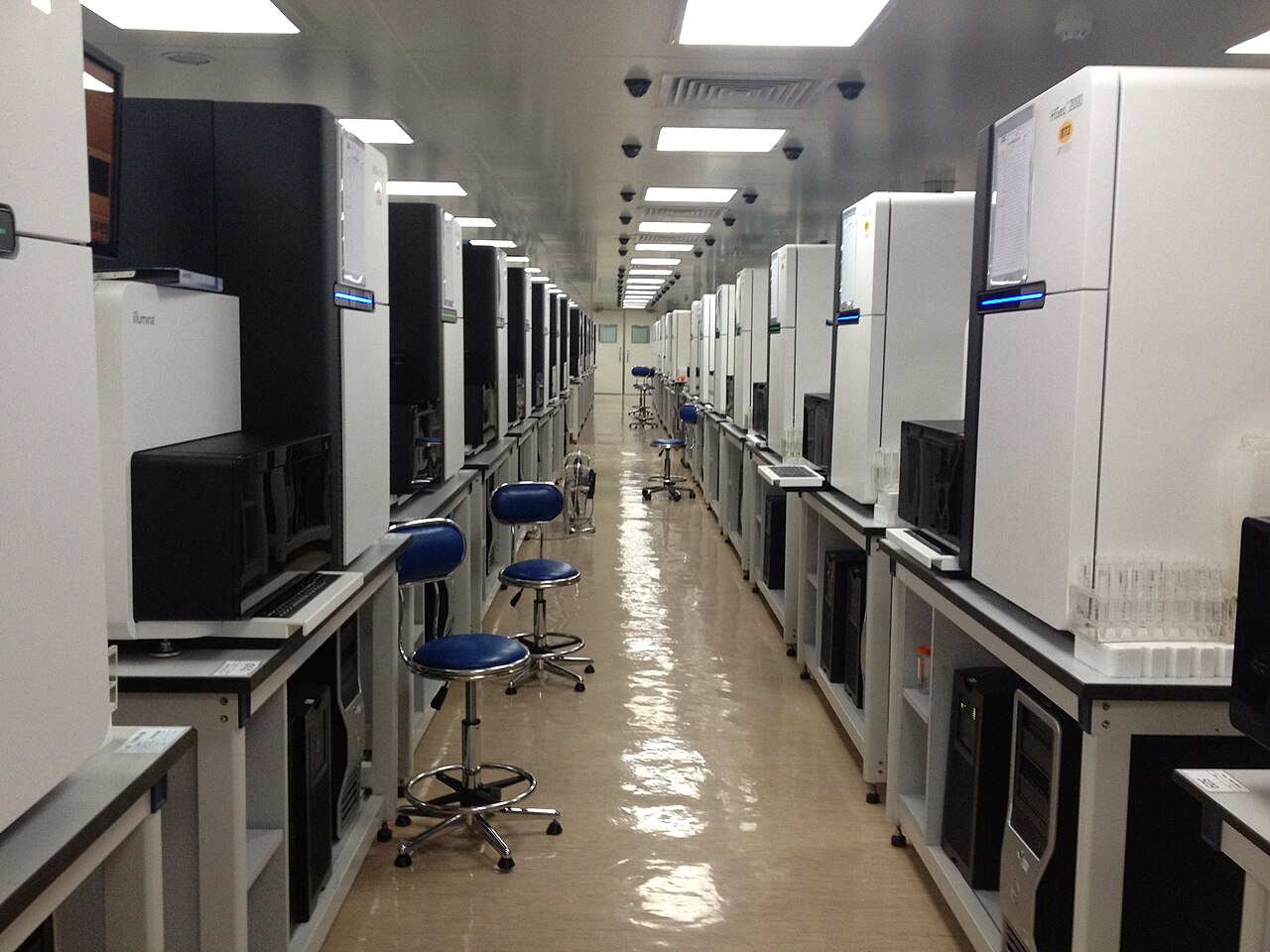
- Illumina HiSeq 2000 sequencers, BGI Hong Kong sequencing room, Wikimedia Commons, CC BY 3.0. Illustrative only.