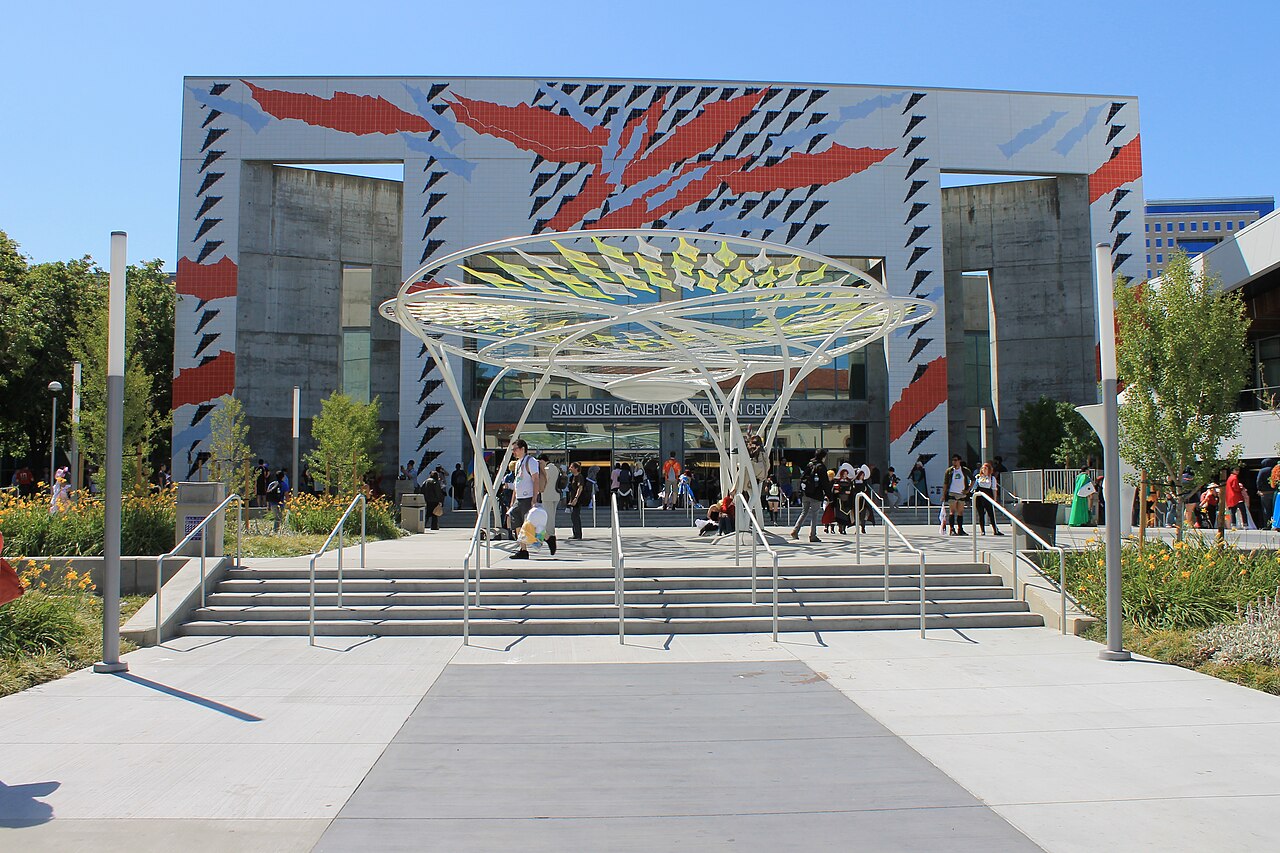
The Agentic AI Foundation (AAIF), hosted by the Linux Foundation, announced four new projects on October 22, 2026 at AGNTCon + MCPCon North America in San Jose. According to the Linux Foundation's announcement, the additions are Anthropic's Agent Skills, OpenAI's Open Responses, Hugging Face's OpenEnv and Alibaba's OpenSandbox. The foundation launched in December 2025 with three projects and now hosts ten.
Individually each project is modest. Together they fill in layers of the agent stack that previously had no neutral home, which is the more useful way to read the news.
What each project standardizes
| Project | Contributor | What it is, per the announcement |
|---|---|---|
| Agent Skills | Anthropic | An open format for packaging instructions, scripts and resources that agents load on demand; Anthropic launched it a year earlier |
| Open Responses | OpenAI | An open specification for interoperable LLM interfaces, based on the OpenAI Responses API, with a shared schema and streaming events |
| OpenEnv | Hugging Face | A framework and community hub for interoperable reinforcement learning environments, exposed through MCP and Gym |
| OpenSandbox | Alibaba | A general-purpose sandbox platform with multi-language SDKs, Docker and Kubernetes runtimes and an extensible sandbox protocol |
 Anthropic
 OpenAI
 Alibaba
From three projects to ten
AAIF already hosted Agent2Agent (A2A), Agent Router, agentgateway, AGENTS.md, goose and the Model Context Protocol (MCP). MCP and goose are described as founding projects, and MCP was donated to AAIF less than a year before this announcement. Placing the four new projects next to the better-known existing ones shows which layers now have a neutral home:
Projects hosted by the Agentic AI Foundation
The foundation launched in December 2025 with three projects and hosts ten after the October 22, 2026 additions.
Source: Linux Foundation press release, October 22, 2026.
| Layer | Question it answers | Project |
|---|---|---|
| Model interface | How does an application talk to any model? | Open Responses (new) |
| Tool and data access | How does an agent reach tools and data? | MCP |
| Agent-to-agent | How do agents talk to each other? | A2A |
| Task know-how | How does an agent load task-specific instructions and scripts? | Agent Skills (new) |
| Execution environment | Where does agent code run safely? | OpenSandbox (new) |
| Training environment | How are agents trained and evaluated? | OpenEnv (new) |
The layer assignments are our grouping of the projects' stated purposes, not the foundation's taxonomy, and the other existing projects (Agent Router, agentgateway, AGENTS.md, goose) are omitted because the announcement does not describe them. The table shows that the model interface, execution and training layers now have neutral projects alongside the tool and agent-to-agent layers. Our earlier look at the interoperability stack covers MCP and A2A in more depth.
Analysis: why the donations matter
1. Competitors contributed to the same venue. Anthropic and OpenAI, direct competitors, each donated a core interface. Neutral governance is what makes a competitor willing to depend on a specification, since no single company can change it unilaterally. The announcement describes all projects as operating under AAIF's open, vendor-neutral governance.
2. Skills are a different kind of standard from protocols. MCP and Open Responses define wire interfaces. Agent Skills defines a packaging format for know-how that agents load on demand. That is closer to a file format than a protocol, and the two kinds of standard solve different compatibility problems. Our guide to Claude skills explains the format from a user's side.
3. Sandboxing and training environments are infrastructure bets. OpenSandbox and OpenEnv address where agents run and learn. Standardizing those layers lowers switching costs for the operators who host agents, not only for the developers who write them.
A standard becomes durable when its competitors maintain it together.
Metir analysis
What the announcement does not say
- It gives no adoption metrics such as users, downloads or company counts for the new projects.
- It does not list AAIF's members. Organizations named in connection with OpenEnv's work, including Hugging Face, Microsoft, Meta-PyTorch, Modal and Prime Intellect, are described as sharing what they built and used, not as confirmed members.
- It does not describe how conflicts between overlapping specifications, for example Open Responses and MCP's tool calling, will be resolved.
Manik Surtani, CTO and co-founder of AAIF, said the foundation exists to give the community "one place to build shared standards, protocols, and infrastructure."
What it means for teams building agents
Open interfaces reduce the cost of changing models, tools or runtimes, which is the same logic behind using more than one model provider. Products that sit across providers, such as Metir, benefit when the layers beneath them are standardized, because one skill or tool integration can work with several models.
What to watch
- Overlap handling. How AAIF reconciles specifications that cover similar ground.
- Adoption data. Whether the foundation publishes usage figures for the projects it hosts.
- Further donations. Whether Google, Microsoft or others contribute core interfaces.
- Security practice. Skills and sandboxes both raise questions about untrusted instructions and code, which the projects will have to address in their specifications.
Sources:
Image credits
- Hero and in-body photo: "San-Jose-Convention-Center.jpg" by Michael Ocampo, Wikimedia Commons, licensed CC BY 2.0. Taken May 24, 2015. Reviewed visually before use.