On August 24, 2026, XPeng, the Chinese electric-vehicle maker, disclosed that its robotics business had raised more than 900 million dollars in its first external funding round, at a post-money valuation above 6.3 billion dollars. The company described it as the largest single private financing round ever recorded in China's embodied-AI industry, and the framing is notable in itself: a carmaker's robotics arm is now valued as a standalone AI company, funded by investors betting on a humanoid robot that has not yet been sold. This piece looks at where the money came from, what XPeng says it will build, and the sizable gap between the production targets and today's reality.
 Tesla
Tesla NVIDIA
 Apple
AppleWhere the money came from
The round was led by IDG Capital, with participation from Gaorong Ventures and strategic backing from Tencent and Alibaba. The internal structure of the raise is worth noting, because it reveals how much of the conviction is XPeng's own. Of the more than 900 million dollars committed, roughly 600 million came from external investors, about 200 million from an XPeng subsidiary, and about 100 million from company leadership. In other words, a third of the round is XPeng and its executives backing themselves.
That mix cuts two ways. Strategic participation from Tencent and Alibaba, two of China's largest technology companies, is a meaningful external validation, and a lead from IDG Capital signals institutional conviction. At the same time, a round that leans partly on the parent company and its leadership is not the same as one funded entirely by arms-length outside capital. Both readings are fair, and the honest description holds them together: strong backing, with a notable share of internal belief.
What XPeng says it will build
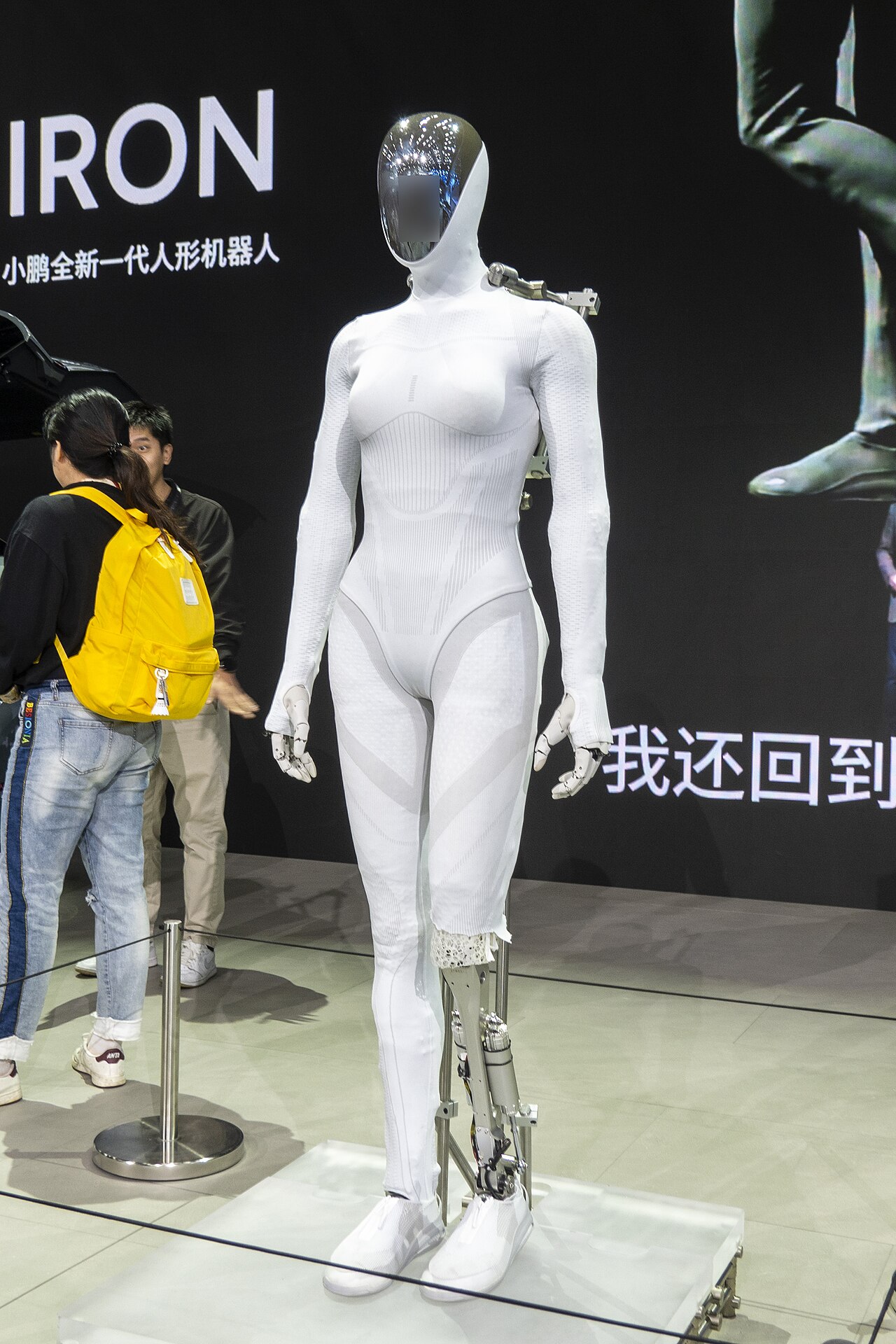
The capital is aimed at the IRON humanoid robot. XPeng says IRON is expected to enter mass production by the end of 2026, with initial deployment inside XPeng's own stores and campuses, followed by commercial deliveries in China and overseas markets in 2027. The production targets are aggressive: the company has stated a goal of producing 1,000 IRON units per month by the end of 2026, and a long-term ambition of 1 million units per year by 2030.
The IRON production targets, on a log scale
XPeng's stated goals for IRON humanoid output. The gap between the two is roughly 80-fold, and both are targets rather than confirmed shipments. A log scale is used so both fit on one axis.
As of the funding round, XPeng had not sold a single IRON to a customer. These figures describe intent, not delivery.
Those numbers deserve to be read as targets, not forecasts. Manufacturing a humanoid robot at volume is a genuinely hard problem, distinct from manufacturing a car, and the industry as a whole has a track record of announcing ambitious timelines and then extending them. A goal of 1,000 units a month by year-end, from a standing start, is the kind of target that reveals ambition and funding appetite more than it predicts a shipment schedule. The useful posture is to treat the trajectory as the company's stated intent and to watch actual deliveries as they arrive.
The gap worth naming
The most important fact about this round is one the headline valuation obscures: XPeng has not, as of the raise, sold a single IRON to a customer. The 6.3 billion dollar valuation rests entirely on what the unit is expected to produce and sell, not on what it has produced and sold. This is not unique to XPeng. It is the defining characteristic of the current humanoid-robotics wave, where capital is being priced against future capability across the sector.
The valuation is built on production targets, not production. That is the shape of the entire humanoid-robot moment.
On pricing physical AI ahead of revenue
Why is so much money flowing into pre-revenue hardware? The bet is that general-purpose humanoid robots represent a market large enough that establishing manufacturing capability and cost position early is worth funding through years of losses, much as electric-vehicle makers were funded long before they were profitable. XPeng's own EV background is part of the thesis: the company argues that the supply chain, actuators, batteries, and manufacturing discipline of car-making transfer to robots. Whether that transfer is as clean as it sounds is one of the open questions the sector will answer over the next few years.
The part the hardware does not settle
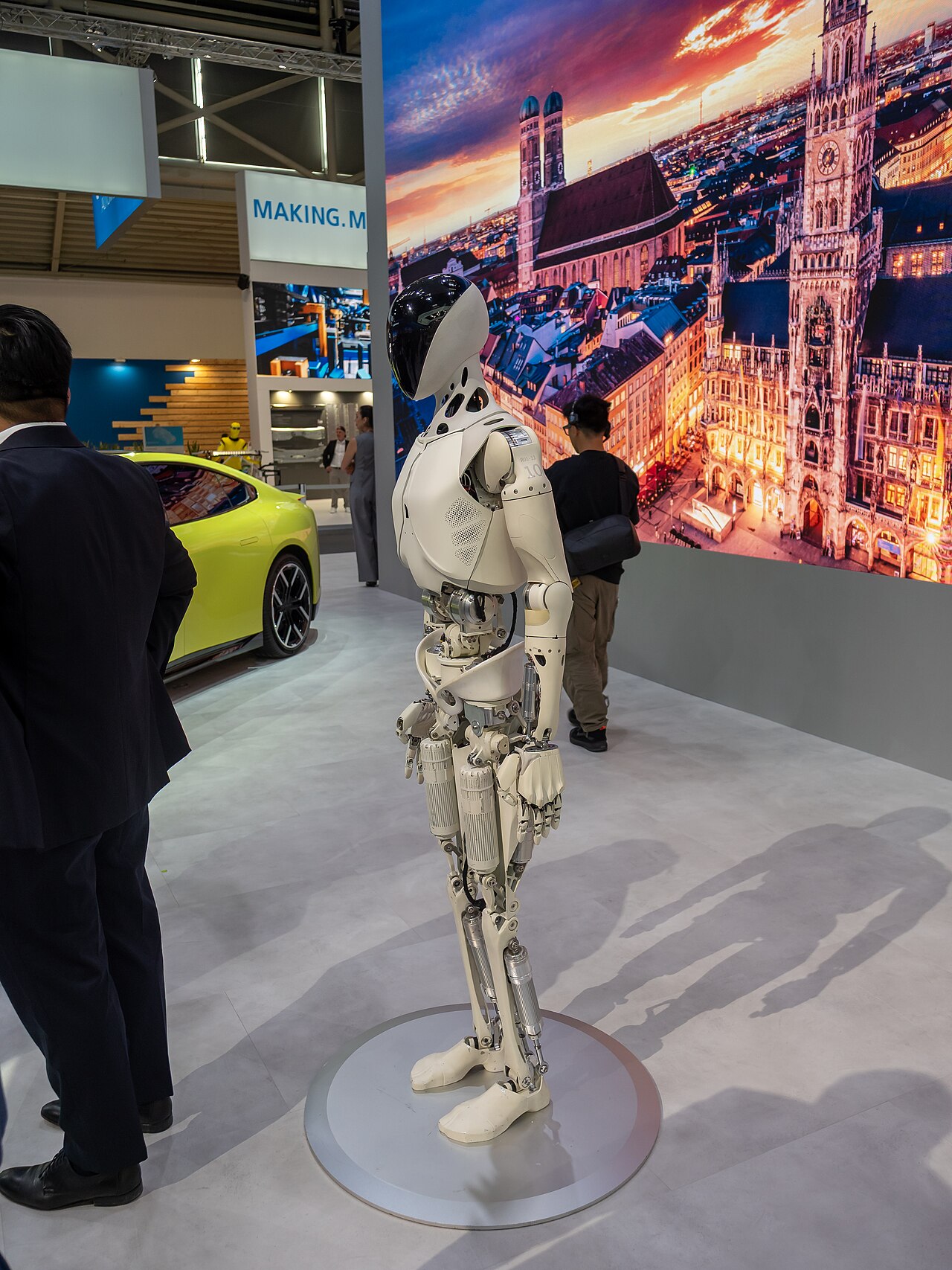
A humanoid robot is two things: a body and a mind. The 900 million dollars buys progress on the body, the actuators, the manufacturing line, the unit economics. What it does not by itself solve is the intelligence that lets the robot perceive an unstructured environment and act usefully in it. That is a software and model problem, and it is where a large share of the field's hardest work sits. The companies racing to build the physical machines and the labs building the world models and control policies that would animate them are, for now, running on somewhat separate tracks that have to converge.
This is the quiet reason the embodied-AI story connects back to the broader model landscape. The intelligence layer for robots is likely to be plural, with different models suited to perception, planning, and control, and the systems that endure will be the ones that can compose and swap those models rather than betting everything on one. That model-agnostic instinct, the same one that shapes how flexible AI platforms like Metir are built, is as relevant to a robot's mind as to a chatbot's. The body is what 6.3 billion dollars is being priced on today. The mind is the harder half.
For now, the measured summary is this. XPeng has raised a record sum for a Chinese embodied-AI company, at a valuation set before any IRON has been sold, with roughly a third of the round supplied internally, aimed at production targets that are ambitious by any standard. The capital is real and the ambition is clear. The deliveries are the thing to watch.
Sources:
- XPENG Robotics Raises US$900M for Humanoid Robots (XPeng Newsroom, Aug 2026)
- XPeng's robotics unit raises over $900m at a $6.3bn valuation (TechNode, Aug 25, 2026)
- XPeng robotics raises $900M at $6.3B valuation for IRON robot push (Electrek, Aug 24, 2026)
- XPENG IRON humanoid robot draws record physical AI funding (AI News, Aug 2026)
Image credits
- Hero: "XPeng Iron at Auto Guangzhou 2025" by Tim Wu (via Wikimedia Commons), licensed CC BY-SA 4.0. Retrieved August 25, 2026.
- In-body photo: "XPeng, IAA Summit 2025, Munich" by Matti Blume (via Wikimedia Commons), licensed CC BY-SA 4.0. Retrieved August 25, 2026.